


This article was automatically translated from the original Turkish version.
+1 More
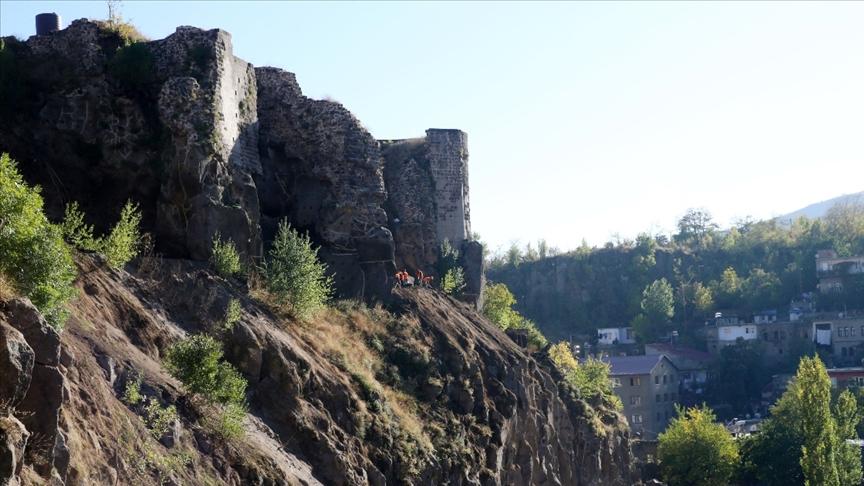
Bitlis Castle
Location | Bitlis / Türkiye | ||||||||
|---|---|---|---|---|---|---|---|---|---|
Coordinate | 42.117°D (Bitlis center) Approximately 38.400°K | ||||||||
Elevation | 56 meters | ||||||||
Number of Mazgals | 670 | ||||||||
Width | 7 meters | ||||||||
Material | Regularly cut stone | ||||||||
Findings | Lüle (tobacco pipe) – over 113 examples Glaze-free ceramics Water distribution system – double-row künk pipes Keys and iron lock apparatuses belonging to the palace | ||||||||
Historical Sovereignties | Byzantine Ottoman Safavid Aq Qoyunlu Kara Qoyunlu Anatolian Seljuks Ayyubids Dilmaçoğulları Great Seljuk Abbasid Umayyad | ||||||||
Bitlis Castle is a historical structure built on a natural rock formation in the city center of Bitlis, located in Türkiye’s Eastern Anatolia Region. Dominating the city center, the castle is surrounded by the Dideban Creek to the east and the İskender Creek to the west, which functioned as natural moats around its perimeter.
The exact construction date of Bitlis Castle is unknown, but historical sources indicate it was built around 312 BCE by Bedlis (Badlis), a commander of Alexander the Great. Throughout history, due to its strategic location, the castle came under the control of numerous civilizations. According to Islamic sources, the region was conquered by Islamic armies under the command of Iyaz ibn Ganem between 638 and 641 CE. Subsequently, it passed through the rule of the Umayyads, Abbasids, Byzantines, Great Seljuks, Dilmaçoğulları, Ayyubids, Khwarezmians, Anatolian Seljuks, Ilkhanids, Kara Koyunlu, Ak Koyunlu, Safavids, and finally came under Ottoman administration in 1514.
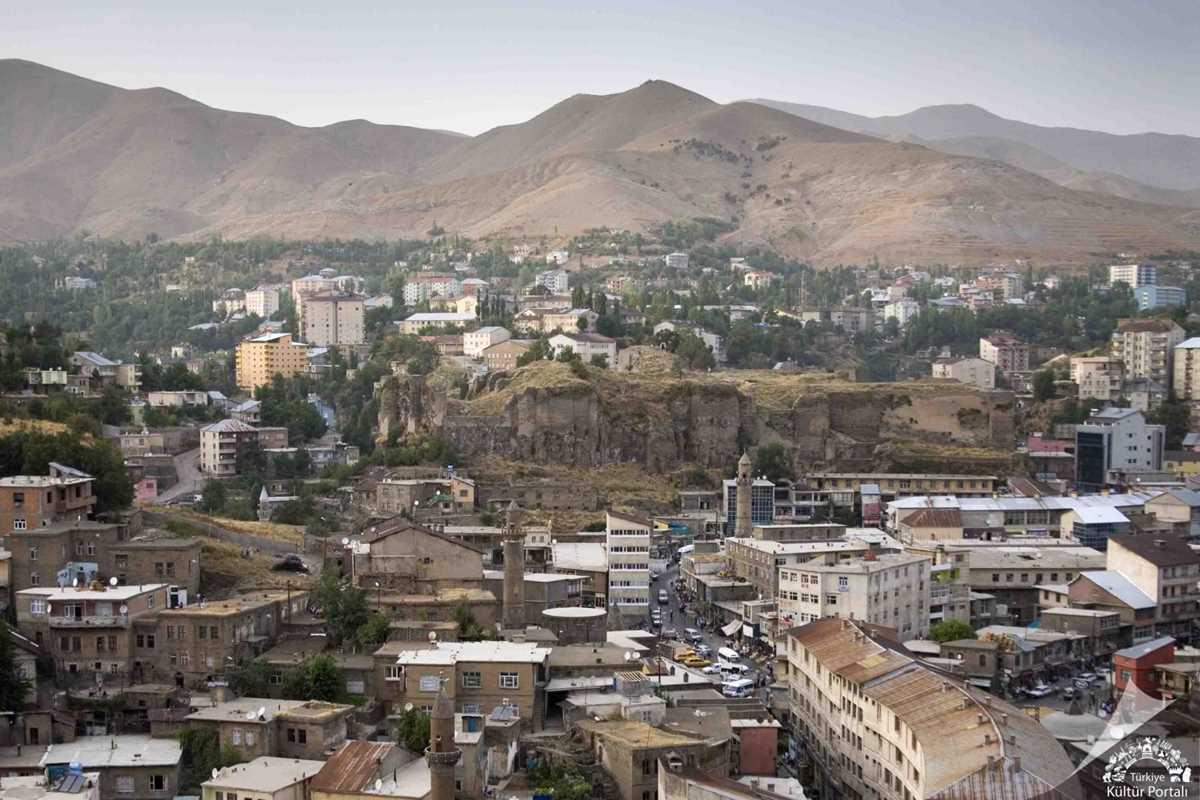
Bitlis Castle. (Türkiye Kültür Portalı)
Bitlis Castle is a large defensive structure extending in a north-south direction, with a perimeter of approximately 2,800 to 3,000 meters, a height of 56 meters, and a width of 7 meters. The curtain walls were constructed using precisely cut stones and reinforced with various towers. A total of 670 machicolations have been identified within the castle; beneath these, enclosed chambers designed for defensive purposes are located. The access routes to the castle are bordered by steep cliffs, eliminating the need for a traditional moat.
During the Ottoman period, Bitlis Castle served as an administrative and military center and underwent significant restoration in the 16th century. According to miniatures by Matrakçı Nasuh and the accounts of Evliya Çelebi, the castle contained a palace, a bazaar, a covered market, a bathhouse, two mosques, a marketplace, a caravanserai, and approximately 300 houses. These structures demonstrate that the castle was not only a military stronghold but also a center of civilian life.
Archaeological excavations at the castle began in 2004 and were renewed with increased intensity in 2018 and 2022. Conducted in collaboration between Ahlat Museum and Bitlis Eren University, these excavations have yielded numerous artifacts including many pipes (tobacco smoking devices), ceramics, glass, metal objects, coins, keys, ammunition remnants, and cannonballs. Notably, the abundance of Ottoman-era pipes indicates the widespread cultivation and use of tobacco in the region. Over 113 pipes of various forms and decorations have been identified, some of which were locally produced while others were imported.
During the 2022 excavations, work conducted in the palace area and south of the Sinan Bey Hamam uncovered a drainage channel, street structure, and ground leveling layers. Particularly abundant finds of unglazed ceramics have shed light on the daily life within the castle. These unglazed ceramics consist of vessels used for cooking, storage, serving, and lighting. Technical analyses revealed that the ceramics were manufactured using additives such as mica, lime, sand, crushed stone, and quartz. The clay body colors range widely from reddish-brown to pink. Excavations also uncovered a key and lock mechanisms believed to belong to the palace entrance, as well as künk systems that served water distribution. The water distribution system was found to consist of a two-tiered künk channel directed toward the palace area. These findings provide significant insights into Ottoman engineering.
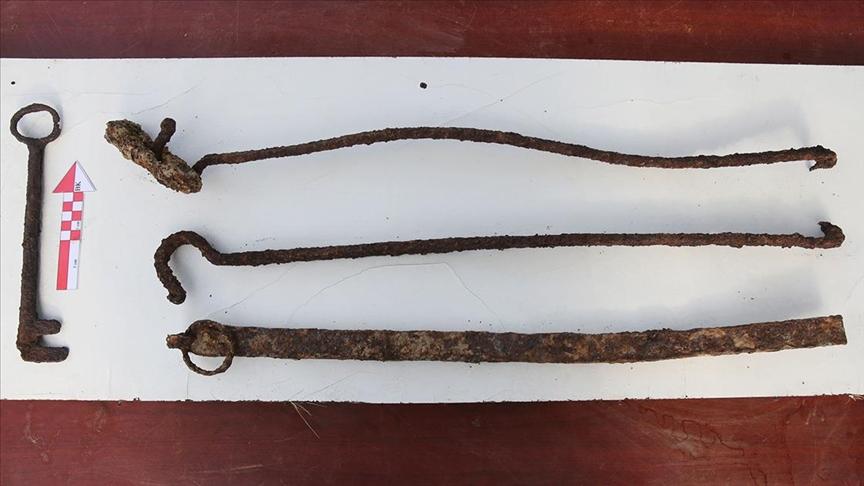
Key and Mechanisms Believed to Belong to the Palace. (Anadolu Ajansı)
Today, Bitlis Castle survives only in the form of structural remains. Thanks to ongoing excavation and restoration efforts by the Ministry of Culture and Tourism, Ahlat Museum, and local universities, the castle is now under protective conservation. As of 2024, it has been reported that the palace section has been largely uncovered and a five-year excavation and public awareness plan is being implemented. Bitlis Castle’s historical and cultural heritage holds significant potential both from a scientific perspective and for regional tourism.
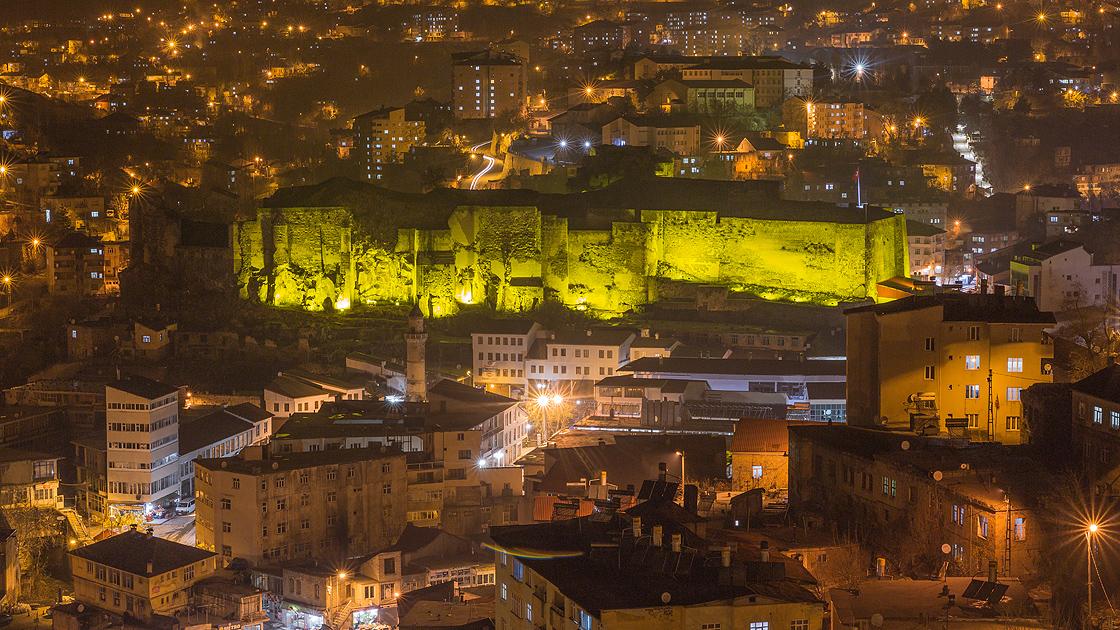
Lighting of the Castle. (Anadolu Ajansı)
Anadolu Ajansı. "Bitlis Kalesi'nde Saraya Ait Olduğu Değerlendirilen Anahtar ile Aparatları Bulundu." Accessed April 22, 2025.https://www.aa.com.tr/tr/kultur/bitlis-kalesinde-saraya-ait-oldugu-degerlendirilen-anahtar-ile-aparatlari-bulundu/3368109
Anadolu Ajansı. "Bitlis Kalesi'ni ışıklandırma çalışması tamamlandı." Accessed April 22, 2025.https://www.aa.com.tr/tr/turkiye/bitlis-kalesini-isiklandirma-calismasi-tamamlandi-/1678123
Anadolu Ajansı. "Bitlis Kalesi'nin kuzey surları restore ediliyor." Accessed April 22, 2025.https://www.aa.com.tr/tr/gundem/bitlis-kalesinin-kuzey-surlari-restore-ediliyor/2724734
Bitlis Eren Üniversitesi. "Bitlis Kalesi’ndeki Arkeolojik Kazılar Devam Ediyor: Osmanlı Dönemine Ait Yapılar Gün Yüzüne Çıkıyor." BEÜ Resmî Web Sitesi. Accessed April 22, 2025.https://www.beu.edu.tr/Haberler/bitlis-kalesi-ndeki-arkeolojik-kazilar-devam-ediyor-osmanli-donemine-ait-yapilar-gun-yuzune-cikiyor
Karasu, Yunus Emre. "Bitlis Kalesi Osmanlı Dönemi Günlük Yaşamında Sırsız Seramikler (2022 Yılı Kazı Sezonu)." Korkut Ata Türkiyat Araştırmaları Dergisi 11 (2023): 1066–1088.
Ministry of Culture and Tourism. "Bitlis Kalesi." *Türkiye Kültür Portalı Bitlis Gezi Rehberi*. Accessed April 22, 2025.https://www.kulturportali.gov.tr/turkiye/bitlis/gezilecekyer/bitlis-kalesi
T.C. Kültür ve Turizm Bakanlığı. “Bitlis Kalesi.” Türkiye Kültür Portalı. Accessed April 22, 2025.https://www.kulturportali.gov.tr/portal/bitlis-kalesi
Şen, Korkmaz, and Yunus Emre Karasu. “Bitlis Kalesi Osmanlı Dönemi Lülelerinin Değerlendirilmesi (2018 Yılı Kazı Sezonu).” Art-Sanat, no. 14 (July 2020): 413-40.
Bitlis Castle
Location | Bitlis / Türkiye | ||||||||
|---|---|---|---|---|---|---|---|---|---|
Coordinate | 42.117°D (Bitlis center) Approximately 38.400°K | ||||||||
Elevation | 56 meters | ||||||||
Number of Mazgals | 670 | ||||||||
Width | 7 meters | ||||||||
Material | Regularly cut stone | ||||||||
Findings | Lüle (tobacco pipe) – over 113 examples Glaze-free ceramics Water distribution system – double-row künk pipes Keys and iron lock apparatuses belonging to the palace | ||||||||
Historical Sovereignties | Byzantine Ottoman Safavid Aq Qoyunlu Kara Qoyunlu Anatolian Seljuks Ayyubids Dilmaçoğulları Great Seljuk Abbasid Umayyad | ||||||||
History
Architectural Features
Settlement and Structures
Archaeological Findings and Excavations
Current Condition