

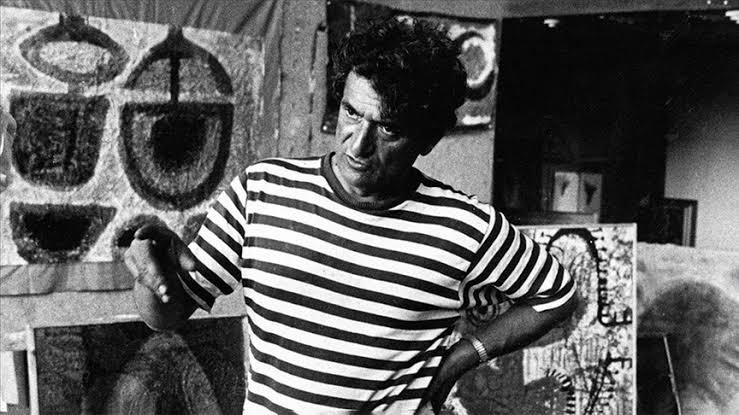

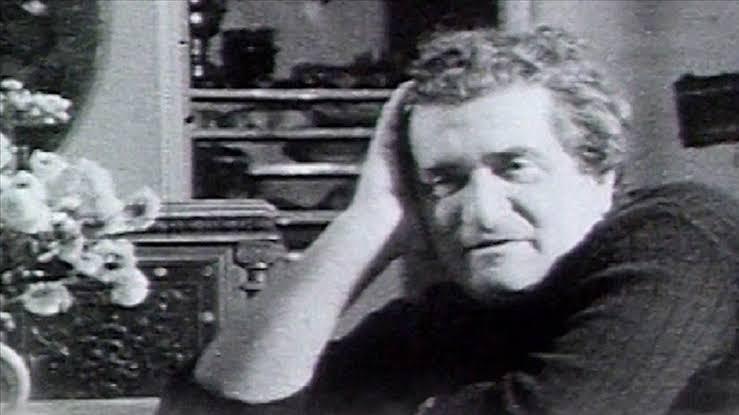
Bedri Rahmi Eyüboğlu
Spouse | Eren Eyüboğlu | ||||||||
|---|---|---|---|---|---|---|---|---|---|
Father | Mehmet Rahmi Eyüboğlu | ||||||||
Mother | Lütfiye Hanım | ||||||||
Year of Birth | 1911 | ||||||||
Place of Birth | Görele, Giresun, Ottoman Empire | ||||||||
Child | Mehmet Eyüboğlu | ||||||||
Nationality | Turk | ||||||||
Place of Death | Istanbul, Türkiye | ||||||||
Place of Burial | Küçükyalı Cemetery, Istanbul, Türkiye | ||||||||
Date of Death | 1975-09-21 | ||||||||
Born on March 15, 1911, in Görele district of Giresun, Bedri Rahmi, whose real name was Ali Bedrettin Eyüboğlu, was the second child in a family of five. His father, Rahmi Bey, was a district governor and member of parliament, and his mother was Lütfiye Hanım. He is the brother of the renowned writer Sabahattin Eyüboğlu and Mualla Eyüboğlu, one of Türkiye’s first female architects.
His childhood was spent in various towns across Anatolia due to his father’s official postings. The literary and artistic atmosphere at home influenced him from an early age. While his mother passed on to her children the cultural heritage of folk literature, his father translated works from French literature.
During his middle school years, Eyüboğlu co-founded a magazine called Serçe with his friends. In 1923, when his father was elected as a member of parliament for Trabzon, the family moved to Trabzon. While studying at Trabzon High School, he developed an interest in literature and poetry; his earliest poems were published in journals such as Trabzon Mecmuası and Muhit.
Influenced by the painter Ahmet Zeki Kocamemi, Bedri Rahmi turned to painting and entered the State Academy of Fine Arts in 1929 (today’s Mimar Sinan Fine Arts University). There he received instruction from notable figures such as Nazmi Ziya Güran and İbrahim Çallı. However, in 1931 he left the academy midway and moved to France to join his elder brother Sabahattin.
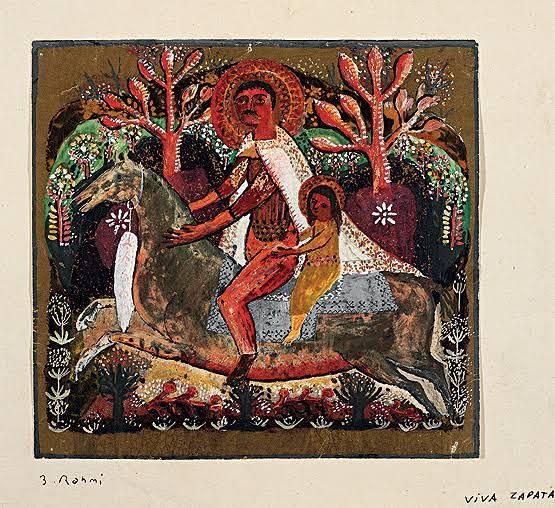
The Work of Bedri Rahmi Eyüboğlu Anadolu Ajansı)
In Paris, Eyüboğlu, who developed an interest in art history, attended the workshop of the renowned painter André Lhote. There he met the Romanian-born artist Eren Eyüboğlu (Ernestine Letoni), with whom he married in Türkiye in 1936. The couple became an important artistic pair in Türkiye’s cultural scene, sharing both life and artistic endeavors.
After a brief trip to London in 1933, he returned to Türkiye. In 1934 he joined the innovative group of painters known as D Grubu. In 1935 he held his first solo exhibition in Romania. In 1937 he began working as an assistant to Leopold Levy at the Academy of Fine Arts and later rose to the rank of professor.
Bedri Rahmi was not only a painter but also a prolific poet and essayist. His first poetry collection, published in 1941 and titled Yaradana Mektuplar, attracted attention with its voice rooted in folk poetry. His most famous poem, “Karadut”, is one of his works that successfully fused folk culture with modern poetic aesthetics. His poems prominently feature the plain language of folk bards, along with themes of love, nature, and Anatolia.
In his paintings, elements such as the texture of Anatolia, village landscapes, traditional motifs, kilim patterns, female figures, and fruit and vegetable themes stand out. From the 1940s onward, he also produced works using techniques such as mosaic, mural painting, and ceramics. His 227-square-meter mosaic panel created for the Turkish pavilion at the 1958 Brussels World’s Fair earned him a gold medal.
Eyüboğlu, who blended modern art with Anatolian folk culture, united Western techniques with Eastern spirit in his paintings. He synthesized forms and colors drawn from folk art with influences from Fauvism, Post-Impressionism, and Abstract Expressionism into an original synthesis.
In the 1940s, his brother Sabahattin Eyüboğlu, Azra Erhat, and Cevat Şakir Kabaağaçlı (Halikarnas Balıkçısı) participated together in the Mavi Anadolu movement. This intellectual current viewed Anatolia as the cradle of civilizations and a source of humanism. Bedri Rahmi reflected this perspective in both his poetry and his paintings.
His artistic techniques included engraving, calligraphy, stained glass, mosaic, lithography, ceramics, plastic glue, and Japanese paper. In this regard, he is regarded as one of the pioneers of multidisciplinary art in Türkiye.
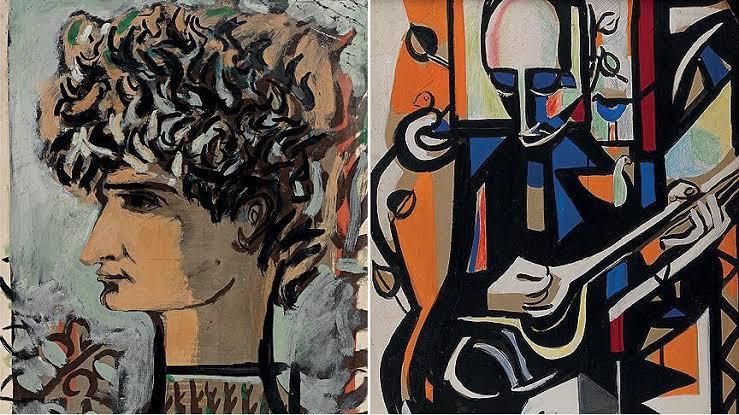
Work by Bedri Rahmi Eyüboğlu - (Anadolu Ajansı)
Bedri Rahmi continued his academic career from 1937 until 1971, when he served as Head of the Painting Department. He supported his students and actively encouraged young artist movements such as Onlar Grubu.
Between 1951 and 1960, he wrote a weekly column titled Pazartesi Konuşmaları on art and culture for the newspaper Cumhuriyet. In 1961, with a Rockefeller scholarship, he traveled with his wife to Paris and the United States, where he delivered lectures.
Bedri Rahmi Eyüboğlu contracted jaundice in 1975 and passed away on September 20, 1975, in Istanbul at the age of 64. A year after his death, he was named “Artist of the Year” by the journal Milliyet Sanat.
Yaradana Mektuplar (1941)
Karadut (1948)
Tuz (1952)
Bigüzel (1959)
Dol Karabakır Dol (1974)
Canım Anadolu (1953)
Delifişek (1975)
Tezek (1975)
Bu Anadolu Var ya (1993, posthumous)
Resim Yaparken (1996)
Binbir Bedros (1977)
After his death, Eyüboğlu’s works were compiled and published by Bilgi Yayınevi and Türkiye İş Bankası Kültür Yayınları. Recognized as one of Türkiye’s foremost figures in modern art grounded in folk culture, Eyüboğlu successfully merged Anatolian cultural elements with Western artistic disciplines.
Anadolu Ajansı. “Anadolu motiflerini incelikle işleyen sanatçı: Bedri Rahmi Eyüboğlu.” *aa.com.tr*, March 6, 2024.https://www.aa.com.tr/tr/kultur/-anadolu-motiflerini-incelikle-isleyen-sanatci-bedri-rahmi-eyuboglu/3335587
T.C. Kültür ve Turizm Bakanlığı. “Bedri Rahmi Eyüboğlu.” Kültür Portalı. Accessed June 13, 2025.https://www.kulturportali.gov.tr/portal/bedri-rahmi-eyuboglu
Bedri Rahmi Eyüboğlu
Spouse | Eren Eyüboğlu | ||||||||
|---|---|---|---|---|---|---|---|---|---|
Father | Mehmet Rahmi Eyüboğlu | ||||||||
Mother | Lütfiye Hanım | ||||||||
Year of Birth | 1911 | ||||||||
Place of Birth | Görele, Giresun, Ottoman Empire | ||||||||
Child | Mehmet Eyüboğlu | ||||||||
Nationality | Turk | ||||||||
Place of Death | Istanbul, Türkiye | ||||||||
Place of Burial | Küçükyalı Cemetery, Istanbul, Türkiye | ||||||||
Date of Death | 1975-09-21 | ||||||||
No Discussion Added Yet
Start discussion for "Bedri Rahmi Eyüboğlu" article
Artistic Life and Meeting Eren Eyüboğlu
Literary and Visual Production
The Blue Anatolia Movement and the Anatolian Theme
Academic and Public Activities
Death and Legacy
Selected Works
Poetry Collections
Essays and Travel Writings
Art Books
Artistic Legacy