This article was automatically translated from the original Turkish version.
+1 More
Period(s) | Ottoman Period | ||||||||
|---|---|---|---|---|---|---|---|---|---|
Construction Date(s) | 1651-1652 | ||||||||
Minaret | Single Minaret | ||||||||
Dome | Lead-Clad Domes | ||||||||
Historical Name | Hacı Hüseyin Camii | ||||||||
Current Name | Başdurak Camii | ||||||||
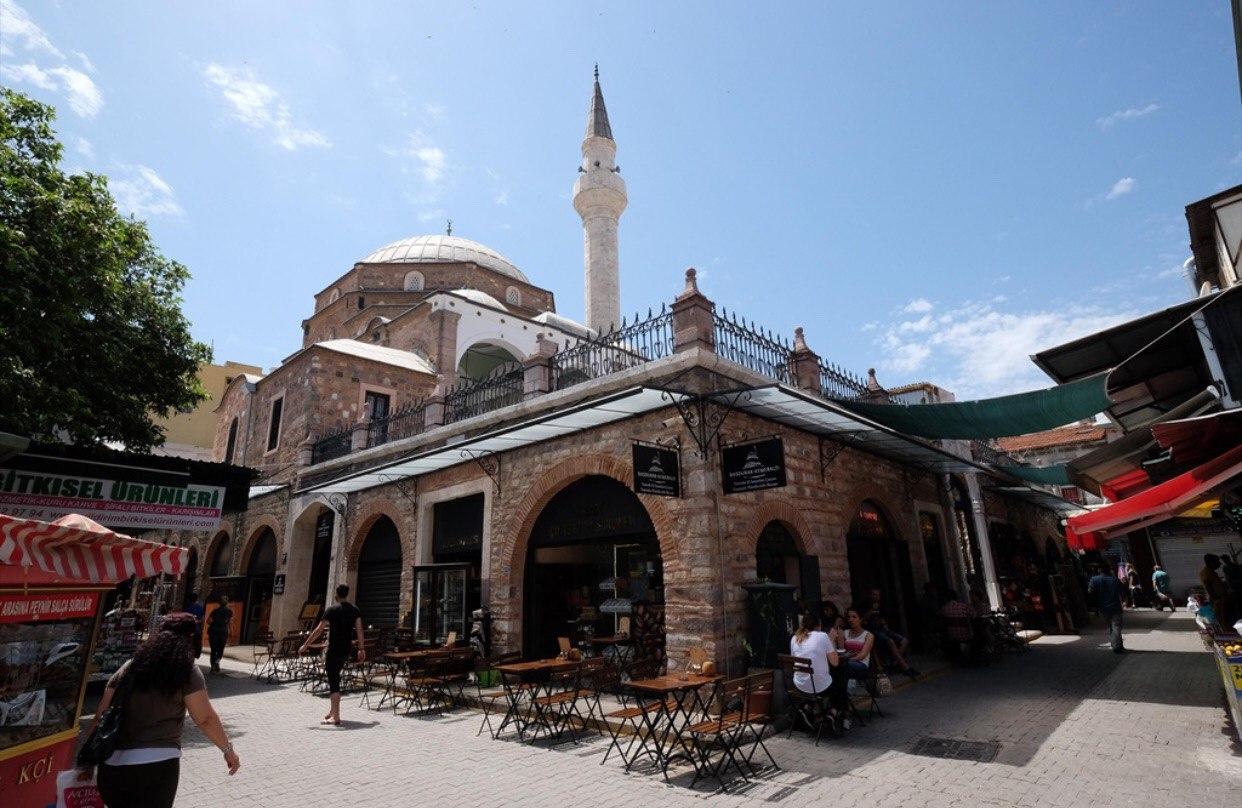
Basdurak Camii, during the Ottoman period known as Hacı Hüseyin Ağa Camii, is a historical mosque located in the city center of İzmir. The structure derives its name from its founder, Hacı Hüseyin Ağa ibn Muharrem el-Cündî, and was constructed in the mid-17th century. Endowment records and travel accounts confirm that during the Ottoman era, the mosque was among the principal mosques in İzmir where Friday prayers were held.
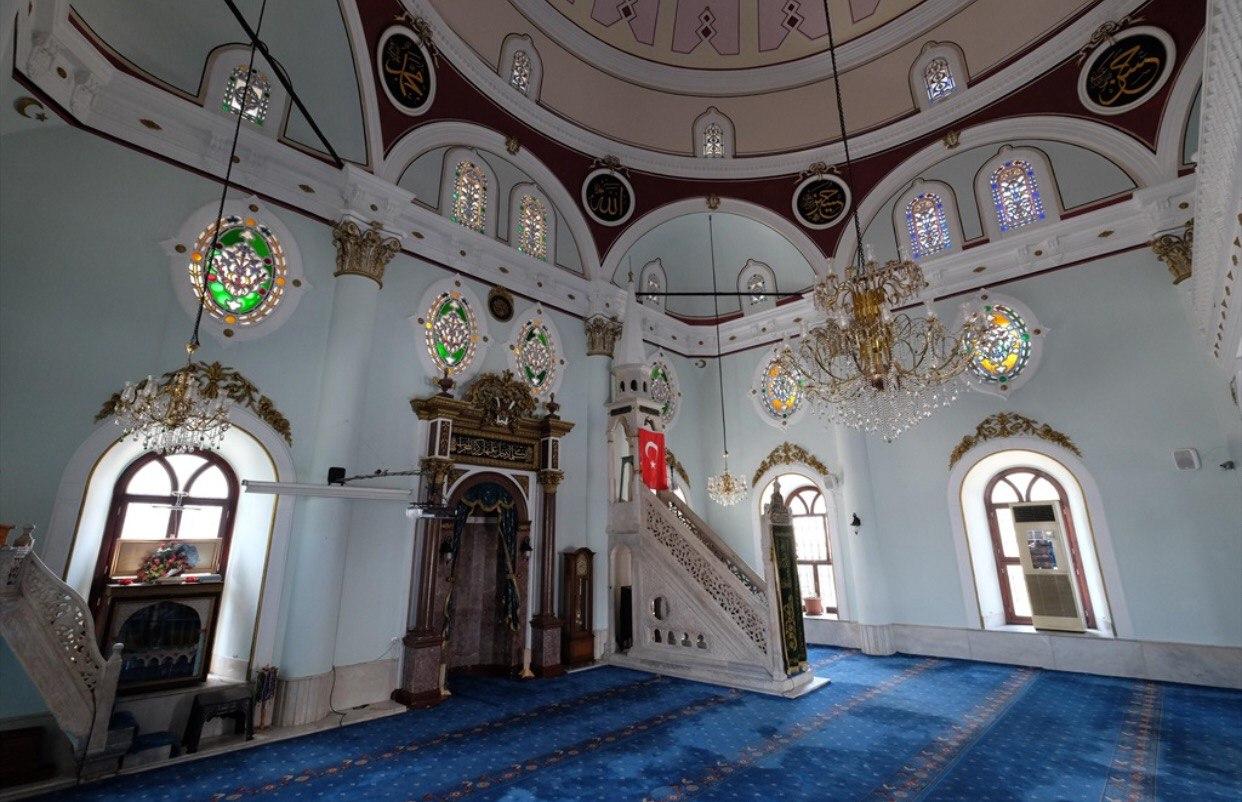
Interior of Başdurak Camii (Visitİzmir)
Basdurak Camii (Hacı Hüseyin Camii) is an Ottoman-era mosque of the fevkani type, situated within the Kemeraltı Bazaar at the corner of Anafartalar Avenue and 863rd Street. Although the original foundation inscription at the entrance has not survived to the present day, it is accepted that the mosque existed in the 17th century and was built in 1652 by the grain merchant Hacı Hüseyin.
The mosque underwent various renovations in subsequent periods. The restoration inscription dated 1774, located in the current entrance section, indicates that a library was added to the structure at that time. A second restoration inscription on the courtyard gate records that the building was repaired after an earthquake with contributions from the public. It is known that the minaret collapsed in 1880, was rebuilt in 1894, and that following restoration work carried out by the General Directorate of Foundations, the mosque was reopened for worship in 2001.【1】
Basdurak Camii was endowed by Hacı Hüseyin Ağa ibn Muharrem el-Cündî. The endowment deed dated 1654 is preserved on folio 32b of Register No. 571 in the Kuyud-ı Kadime Archive of the Ankara General Directorate of Land Registry and Cadastre, and was approved by the Mahmud Paşa Court in Istanbul.【2】 The deed states that Hacı Hüseyin Ağa allocated various immovable properties and income-generating assets in İzmir for the mosque and medreses, and also established endowments for Yakup Bey Camii as well as for the Kurşunlu and Kadı Resul Medreses.
Evliya Çelebi, during his visit to İzmir, mentioned Hacı Hüseyin Camii and noted the presence of a foundation inscription dated 1062 (1651–1652) above the mosque’s entrance. According to Evliya Çelebi, the mosque was located near the harbor, had a lead-covered dome and a single minaret. He also noted that the congregation was large and that it was counted among the mosques where Friday prayers were held.【3】
Kâtip Çelebi, in the mid-17th century, stated that there were ten mosques in İzmir and named three of them, including Hacı Hüseyin Camii. The other two mosques he listed were Niflizâde Camii and Yakup Bey Camii.【4】
Basdurak (Hacı Hüseyin) Camii is evaluated within the typology of Ottoman urban mosques. Endowment records and traveler accounts confirm that the structure had a single minaret and a lead-covered dome. The mosque reflects the characteristics of classical Ottoman mosque architecture through its square prayer hall, central dome, and final congregation area, while also demonstrating the construction techniques of the period through its use of stone and brick materials.
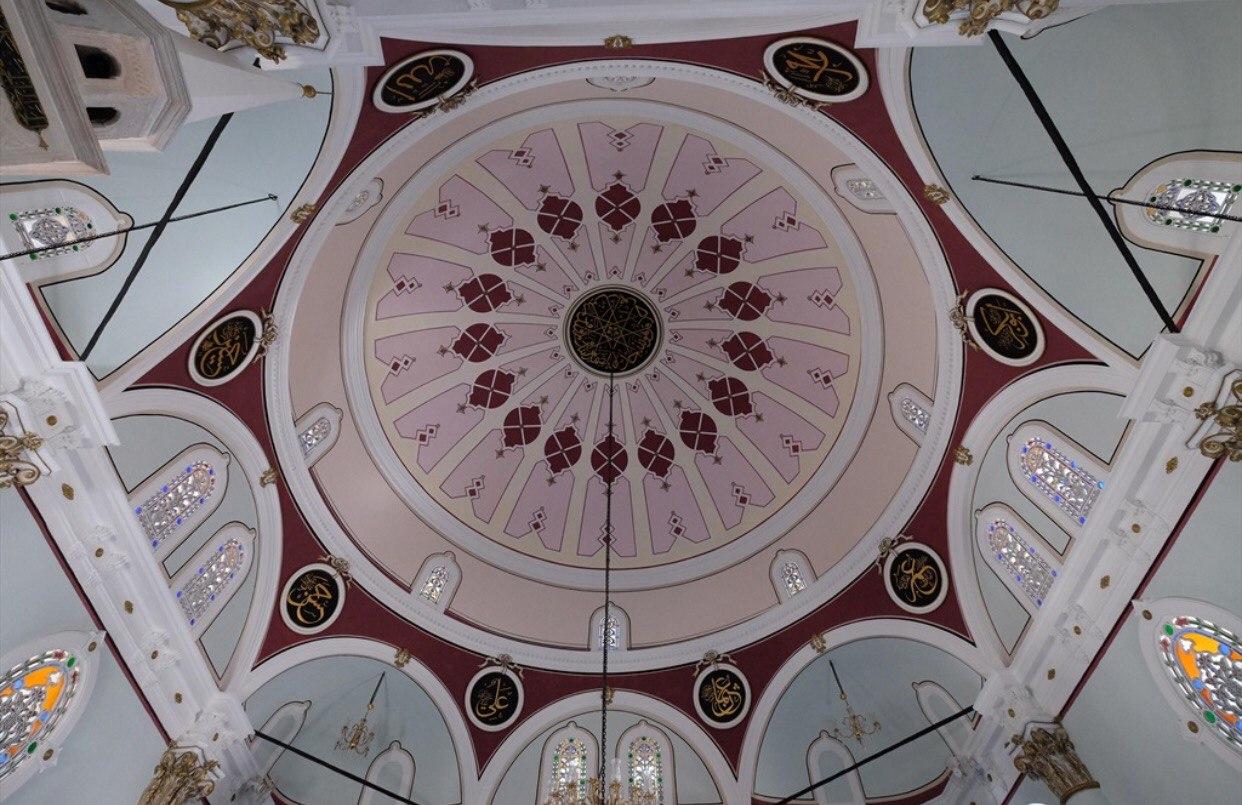
Dome of Başdurak Camii (Visitİzmir)
According to endowment records and traveler accounts, the mosque was situated in a location close to the harbor and within a dense commercial environment. Considering that Hacı Hüseyin Ağa owned numerous shop units and directed the income from these properties toward endowments, it is evident that the mosque was embedded within a commercial urban fabric. During the Ottoman period, the mosque functioned as one of the principal places of worship in İzmir where Friday prayers were held. It is counted among the city’s important mosques alongside Ahmed Ağa Camii, Bıyıklıoğlu Camii, and Yakup Bey Camii.
Erdoğru, M. Akif. “Hacı Hüseyin Ağa İbn Muharrem El-Cündî Vakfiyesi.” *İzmir Araştırmaları Dergisi* 3. (2016): 17–27. Accessed January 23, 2026. https://dergipark.org.tr/tr/download/article-file/1856227
Visit İzmir. "Başdurak (Hacı Hüseyin) Camisi." İzmir Büyükşehir Belediyesi. Accessed January 23, 2026. https://www.visitizmir.org/tr/Destinasyon/9570
İzmir İl Directorate of Culture and Tourism. "Tarihi Camiler." T.C. Kültür veTurizm Bakanlığı. Accessed January 23, 2026. https://izmir.ktb.gov.tr/TR-77392/tarihi-camiler.html
[1]
İzmir İl Kültür ve Turizm Müdürlüğü, “Tarihi Camiler,” T.C. Kültür ve Turizm Bakanlığı, Son Erişim: 23 Ocak 2026, https://izmir.ktb.gov.tr/TR-77392/tarihi-camiler.html
[2]
M. Akif Erdoğru, “Hacı Hüseyin Ağa İbn Muharrem El-Cündî Vakfiyesi,” İzmir Araştırmaları Dergisi 3 (2016): s. 18. Son Erişim: 23 Ocak 2026, https://dergipark.org.tr/tr/download/article-file/1856227
[3]
A.e., s. 21.
[4]
A.e., s. 22.

Period(s) | Ottoman Period | ||||||||
|---|---|---|---|---|---|---|---|---|---|
Construction Date(s) | 1651-1652 | ||||||||
Minaret | Single Minaret | ||||||||
Dome | Lead-Clad Domes | ||||||||
Historical Name | Hacı Hüseyin Camii | ||||||||
Current Name | Başdurak Camii | ||||||||
No Discussion Added Yet
Start discussion for "Başdurak (Hacı Hüseyin) Camii" article
History
Endowment Deed and Founder
According to Travelers and Sources
Architectural Features
Location and Function within the City