Aztecs: The Story of a Mysterious Civilization
The Aztecs were a powerful people who lived in central Mexico approximately 500 to 700 years ago. They were not only warriors but also highly skilled engineers, farmers, and artists. They are also the ones who introduced to the world many foods we eat today, such as chocolate and tomato.
Who Were the Aztecs and Where Did They Live?
The Aztecs were a nomadic group who called themselves "Mexica" (Meshika). According to legend, their gods told them to build a city where they saw an eagle devouring a serpent on a cactus. In 1325, they saw this sign on a small island in Lake Texcoco and founded their capital, Tenochtitlan. This symbol still appears on the flag of Mexico today.
The City on the Water: Tenochtitlan
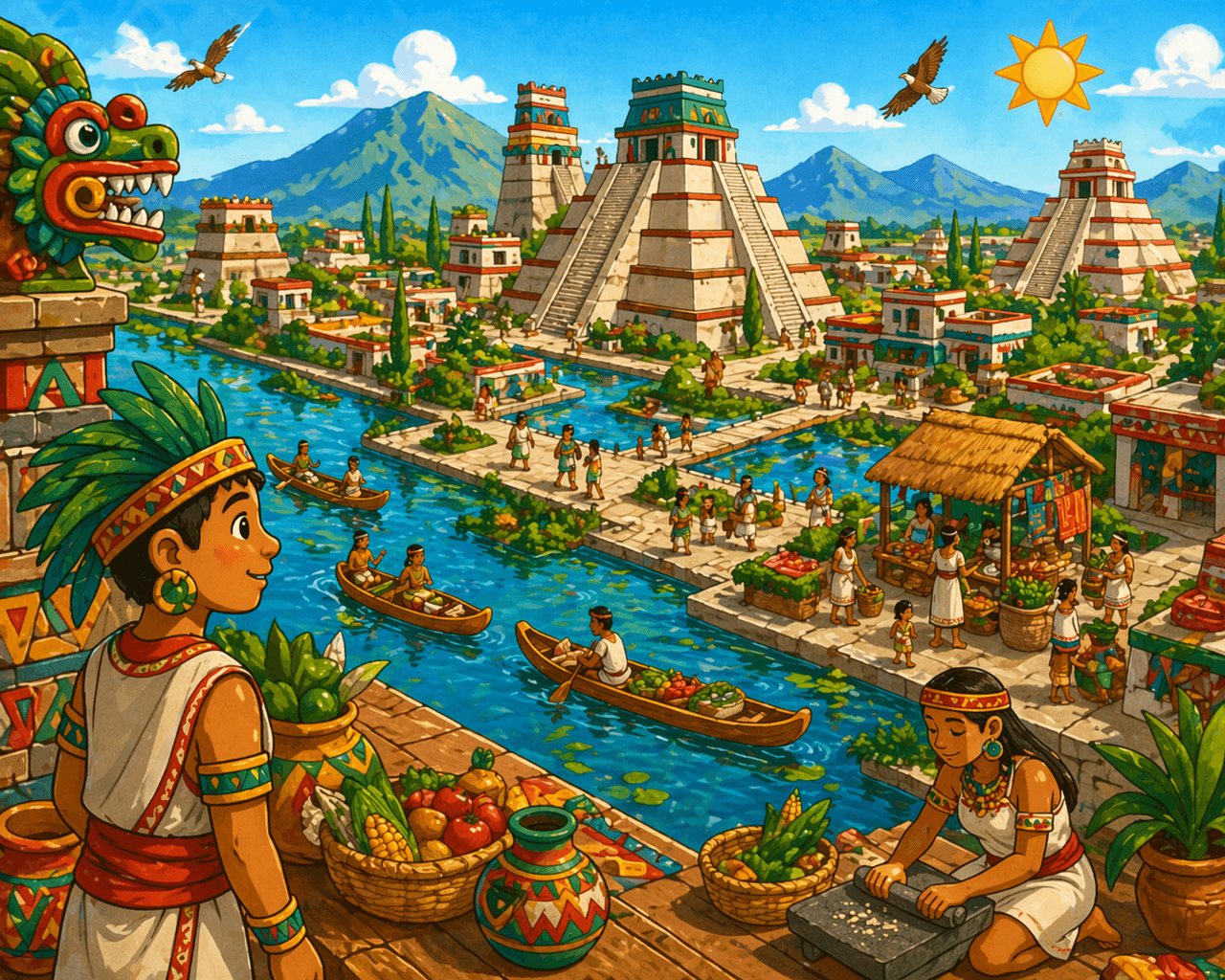
Tenochtitlan was one of the largest and cleanest cities of its time. Because the city was located in the middle of a lake, the Aztecs built long causeways and canals to reach the land. At its center stood massive pyramids, schools, and large marketplaces. Its population reached up to 300,000 people—far greater than many European cities of that era.
Daily Life and Interesting Inventions
The Aztecs invented Chinampa, known as "floating gardens," to farm in swampy areas. These gardens were artificial islands made from mud and vegetation lifted from the lakebed.
- Diet: Their most important food was maize. They also consumed tomato, beans, and cacao. They valued cacao so highly that they used cacao beans as currency.
- Education: Aztec children began their education at home. During adolescence, both girls and boys attended school, where they learned music, religion, history, and military skills.
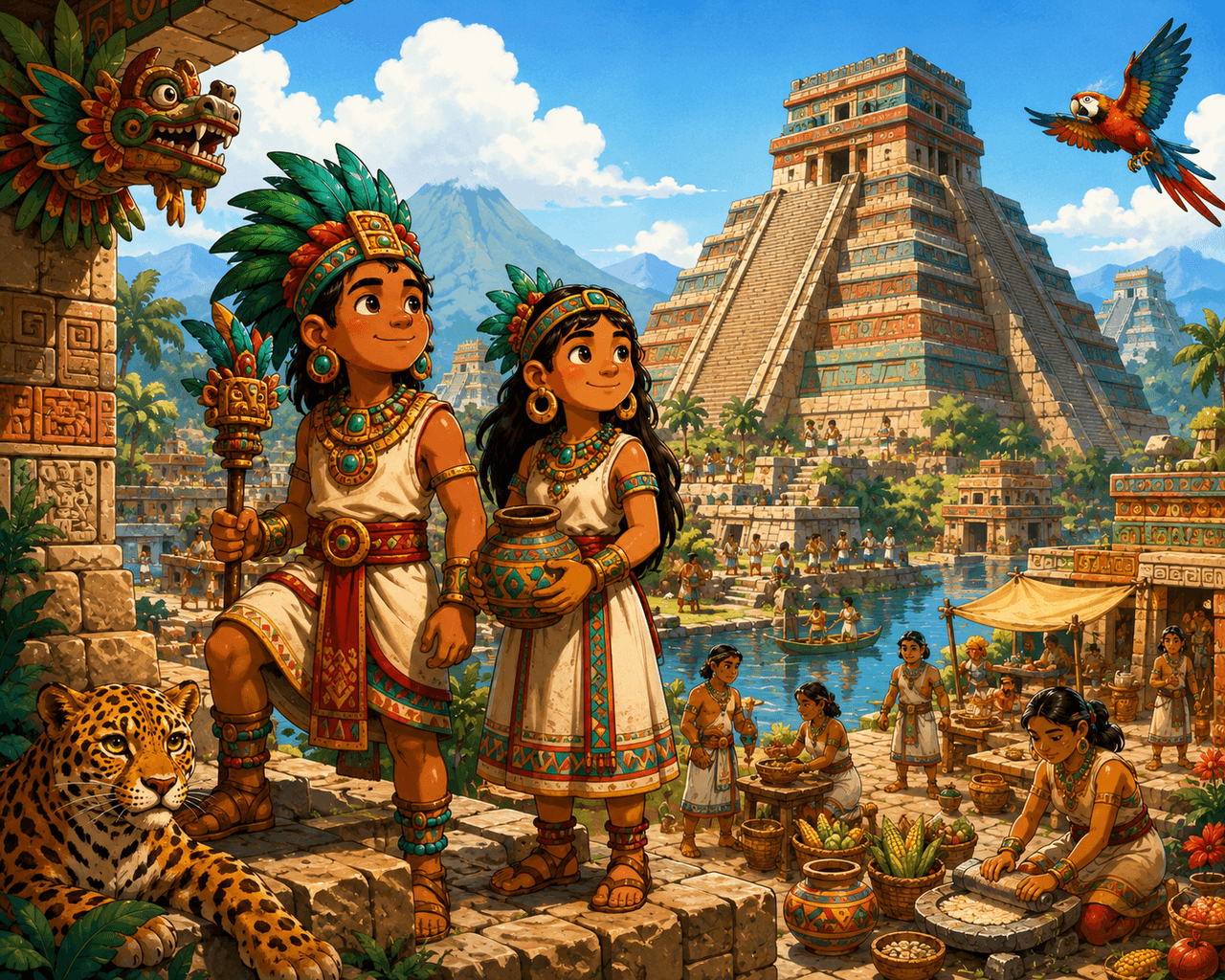
Daily life and agriculture among the Aztecs (generated by artificial intelligence)
Aztec Beliefs and Calendars
The Aztecs believed in many gods. Their most important deities were the sun and war god Huitzilopochtli and the rain god Tlaloc. They built temples atop massive pyramids in their honor.
Highly skilled in observing the sky, the Aztecs used two different calendars. One was a 365-day solar calendar and the other a 260-day ritual calendar. These two calendars aligned every 52 years.
First Lessons at Home: Parental Teaching
For Aztec children, the first school was their own home. Young children learned basic life skills by observing their parents.
- Girls: They were educated by their mothers, learning household chores, cooking, and weaving textiles—a craft of great importance in Aztec culture.
- Boys: They were educated by their fathers. From an early age, they were taught discipline, sometimes by being held over fire to discourage misbehavior. As they grew older, they learned "male tasks" such as fishing. Their fathers also taught them the good and bad aspects of life to prepare them for adulthood.
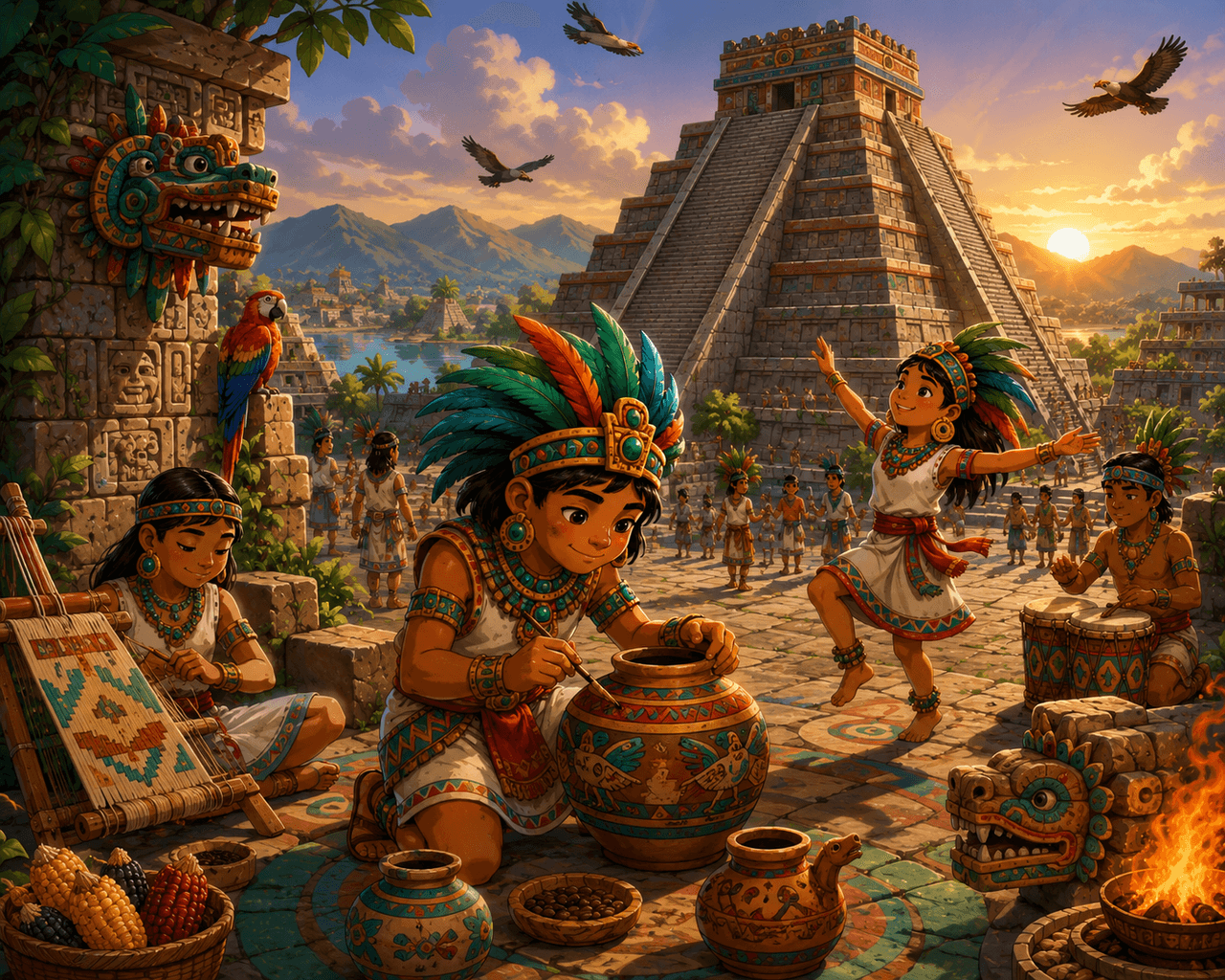
Cultural life among the Aztecs (generated by artificial intelligence)
The End of the Empire and Its Legacy
In 1519, Spanish forces led by Hernán Cortés arrived in Mexico. By allying with other indigenous groups dissatisfied with Aztec rule, they captured Tenochtitlan in 1521, bringing the Aztec Empire to an end. However, Aztec culture did not disappear. Today, millions of people in Mexico still speak Nahuatl, the language of the Aztecs, and continue to preserve their traditions.
School and Education Among the Aztecs: Future Warriors and Sages
In Aztec society, education began the moment a child was born. For the Aztecs, education was not merely about reading books; it was a lifelong journey encompassing survival skills, the learning of traditions, and becoming a valuable member of society.