


This article was automatically translated from the original Turkish version.
+2 More
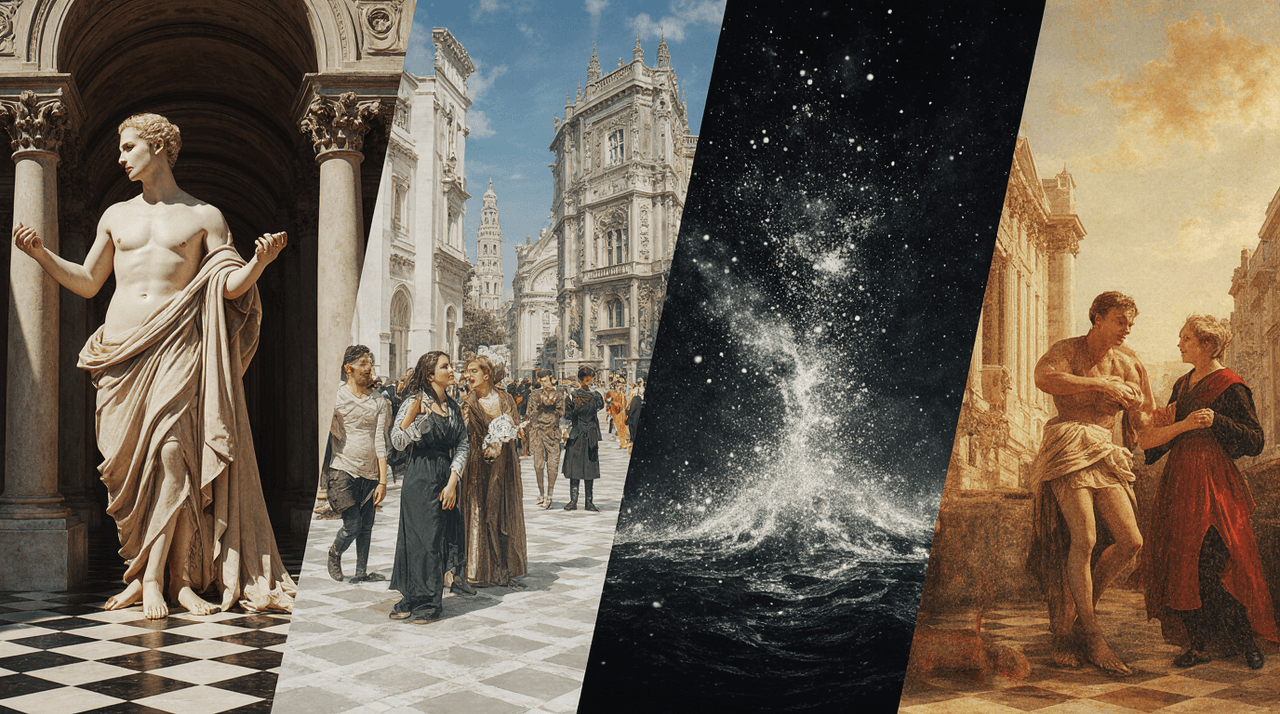
Art Movements (Generated by Artificial Intelligence.)
Influencing Factors | Social, Cultural, Political, Philosophical and Technological Developments | ||||||||
|---|---|---|---|---|---|---|---|---|---|
Development | Movements typically emerge as a reaction to those preceding them or by developing existing artistic traditions | ||||||||
Scope | Painting Can influence many art forms such as music Literature Architecture Sculpture | ||||||||
Important Turning Points | Renaissance (humanism), 19th century (beginning of modernism), 20th century (abstract and avant-garde movements) | ||||||||
An art movement is defined as a group of artists who come together around a shared artistic understanding, aesthetic values, techniques, and intellectual foundations within a specific historical period. These movements provide the foundation for the development of painting, sculpture, architecture, literature, music, and other art forms along a particular direction. Art movements reflect the social structure, cultural conditions, political orientations, and philosophical ideas of their time; therefore, they are evaluated both as products of their own era and as influences on subsequent periods.
The movements that emerged in different periods of art history generally arose as reactions against earlier approaches or with the aim of reinterpreting, transforming, and expanding existing artistic traditions. For example, the Renaissance emphasized a human-centered aesthetic inspired by ancient Greek and Roman culture, while the Baroque period foregrounded dramatic narration and powerful emotional impact. Subsequent movements such as Neoclassicism, Romanticism, Realism, Impressionism, and Modernism shifted both the formal characteristics of art and the conceptual worlds they expressed in new directions.
Throughout art history, various movements have emerged in different periods. These movements typically developed as reactions against preceding styles or sought to transform and reinterpret existing artistic traditions. For instance, the Renaissance movement adopted a human-centered approach influenced by ancient Greek and Roman culture; Baroque art highlighted emotional intensity through dramatic narration and ornate details. Neoclassicism emphasized rationality and order, while Romanticism turned toward individual emotions and the depiction of nature. Realism, emerging in the 19th century, portrayed everyday life with an objective gaze; Impressionism emphasized the role of light and fleeting impressions in painting. Modernism and the subsequent Postmodernism in the 20th century expanded the formal and conceptual boundaries of art, opening the way for diverse interpretations.
Art movements reflect the social, political, and philosophical structure of their time. For example, artistic tendencies that emerged after the French Revolution addressed concepts such as freedom, equality, and individual expression; the effects of the Industrial Revolution influenced both the subject matter and techniques of Realist and Impressionist artists. From this perspective, art movements make visible not only the formal characteristics of artistic production but also the social transformations, systems of thought, and cultural atmosphere of their era.
Romanesque art, dominant in the 11th and 12th centuries, was particularly evident in architecture. Thick stone walls, small windows, semicircular arches, and barrel vaults are characteristic features of this period. Romanesque churches featured thick stone walls and small windows, while interior spaces created a mystical atmosphere through limited light. In painting and sculpture, religious iconography was used intensively, but figures were typically rendered in a schematic, disproportionate, and non-naturalistic manner. This style aimed to convey Christian faith through an instructional and symbolic narrative.
Gothic art emerged in France in the mid-12th century and rapidly spread across Europe. Its development was influenced by social and political transformations such as cultural exchanges triggered by the Crusades, the decline of the Byzantine Empire, urbanization, and the founding of universities. The most striking feature of Gothic architecture is its emphasis on verticality. Pointed arches, ribbed vaults, flying buttresses, and large stained-glass windows gave cathedrals the impression of rising toward the heavens. Notre Dame Cathedral in Paris and Chartres Cathedral are among the most important examples of this period.
In painting and sculpture, religious subjects continued to be depicted, but figures were rendered in a more naturalistic, human-like, and emotionally expressive style. Biblical stories were narrated visually through Gothic stained-glass windows. The artistic aim of this period was to integrate worship with an aesthetic experience and strengthen the spiritual feelings of the faithful. Giotto di Bondone prepared the ground for the Renaissance through his dramatic narration and use of volume and spatial depth in figures.
The Renaissance emerged in Italy in the 14th century and maintained its influence throughout Europe until the 17th century. This period, meaning “rebirth,” signifies the rediscovery of ancient Greek and Roman art, philosophy, and scientific thought. During this process, humanism, which emphasized the importance of the individual and the power of human reason, became the central philosophical approach in art.
Geographical discoveries, the revival of trade, the invention of the printing press, and the economic development of city-states created the foundation for the Renaissance. The patronage of wealthy families such as the Medici in Florence played a decisive role in strengthening this movement. During this time, art moved beyond its religious function and began to be used as a medium of expression focused on the individual, nature, and human reason.
Renaissance artists adopted a realistic style by studying nature and human anatomy. The use of perspective created a sense of spatial depth. Composition emphasized simplicity, proportion, balance, and harmony. Religious and mythological subjects continued to be depicted, but these themes were approached through a human-centered perspective. Among the techniques developed during the Renaissance, sfumato (the soft blending of colors) and chiaroscuro (the strong use of light and shadow contrast) are particularly significant. These techniques influenced artistic approaches in subsequent periods.
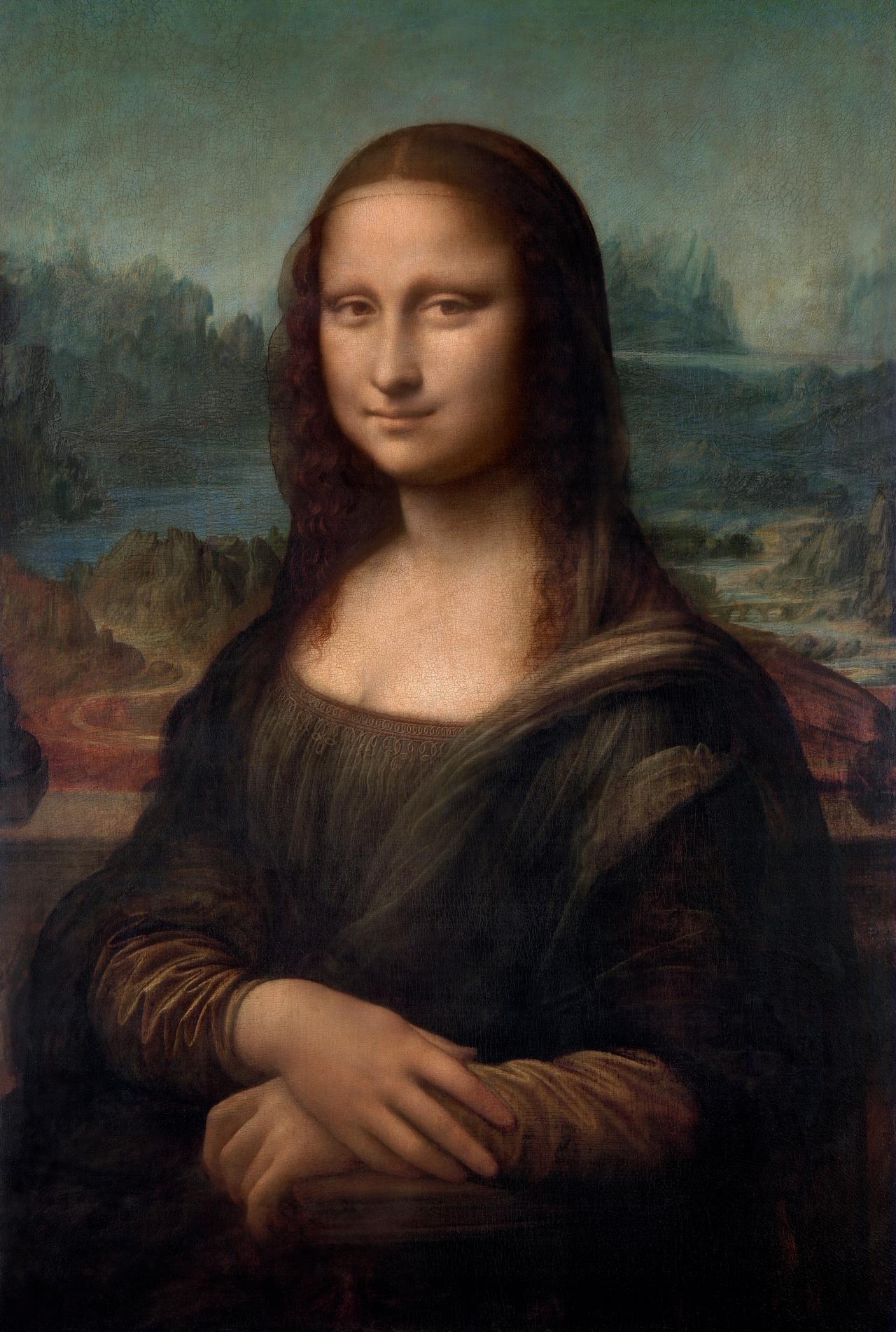
Mona Lisa (Rawpixel)
These artists played a significant role in the development of the Renaissance by combining technical mastery with philosophical content in their works.
Mannerism, spanning from the 1520s to the 1580s, is seen as a transitional style between High Renaissance and Baroque. Derived from the Italian word “maniera” meaning style or manner, this movement represented a deliberate departure from the Renaissance ideals of proportion, balance, and harmony. Artists exaggerated and artificialized the concept of ideal beauty, creating consciously complex compositions.
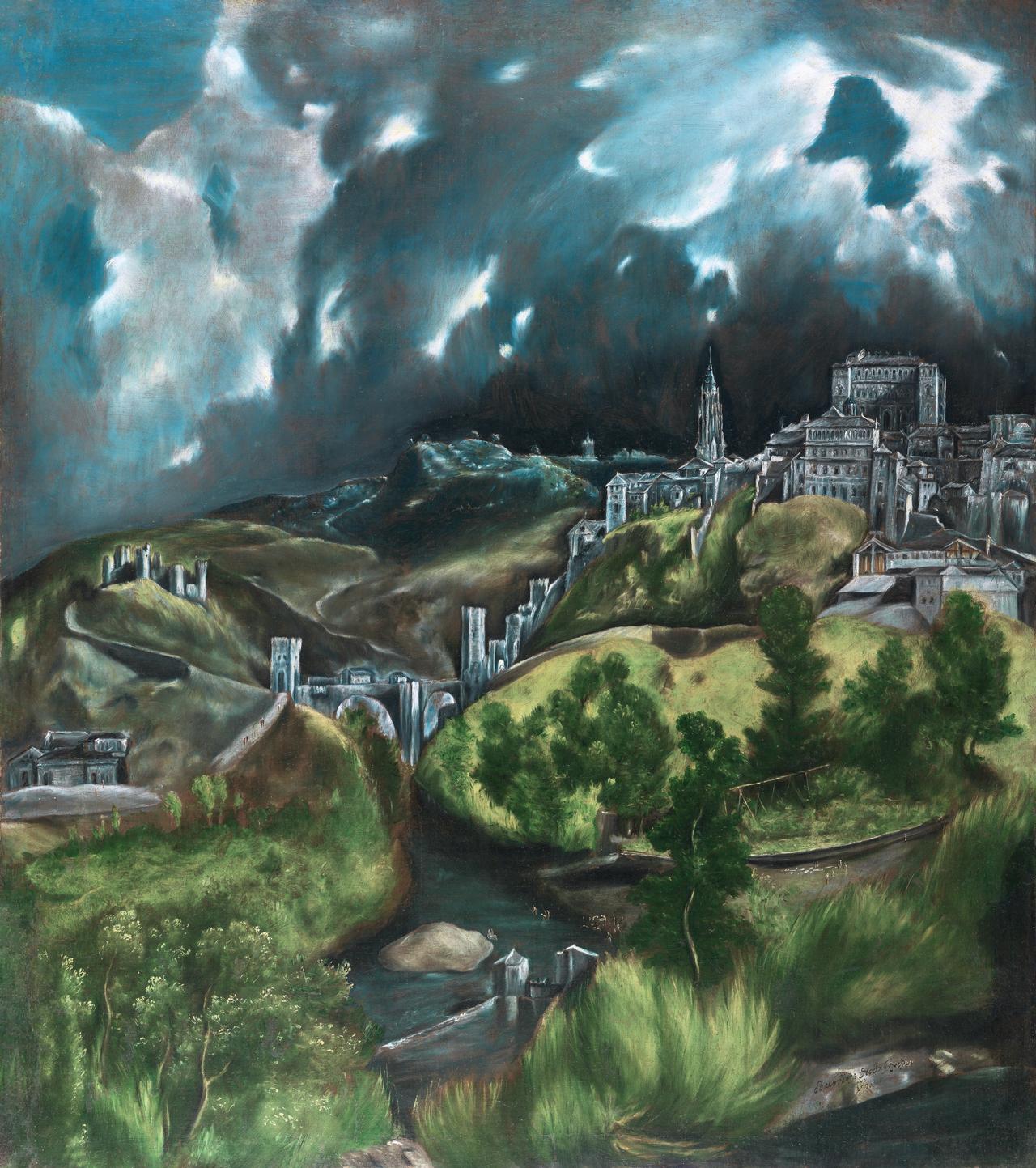
View of Toledo (Rawpixel)
Figures were elongated, contorted, and depicted with elegant movements; colors were mostly rendered in pale and unconventional tones. Asymmetrical arrangements aimed to evoke unease and dramatic tension in the viewer. Unlike the calmness of the Renaissance, this approach emphasized a more emotional and individualized expression. The mystical light and elongated figures in El Greco’s paintings and Tintoretto’s dynamic compositions are among the strongest examples of Mannerism.
Baroque art was influential in Europe from the early 17th century to the mid-18th century. The term “barocco,” meaning “irregular pearl” in Portuguese, alludes to the movement’s ornate, grandiose, and dramatic character. Baroque developed as a reaction against the structured formality of the Renaissance and the artificiality of Mannerism, aiming to inspire awe, emotional intensity, and religious fervor in the viewer.
Key characteristics of Baroque art include intense use of contrast, dramatic light and shadow effects (chiaroscuro), dynamic figures, theatrical narration, and elaborate details. The Catholic Church, during the Counter-Reformation, utilized the powerful impact of Baroque art to strengthen religious emotions. Caravaggio’s dramatic use of light, Rubens’s exuberant and dynamic figures, Rembrandt’s psychological depth in portraiture, and Bernini’s theatrical sculptures are among the defining examples of this period.
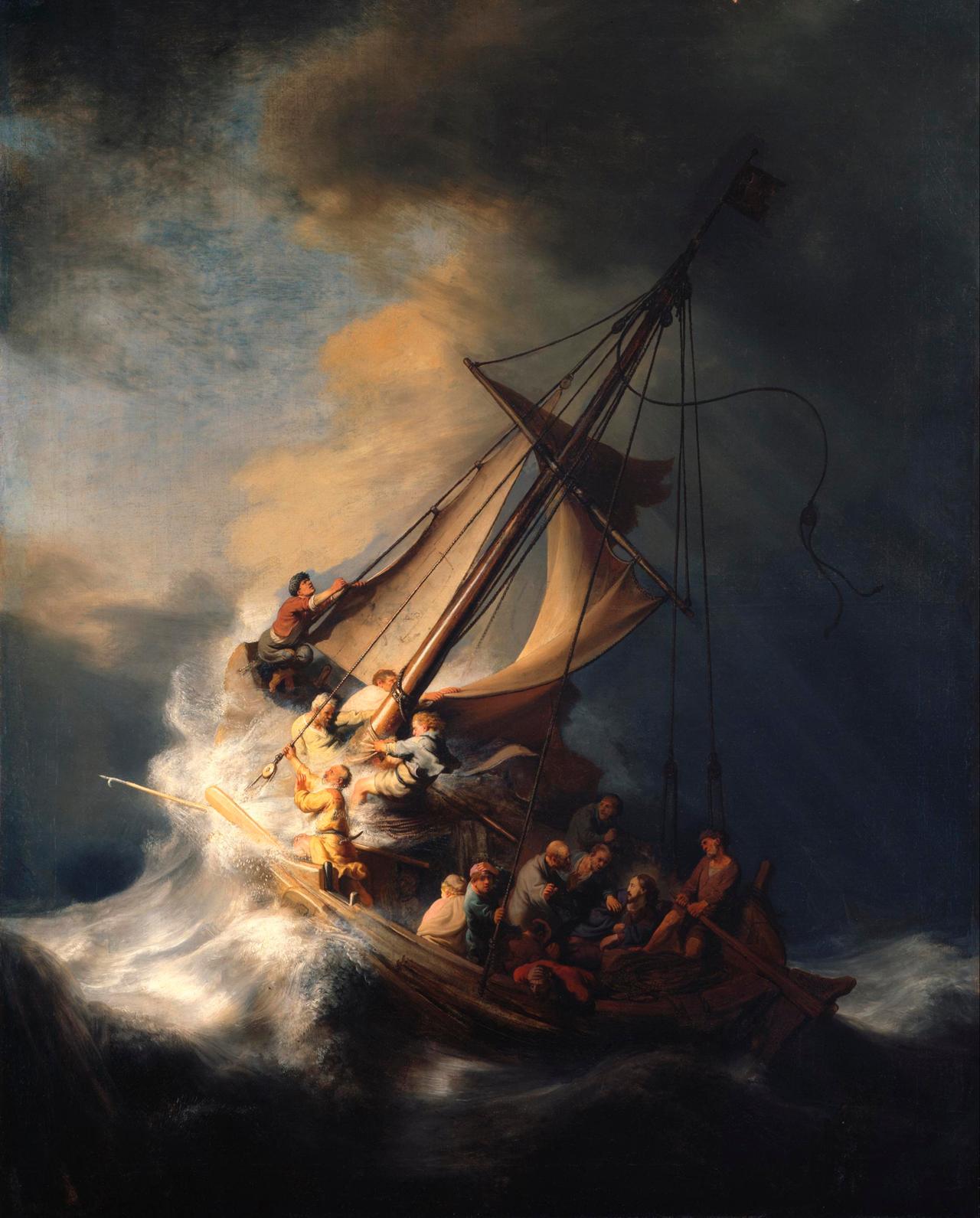
The Storm on the Sea of Galilee (Rawpixel)
The Baroque style also had a significant impact on architecture, with structures such as the expansive piazza of St. Peter’s Basilica in Rome and the Palace of Versailles near Paris exemplifying the grandeur of the period. Baroque left a lasting influence not only in the visual arts but also in music through composers such as Johann Sebastian Bach and George Frideric Handel.
Emerging in France in the early 18th century, Rococo developed as a more delicate, light, and decorative style in reaction to the heavy and dramatic expression of Baroque. Named after “rocaille” (shell-like) motifs, Rococo reflected aristocratic tastes through curved lines, pastel colors, fine details, and ornamental sensibility.
In Rococo painting, themes of love, leisure, depictions of nature, and mythological scenes were prominent. The purpose of art became primarily to appeal to pleasure and aesthetic enjoyment. François Boucher and Jean-Honoré Fragonard are among the most important representatives of Rococo. This movement was influential not only in painting and sculpture but also in interior decoration, furniture, and even fashion. Rococo particularly reflected court culture and the splendor of aristocratic life.
Emerging in the mid-18th century as a reaction against the excessive ornamentation of Baroque and Rococo, Neoclassicism symbolized a return to the art of ancient Greece and Rome. The rational thinking of the Enlightenment, archaeological discoveries (excavations of Pompeii and Herculaneum), and the classical ideal of order formed the foundation of this movement.
Neoclassical art is characterized by principles of symmetry, simplicity, order, and disciplined composition. Paintings predominantly addressed themes of heroism, morality, patriotism, and virtue. Jacques-Louis David is widely regarded as the leading representative of Neoclassicism; his work “The Oath of the Horatii” is among the key artworks reflecting the ideals of the period. In architecture, columned and domed structures inspired by classical temples were constructed.
Romanticism, influential from the late 18th century to the mid-19th century, emerged as a reaction against the rigid rules of Neoclassicism; individual emotion, imagination, and free expression came to the forefront. The social changes brought about by the French Revolution and the Industrial Revolution significantly influenced the development of this movement.
In Romanticism, artists depicted nature not merely as an aesthetic element but as a powerful force, sometimes even as a threatening presence in relation to humanity. Exotic themes, historical events, individual emotions, solitude, love, fear, and awe before nature were frequently explored.
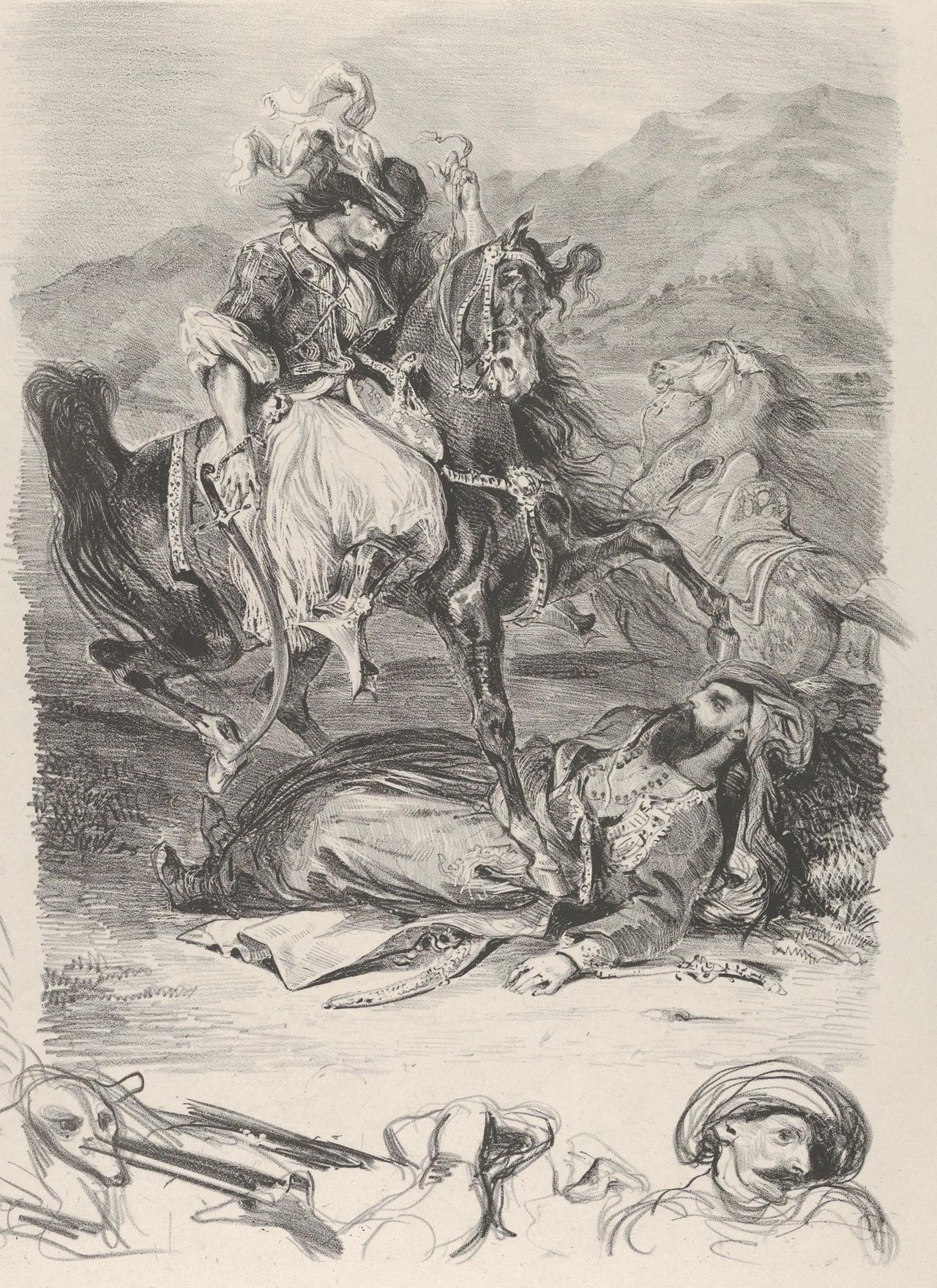
The Battle of the Giaour and Hassan ((Met Museum)
Eugène Delacroix’s paintings, which emphasized color and movement, Caspar David Friedrich’s melancholic landscape scenes, and William Turner’s dramatic light effects are among the key examples of Romanticism. This movement underscored that art could be a free medium for expressing individual emotions.
Emerging in France in the mid-19th century, particularly after the Revolutions of 1848, Realism arose as a reaction against the emotionally charged and imagination-based narratives of Romanticism. Realist artists aimed to depict social and everyday life without idealization, as it was. In this movement, art shifted from expressing individual emotions to conveying social realities and the living conditions of ordinary people.
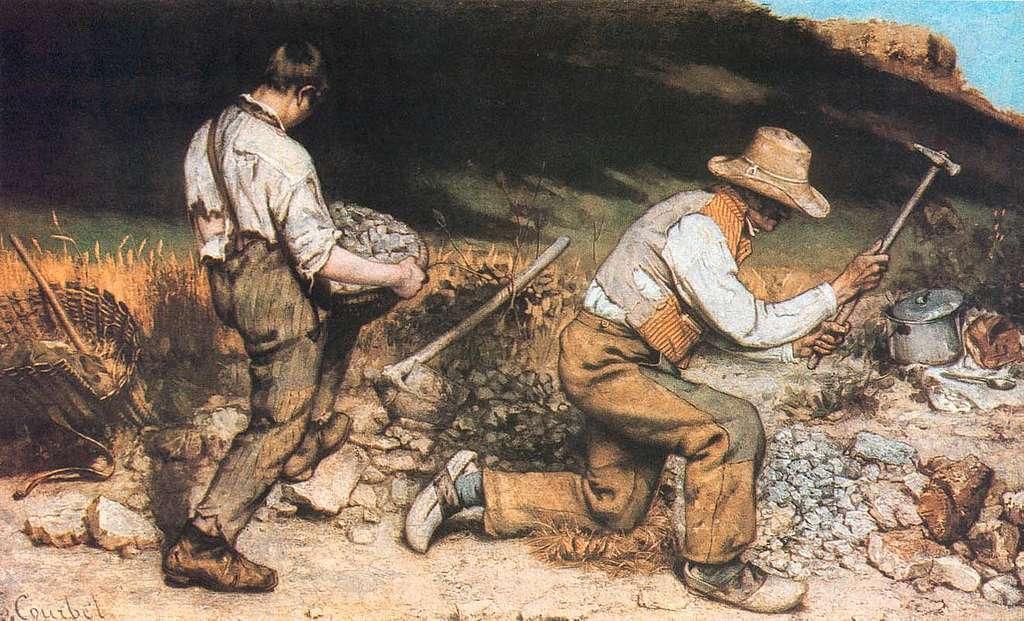
The Stone Breakers (Picryl)
Key features of Realism include direct observation-based depiction, representation of the working class and peasant life, inclusion of mundane scenes from daily life, and a rejection of romantic idealization. Gustave Courbet’s painting “The Stone Breakers,” which portrays the arduous labor of workers in a non-dramatic style, is regarded as a manifesto of Realism. Jean-François Millet’s works depicting peasant life are also important examples of this movement.
Impressionism emerged in France in the last quarter of the 19th century, taking its name from Claude Monet’s 1874 painting “Impression, Sunrise.” While continuing the Realist commitment to objective representation, Impressionism aimed to capture the fleeting effects of light and atmosphere in painting. Impressionist artists worked directly in nature, employing rapid brushstrokes, vibrant colors, and optical effects to convey momentary impressions.
Characteristic features of Impressionism include the abandonment of sharp contours, the use of color instead of black in shadows, the depiction of changing light conditions in nature, and the portrayal of modern urban life. Monet, Pierre-Auguste Renoir, Edgar Degas, and Camille Pissarro are among the leading artists of this movement. Impressionism is widely regarded as the beginning of modern painting.
Emerging from the 1880s as a reaction against Impressionism’s focus on light and fleeting impressions, Post-Impressionism placed greater emphasis on the artist’s individual expression, emotions, and subjective interpretation. While drawing on Impressionist techniques, this movement aimed to infuse painting with greater symbolic, emotional, and structural depth.
Paul Cézanne pioneered modern abstract tendencies by seeking to reduce natural forms to geometric shapes. Vincent van Gogh powerfully conveyed individual emotions through dynamic brushwork and intense color use. Paul Gauguin attracted attention with exotic themes and symbolic narratives, while Georges Seurat attempted to create scientific order and optical effects in painting through pointillism.
Post-Impressionism, by foregrounding the artist’s subjective modes of expression, laid the groundwork for early 20th-century movements such as Fauvism, Cubism, and Expressionism.
Developed in the early 20th century, particularly from 1907 onward, by Pablo Picasso and Georges Braque, Cubism is regarded as one of the most influential movements in modern art. Cubism reduces objects and figures in nature to geometric forms and aims to represent three-dimensional perception on a two-dimensional surface by showing multiple viewpoints simultaneously.
Cubism underwent a two-phase development: Analytic Cubism, characterized by the fragmentation of objects and their transparent superimposition from multiple angles; and Synthetic Cubism, defined by the use of collage techniques, colored surfaces, and more decorative elements. Cubism was influential not only in painting but also in sculpture, architecture, and design, playing a decisive role in modern art’s turn toward abstraction.
Futurism emerged in Italy in 1909 with the publication of Filippo Tommaso Marinetti’s Futurist Manifesto, elevating the dynamism, speed, technology, and industrial society of the modern age. Futurists rejected past artistic traditions and placed machines, urban life, movement, and energy at the center of art.
In painting, continuous motion was depicted through brushstrokes, and the sense of movement was conveyed by the repetition of figures in sequence. Umberto Boccioni, Giacomo Balla, and Gino Severini are leading representatives of this movement. In sculpture, Boccioni’s “Unique Forms of Continuity in Space” is regarded as a significant work symbolizing speed and dynamism. Futurism was not limited to art; it also influenced architecture, typography, and literature.
Emerging in Germany in the early 20th century, Expressionism is a movement in which the artist reflects not the external world but their own inner emotions and psychological state. Rather than depicting reality objectively, it foregrounds the artist’s internal response and personal experience. Distorted forms, exaggerated lines, and intense colors are defining features of this movement.
Expressionism developed primarily through the Die Brücke (The Bridge) group founded in Dresden in 1905 and the Der Blaue Reiter (The Blue Rider) group established in Munich in 1911. Ernst Ludwig Kirchner, Emil Nolde, Wassily Kandinsky, and Franz Marc are among the leading representatives of this movement. Kandinsky’s works moving toward abstraction are considered a major development in the history of modern art.
Expressionism was influential not only in painting but also in theater, literature, cinema, and architecture. German Expressionist cinema of the 1920s, such as The Cabinet of Dr. Caligari, illustrates the movement’s impact beyond the visual arts.
Emerging in 1916 around the Cabaret Voltaire in Zurich during the destructive impact of World War I, Dadaism was a protest movement against the social and cultural values of the time. Dadaists rejected rationality, order, and traditional artistic concepts, favoring absurd, random, and provocative expressions instead.
Collage, ready-made objects, photomontage, and performance art were among the methods frequently used by Dadaists. Marcel Duchamp’s work “Fountain,” a urinal presented as art, fundamentally questioned the definition of modern art. Tristan Tzara, Hugo Ball, and Hans Arp are also important figures of the movement. Although Dadaism was short-lived, it inspired the conceptual orientations of contemporary art.
Formally established in 1924 with André Breton’s publication of the Surrealist Manifesto, Surrealism advocated the expression of the unconscious, dreams, and irrational thought in art. Influenced by Freud’s psychoanalytic theories, this movement aimed to present irrational elements within an aesthetic framework.
Surrealist artworks feature illogical object combinations, distorted spaces, dreamlike scenes, and symbolic imagery. Salvador Dalí’s “The Persistence of Memory” with its melting clocks, René Magritte’s visual puzzles, and Max Ernst’s collage works are among the most famous examples of the movement. Surrealism was influential not only in painting and sculpture but also in literature, photography, cinema, and theater. Luis Buñuel’s film Un Chien Andalou, made in collaboration with Dalí, is one of the movement’s cinematic manifestations.
Emerging in the early 20th century, Abstract Art developed a language of expression through lines, colors, forms, and surface relationships rather than directly depicting nature, objects, or figures. This approach argues that art can exist according to its own internal rules rather than imitating the external world.
Abstract art can be examined under two main tendencies: Geometric Abstraction, based on order, symmetry, and geometric forms, exemplified by Kazimir Malevich’s Suprematism and Piet Mondrian’s De Stijl movement; and Lyrical Abstraction, grounded in freer brushwork and emotional color use, as seen in Wassily Kandinsky’s improvisational style. Abstract Art laid the groundwork for later movements such as Abstract Expressionism, demonstrating that art could establish a purely aesthetic language independent of representation.
After World War II and especially from the 1960s onward, art became increasingly diverse under the influence of accelerating globalization, the development of new technologies, and social transformations. “Contemporary art” generally refers to present-day art and is not confined to any specific style or discipline. Interactions between different cultures, individual artistic expressions, new material usage, and interdisciplinary approaches are defining features of this era. Contemporary art encompasses not only traditional fields such as painting and sculpture but also new forms such as installation, performance, video art, and digital media.
Emerging in late 1950s Britain and gaining strength in the United States during the 1960s, Pop Art brought the visual imagery of popular culture—advertisements, comic books, and mass media—into the center of art. While critically examining consumer society and everyday life, this movement also blurred the boundaries between art and ordinary objects. Andy Warhol’s portraits of Marilyn Monroe and Campbell’s soup cans, and Roy Lichtenstein’s paintings inspired by comic book aesthetics, are among the most well-known examples of this movement. Pop Art demonstrated that art could move beyond being an elite domain and become a mass cultural phenomenon.
Emerging in the United States in the 1960s, Minimalism sought to reduce the art object to its most essential elements, emphasizing extreme simplicity and objectivity. Geometric forms, repetitive structures, and industrial materials were commonly used. Minimalist artists pushed personal expression into the background, drawing attention to the relationship between the artwork and the viewer’s spatial experience. Artists such as Donald Judd, Dan Flavin, and Carl Andre became key representatives of Minimalism through experimental works focused on light, form, and space.
Emerging in the 1960s, Conceptual Art prioritizes the idea or concept behind the artwork over its physical form. This movement subordinates the aesthetic and formal qualities of art to foreground the intellectual process. Joseph Kosuth’s work “One and Three Chairs,” which questions the relationship between an object, its photograph, and its dictionary definition, is a typical example. Sol LeWitt outlined the theoretical framework of Conceptual Art, asserting that the idea of the artwork is more valuable than the artwork itself. This movement questioned traditional definitions of art and became one of the foundational pillars of contemporary art.
Emerging from the 1960s onward, Performance Art is a form of expression in which the artist’s body and actions become integral components of the artwork. Moving beyond traditional notions of painting and sculpture, this movement typically occurs within a specific time and space and is non-repeatable. The viewer is no longer a passive observer but often becomes an active participant.
Although Performance Art shares similarities with theater and dance, it is not bound by text or structured dramaturgy. Artists use their bodies, space, and objects to communicate social, political, or personal messages. Marina Abramović is one of the most renowned figures in this field, known for works that push the boundaries of the body. Joseph Beuys presented powerful experiences to viewers through symbolic objects and rituals in his performances.
Becoming widespread in the second half of the 20th century, Installation Art is based on the idea that the artwork is not a single object but an arrangement that transforms the entire space. The work integrates with its environment, and the viewer becomes part of the artistic experience by entering the space. Installations may combine sculpture, sound, light, video, natural materials, and found objects.
Installation art enables viewers not only to observe the artwork but to interact with it. Christo and Jeanne-Claude’s large-scale spatial interventions, Yayoi Kusama’s infinity mirror rooms, and Olafur Eliasson’s works using light and natural elements are important examples in this field.
Emerging from the late 20th century with the advancement of computer technology, Digital Art is one of the most innovative fields in contemporary art. This art form utilizes digital tools, software, virtual reality (VR), augmented reality (AR), artificial intelligence, and blockchain technologies as new media.
Digital art not only reinterprets traditional art forms but also offers interactive experiences to viewers. Net art, video art, NFT-based works, and digital sculptures illustrate the diversity within this field. Refik Anadol’s works combining artificial intelligence and data visualization are globally recognized examples of digital art.
Ching, Francis D. K., Mark M. Jarzombek, and Vikramaditya Prakash. *A Global History of Architecture*. Third edition. Hoboken, N.J.: Wiley, 2017. Accessed September 15, 2025.https://www.wiley.com/en-us/A+Global+History+of+Architecture%2C+3rd+Edition-p-9781118981337
Gai, Hailong, Yajuan Lu, and Yajun Guo. “The Evolution and Development of Pop Art in the Visual Field of Digital Art Design.” *Journal of Education, Humanities and Social Sciences* 4 (November 17, 2022): 121–24. Accessed September 15, 2025.https://doi.org/10.54097/ehss.v4i.2732.
Hollingsworth, Mary. *Art in World History*. Introduction by Giulio Carlo Argan. 1st ed. London: Routledge, 2016. Accessed September 15, 2025.https://doi.org/10.4324/9781315706320
Hu, Manran. “A Study of the Development History and Stylistic Features of Chinese Ink Painting.” *Pacific International Journal* 6 (2023): 71–76. Accessed September 15, 2025.https://doi.org/10.55014/pij.v6i1.310.
Rawpixel. "Calming the Storm JPG." Accessed August 18, 2025.https://www.rawpixel.com/image/7667067/calming-the-storm.
Rawpixel. "Illustration Image Art People JPG." Accessed August 18, 2025.https://www.rawpixel.com/image/3847411/illustration-image-art-people.
Rawpixel. “Image Art Vintage Public Domain JPG.” Accessed August 18, 2025.https://www.rawpixel.com/image/9758844/image-art-vintage-public-domain.
Roy, Ankita, and Delwyn Remedios. “Integrating Inktober and Simulated Art Therapy for Online Teaching and Learning ‘Basics of Illustration’.” *Grafist*, 2023. Accessed September 15, 2025.https://www.researchgate.net/publication/376681765_Integrating_Inktober_and_Simulated_Art_Therapy_for_Online_Teaching_and_Learning_'Basics_of_Illustration'.
Taschin, Andrea, Paolo Bartolini, Jordanka Tasseva, Jana Striova, Raffaella Fontana, Cristiano Riminesi, and Renato Torre. “Drawing Materials Studied by THz Spectroscopy.” arXiv, 2017. Accessed September 15, 2025.https://arxiv.org/abs/1703.01770
The Art Story. "Mannerism." Accessed August 18, 2025.https://www.theartstory.org/movement/mannerism/.
The Art Story. "Neoclassicism." The Art Story. Accessed August 18, 2025.https://www.theartstory.org/movement/neoclassicism/.
The Metropolitan Museum of Art. "Drawing: Ink." The Metropolitan Museum of Art. Accessed August 18, 2025.https://www.metmuseum.org/about-the-met/collection-areas/drawings-and-prints/materials-and-techniques/drawing/ink.
The Metropolitan Museum of Art. “Interior of St. Peter’s, Rome, after Giovanni Paolo Panini.” The Metropolitan Museum of Art. Accessed September 23, 2025.https://www.metmuseum.org/art/collection/search/337932.
Zhu, Tianhua. “Defining Computer Art: Methods, Themes, and the Aesthetic Problematic.” arXiv, 2020. Accessed September 15, 2025.https://arxiv.org/abs/2010.04929.
“Baroque Art and Architecture.” The Art Story. Accessed August 18, 2025.https://www.theartstory.org/movement/baroque-art-and-architecture/.
“Courbet Kamieniarze.” Picryl. Accessed August 18, 2025.https://picryl.com/media/courbet-kamieniarze-01f141.
“Smarthistory: The Basics of Art History.” Smarthistory. Accessed August 18, 2025.https://smarthistory.org/curated-guide/the-basics-of-art-history/.
“Solomon R. Guggenheim Museum Education.” National Gallery of Victoria. Accessed August 18, 2025.https://www.ngv.vic.gov.au/guggenheim/education/04.html.

Art Movements (Generated by Artificial Intelligence.)
Influencing Factors | Social, Cultural, Political, Philosophical and Technological Developments | ||||||||
|---|---|---|---|---|---|---|---|---|---|
Development | Movements typically emerge as a reaction to those preceding them or by developing existing artistic traditions | ||||||||
Scope | Painting Can influence many art forms such as music Literature Architecture Sculpture | ||||||||
Important Turning Points | Renaissance (humanism), 19th century (beginning of modernism), 20th century (abstract and avant-garde movements) | ||||||||
Historical Development
Social and Cultural Context
Romanesque Art
Gothic Art
Renaissance
Historical and Cultural Context
Artistic Characteristics
Key Artists and Works
Mannerism
Baroque
Rococo
Neoclassicism
Romanticism
Realism
Impressionism
Post-Impressionism
Cubism
Futurism
Expressionism
Dadaism
Surrealism
Abstract Art
Pop Art
Minimalism
Conceptual Art
Performance Art
Installation Art
Digital Art