


This article was automatically translated from the original Turkish version.
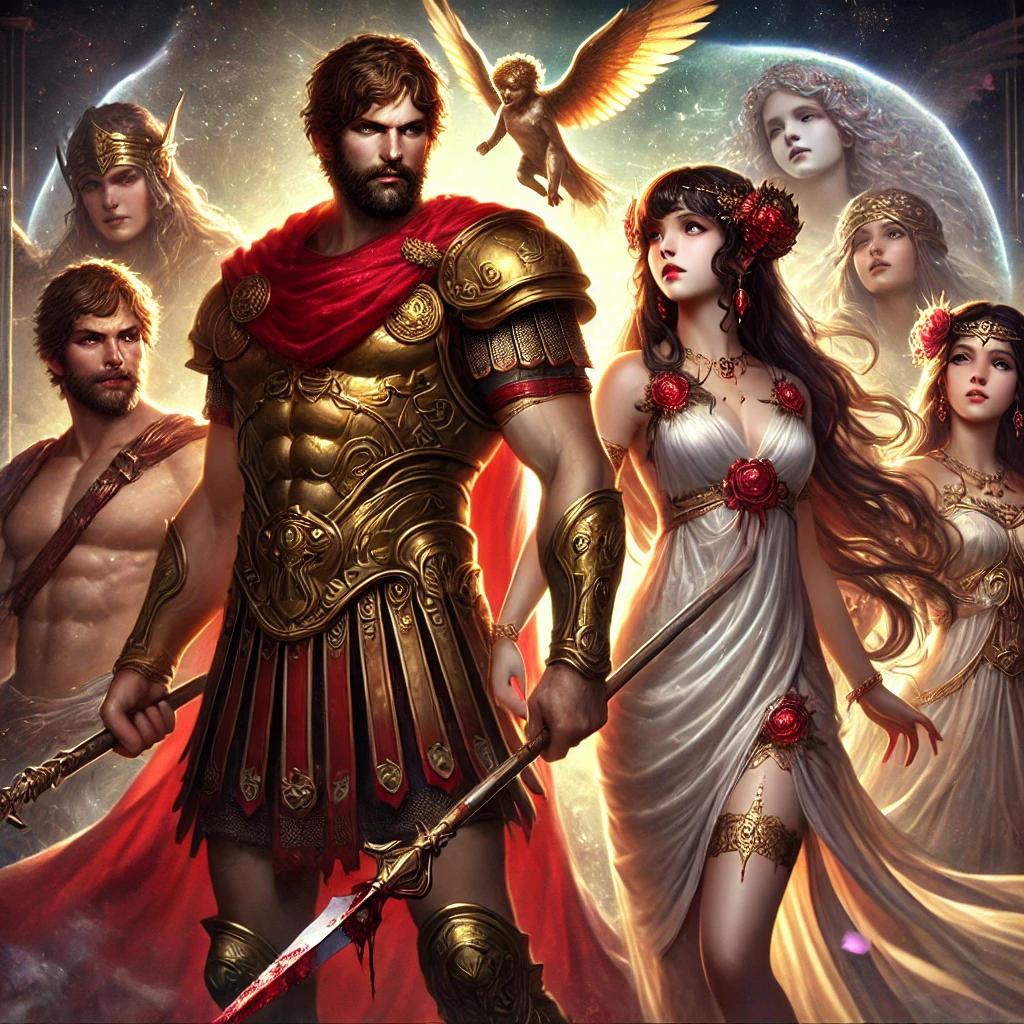
Ares, Aphrodite and Their Children
Name | Ares | ||||||||
|---|---|---|---|---|---|---|---|---|---|
Mythology | Greek Mythology | ||||||||
Equivalent in Rome | Mars | ||||||||
Parents | Zeus and Hera | ||||||||
Siblings | Hebe, Ilithyia | ||||||||
Symbols and Weapons | Spear, shield, helmet | ||||||||
Concept Represented | War | ||||||||
Spouse/Lover | Aphrodite | ||||||||
Children | Deimos (god of dread) Phobos (god of fear) Harmonia (goddess of harmony and peace) Eros (god of love and passion) | ||||||||
Ares is the god of war and destruction in Greek mythology. Born as the son of Zeus and Hera, Ares embodies pure violence, chaos, and devastation, in contrast to Athena, who represents the strategic and calculated aspects of war. Although known for his physical strength and martial prowess, he is disliked by the other Olympian gods due to his thoughtlessness and aggression.
Ares represents the bloodiest and cruelest face of war in Greek mythology. Although a brave and fearless warrior, he often fails in battle because of his reckless movements. Homer’s Iliad contains harsh criticisms of Ares, referring to him as “hateful Ares,” “murderer of men,” and “insatiable in war.”
The Greeks did not regard Ares as their true god in the full sense, associating him instead with the Thracians, a people known for their warrior and barbaric nature. In Roman mythology, however, Ares, known as Mars, became a more serious and respected god of war.
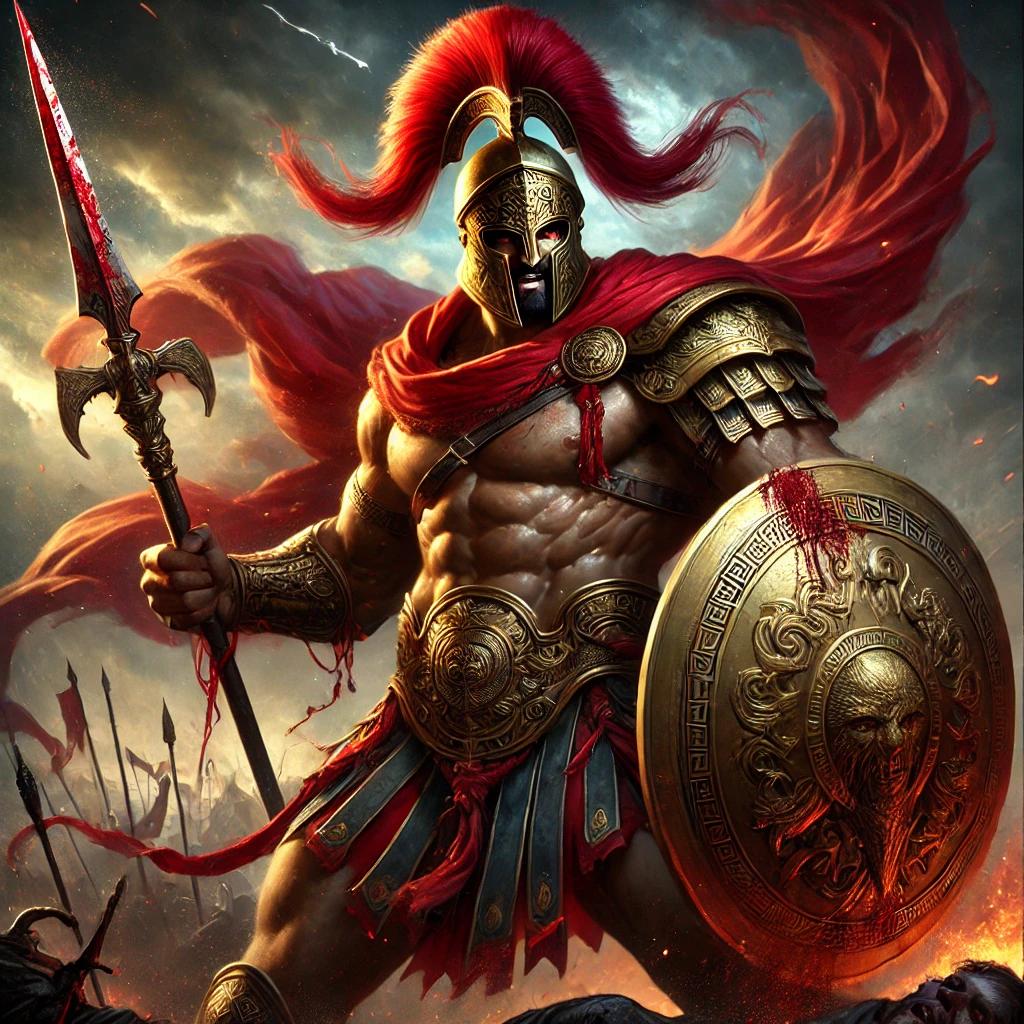
Visual representation of the God of War, designed by artificial intelligence.
Ares is the son of Zeus and Hera, and Hebe and Ilithyia are his siblings. He had numerous relationships with goddesses and mortals, resulting in many children. His most famous love story is his forbidden romance with Aphrodite. Aphrodite’s husband Hephaestus discovered their affair and trapped them in a net, exposing them to all the gods in a humiliating scene. Among the children of Ares and Aphrodite, the most well known are:
Eros: The god of love and desire.
Deimos (Fear) and Phobos (Terror): Gods who accompany their father on battlefields, spreading fear and panic.
Harmonia: The goddess of harmony and peace.
Ares is also regarded as the father of the brave and warlike Amazon women.
One of Ares’ most famous myths is his battle with Heracles. Ares’ son Cygnus gained notoriety by attacking travelers on their way to Delphi. Apollo sent Heracles to stop him. Upon Cygnus’ death, Ares, enraged, attacked Heracles. However, Athena protected Heracles and prevented Ares from suffering harm, driving the god of war away.
One myth illustrating Ares’ vulnerability describes how he was captured and locked inside a bronze jar by the twin giants Otus and Ephialtes. Trapped for a year, Ares was only freed with the help of Hermes. This event damaged his status among the Olympians.
Ares supported the Trojans during the Trojan War. However, he was deceived by Athena and wounded by the Achaean warrior Diomedes, forcing him to withdraw from battle. Homer compared Ares’ cry to the screams of ten thousand men. Upon returning to Olympus, Zeus ignored his complaints but instructed the healer Paieon to heal his wounds.
In ancient Greek art, Ares is typically depicted as a fully armored warrior, holding a shield and spear, wearing a helmet. He is sometimes shown riding a war chariot drawn by fire-breathing horses.
Common scenes in art include his forbidden love affair with Aphrodite or his battle with Heracles. From the 6th century BCE onward, Ares appears frequently on Greek vases and statues.
In Roman mythology, Ares is known as Mars and is regarded as a more respected god within Roman culture. For the Romans, Mars was not only the god of war but also the god of order and protector of the empire. Thus, he held a far more important position in the Roman pantheon.
Ares is the god who embodies the most destructive and bloody aspects of war in Greek mythology. Although known for his physical power and courage, he often suffers defeat due to his lack of strategy and intelligence. Myths such as his relationship with Aphrodite, his role in the Trojan War, and his battle with Heracles are key narratives that shape his character.
As a figure symbolizing the destructive nature of war and the dangers of unchecked power, Ares, though one of the least favored among the Greek gods, remains an essential element of mythology, reminding us that war is an inevitable reality.
"Yunan Mitolojisinde Aşk ve İhanet: Afrodit ve Ares," Gedik Üniversitesi UZEM İGÜNŞEM, Accessed March 19, 2025.https://uzemigunsem.gedik.edu.tr/yunan-mitolojisinde-ask-ve-ihanet-afrodit-ve-ares
Mark Cartwright, "Ares," World History Encyclopedia, Accessed March 19, 2025.https://www.worldhistory.org/trans/tr/1-11196/ares/
“Yunan Mitolojisinin En Bilinen Tanrıları ve Tanrıçaları,” Karsem - Karatay Üniversitesi, Accessed March 19, 2025.https://karsem.karatay.edu.tr/yunan-mitolojisinin-en-bilinen-tanrilari-ve-tanricalari

Ares, Aphrodite and Their Children
Name | Ares | ||||||||
|---|---|---|---|---|---|---|---|---|---|
Mythology | Greek Mythology | ||||||||
Equivalent in Rome | Mars | ||||||||
Parents | Zeus and Hera | ||||||||
Siblings | Hebe, Ilithyia | ||||||||
Symbols and Weapons | Spear, shield, helmet | ||||||||
Concept Represented | War | ||||||||
Spouse/Lover | Aphrodite | ||||||||
Children | Deimos (god of dread) Phobos (god of fear) Harmonia (goddess of harmony and peace) Eros (god of love and passion) | ||||||||
Family Ties
Mythological Stories
Battle with Heracles
Imprisonment by the Twin Giants
Role in the Trojan War
Place in Art and Culture