This article was automatically translated from the original Turkish version.
Japan has emerged as a country of particular significance in world history, especially in the modern era, noted for its economic, technological, and social development. However, this success story is not solely the result of peaceful progress. Throughout its historical development, Japan has also pursued policies grounded in power struggles and regional influence-seeking.
The emergence of Japan on the historical stage was profoundly shaped by Chinese culture. Many elements—including writing systems religious thought architecture and administrative concepts—were adopted from China and integrated into Japanese society. Yet over time this cultural exchange became intertwined with political and military competition.
In particular the Korean Peninsula has historically served as an arena for struggle over spheres of influence between Japan and China. Due to its geographic location and strategic importance Korea has at times been subjected to Japanese military campaigns. This pattern can be interpreted as evidence of Japan’s occasional pursuit of regional power projection throughout its history.
One of the pivotal moments when Japan drew international attention in the modern era was the Russo-Japanese War of 1905. Japan’s naval victory in this conflict became one of the first instances in history where a non-Western power defeated a major European state.
This victory was not merely a military achievement but also a clear demonstration of Japan’s determination to become an influential actor in the international system.
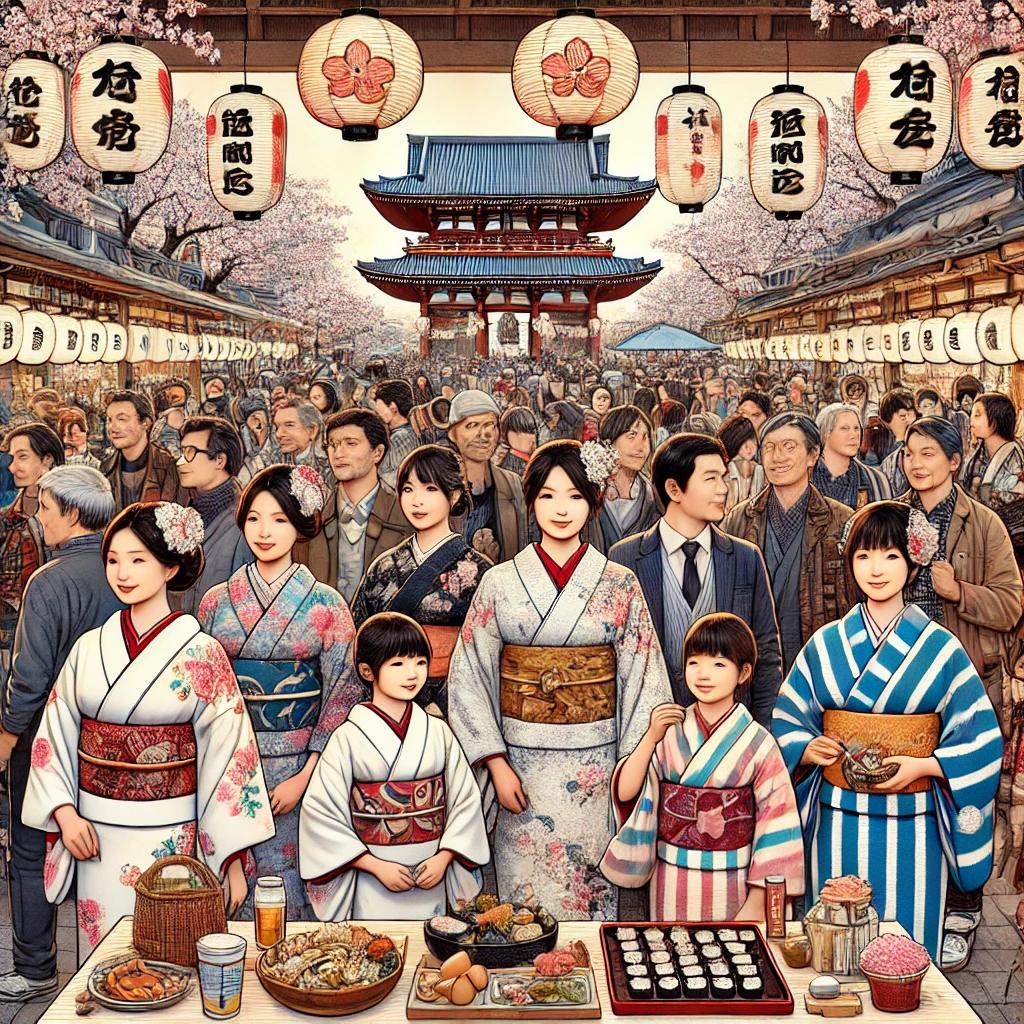
A depiction of the Japanese (generated by artificial intelligence)
During World War II Japan brought many regions and island states in East Asia under its control. Areas such as the Philippines Indonesia Malaysia Thailand and Hong Kong became part of Japan’s military sphere of operations during this period.
This phase clearly revealed the ambition of Japan’s leadership at the time to establish regional dominance. At the same time the harsh conditions of war imposed difficult consequences on many societies. This era represents one of the periods in Japanese history when the country pursued not only defensive but at times an active and expansionist policy.
After World War II Japan underwent a remarkable transformation. The modernization initiated by the Meiji Restoration deepened through postwar reconstruction and within a short time Japan became an advanced nation in the fields of technology economics and society.
Today Japan is recognized globally as a model in science technology education and culture. In international relations it generally maintains a peaceful and constructive stance.
Historically relations between Türkiye and Japan have followed a positive trajectory. One of the main reasons for this is that both countries occupy regions that are geographically distant and strategically non-overlapping.
Both nations have at times adopted similar positions in international affairs and have been open to cultural exchanges and economic cooperation. Sustaining this positive dynamic is possible through mutual understanding and the preservation of shared interests.
Throughout history Japan has assumed different roles in different eras—sometimes distinguished by its cultural output sometimes by its military initiatives and at other times by its technological breakthroughs. This diversity demonstrates that Japan cannot be understood through a single lens but must be evaluated multidimensionally according to historical contexts. Friendships and relationships are of course important; yet historical realities also help us understand how states shift their strategic preferences over time.
Cultural Interaction and Political Competition: The China Korea Japan Triangle
The 1905 Russo-Japanese War: Japan’s Rising Power
World War II and Expansion in East Asia
Modern Japan: Development Discipline and International Image
Türkiye–Japan Relations: Distant Yet Balanced
Historical Periods and Power Balances