This article was automatically translated from the original Turkish version.
Throughout history, the origins of nations and the intersections of languages and cultures have always been fascinating. Sometimes unexpected similarities raise new questions in the human mind. One of these questions, perhaps the most surprising, is: Could the Swedes truly be of Turkic origin? At first hearing, this claim may seem like “an extreme theory.” Yet history and mythology sometimes leave surprising traces between geographies that appear far apart. Indeed, some researchers point out striking similarities between elements in Swedish mythology and sacred symbols found in ancient Turkic culture.
In Turkic mythology, the sky is sacred, representing the majesty, infinity, and order of the divine. Similarly, in Scandinavian mythology, the god of the sky, Odin, is associated with wisdom and sovereignty. The parallel between the Turkic gray wolf legend and the Swedish myth of the wolf Fenrir is also frequently noted. In both cultures, the wolf emerges as both a destructive and creative force—that is, as the very essence of the cycle of life. It is easy to dismiss such similarities as “coincidences,” but shared symbols may point to the existence of a mythological language common to humanity since its earliest periods.
Cultural parallels are not limited to myths alone. The runic alphabet used in Sweden and Norway exhibits formal similarities with the Orkhon-Yenisey writing system employed by the Turkic peoples of Central Asia. Both writing systems are composed of vertical lines, sharp angles, and geometric characters. Of course, this similarity does not imply “direct kinship”; however, it may reflect historical contacts, cultural interactions, or shared symbolic modes of thought with a common origin.
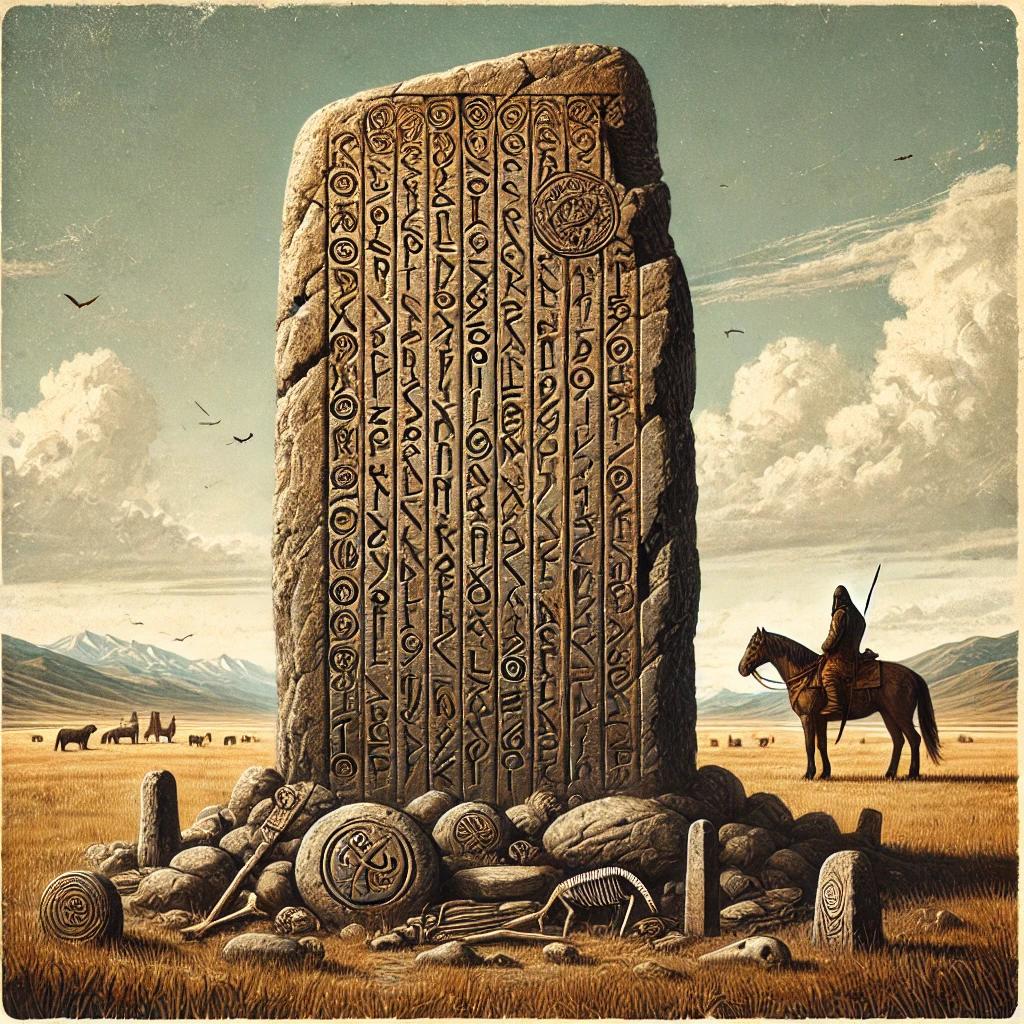
A square related to runic writing (generated by artificial intelligence)
Even more intriguing is the existence of documents indicating that, in the early 18th century, certain Swedish historians and intellectuals identified themselves as “descendants of the Turks.” This was an era in Europe marked by intense searches for historical identity. Some Swedish writers linked their national past to Japheth, one of Noah’s sons, and identified the Turks as descendants of one of Japheth’s grandchildren. In this way, they asserted that Swedes and Turks shared a common ancestral lineage.
In Islamic historiography, the three sons of Noah—Ham, Shem, and Japheth—are regarded as the second origin point of humanity. According to tradition, the peoples of the Middle East descended from Shem, the peoples of Africa from Ham, and the Turks and Europeans from Japheth. This narrative appears in both Islamic and Biblical historical frameworks. If this genealogical chain is accepted, the idea that European and Turkic societies share a common root is not merely a myth but also a component of ancient cultural memory.
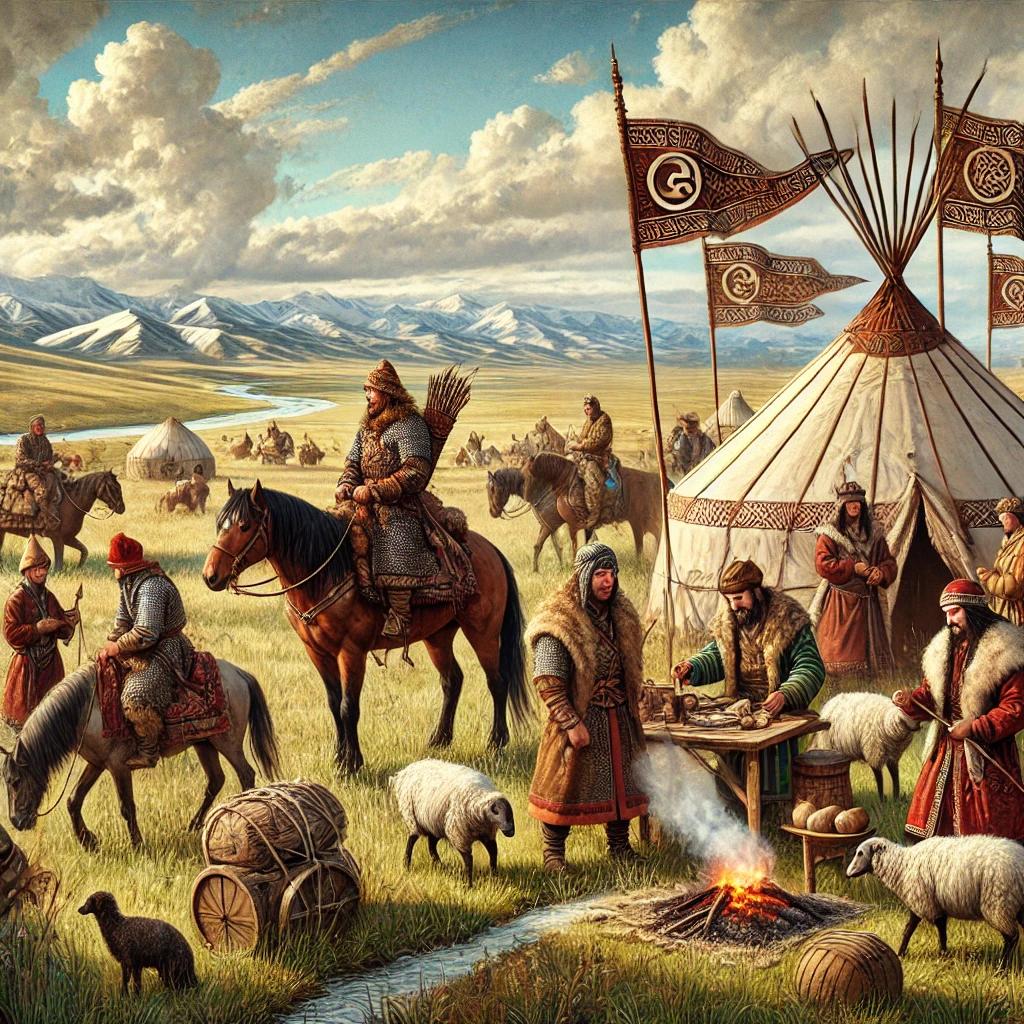
A square depicting ancient Turkic peoples (generated by artificial intelligence)
The history of humanity is filled with surprises. It is possible that communities today perceived as “very different” once began from the same root and the same story thousands of years ago. Perhaps this is why ancient sagas echoing through the Swedish tundra sound so familiar alongside the poetic melodies of the Central Asian steppes. From another perspective, such claims remind us less of their factual accuracy and more of how deeply interconnected human history truly is. Every new discovery deepens our understanding of our own past. Tracing our origins is not merely reading history—it is also answering the ancient question: “Who are we?”
The claim that Swedes may be of Turkic origin is not a proven historical fact but rather a domain of historical and cultural curiosity. Yet the similarities spanning from mythology to writing, from language to symbolism, lead us to reflect on the shared roots of the human family. Perhaps the most appropriate approach is not to ask “Who descended from whom?” but rather “Where do we meet?” The history of humanity resembles branches sprouting from the same root. Though each branch extends in different directions, it draws nourishment from the same soil. And this soil, wherever we may be, is the past of us all.
Köksal, M. Asım. Peygamberler Tarihi. Ankara: Türkiye Diyanet Vakfı Yayınları, 2002.
Yavaş, Halil. Siyasi ve Sosyo-Kültürel Yönleriyle Vikingler. İstanbul: Motto Yayınları, 2019.
Traces in Mythology: Sky, Wolf, and Fate
Runic Scripts and Orkhon Inscriptions
“Turkic” Identity in Swedish Sources
Japheth and the Belief in a Common Ancestor
On the Surprises of History