


This article was automatically translated from the original Turkish version.
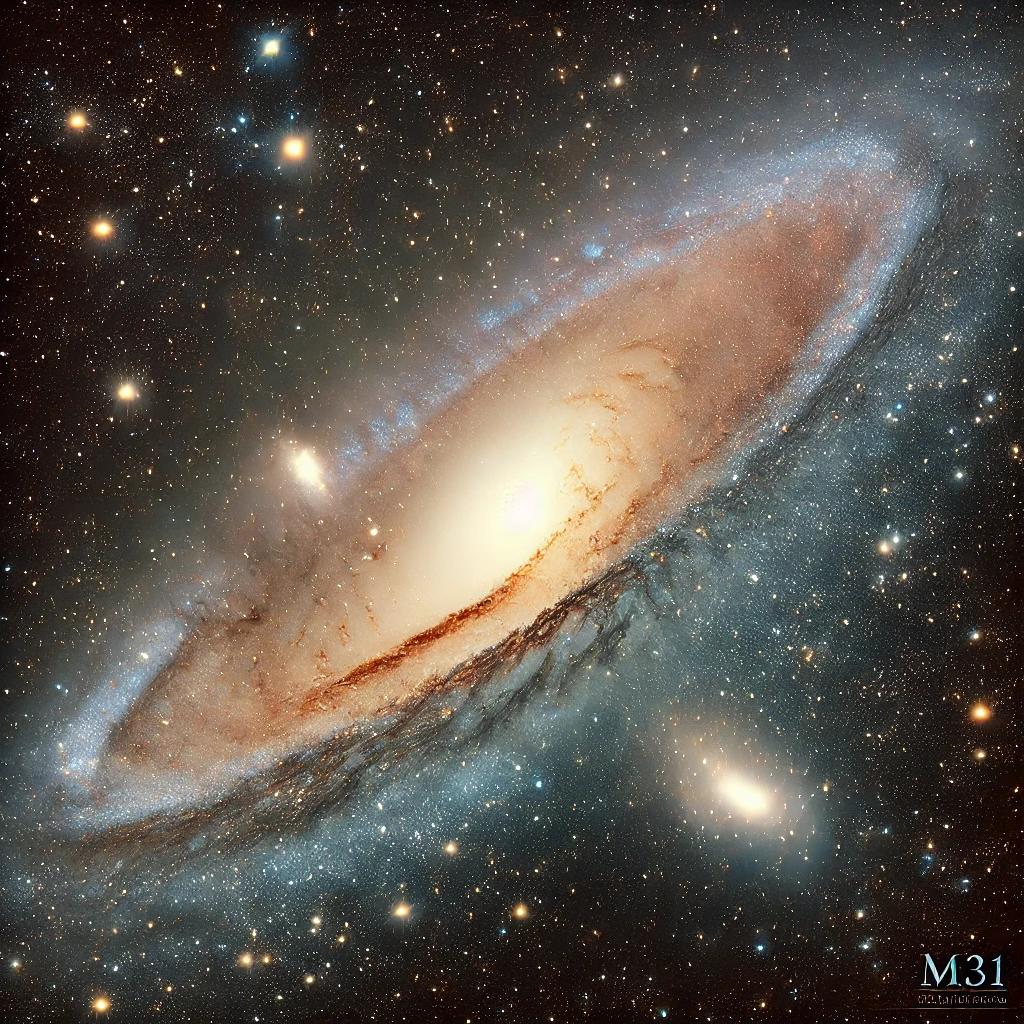
The Andromeda Galaxy (M31) is the closest spiral sky island to the Milky Way and is located approximately 2.5 million light years away. Andromeda, the most distant object visible to the naked eye, holds great importance for astronomers. Andromeda, which provides critical information about the formation and evolution of sky islands in the universe, is at the center of numerous scientific studies.
class=\
The first observations of the Andromeda Galaxy date back to antiquity. In 964 AD, the Persian astronomer Abd al-Rahman al-Sufi described it as a “small cloud”. It was recorded by many astronomers throughout the Middle Ages, but its true nature remained unclear. With the development of telescopes in the 17th century, Andromeda began to be studied in greater detail.
In modern astronomy, observations made with telescopes during the 18th and 19th centuries contributed to determining the structure of this sky island. Cataloged as M31 by Charles Messier in 1764, Andromeda was proven in the early 20th century by Edwin Hubble to be a separate galaxy, leading to its reclassification from “spiral nebula” to “external galaxy”. Hubble’s work provided important insights into the scale of the universe and demonstrated that the universe extends far beyond the Milky Way.
Andromeda has a diameter of approximately 220,000 light years, making it larger than the Milky Way. This galaxy contains trillions of stars and features a dense central core, extensive spiral arms, and numerous satellite galaxies.
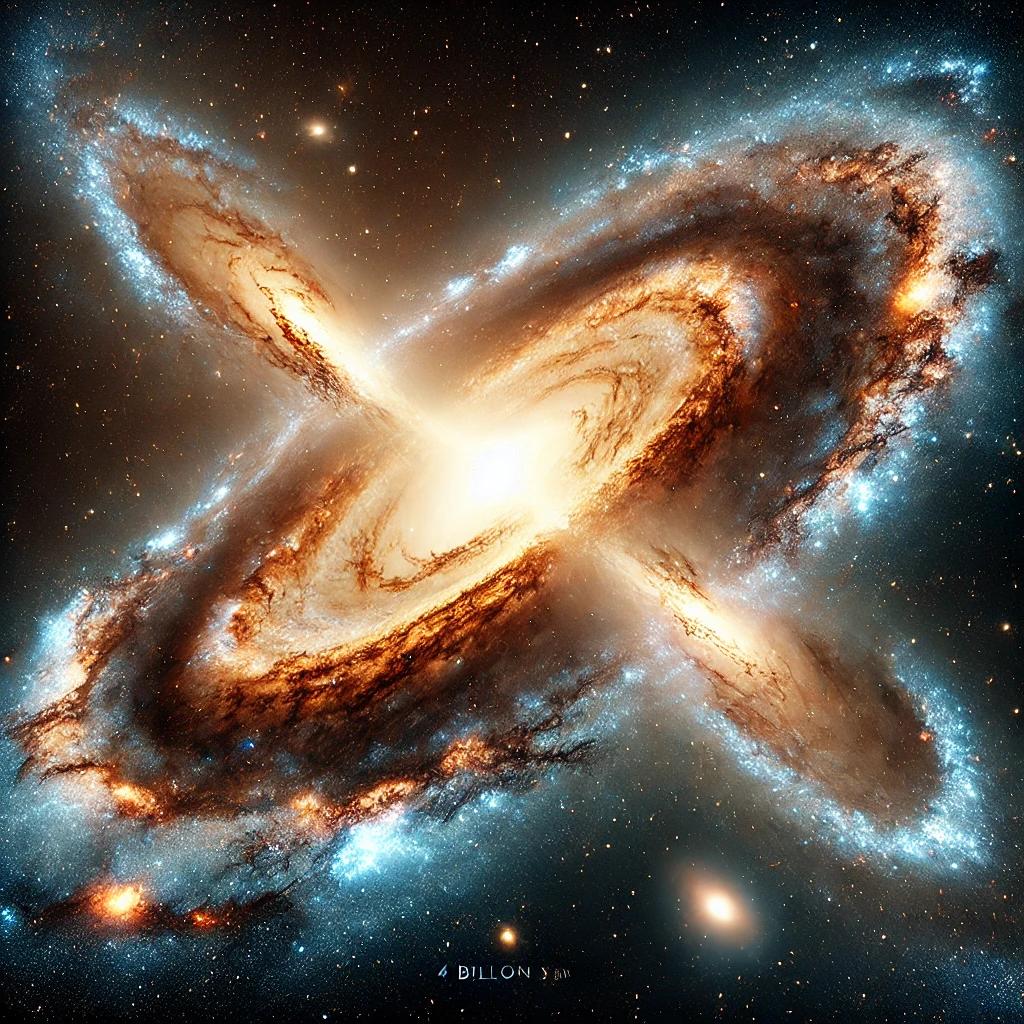
Observational data show that Andromeda is approaching the Milky Way at a speed of approximately 110 kilometers per hour. In about 4 to 5 billion years, the two galaxies will collide and merge to form a single elliptical galaxy.
This merger will occur due to gravitational interactions between the galaxies. Although individual stars are unlikely to collide directly, the collision of gas and dust clouds will trigger massive bursts of star formation. Simulations indicate that this collision will cause dramatic morphological changes in both galaxies. Ultimately, the resulting sky island from this merger is already referred to by scientists as “Milkomeda”.
class=\
Andromeda is continuously studied by the Hubble Space Telescope, the James Webb Space Telescope, and other observatories. Observations have provided key insights into star formation processes, the distribution of dark matter, and evolutionary processes within the galaxy.
The Andromeda Galaxy, as the largest neighbor of the Milky Way, offers a vast research field for astronomers. Future observations and technological advancements will yield more information about Andromeda and enhance our understanding of the structure of the universe.
Al-Sufi, A. Kitab al-Kawakib al-Thabitah. (964).
Hubble, E. "Cepheid Variables in the Spiral Nebulae". Astrophysical Journal. (1925).
Kormendy, J., and Richstone, D. "Inward Bound—The Search for Supermassive Black Holes in Galactic Nuclei". Annual Review of Astronomy and Astrophysics. (1995) 581-624.
van der Marel, R. P., Besla, G., Cox, T. J., Sohn, S. T., and Anderson, J. "The M31 Velocity Vector and Future Collision with the Milky Way". Astrophysical Journal. (2012).

Discovery and History
Structure and Characteristics
Collision Scenario with the Milky Way
Scientific Research and Observations