


This article was automatically translated from the original Turkish version.
+2 More
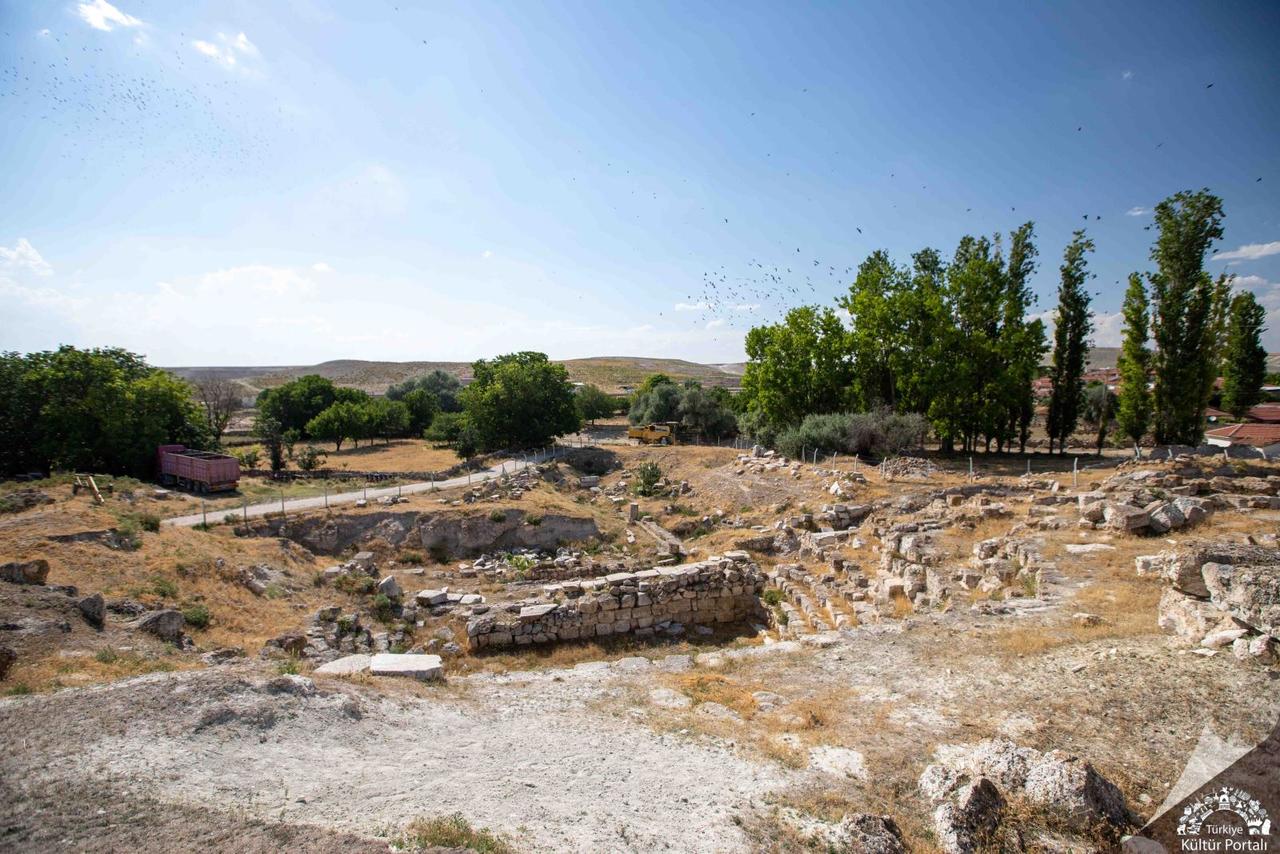
Pessinus Ancient City
Location | Sivrihisar district Türkiye Eskişehir Ballıhisar Village | ||||||||
|---|---|---|---|---|---|---|---|---|---|
Architectural Structures | Roman theatre | ||||||||
Pessinus is an ancient Frigyan city located near the village of Ballıhisar in the Sivrihisar district of Türkiye’s Eskişehir province. This sacred city, with a history extending back to the 2nd millennium BCE, is particularly known as one of the central cult sites of the mother goddess Kybele. During the Roman Empire, it developed into a Greco-Roman polis and became a regional center.
Pessinus is situated in a valley approximately 950 meters above sea level in the eastern part of Central Phrygia. It lies about 150 kilometers south-southwest of Ankara and 100 kilometers northeast of Eskişehir. The ancient city developed around the Gallos Stream and was surrounded by the Sangarios River (Sakarya) and Mount Dindymos (modern Günyüzü Mountain).
Although Pessinus is first mentioned in historical sources in the 2nd century BCE, archaeological evidence pushes its settlement history back to the 16th century BCE. According to ancient authors, the city was founded by the legendary Phrygian king Midas. The cult of Kybele shaped the city’s early religious structure. Its religious significance endured into the Roman period; Pessinus transitioned from a theocratic temple state to become a Roman colony and a city authorized to mint its own coins. After joining Rome in 25 BCE, the city rapidly adopted Roman urban forms from the 1st century CE onward and was adorned with monumental buildings. Emperor Julianus worshipped in this city in 362 CE and emphasized its pagan traditions.
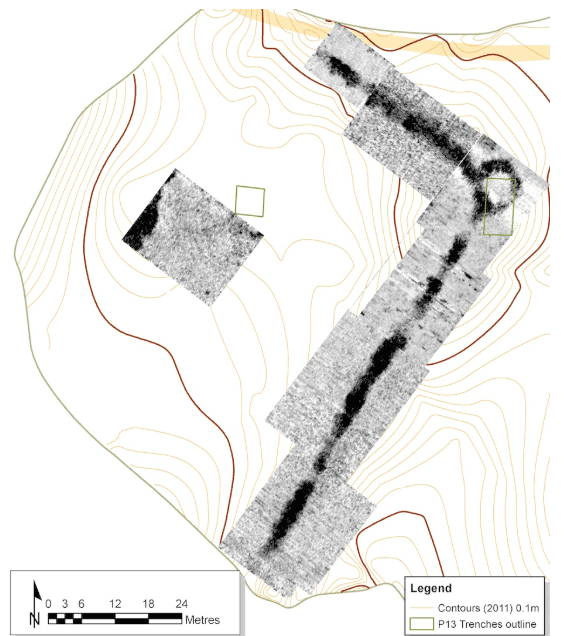
Geç Roma-Erken Bizans dönemi kalesinin jeofizik inceleme sonuçları (Eskişehir İl Kültür ve Turizm Müdürlüğü)
The Ancient City of Pessinus was first identified in 1834 by the French traveler Charles Texier. Systematic archaeological excavations began in 1967 under the leadership of Pierre Lambrechts on behalf of Ghent University in Belgium. From 1987 to 2008, the excavations were directed by John Devreker, and since 2009 they have been led by Gocha Tsetskhladze. Excavations are currently carried out by an international team.
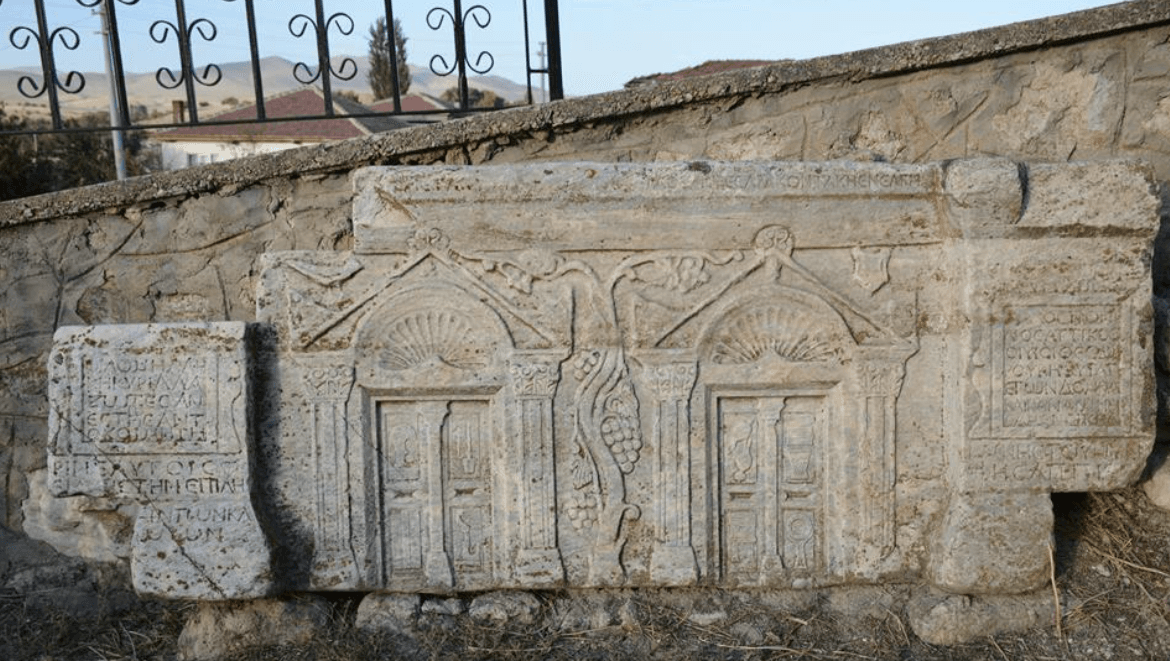
Remains from the Ancient City of Pessinus (Eskişehir İl Kültür ve Turizm Müdürlüğü)
During the Roman period the city expanded to approximately 88 hectares and is architecturally rich:
The city was constructed using local stone and marble quarried from the İstiklalbağı site approximately 12 kilometers away.
In antiquity, Pessinus was regarded as the capital of Kybele. The temple of Kybele, the city’s religious center, has not yet been definitively located, but numerous altars, sacred precincts, and ritual structures have been identified. Religious practices associated particularly with the Galli priests (eunuch priests) are extensively documented in this city.
Archaeological finds around the city include burnt layers, pottery fragments, and Phrygian defensive walls dating to the 15th century BCE. Marble sarcophagi and grave goods from the 3rd–2nd centuries BCE have been discovered in necropolis areas. Rock-cut tombs, pools, and altars from the Phrygian period have also been identified in the Tekören region north of Pessinus.
Since Pessinus was built within a natural valley, it was not surrounded by walls. Instead, security was provided by six to seven watchtowers positioned at strategic points. The rural area controlled by the ancient city extended from Tekören in the north to Çaykoz and Dinek villages in the east.
Modern research aims to establish Pessinus as a model archaeological site in terms of digital documentation, systematic excavation, and cultural heritage management. Information regarding the city’s social, religious, and political structure makes significant contributions to both archaeology and ancient history studies.
Kumandaş Yanmaz, Hacer. “Galatia Krallık (Tolistoboglar) Dönemi Pessinus Darplı Sikkeleri.” Dumlupınar Üniversitesi Sosyal Bilimler Dergisi 36 (2013): 105–122. Accessed May 28, 2025.https://dergipark.org.tr/tr/download/article-file/273717
Ministry of Culture and Tourism. "Eskişehir Pessinus Örenyeri." Turkish Museums. Accessed May 28, 2025.https://www.turkishmuseums.com/museum/detail/2045-eskisehir-pessinus-orenyeri/2045/1
Ministry of Culture and Tourism. "Pessinus Antik Kenti." Türkiye Kültür Portalı. Accessed May 28, 2025.https://www.kulturportali.gov.tr/turkiye/eskisehir/gezilecekyer/pessinus-antik-kenti
Ministry of Culture and Tourism. "Pessinus Örenyeri." Müze.gov.tr. Accessed May 28, 2025.https://muze.gov.tr/muze-detay?sectionId=EPO01&distId=MRK
Pelin Çift ile Gündem Ötesi. "Tarihçi-Yazar Ahmet Ümit ile Frigler’in Kayıp Şehri Pessinus’u Konuştuk." YouTube video, 1:18:36. Published by: Pelin Çift ile Gündem Ötesi. May 21, 2024. Accessed May 28, 2025.https://www.youtube.com/watch?v=N68QGhH0LIg

Pessinus Ancient City
Location | Sivrihisar district Türkiye Eskişehir Ballıhisar Village | ||||||||
|---|---|---|---|---|---|---|---|---|---|
Architectural Structures | Roman theatre | ||||||||
No Discussion Added Yet
Start discussion for "Ancient City of Pessinus" article
Location and Geography
History
Excavations and Research
Architectural Remains and Urban Structure
Cult Areas and the Cult of Kybele
Early Settlement and Necropolis
City Defenses and Rural Area
Pessinus Today