


This article was automatically translated from the original Turkish version.
Qaitbay Castle is located in the city of Alexandria, Egypt, and is one of Alexandria’s iconic landmarks. The castle was built using the remains of the ancient sea lighthouse, one of the Seven Wonders of the Ancient World, which was constructed in the 3rd century CE and nearly destroyed by an earthquake in Egypt in 1303.
The castle was commissioned between 1477 and 1479 by Mamluk Sultan Qaitbay to strengthen the defense of Alexandria during the Mamluk period. At the time, the aim was to establish a strong defensive line along the Mediterranean against the threat of the Ottomans and crusader attacks from Europe. Suffering extensive damage during the British bombardment of 1882, the castle was restored in 1984 and opened to both local and foreign tourists.
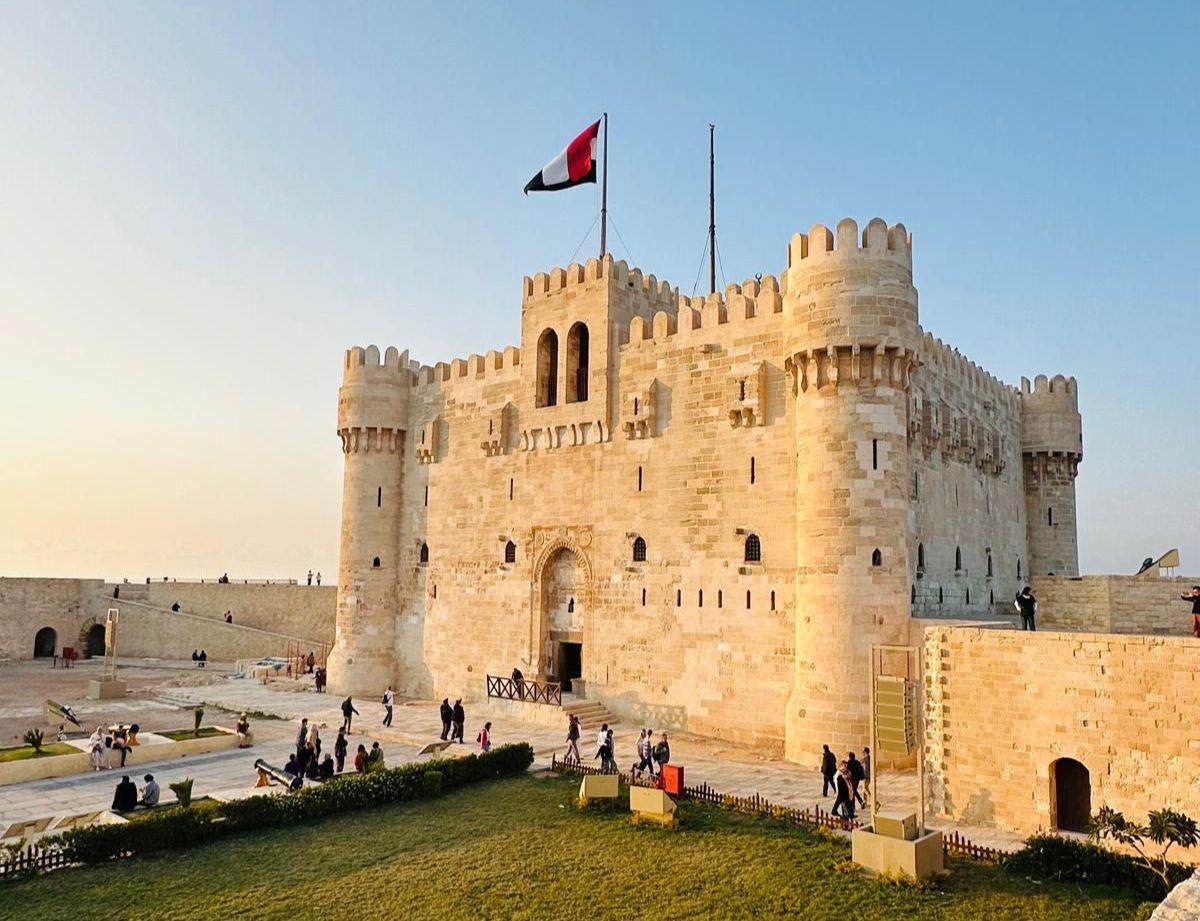
Qaitbay Castle, (2025). From the author’s lens.
Qaitbay Castle is square-shaped, covering an area of 150 meters on each side, with both sides bordered by the sea. On the first floor are a mosque and a defense hall to allow soldiers easy movement and defense of the walls. The second floor contains rooms and halls, while the third floor features a large throne room where Sultan Qaitbay observed ships with sails unfurled along the Alexandria coastline. Additionally, a bakery was present within the castle to produce wheat bread for the soldiers stationed there.
During the Mamluk period, Sultan Qansuh supplied the Alexandria Castle with troops, military equipment, and weapons. The castle is regarded as one of the most important defensive fortresses not only in Egypt but along the entire Mediterranean coast.
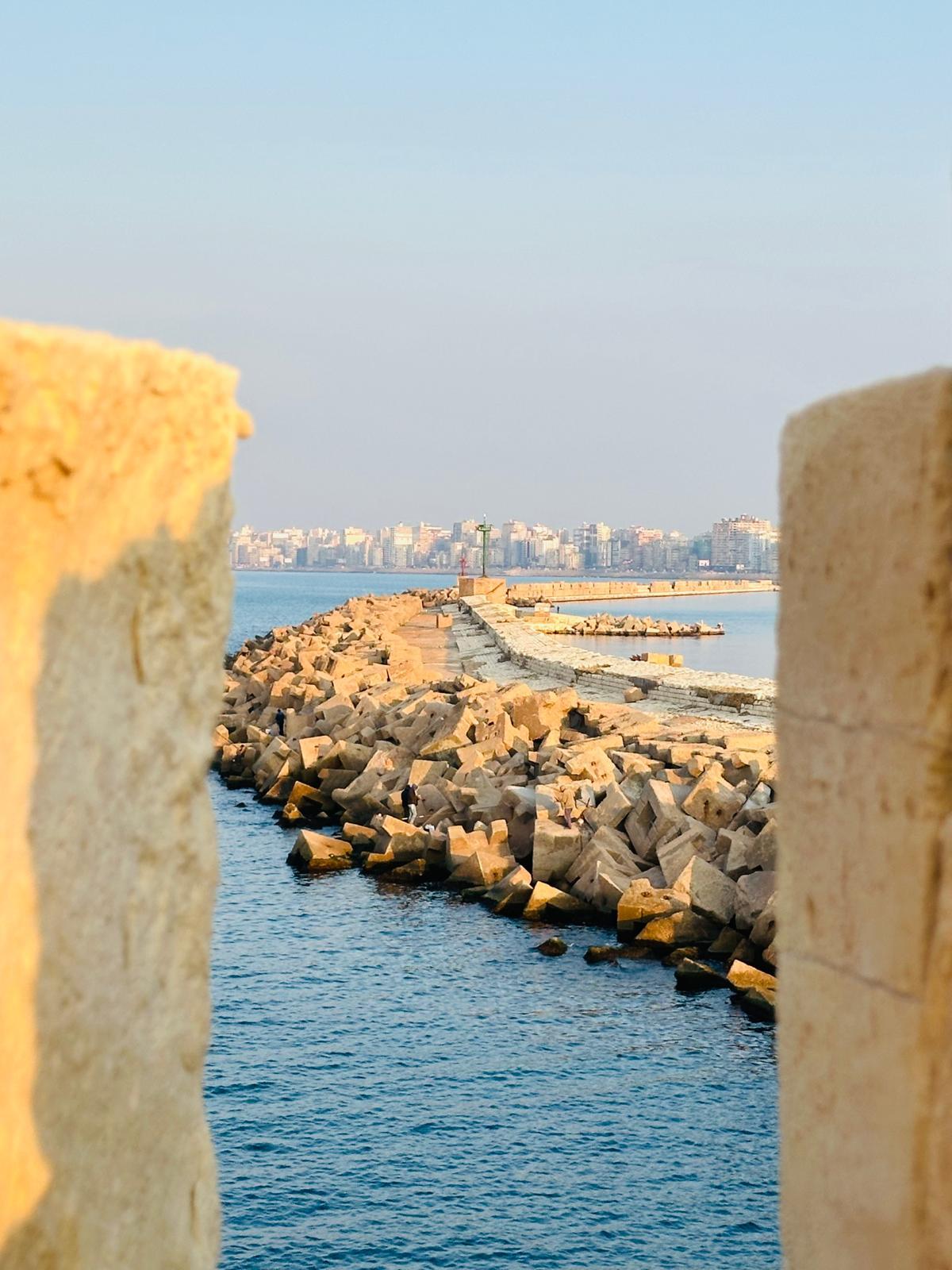
View of Alexandria city from the walls of Qaitbay Castle, (2025). From the author’s lens.
After the Ottomans conquered Egypt, they repurposed the castle as a defensive gateway along Egypt’s northern coast and modified its design. As the Ottoman state weakened, the castle lost its strategic importance. With the gradual decline of Ottoman dominance, French forces under Napoleon captured Alexandria in 1798 and subsequently took control of the rest of Egypt.
In 1805, Muhammad Pasha seized control of Egypt and undertook the restoration of Qaitbay Castle, repairing damaged sections in accordance with its original design. In particular, the outer walls were reinforced and the castle was equipped with modern weaponry of the period, including coastal artillery. During the Urabi Pasha revolt of 1882, a large portion of the castle suffered significant damage as a result of the British bombardment of Alexandria.
Anadolu Ajansı. Accessed January 19, 2025.https://www.aa.com.tr/tr/pg/foto-galeri/iskenderiyede-kayitbay-kalesi/0/56775#
Egypt Time Travel. Accessed January 19, 2025.https://egypttimetravel.com/citadel-of-qaitbay
Empereur, J., (2002), Alexanria, Past, Present and Future, London.
Kayıtbay Kalesi. Accessed January 19, 2025.http://www.3dmekanlar.com/tr/kayitbay-kalesi.html
Milliyet. Accessed January 19, 2025.https://www.milliyet.com.tr/galeri/iskenderiyede-kayitbay-kalesi-1932095/1
Travel To Egypt. Accessed January 19, 2025.https://www.traveltoegypt.net/discover-egypt/alexandria-attractions/qaitbay-citadel

No Discussion Added Yet
Start discussion for "Alexandria Kayıtbay Castle" article
The Castle During the Ottoman Empire
The Era of Muhammad Ali Pasha