

This article is not approved yet.
+1 More
edit37
Artificial intelligence-assisted music production is a form of music creation realized through the use of algorithmic systems that compose, reproduce or interpret music without the need for human intervention or with limited interaction. With the development of artificial intelligence techniques such as deep learning, neural networks and machine learning, automated production processes have gained significant momentum in the field of music. These technologies have begun to permeate not only music composition but also improvisation, arrangement, instrumentation and even performance. Artificial intelligence is now used as a tool to support creative processes by both independent musicians and major music labels, raising new aesthetic, ethical and legal debates about the relationship between art and technology.
The relationship between music and artificial intelligence began in the 1950s with algorithmic composition studies. One of the first examples is the Illiac Suite, a four-movement string quartet developed by Lejaren Hiller and Leonard Isaacson in 1957. This work is considered to be the first piece of music composed by a computer. However, the real transformation took place in the 2010s with the development of deep learning algorithms.
Magenta (Google Brain): An open source project working on melody generation, improvisation and visual-musical interaction. It produces works in MIDI format.
OpenAI - Jukebox: It can create full production tracks including not only melody but also vocals and lyrics. It provides a high level of success in style imitation and sound synthesis.
AIVA (Artificial Intelligence Virtual Artist): Developed as an AI-powered composer for movie soundtracks and classical compositions. Available for commercial use.
Amper Music: It enables automatic music generation, with users specifying genre, tempo and emotion; common in areas such as advertising and game soundtracks.
Musical works produced with artificial intelligence necessitate the reconsideration of aesthetic evaluation criteria. The emotional dimension of artistic production, concepts such as individual creativity and inspiration can be imitated by algorithms but cannot be fully felt.
Does the fact that an artificial intelligence system produces a new piece by analyzing previous music data make it “original”? The answer to this question depends on whether the concept of creativity is based solely on technical production or on intention and context.
Who owns the copyright in works produced by artificial intelligence? Is it the person who programs the composition, the person who trains the system, or no human being at all? There are legal gaps in this regard, both nationally and internationally.
Artificial intelligence is used effectively in the music industry not only in creative processes but also in production, marketing and distribution.
Producers working under time pressure can create royalty-free background music in a short time with artificial intelligence systems. It is especially possible to create appropriate intonations for horror, science fiction and emotional scenes.
Artificial intelligence systems offer automatic music recommendations based on users' video content. Rhythms that can go viral in a short time can be created according to the trends analyzed by the system.
Artificial intelligence can be used in music therapy applications by providing music suggestions suitable for individual psychological conditions. It can also create educational materials by analyzing student-specific exercises and compositions in learning processes.
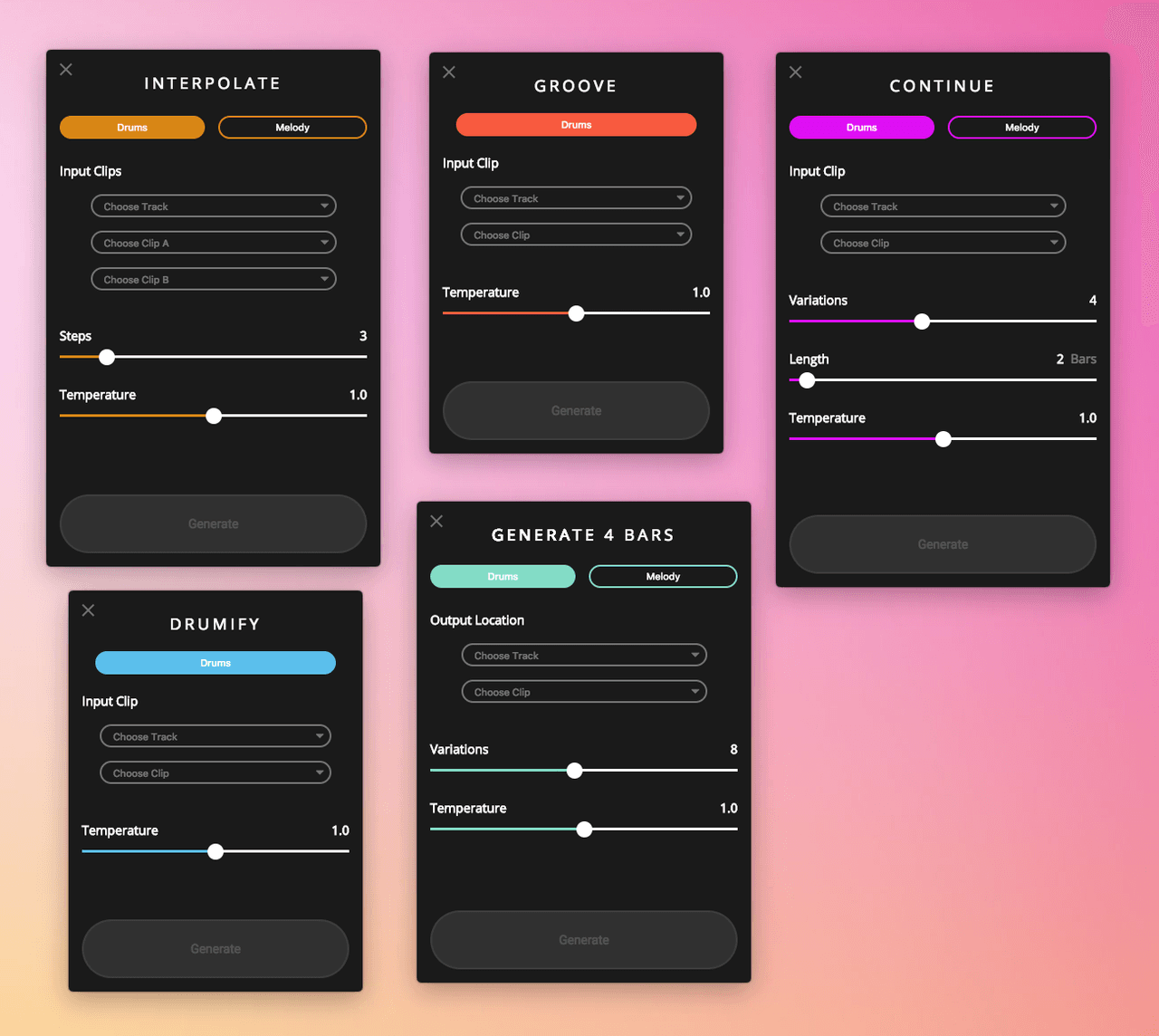
Source: Magenta
User interface of the Magenta system for music production with artificial intelligence. The user can have control over style, tempo and melodic structure.
The relationship between music and artificial intelligence is expected to become even closer in the future. In particular:
Hybrid compositions created through human-machine collaborations,
Virtual artists (e.g. AI vocalists) organizing concerts,
Affective computing systems producing music according to personal moods,
are likely to become more visible in the coming years.
In addition, the fact that artificial intelligence takes over not only music creation but also music criticism and curation has the potential to radically transform the concept of art and music culture.

No Discussion Added Yet
Start discussion for "AI-powered Music Production" article
History and Technological Development
Major Artificial Intelligence Composition Systems
Aesthetic and Ethical Debates
Originality and Creativity
Copyright and the Question of Ownership
Uses in the Music Industry
Movie and Game Soundtracks
Social Media Content
Music Therapy and Education
Future Prospects