

`deep-learning` Related Article Results
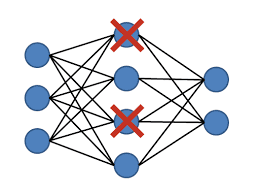
Dropout Technique
Dropout is a regularization method developed to prevent overfitting in deep learning models and is now widely used. It was first proposed by Geoffrey Hinton and colleagues in 2012 and later thoroughly analyzed in 2014 under the leadership of Nitish Srivastava. Illustration of the dropout working principle (generated by Artificial Intelligence) " image-alternate="" image-element-format="right"> Working Mechanism Dropout is a regularization technique designed to prevent overfitting in deep neur
EN
Yağmur Nur Küçükarslan
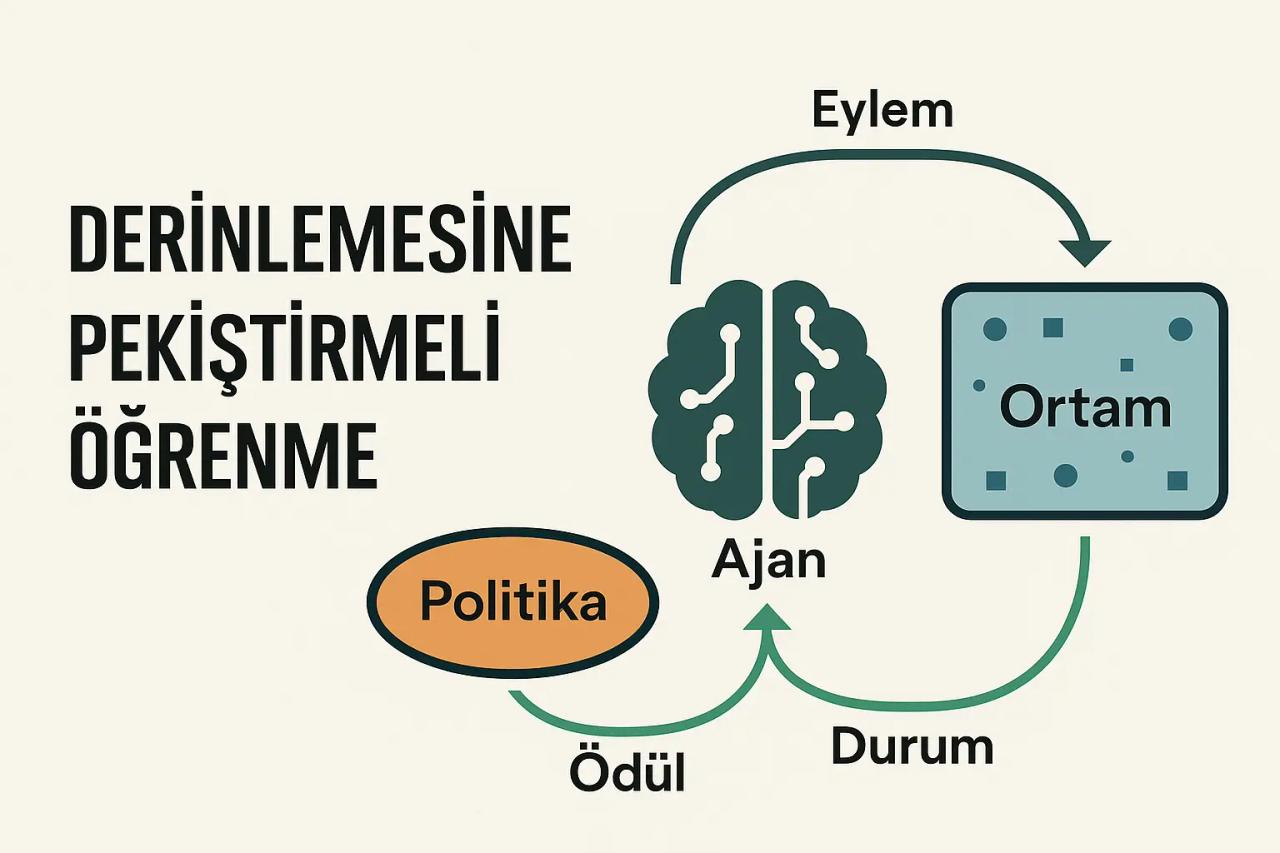
Deep Reinforcement Learning
Deep Reinforcement Learning (DRL) is an artificial intelligence approach that combines the fundamental principles of reinforcement learning (RL) with the representational power of deep learning (DL). This method enables an agent to learn a policy through trial and error in an environment, with the goal of maximizing the total future rewards. DRL employs deep neural networks to perform this process in high-dimensional and complex state spaces. Historical Background The origins of reinforcement le
ENEmre Emer
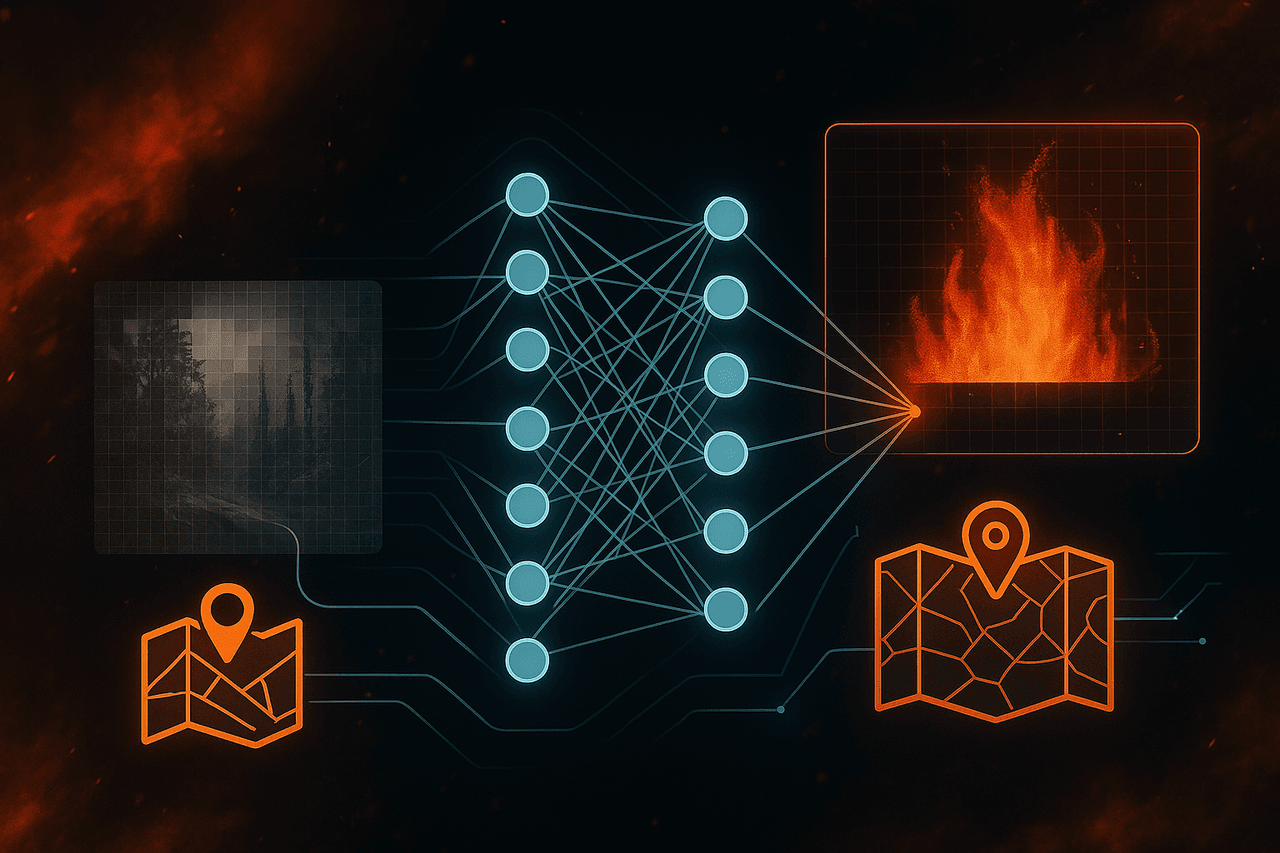
Image Processing with Deep Learning
Deep Learning is a subfield of machine learning, which itself is a branch of artificial intelligence. Generally, artificial intelligence refers to systems that emulate human-like capabilities, while machine learning encompasses a set of algorithms that learn from data and improve over time. The term Deep Learning specifically describes methods that utilize Artificial Neural Networks (ANN). Similar to neurons in the human brain, artificial neural networks consist of nodes (neurons) and connection
EN
Betül Kırımlıoğlu
VGG19
VGG19 is a deep convolutional neural network developed for visual recognition tasks. Proposed in 2014 by the Oxford University Visual Geometry Group (VGG), this model is a deeper variant of VGG16. Comprising a total of 19 layers, its architecture aims to learn more complex patterns by employing small convolutional filters (3×3) in a stacked configuration. VGG19 Architecture The VGG19 architecture is based on design principles similar to those of VGG16. Each convolutional layer uses 3×3 filters,
EN
Kaan Gümele

ResNeXt
ResNeXt is a CNN architecture designed to improve accuracy in deep convolutional neural networks while maintaining parameter efficiency. Proposed in 2017 by Facebook AI Research (FAIR), this design enhances the residual connection principle of ResNet by integrating the group-based discrete transformation concept from the Inception architecture. The key innovation of ResNeXt lies in aggregating multiple transformations within the same structure across parallel branches (cardinality). Foundations
ENKaan Gümele
 De
DeDeep Neural Networks
Deep Neural Networks (DNNs) are a subclass of artificial neural networks, consisting of multilayer structures with at least two or more hidden layers. Inspired by the human brain, these structures are composed of neurons, weights, bias values, and activation functions. Each neuron aggregates incoming signals, processes them through an activation function, and transmits the result to the next layer. The "depth" of DNNs is measured by the number of hidden layers they contain. For example, a neural
EN
Ahmet Burak Taner

Google Colab
Google Colab (Colaboratory), developed by Google Research in 2017, is a free, online Jupyter Notebook environment that allows users to run machine learning and deep learning models on CPUs, GPUs, and TPUs. Colab is a platform that enables users to work with Python without needing to rely on the hardware of their local computers. Created with the goal of advancing artificial intelligence technologies and promoting the use of cloud services, Google Colab is an accessible tool for all users. Users
EN
Kaan Gül
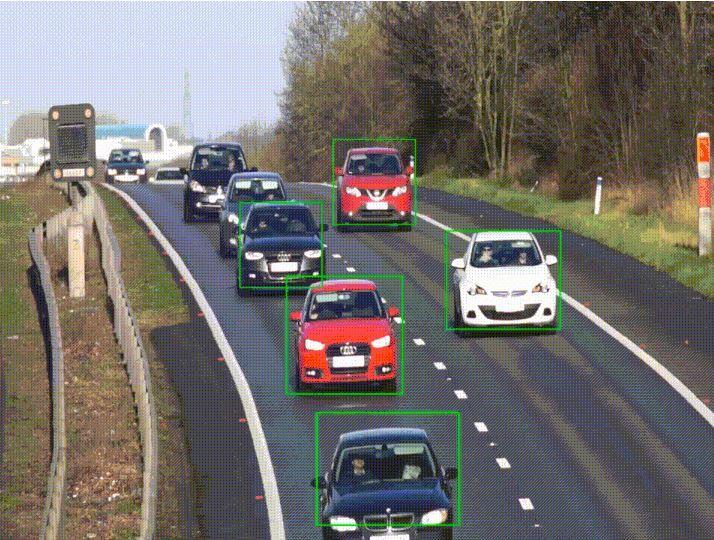
Image Processing Techniques
Image processing is the process of analyzing, transforming, and interpreting digital images by computers. Thanks to this technology, machines can perform various tasks by processing the data visible to the human eye in numerical form. Image processing systems are developed to detect patterns, objects, faces, or texts within visuals and derive meaning from this data. History Image processing technologies first emerged in the 1960s through digital image analysis systems developed by NASA for space
EN
Hüsnü Umut Okur
YOLO
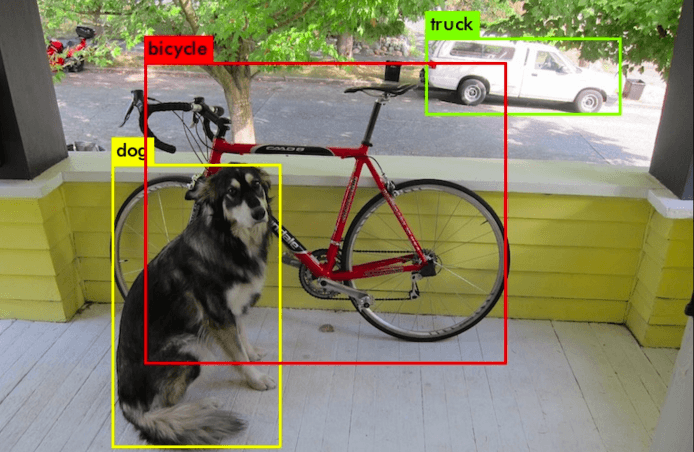
YOLO is an object detection algorithm that simultaneously predicts the location and class of all objects in an image through a single pass of a neural network. YOLO, which holds a prominent place in the fields of artificial intelligence and deep learning, is particularly preferred in video processing and autonomous systems due to its real-time analysis capability. YOLO’s most distinctive feature is its ability to detect objects in a single step, delivering efficient results in terms of both spee
EN
Semih Yeşil
LoLoss Function
The loss function is one of the fundamental tools used in machine learning and statistical modeling to measure a model’s predictive performance. It converts the difference between the predicted value and the true value into a numerical measure that indicates how accurate or inaccurate the model’s predictions are. Loss functions not only quantify the error rate but also provide information on how the model should be optimized. They play a critical role in training models in fields such as deep le
ENYusuf Çağan Ceylan