

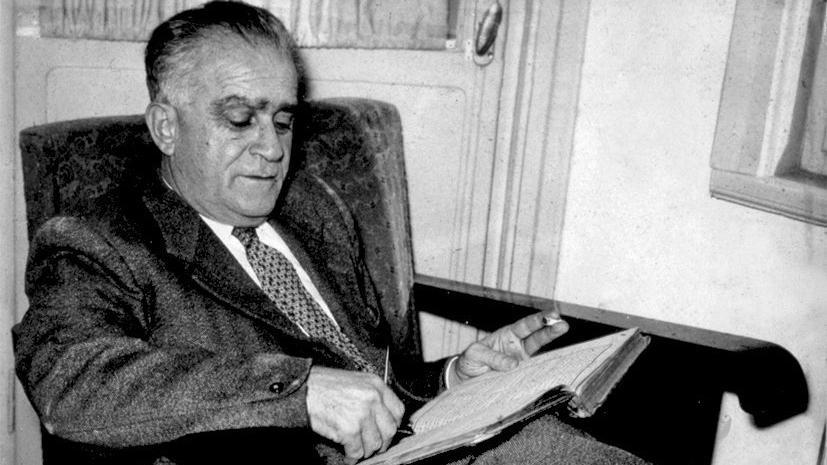
+2 More

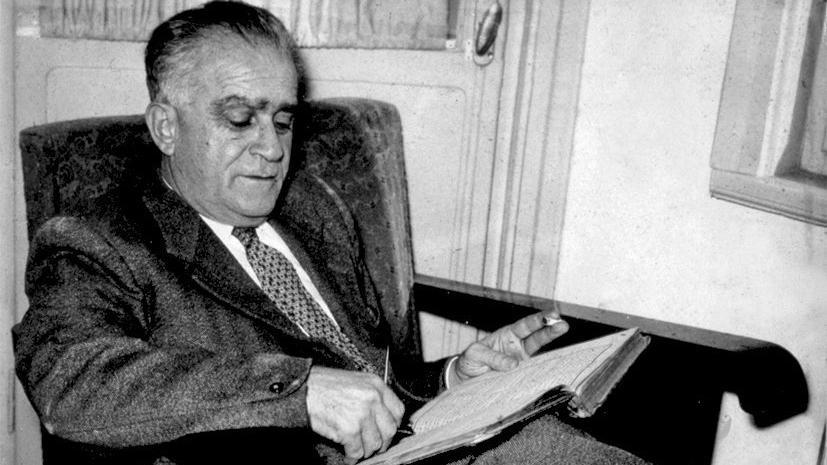
Ahmet Hamdi Tanpınar
Profession | Poet novelist short story and essay writer literary historian academic | ||||||||
|---|---|---|---|---|---|---|---|---|---|
Birth | 23 June 1901, Istanbul | ||||||||
Burial | Rumelihisarı Cemetery (next to Yahya Kemal Beyatlı's grave) | ||||||||
Academic Position | Istanbul University Faculty of Letters, Modern Turkish Literature (19th century) | ||||||||
Literary Genres | Poetry, novel, short story, essay, literary criticism | ||||||||
Major Works | History of Turkish Literature of the 19th Century, Huzur, The Institute for Setting Clocks, Mahur Beste, Those Outside the Stage, The Woman on the Moon (incomplete, published posthumously), Five Cities, Poems | ||||||||
Fields of Study | Modern Turkish literature, literary history, aesthetics, art history, mythology | ||||||||
Death | 24 January 1962, Istanbul | ||||||||
Ahmet Hamdi Tanpınar (23 June 1901, Istanbul – 24 January 1962, Istanbul) was a writer and literary historian who produced works in poetry, novel, short story, essay, and literary history; he also served as a teacher, academic, and member of parliament. Born in the final years of the Ottoman Empire, he participated in the educational and academic life of the Republic; through his teaching, university work, and literary output, he became one of the most significant figures in 20th-century Turkish literature.
On Tanpınar (TRT News)
Ahmet Hamdi Tanpınar was born on 23 June 1901 in the Şehzadebaşı neighborhood of Istanbul. His father, Hüseyin Fikri Efendi (1852–1935), held various administrative posts including deputy governor and judge in different regions of the empire during the reigns of Abdülhamid II and the Second Constitutional Era, and later retired from the judgeship of Antalya. It is known that the family originally came from Batumi; Hüseyin Fikri Efendi’s grandfather had served as a mufti in Batumi, which is why the family was also known as Müftüzadeler.
His mother, Nesime (Nesibe) Bahriye Hanım (1876–1916), belonged to the Kansızzadeler family of Trabzon and was the daughter of naval captain Ahmed Bey (of Tirebolu) and Emine Hanım. Tanpınar was the middle child of three. He had an older sister, Nigâr Tümer (1893–1982), who was eight years older, and a younger brother, Kenan Tanpınar (1908–1983), who was seven years younger.
The family’s livelihood and daily rhythm were shaped by the father’s civil service career, which became one of the defining elements of Tanpınar’s childhood. Due to his father’s postings, the family relocated periodically, and Tanpınar spent his childhood and early youth in various cities.
Tanpınar’s frequent relocations directly affected both family life and his schooling. The family resided in Ergani between 1902 and 1905, and returned to Istanbul in April 1905. Tanpınar’s formal education began in Istanbul after this return, when he enrolled at the Ravza-i Maarif İptidai Mektebi.
Subsequent family relocations led Tanpınar to continue his education in different schools. When his father was transferred to Sinop, Tanpınar attended the Rüştiye there between 1908 and 1910. The family then moved to Siirt, where Tanpınar studied at the French Dominican missionary school from October 1910 to May 1913.
1913–1914 saw the family return to Istanbul, where Tanpınar attended the Vefa İdadisi for a time. In July 1914, the family moved to Kerkük and remained there until September 1916. During this period, Tanpınar completed his idadi education at the Kerkük İdadisi.
The years in Kerkük are also noted for the development of Tanpınar’s reading habits. He recalled reading works such as Kısas-ı Enbiya, Cezmi, and Celâl; he also began learning French during this period. The family’s departure from Kerkük coincided with his father’s appointment to Antalya; they departed for Antalya in October 1916.
During the journey to Antalya, Tanpınar’s mother, Nesime (Nesibe) Bahriye Hanım, fell ill, prompting the family to stop briefly in Mosul. After this stop, she died of typhus in Mosul. Tanpınar was fifteen years old at the time of his mother’s death, and this loss left deep psychological marks on him, which later reflected in his literary output.
After his mother’s death, the family continued to Antalya, where Tanpınar lived with his father, grandmother, sister, and brother until 1918. During this time, he completed his secondary education at the Antalya İdadisi and continued expanding his reading interests. It is recorded that one of his earliest published poems was about his mother, marking a concrete expression of his emotional connection to poetry following her death.
After completing secondary school, Ahmet Hamdi Tanpınar enrolled in the Faculty of Letters at Darülfünun in Istanbul in 1919. He initially began his university studies in the History Department but soon transferred to the Turkish Language and Literature Department. This decision was shaped by the curriculum and teaching staff at Darülfünun.
His education at Darülfünun encompassed courses in classical Turkish literature, modern Turkish literature, and Western literature. Literary texts were examined within their historical contexts, with emphasis on textual analysis, literary chronology, and inter-genre relationships. Throughout his studies, Tanpınar followed the faculty’s regular curriculum and developed a systematic body of knowledge in literary history and aesthetics.
He completed his university education in 1923 and graduated from the Faculty of Letters at Darülfünun. This graduation laid the institutional foundation for his subsequent career in teaching and academia.
Among the instructors Tanpınar studied under at Darülfünun, Yahya Kemal Beyatlı held a prominent place. Yahya Kemal’s lectures focused particularly on classical Turkish poetry, Ottoman literature, and literary tradition. In these courses, divan poetry texts were analyzed within their historical continuity, and the role of literature in cultural and civilizational contexts was emphasized.
Yahya Kemal’s teaching was text-centered; poetry and literature were evaluated alongside historical and aesthetic concepts. Through these courses, Tanpınar gained direct access to classical literary texts and encountered a systematic framework for approaching literary history.
Tanpınar’s academic formation was shaped by his education at the Faculty of Letters at Darülfünun. His university studies focused on the historical development of literature, the evolution of literary genres, and the aesthetic structure of texts. During this period, literary history was treated not merely as a chronological sequence but as an analytical field grounded in textual examination.
The courses at Darülfünun equipped Tanpınar with skills in textual analysis, comparative reading, and establishing connections between literary genres. This academic foundation provided the basis for his later teaching and university work. The core elements of his academic formation were determined by the method and knowledge acquired during his university years.
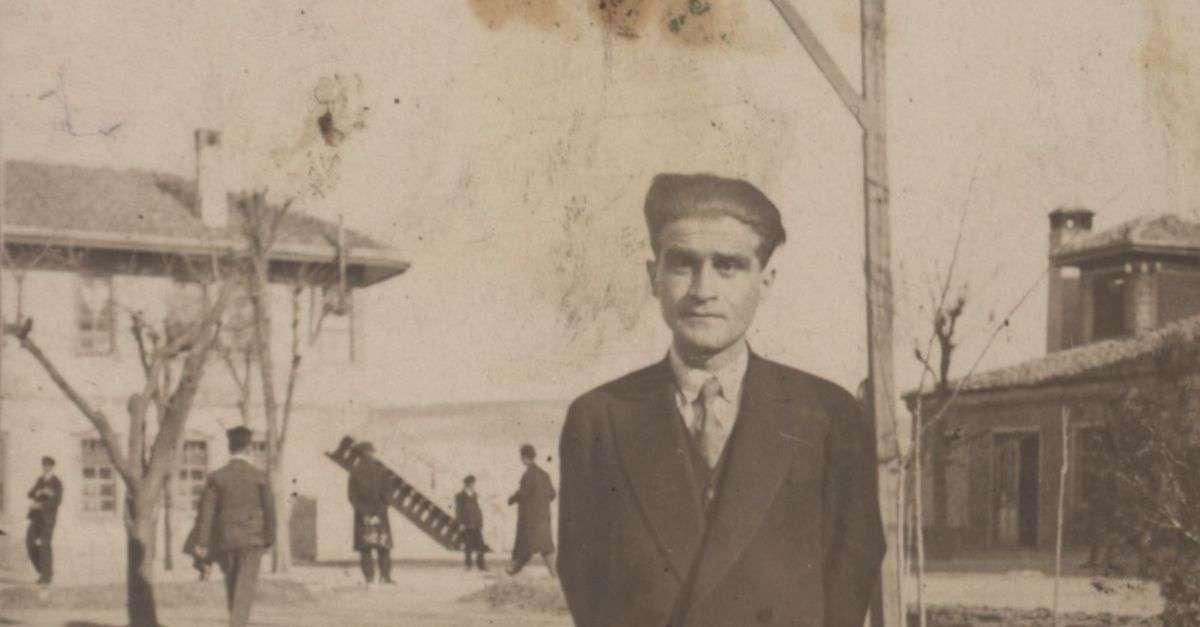
Ahmet Hamdi Tanpınar (Anadolu Agency)
After completing his university education, Ahmet Hamdi Tanpınar turned to the profession of teaching. His professional career began with teaching at secondary schools, where he served as a literature teacher, instructing students in Turkish language and literature, literary texts, and literary history according to the official curriculum.
Among the institutions where he taught were high schools in Erzurum, Konya, and Ankara. While fulfilling his teaching duties, he conducted regular lessons and assigned required readings and written assignments. His years as a teacher marked the first period of his professional life characterized by continuous and active educational engagement. He adhered strictly to official curricula and carried out his duties as a state school teacher.
During his postings in Ankara, he engaged with the cultural and educational circles of the time, though these interactions occurred within the framework of his professional duties. His teaching years constituted the foundational stage of his professional life, preceding his later academic appointments.
Following his teaching duties, Tanpınar was appointed to teach at the Istanbul State Academy of Fine Arts. At the academy, he taught courses covering aesthetics, history of art, and literature. This appointment marked his transition from secondary to higher education.
His courses at the Academy were conducted according to the institution’s curriculum, examining both artistic works and literary texts within their historical and aesthetic contexts. Throughout his tenure, Tanpınar maintained his teaching activities and participated in academic meetings and programs required by the institution.
This period represented a stage in his professional life during which he conveyed his knowledge of art and literature within a formal higher education framework.
In 1941, Tanpınar was appointed to teach 19th-Century Turkish Literature at the Faculty of Letters of Istanbul University. With this appointment, he began his academic career within the university system. His academic activities were carried out primarily through courses in literary history.
During his tenure at Istanbul University, Tanpınar attained the rank of professor and continued his teaching activities according to the faculty’s curriculum. His courses covered 19th-century Turkish literature, the evolution of literary genres, and the writers of the period. His university duties were conducted according to a regular teaching schedule.
During this period, Tanpınar became an integral part of the university’s academic structure, fulfilling responsibilities related to teaching, examinations, and academic duties. His professorship at Istanbul University was one of the longest and most institutional phases of his professional life.
Tanpınar’s professional life included several overseas assignments and travels. During various periods, he traveled to Europe, particularly to France. These trips were conducted as official assignments or academic exchanges.
During his travels abroad, Tanpınar engaged with the cultural and academic environments of the countries he visited, touring museums, libraries, and art circles. These journeys were undertaken for educational and research purposes. The dates and durations of his trips were determined by official assignments and leave policies.
Tanpınar’s overseas assignments and travels are recorded as a phase of his professional life that ran parallel to his teaching and university duties.
Ahmet Hamdi Tanpınar served as a member of parliament for Maraş in the Turkish Grand National Assembly between 1942 and 1946. This role represented a public office outside his academic and teaching activities, conducted within the legislative body. He was elected to this position through the list of the Republican People’s Party.
During his parliamentary term, Tanpınar participated in assembly sessions and attended meetings within the legislative period. His term coincided with the 7th Term of the TBMM. Assembly activities were conducted within the constitutional and legal framework of the time, and Tanpınar fulfilled his duties as a member of parliament under the prevailing parliamentary system.
During this period, his responsibilities were not limited to a specific specialization but encompassed the general legislative duties required of a parliamentarian. His parliamentary term ended with the 1946 elections, after which Tanpınar returned to his academic and cultural activities.
After his parliamentary term, Tanpınar served as an inspector within the Ministry of National Education. This role involved inspecting and evaluating educational institutions. In this capacity, Tanpınar visited various educational institutions and conducted assessments of teaching activities and educational practices.
Ministry of National Education inspectorship was one of the administrative roles Tanpınar held in public service. The work carried out during this period was confined to matters within the ministry’s authority and responsibilities. Inspectorate activities were conducted according to fixed-term assignments and reporting procedures.
This administrative role was one of Tanpınar’s official public duties outside his roles as a teacher, academic, and parliamentarian. After completing his term, he resumed his academic work within the university system.
Throughout his literary life, Ahmet Hamdi Tanpınar regarded poetry as a central pursuit, approaching poetic texts through a prolonged process of revision, refinement, and completion. In his correspondence regarding the preparation of a poetry collection, he often felt the need to revisit “one or two poems,” insisting that publication not be rushed, that proofs be delayed, and that time be allowed for reflection. He worked toward refining his poetry manuscript, writing from Zurich that he was “always occupied with poems” and working to complete certain verses.
The primary publication of his poetry is the collection Şiirler, published in 1961. In this volume, Tanpınar selected 37 poems from approximately 100 poems he had written, reflecting his meticulous approach to compiling his poetic work.
As the publication date approached, Tanpınar closely monitored the organizational aspects of the book. His correspondence with the publisher emphasized delaying the publication, postponing proofs, and seeking additional time to complete new poems. In letters to Hüsamettin Bozok, owner of Yeditepe Publishing, he expressed his desire to postpone the book’s release until autumn, noting that certain poems, particularly “Raks” and “Eşik,” were nearly complete, but that mere work was insufficient—he needed to remain in the same “state of mind” and “belief.”【1】
The prolonged nature of his poetic production is evident in poems that remained unfinished for years. The poem “Eşik” frequently appears in his letters and diaries as a text he continually revisited; his plan to complete it was repeatedly mentioned. In his diaries, he wrote that he had reread “Eşik,” that the poem remained at the level of “five or six lines,” and that his “modern-style” poems were not yet “truly modern.” He also noted that he had worked for a long time on the poem “Deniz,” which he had been unable to complete for six years.
Letters reveal that Tanpınar’s poetry developed through stages of draft, feedback, revision, and rewriting. His correspondence with Ahmet Kutsi Tecer is especially revealing: in a letter dated February 1931, and again in one dated 26 April 1934, he enclosed the unfinished poem “Yılan” in “skeletal” form and requested that the previously sent poem “Sfenks” be marked for revisions, punctuated, typed, and returned. Such exchanges reveal a working process in which poems circulated before reaching their final form.
When defining poetry, Tanpınar drew a functional distinction between poetry and prose. He described poetry as “not speaking, but silence”; he stated that he expressed what he remained silent about in his novels and stories, and that he wanted his poems to be “as closed worlds as possible.” This approach positions poetry as a concentrated form of expression, while placing the novel and short story on a different plane of broader narrative.
In his reflections on what poetry is, Tanpınar rejected the notion that poetry is merely a collection of beautiful lines. In one letter, he associated poetry with “making language a personal instrument”; he argued that a few beautiful lines alone were insufficient, that a poem could not emerge automatically from many beautiful lines, and that poetry should not be seen as a “jewel box” but as a “taazzuv” (organic whole). These statements reflect a framework in which poetry is understood as a unified structure with internal relationships.
The formation of Tanpınar’s poetic aesthetics was significantly shaped by his relationship with his teacher and mentor, particularly Yahya Kemal Beyatlı. In “Letter to a Young Girl from Antalya,” he refers to Yahya Kemal as his “first and perhaps last teacher,” from whom he absorbed the taste of old poetry; he states that Yahya Kemal’s “greatest influence” on him was the idea of “perfection” and “linguistic beauty,” and that “he opened the door to language for us.” In the same letter, he acknowledges that their aesthetics differed, yet emphasizes that Yahya Kemal’s influence remained strong on his views regarding nation and history.
In the development of his poetic understanding, alongside Yahya Kemal, the names of Ahmet Haşim and certain Western poets are mentioned. In the context of “Letter to a Young Girl from Antalya,” the influence of Paul Valéry is directly noted; the same letter links the treatment of time in poetry and prose to Bergson, and the issue of dreams to psychoanalysts. This context indicates that time and dream were foundational concepts in Tanpınar’s poetic thought.
His view of poetry as “closed worlds” is accompanied by a framework for reading and interpretation. He did not design his poems to be easily enjoyable by ordinary readers; the phrase “to dream while awake” is used to explain that the symbolic dimensions of dream, imagination, and time must be understood before the associative layers of his poems can be unlocked. This approach positions poetry reading as an activity requiring preparation.
The decision to publish his poetry collection and the process of compiling it must be understood in light of Tanpınar’s goals for poetry. The idea of “hakiki şiir” (true poetry), associated with the concept of “poésie pure” (pure poetry), is linked to the difficulty of poetry and the high standard expected of it; Tanpınar frequently emphasized after his death his desire to be remembered “only as a poet,” yet throughout his life wrote only a small number of poems; the fact that he included only 37 poems in Şiirler fits within this framework.
Tanpınar’s characterization of his poetic labor as a “matter of work” reveals his view of poetic creation as dependent on time, discipline, and mental state. In a letter to Tarık Temel from Paris, he wrote that even during his parliamentary term, he realized he was “only a poet”; that poetry required work; that human beings are composed not only of potential but also of inertia; that he could not find himself unless he broke through the “ice layer”; that he had lost time due to “unfavorable conditions” and then due to “teaching”; and that he had only four to five months left before the book’s publication, which he considered crucial for his working rhythm.
In analyses of the internal structure of his poetry, it is observed that the majority of the 37 poems in Şiirler are organized around common axes; the poetic subject, the poetic universe/space, and the concept of time connect these poems, allowing them to be read as “one long poem.” It is also noted that their vocabulary is built around a relatively limited lexicon. This analysis simultaneously addresses linguistic simplicity and original imagery in word combination.
Examples in his poems where dream, time, and threshold imagery coexist are particularly analyzed around the poem “Eşik.” This poem unites many elements—time, dream, object, space, image, and the questioning of existence—within a single structure; the axis of “being or not being” is clearly present, and images such as the female figure and the “blooming rose of time” are linked to this axis. In this context, “Eşik” appears as one of the texts Tanpınar worked on extensively in his poetic world.
Tanpınar’s relationship with poetry is understood by considering his questionnaire responses, letters, diaries, and writings on poetry and the novel together; especially “Letter to a Young Girl from Antalya” is regarded as a uniquely important text in terms of poetics. Around this text, his views on poetry are concentrated; traces of poetic plans, drafts, and unfinished texts are also found in his letters and diaries.
Ahmet Hamdi Tanpınar’s novelistic output develops against a historical backdrop spanning different periods, centered on the life stories and inner worlds of characters situated within that context. In his novels, the plot is not merely a sequence of external events but is constructed within a broader narrative framework that includes characters’ relationships with the past, the various stages of their lives, their interactions with their environment, and the social conditions of the era. In this way, Tanpınar’s novels encompass the time span from the late Ottoman period to the Republic; the social and cultural fabric of specific places, especially Istanbul; the intellectual circles, family structures, professions, and daily life; and the accompanying shifts in mentality.
Two distinct patterns emerge in the publication history of Tanpınar’s novels: some were first serialized in newspapers or magazines and later published as books; others were published directly as books or posthumously compiled. Mahur Beste was serialized in the Ülkü magazine in 1944; its book publication occurred in 1975. Huzur was serialized in the Cumhuriyet newspaper in 1948 and published as a book in 1949. Sahnenin Dışındakiler was serialized in the Yeni İstanbul newspaper in 1950 and published as a book in 1973. Saatleri Ayarlama Enstitüsü was serialized in Yeni İstanbul in 1954 and published as a book in 1961. Aydaki Kadın, an unfinished novel, was published in 1987. This publication history demonstrates that a significant portion of Tanpınar’s novelistic output originated in newspaper and magazine contexts, and that the book publication of some texts became possible only after many years.
A sense of continuity is also evident in Tanpınar’s novelistic world, with certain characters and plot elements appearing across multiple novels. Mahur Beste, Huzur, and Sahnenin Dışındakiler share common characters and settings; these three novels can be viewed as forming a “river novel” structure, with characters and story fragments interlinked. In this context, names such as Behçet Bey, İhsan, and Sabiha may appear as secondary figures in one novel but take on more prominent roles in another, allowing Tanpınar’s novels to reconstruct the same social environment from different temporal perspectives and viewpoints.
Mahur Beste takes its name from a musical mode; “Mahur Beste” functions as a leitmotif directly tied to the novel’s title. The central figure is Behçet Bey; however, the narrative does not follow a linear plot but expands through the stories of those who enter Behçet Bey’s life. This expansion enlarges both the character ensemble and the depiction of the social environment.
The novel opens with Behçet Bey’s life oriented toward the past and memories. His marital life and family circle form one of the novel’s main threads. Behçet Bey’s wife, Atiye Hanım, and her circle, along with figures such as Atâ Molla and İsmail Molla, provide a broad portrait of both familial relationships and the social-political environment of the era. The work narrates, through the lives of its characters, the dissolution of certain institutions and social groups (particularly the ilmiye circle) during the reign of II. Abdülhamid in Ottoman Turkey.
Mahur Beste consists of seven chapters, each titled to reflect the novel’s fragmented narrative structure: “Father and Son,” “Two Old Men,” “Behçet Bey’s Married Years,” “A Strange Revolutionary,” “Among Relatives,” and “An Old Mansion.” This structure advances the novel’s plot and character ensemble through different focal points. After its serialization, a text titled “Letter to Behçet Bey on Mahur Beste,” written in direct address to Behçet Bey, is considered alongside the novel; together, the novel and the letter form a unified whole of seven chapters and one letter. Thus, the novel transcends mere fictional storytelling and incorporates direct address to a fictional character.
Huzur, one of Tanpınar’s most distinctive narrative structures following its serialization, is structured in four sections named after the novel’s main characters: “İhsan,” “Nuran,” “Suat,” “Mümtaz”. This titling sustains the narrative flow within a character-centered framework.
The novel’s present-time structure is confined to a specific day and the same hour the following day: the narrative begins on 31 August 1939 at 9:00 a.m. and ends the next day at 9:00 a.m., with the news of Germany’s invasion of Poland. Thus, the novel is concentrated within a single day on the eve of World War II.【2】 Within this compressed time frame, the characters are examined through their personal histories, conversations on culture and art, romantic relationships, internal conflicts, and interactions with their environment.
The central figure of the novel is Mümtaz; around him are İhsan, Nuran, and Suat. The novel uses the relationship between Mümtaz and Nuran as one of its main threads, while the roles of Suat and İhsan expand the narrative’s intellectual and conflictual dimensions. Specific neighborhoods of Istanbul, particularly the Bosphorus area, play a dominant role in the novel’s spatial structure; city descriptions intertwine with the characters’ daily movements and cultural-artistic conversations.
Sahnenin Dışındakiler is a prominent example among Tanpınar’s novels in terms of its serialization and book publication process: it was serialized in Yeni İstanbul from 10 March to 26 March 1950 and later published as a book in 1973. The novel’s title is linked to the phrase “The real stage is there… Unfortunately, we are spectators. We are outside the stage,” which captures its fundamental spatial and historical positioning. This title also signifies the novel’s core setting.
The novel’s temporal framework is centered on Istanbul during the Armistice period; in contrast to Anatolia, where the National Struggle was being waged, the narrative focuses on the environment remaining in occupied Istanbul and its daily, political, and social atmosphere. Structurally, the novel consists of two main sections: “Mahalle ve Ev” and “Hâdiseler”. Each main section is divided into eleven subsections, allowing the novel to advance its broad cast of characters and events through fragmented segments.
The central character is Cemal. Cemal arrives in Istanbul in September 1920 to pursue his education and initially stays with his relative Behçet Bey. Cemal’s search in Istanbul revolves around his childhood love, Sabiha. This search leads him back to the neighborhoods where he spent his childhood; however, the Istanbul he encounters is not the one he left. The neighborhood structure, people, and homes have changed; Cemal’s wandering through the city becomes one of the fundamental movements constructing the novel’s spatial structure. Within this narrative thread, the weariness of the occupation years, party rivalries, relationships shaped by personal interests, and the presence of individuals motivated by the idea of homeland are all depicted. The novel establishes connections with Mahur Beste and Huzur through shared characters and settings; Behçet Bey and other figures appear within this continuity.
Saatleri Ayarlama Enstitüsü is one of Tanpınar’s most clearly traceable novels in terms of serialization and book publication: after its serialization in Yeni İstanbul in 1954, it was published as a book in 1961. The novel is structured as the memoirs of its narrator, Hayri İrdal; this structure provides the narrative with both temporal breadth and the ability to traverse historical transitions. Hayri İrdal’s life spans the reigns of II. Abdülhamid, II. Meşrutiyet, and the Republic; the novel, through these three eras’ social environments and character types, constructs an ironic portrayal of a society caught between the old and the new, East and West.
The novel’s plot begins with Hayri İrdal’s family and professional life and gradually moves toward the establishment of the Saatleri Ayarlama Enstitüsü. Hayri İrdal leads a life drifting between various jobs and environments; his meeting with Dr. Ramiz at the Forensic Medicine Institute’s psychiatric unit marks one of the narrative’s turning points. Under Dr. Ramiz’s influence and guidance, Hayri İrdal enters different circles; his days at the café in Şehzadebaşı provide the foundation for the novel’s expansion in terms of social types and intellectual currents. Along this line, Hayri İrdal is introduced to Halit Ayarcı. Halit Ayarcı’s entrepreneurial ability initiates the institute’s formation: the Saatleri Ayarlama Enstitüsü, established with the ambition of regulating time nationwide, becomes the central institution of the novel; Hayri İrdal is placed at its head, places his associates within it, and the institution gradually expands. Eventually, the institute is closed following a report prepared by an American delegation, bringing the institutional narrative to a close.
The novel’s chapter structure is organized under four main headings: “Great Hopes,” “Small Truths,” “Towards Dawn,” “Every Season Has Its End”. These chapters form the main framework that traces Hayri İrdal’s life stages and the rise and fall of the institute idea. The novel brings together, under the umbrella of the institute, scenes related to the transformations and transitions from the Tanzimat era to the 1960s.
Aydaki Kadın is one of Tanpınar’s unfinished novels, published posthumously in 1987. The novel shares close connections with certain narrative and thematic lines in Tanpınar’s novelistic world; particularly the concentration of time within a narrow span, the strong spatial presence of Istanbul and the Bosphorus, and the integration of cultural and artistic discussions through dialogue and inner thoughts are among these connections.
The novel’s temporal framework is confined to a twenty-four-hour period. The narrative centers on Mehmet Selim, a physician, writer, and painter whose surname is given as Baka. Selim’s relational axis revolves around Leyla. Leyla, who grew up by the Bosphorus, is one of the figures carrying the novel’s spatial structure as a cosmopolitan character; Selim’s gaze, focused on the Bosphorus landscape, light, and sea views, constructs the novel’s descriptive scenes. These scenes include references to painting art and the names of certain painters; the Bosphorus’s changing appearance at different times of day enters the narrative through Selim’s attention. The novel unfolds within a narrative structure that progresses more through characters’ mental states, conversations within daily life, and artistic discussions than through plot events.
Tanpınar’s identity as a novelist is unified through these novels by features such as the serialization–book publication trajectory, the broad temporal framework spanning different eras, the spatial structure centered on Istanbul and particularly the Bosphorus, the recurrence of common characters across different novels, and the systematic construction of novels through chapter headings.
In Ahmet Hamdi Tanpınar’s literary output, the fields of short story and essay constitute a writing activity parallel to his novel and poetry works, extending across different periods. His short stories have been collected under specific book titles; his essays form cohesive volumes centered on themes of city, culture, art, and literature.
Tanpınar’s short stories are collected in two main volumes: Abdullah Efendi’nin Rüyaları and Yaz Yağmuru. The texts in these two volumes were later compiled together, and additional stories not included in the original collections were added, resulting in a single-volume collection titled Hikâyeler.
Abdullah Efendi’nin Rüyaları (1943) consists of five texts, including the title story:
This group establishes a distinct framework in Tanpınar’s short story world in terms of character-centered narrative, narrator structure, and atmosphere construction; the stories progress within the constraints of concise narration without extending the plot over a broad time span.
Yaz Yağmuru (1955) consists of the following stories:
The texts in this volume present a repertoire of short narratives built around scenes of daily life, occasionally interwoven with internal monologue and recollection. Although the stories within the same volume follow different plot patterns, they are evaluated together through the continuity of the author’s language and atmosphere in short narrative.
In the later compilation titled Hikâyeler, stories not originally included in the two volumes are collected under the heading “Stories Outside the Books.” These include:
Through this arrangement, Tanpınar’s short story output achieves a unified corpus comprising two primary collections and additional texts. Thus, the stories can be read as a whole, both in their original publication contexts and in their later compiled form.
Tanpınar’s essays encompass writings on city and culture as well as texts on literature and art. These writings, originally published in various magazines and newspapers, were later compiled into cohesive volumes. Essay writing represents a distinct genre within Tanpınar’s literary identity, distinct from his novels and short stories; it is characterized by forms of writing that organize thought around specific subjects rather than constructing narrative.
One of the prominent books in his essay corpus is Beş Şehir (1946). The work is a collection of essays centered on cities, organized under five separate headings:
These city essays progress not as a single narrative line but as sections that collectively examine each city’s historical, cultural, and daily elements. The cities are grouped under separate headings within the book’s internal structure, thus forming the chapters of an essay collection.
Another volume in his essay corpus is Yaşadığım Gibi (1970). This book is a compilation of Tanpınar’s prose writings on various topics, bringing together city essays, texts on culture and art, and essays on literature. The texts are organized not around a single subject but as writings grouped under different headings and sub-themes. This structure demonstrates Tanpınar’s essay writing as a multifaceted field engaging with diverse genres.
Essay writing is not limited to city writings; books compiling writings on literature and art also belong to this domain. Tanpınar’s thoughts on poetry, the novel, and literature have been compiled into books in essay and article form, allowing him to continue his reflections on literary genres through prose.
Ahmet Hamdi Tanpınar’s letters and diaries are texts outside his published literary works but provide direct insight into the workings of his writing life, his working habits, manuscript preparation processes, publishing relationships, travel periods, and social circles. These texts make visible the practical dimensions of Tanpınar’s literary production and its intersections with daily life.
Tanpınar’s letters span a broad time period, from the earliest dated example on 19 October 1929 (from Ankara to Avni Givda) to the latest on 1 July 1961 (from Istanbul to Hasan Âli Yücel); together with the undated “Letter to a Young Girl from Antalya,” a total of 91 letters are evaluated. These correspondences reveal the network of relationships Tanpınar maintained with different individuals; the language and content of the letters vary according to the recipient’s position; letters written to figures within the literary circle differ in style and content from those written to non-literary correspondents.
A significant portion of the letters directly addresses text production and revision processes. Tanpınar shares draft texts with his correspondents and requests annotations and revisions. In a letter dated 26 April 1934, he enclosed the unfinished text “Yılan” in “skeletal” form and requested that the previously sent text “Sfenks” be marked for revisions, punctuated, typed, and returned. This example demonstrates that the letters served not merely as means of communication but as a working ground where drafts circulated and revision and feedback processes occurred.
The letters also contain details regarding publication preparation and printing processes. Especially during book preparation periods, requests to align the printing schedule with the writing schedule are evident: avoiding rushed publication, delaying proofs, and continuing work on certain texts in the manuscript. These contents make visible the time allocated and the revision stages involved in bringing texts to their final form.
The letters also reveal how Tanpınar maintained his writing life during travel and temporary stays. In letters written from abroad, he reports establishing a working routine, being occupied with writing, and striving to complete his texts. Such records demonstrate that Tanpınar’s creative process was not confined to a fixed location but followed a working rhythm that continued across different cities and under varying conditions.
Among Tanpınar’s correspondents, figures from the literary circle are prominent. The fact that a large portion of the letters concerning poetic views were addressed to Ahmet Kutsi Tecer provides data on the content distribution of his correspondence and his points of contact within the literary environment. In this context, the letters simultaneously carry draft texts and revision processes, as well as regular communication within the literary circle.
Tanpınar’s diaries were published under the title Günlüklerin Işığında Tanpınar’la Başbaşa in 2007. Unlike letters, which are addressed communications, the diaries consist of daily notes, brief records, and fragments tracking his work agenda. These texts allow one to follow the daily rhythm accompanying Tanpınar’s writing activity, his intentions for work, planned texts, and points of reconsideration within a calendar framework.
In the diaries, direct records related to text revision stand out. Some texts remained unfinished for long periods, were reread, and attempted to be developed; diary entries clearly show the “draft–rereading–rewriting” trajectory of his creative process. These records concretely demonstrate that the emergence of his works involved not a single act of writing but a prolonged practice of completion and revision.
Following the publication of the diaries, numerous writings have been produced about them, reflecting their impact on readers and critics; it is noted that the diaries have generated a broad resonance among readers and critical circles.
Ahmet Hamdi Tanpınar’s literary historiography became institutionalized through his university teaching duties. Following the Ministry of Education’s decision to establish a chair for “19th-Century Turkish Literature” at the Faculty of Letters, Tanpınar was appointed to this chair on 15 November 1939; he was also assigned the task of writing a history of Turkish literature after the Tanzimat. During this period, he conducted university courses alongside research in literary history and delivered lectures at people’s houses, with titles such as “The Foundation of National Literature” and “Tanzimat Literature.”
Tanpınar’s foundational work in this context is History of 19th-Century Turkish Literature. The publication date of this work is recorded in different sources as 1949 and 1956. The connection between the literary history project and the university chair indicates that the book was designed to meet the needs of teaching and research; thus, it positions itself as a volume analyzing a specific period of post-Tanzimat Turkish literature within the framework of literary history.
A portion of Tanpınar’s academic work follows the same trajectory as his literary historiography and is reflected in various book forms. His first published work in book form is the compilation Tevfik Fikret, published in 1937 under the subtitle “His Life, Personality, and Excerpts from His Poetry and Works.” Other works related to literary history and criticism include the book on Yahya Kemal and the collection of his literary essays, Essays on Literature; additionally, publications such as Literature Lectures – Lecture Notes (2002) and New Lecture Notes from Tanpınar (2004) are cited as texts connected to his academic teaching practice.
Tanpınar’s teaching and academic activities were not limited to the university. Between 1933 and 1939 and again in 1949, he taught courses in art history, aesthetics, and mythology at the Academy of Fine Arts; at the newly established Chair of Late Ottoman Turkish Literature at the Istanbul Faculty of Letters, he continued teaching courses on Modern Turkish Literature until his death. This teaching trajectory indicates a schedule in which literary history research and classroom instruction proceeded simultaneously.
Tanpınar’s concept of literary history does not aim merely to collect writers and texts in biographical order; it constructs a framework around the cultural field of the era, the transformation of literary genres, and the relationship between texts and their historical conditions. This approach reveals literary history not as a mere “sequence of events and dates” but as a field organized through the mental world in which texts emerged, the evolution of genres, and the transformation of literary forms. In this context, for History of 19th-Century Turkish Literature, the idea of a “dialogic relationship” between the writer and his era is central; a comparative literary history focused on the transformation of literary genres is adopted; and the work is presented as possessing the nature of a “history of literary genres.”
In terms of periodization, the same work defines literary history through “moments of change in literary culture and genres.” This perspective encourages thinking of literary history alongside criticism, describing interaction relationships among works, and using genre transformation as a criterion for period definition. Within this framework, literary history becomes not a unidirectional sequence of “writer–era–work” but an expanded narrative based on connections between the writer’s relationship with his era, the text’s position within its genre, and the cultural context of the time.
Another aspect of Tanpınar’s concept of literary history is his tendency to interpret literary history within the logic of cultural history. He demonstrates meticulous attention to both local and foreign sources in constructing his literary history and emphasizes that he conceptualized literary history as a “cultural history.” This perspective enables the literary text to be understood not merely as an aesthetic product but as a text situated within the intellectual, cultural, and social framework of its time.
In Tanpınar’s literary historiography, method does not adhere to a single explanatory mode; instead, a structure is established where different levels of analysis operate simultaneously. The book’s thematic structure is linked to the triad of “personality–era–work”; however, the level of textual analysis within the book does not merely provide basic information required by these headings but advances through a method that incorporates sociological, psychological, and philosophical layers of interpretation. This approach ties literary history writing to a practice that runs alongside literary text analysis.
Under the heading of method, the use of race, environment, and time as methodologies is also mentioned; alongside these, a composite method is described that includes thematic, image-centered, archetypal, stylistic, and phenomenological approaches within the same work. Thus, literary history becomes not merely a chronology and bibliographic compilation but a field analyzed through the structure of texts, their themes, image systems, and stylistic patterns.
In Tanpınar’s literary analysis practice, the weight of the “text–context” relationship is treated as a distinct topic in methodological discussions. It is argued that examining a text in isolation is not always sufficient; the “environmental factor” must be investigated; a method that considers both social context and text-centered analysis is presented as having become prominent in Turkish literature with Tanpınar. This perspective strengthens the tendency to conduct textual analysis alongside social and cultural context in literary historiography.
Stylistically, Tanpınar’s literary history text does not fully rely on the conventional language of textbooks; instead, it emphasizes an expressive level built with concentrated, concise, and short sentences to construct a broad panorama. The tendency to condense a thought that could span several pages into a single sentence is evident in the introductory sections of literary history, where judgments on literature are made; it is also noted that Yahya Kemal’s influence contributed to the formation of this style. Here, style carries both the functions of “conveying information” and “constructing narrative,” enabling literary history to function not merely as a classificatory tool but as a genre that establishes a narrative relationship between the text and the reader.
Tanpınar’s literary historiography and academic work appear as a unified whole centered on the literary history project established through his university lectures and chair position (1939); the resulting History of 19th-Century Turkish Literature; his literary studies and monographic works; lecture notes and texts reflecting his teaching activities; and expanded through conferences and chair activities.
In Ahmet Hamdi Tanpınar’s artistic and aesthetic world, time, while assuming different functions across genres, coalesces around a common core: a fundamental structural element that constructs the internal fabric of the text, organizes emotional and intellectual flows, gives meaning to space, and activates processes of memory. This approach becomes visible in the fact that in his literary texts, time is not merely “elapsed duration”; rather, it directly contributes to the formation of narrative structure, imagery, and scenes.
In Tanpınar’s literary texts, time rarely progresses as a continuous chronology. In novels and short stories, the timeline expands through characters’ processes of recollection and association; the past enters the present not as a sequence of information but as a space reconstructed within the mind. Consequently, the narrative does not follow a linear “beginning-to-end” flow but layers the past fragments opened within the present moment. In such a narrative structure, the chronological order of events does not always coincide with the order of narrative presentation; the text moves with the characters’ inner worlds.
This treatment of time allows Tanpınar to frequently juxtapose narrative time and historical time. The characters’ daily lives are presented alongside the social and cultural conditions of the era; the historical background becomes not merely an “external framework” but a reality shaping their behaviors, institutional relationships, and life choices. Thus, the narrative carries both individual experience and the temporality surrounding it within the same text.
In essays and city writings, the concept of time is elevated to a different plane. The city is not merely the sum of visible structures and streets; the accumulation of historical layers is considered together with present perception. In this view, space is a surface bearing traces of the past; architectural elements, neighborhoods, and daily life features become data revealing the traces of time. Thus, in city narratives, time appears not as “the flow of history” but as a layered whole composed of periods existing simultaneously in the present.
In poetry, time becomes less a device for narrating events and more the organizing principle of imagery, rhythm, and association. The sense of time moves within poetic expression alongside sound structure and imagery; the intensity of the present moment merges with associations to the past, dreams, and memory. In this framework, time is one of the central concepts in Tanpınar’s aesthetic approach, treated with different techniques across genres yet enabling a unified understanding of his entire production.
In Tanpınar’s aesthetic world, dream and memory are two fundamental dimensions that operate alongside time. Dream is not merely a theme in texts but functions as a narrative space that transforms the perception of reality, expands scenes through associations, and constructs atmosphere. Memory appears as a mental process that reconstructs the individual’s past experiences in the present, gathers fragments of personal life, and determines the flow of narrative.
Dream assumes a prominent function especially in short stories and some poems. Dream scenes or dream-like narrative modes open a linguistic field rich in emotion, symbolic and associative, replacing explanatory plot progression. This field is constructed not around “what happened” but around “how it was felt” and “how it was experienced.” In this sense, dream becomes a tool that intensifies the narrative atmosphere and brings together objects, spaces, and sounds on a different perceptual level.
Memory is directly connected to characters’ inner worlds in novels and short stories. Characters’ relationships with the past serve not merely to convey information but to construct an internal structure carrying tension, longing, losses, and fractures. Within this structure, childhood scenes, family circles, city memories, and experiences of loss and separation become not a background determining the character’s present state but active components operating within the narrative. Therefore, recollection functions not merely as “return” but as a structural element expanding the present moment of the text.
Dream and memory also merge with Tanpınar’s perception of the city. The city is not merely an external space but a field that triggers memory. Neighborhoods, streets, shadows of buildings, light and sound patterns at specific hours become elements that activate memory in the text. Thus, the city, together with dream and memory, forms a scene where aesthetic perception is intensified.
In personal texts such as diaries and letters, dream and memory appear on a different plane than in fictional texts. In these texts, dream is a direct record of lived experience; memory forms a ground connected to the processes of rereading, reorganizing, and revisiting texts within the act of writing. In this sense, dream and memory are not merely materials of fiction but mental spaces within Tanpınar’s writing practice.
In Tanpınar’s aesthetic world, music, architecture, and plastic arts are artistic domains considered alongside literature; these fields appear in texts either as direct subjects or as background elements shaping language and narrative structure.
Music becomes both a theme and an aesthetic organizing principle in Tanpınar’s texts. The relationship with music is not limited to mentioning music; the rhythm of the text, repetitions, sentence structures, and the sound organization in poetry follow a musical framework. In poetry, word choice, phonetic similarities, stress patterns, and rhythmic flow hold a prominent place in the construction of poetic language. In novels, music sometimes functions at the level of naming (titles and references) and sometimes in establishing scene atmosphere; musical gatherings, modal and melodic allusions become elements that reveal the cultural horizon and aesthetic dimension of daily life.
Architecture serves as a decisive aesthetic foundation, especially in city writings and city-centered narratives. Architectural elements are not presented as individual structures but as elements defining the city’s identity. Mosques, tombs, mansions, squares, street fabric, walls, and similar structures are considered together with the city; the character of neighborhoods and historical continuity of the city become possible through these elements. In this context, architecture becomes a field carrying both the visual and historical layers of the city. When the position of structures within space, the rhythm of movement in the city, and the flow of daily life converge, architecture transcends being merely a “decor”; it transforms into an element constructing the aesthetic fabric of the text.
Plastic arts (primarily painting and sculpture) become more visible in Tanpınar’s city and cultural writings, particularly in contexts intersecting with his European experience. Museum, exhibition, and art circle encounters allow the relationship with the city to extend beyond architectural and street structures. These encounters proceed not through technical analysis of plastic arts but through the way encounters with artworks expand the perception of the city: art spaces become part of the city experience; painting and sculpture are integrated into the narrative as components of aesthetic perception and cultural context. Thus, Tanpınar’s aesthetic world acquires an interdisciplinary framework encompassing literature, music, architecture, and plastic arts.
In Tanpınar’s artistic and aesthetic world, the East–West issue is not merely a thematic topic but a framework extending into texts through literature, city, institutions, daily life, and cultural environment. This approach does not limit itself to a narrow opposition of “two poles”; it expands through the changes emerging in historical processes, the introduction of new institutions, and the ways new lifestyles enter daily life.
In city writings, the East–West issue is considered together with transformation of urban fabric and cultural memory. Historical layers of structures, traditional ways of life, and new arrangements brought by modernization coexist within city narratives. This coexistence becomes visible not through a simplistic “old–new” dichotomy but through concrete areas such as changing functions of neighborhoods, rhythms of daily life, transformation of architecture, and differentiation of cultural circles.
In novels, the East–West issue often becomes visible through characters’ life experiences and social environments. Education, profession, family structure, modes of movement within the city, and relationships with culture and art serve as channels through which this issue is carried in texts. Institutions and social environments become grounds revealing how the new order enters daily life; characters’ inner worlds and their relationships with their environment are constructed as parts of this transformation. Thus, the East–West issue moves beyond an abstract debate and settles within a framework of cultural transformation manifesting in the city, home, school, and workplace.
In essays and literary writings, this issue is addressed through transformations of literary genres, changes in language, renewal of cultural environment, and diversification of artistic understanding. The manner in which the connection with tradition is established, how new forms are adopted, and how the city–culture relationship transforms are considered alongside aesthetic dimensions. In this framework, the East–West issue becomes one of the fundamental contexts operating in the background of Tanpınar’s artistic and aesthetic understanding, expanding city and cultural depictions and unifying production across genres.
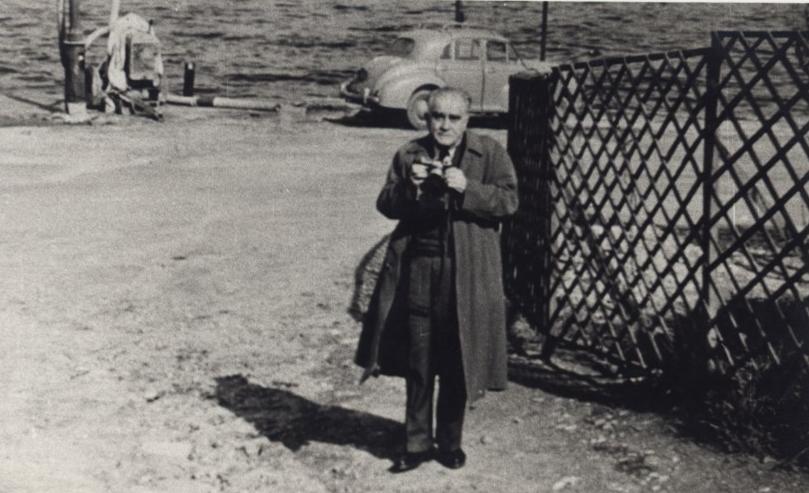
Ahmet Hamdi Tanpınar (Anadolu Agency)
Ahmet Hamdi Tanpınar’s novels progress through the world of individuals shaped within different historical periods and changing urban fabrics. In his novels, plot and character psychology move side by side; the flow of time, transformation of space, bonds with the past, changes in cultural fields, and the individual’s position in the face of these changes constitute the main themes of his texts. These themes become particularly evident in different dimensions in novels such as Mahur Beste, Sahnenin Dışındakiler, Huzur, Saatleri Ayarlama Enstitüsü, and Aydaki Kadın.
In Tanpınar’s novels, time is not merely a framework indicating “when” events occur; it is an organizing principle shaping the narrative. The characters’ daily lives expand through losses from the past, memories, returns, and associations. Consequently, the narrative does not adhere strictly to a chronological line but progresses through layers of the past opened within the “now.”
This temporal structure is concentrated in some novels within a compressed time span. Huzur and Aydaki Kadın are novels constructed around a twenty-four-hour time frame. In Huzur, objective time is concentrated in the period just before the outbreak of World War II; the narrative ends with the news of Germany’s invasion of Poland. Within this compressed time frame, while some sections cover events of a single day, others use flashbacks to bring in a longer past (approximately a year-long relationship story and earlier personal memories). Thus, a brief “now” transforms into an expanded narrative field through memory and internal monologue.
Another dimension of time emerges through the relationship between the novels and their historical background. Some of Tanpınar’s novels can be read within a broad time span extending from the Abdülhamid era to later periods. Mahur Beste is among the novels depicting the Abdülhamid era; the narrative expands around the central character’s life oriented toward the past, incorporating the stories of those who entered his life. This expansion constructs a portrait of a family and environment while simultaneously embedding how the past is lived in the “now” into the novel’s main structure.
Sahnenin Dışındakiler establishes the relationship between space and time through the conditions of occupied Istanbul. The novel opens with the sentence describing the protagonist’s arrival in Istanbul on a rainy, gloomy night in late September 1920; the narrative turns toward childhood memories, neighborhoods, and past individuals through flashbacks; then it constructs a second line covering approximately six months of events following his arrival in Istanbul. This temporal structure carries both the realm of memory opening toward the past and the events concentrated within a short period.
Spatially, Istanbul emerges as the primary narrative setting in Tanpınar’s novels. Space is not merely the “place where events occur”; the urban fabric, neighborhoods, interiors, rooms, objects, streets, and architectural environment are directly linked to the characters’ emotional worlds and life patterns. This connection becomes particularly evident in scenes where the change of space reveals the protagonist’s sense of dislocation.
The effects of space on the characters are not limited to grand urban panoramas; closed and confined spaces also hold a special place in the novel’s structure. In Mahur Beste, the protagonist’s creation of a personal space within his home exemplifies how space becomes a private sanctuary. In this novel, the attic becomes a narrow but continuous living space constructed by the character with books and objects, where he separates himself from the outside world; after marriage, a similar function is maintained through room arrangements. Thus, space becomes an element carrying the desire to withdraw from social relationships, to retreat inward, and to establish different relational forms over time.
In Tanpınar’s city and cultural writings, space—particularly architecture—also holds significant importance; this approach intersects with his spatial perception in novels. The transformation Istanbul underwent between 1908 and 1923 is examined alongside factors such as fires, wars, economic collapse, the empire’s dissolution, and civilizational change; this transformation merges with the background reinforcing the “urban change—personal fracture” connection in the novels. In this context, space becomes embedded in the novelistic world as a field carrying the tension between historical continuity and change.
In Tanpınar’s novels, the individual often occupies a position marked by adjustment difficulties in the face of the flow of time and transformation of space, feeling distance between his inner world and external reality. Alienation is not merely the “external” effect of social change; it emerges as a condition within the individual’s own life structure, his bond with the past, and his relationship with current conditions.
One of the most prominent examples of this theme is found in the life structure of the protagonist in Mahur Beste. The character struggles to gain acceptance within the social environment and leads an introverted life; he transforms the attic and later his room into a “private world” constructed around books and objects. Thus, alienation becomes visible not only as distance from the environment but also as a way of life oriented inward. The prominence of objects, clocks, books, and enclosed spaces expands the area of withdrawal from social relationships.
Sahnenin Dışındakiler links alienation with the city and historical conditions. The protagonist’s attachment to childhood memories upon returning to Istanbul, his awareness of the city’s changes, and his struggle to find a place for himself in the “outside the stage” atmosphere of occupied Istanbul result in his detachment from both space and the new order brought by time. This novel makes visible the gap between the individual’s desire to realize his dreams and the determinism of historical conditions through the city experience.
Huzur transforms the individual’s inner world into an expanded narrative field shaped by time and loss. The protagonist’s returns to the past, through childhood losses and relationships, form a significant part of the narrative. In some scenes, the protagonist’s wandering through the city (markets, the vicinity of the bedesten, encounters with old art objects) becomes a ground that intensifies inner fractures; the relationship between objects and spaces bearing traces of the past and the “present” becomes a field that complicates the individual’s self-positioning.
Aydaki Kadın also advances through the convergence of the individual’s inner world, intense emotional states within a short time frame, relationship tensions, and city landscapes. Within the twenty-four-hour temporal structure, the intertwining of personal life, relationship bonds, and city perception transforms alienation from a “result of external events” into an intrinsic theme connected to the individual’s internal structure.
When considered together, these novels reveal the alienation theme in the following dimensions:
In Tanpınar’s novels, civilizational change unfolds within a broad historical framework spanning from the late Ottoman period to the Republic. The novels, on one hand, carry traces of old ways of life and value systems; on the other hand, they incorporate a transformation field shaped by new institutions, new daily habits, and new cultural environments. This transformation becomes visible not through a one-dimensional “old–new” opposition but through the tensions between layers existing simultaneously within the flow of time.
This theme opens in Mahur Beste through the depiction of the Abdülhamid era and family structure. The novel, while broadly portraying the social circles, familial relationships, and daily life of the past era, strongly establishes the theme of “the past living in the present.” The protagonist’s orientation toward figures from the past places the past not as a fixed image but as a space reconstructed within the “now” at the center of the novel.
Huzur and Saatleri Ayarlama Enstitüsü address civilizational change within a broader social framework. In these novels, elements of cultural life (musical taste, urban language, rhythm of daily life, institutional environments) appear as parts of the transformation process. Particularly, elements such as time measurement, institutionalization, and the new order of urban life become tangible carriers of civilizational change. The characters’ positions in relation to the new order, their search for continuity in culture, and their ways of connecting with the past constitute the individual dimensions of civilizational change.
Sahnenin Dışındakiler considers civilizational change alongside the Istanbul of the occupation years and the presence of the National Struggle in Anatolia; the construction of Istanbul as “outside the stage” embeds the impact of changing political and social atmospheres on the narrative. In this context, civilizational change becomes visible not only at the cultural and institutional levels but also through the fragmentation of daily life in the city, the reformation of relationships, and the individual’s struggle to find a place.
In Tanpınar’s novels, the theme of civilizational change is not treated as a past completely left behind; rather, it is presented as a layer continuously returning through the city, objects, music, architecture, and social environment and existing within the present.
In Tanpınar’s novels, modernization is often narrated through institutions, bureaucratic order, the new rhythm of urban life, and transformations in the perception of time. Under this heading, the concept of “critique” becomes prominent in the sense that the novels treat modernization as a problematic field; they make visible the dissonances and mental tensions produced by the modern order in daily life.
One of the clearest fictional manifestations of this theme is the novel Saatleri Ayarlama Enstitüsü. The novel addresses the idea of measuring time and reorganizing daily life through the hour, intertwined with institutionalization practices. The establishment, functioning, expansion, and closure of the institute embed the logic of “new institution—new order” into the novel’s plot. In the narrative line, the coexistence of different eras (Abdülhamid, II. Meşrutiyet, Republic) constructs a structure demonstrating that the modernization experience is not confined to a single time; change has been experienced in different forms over a long period. The closure of the institute following a report represents a conclusion in which the idea of institutionalization enters into relation with external evaluation mechanisms.
The modernization theme also appears in novels at the level of mentality and daily life. In Huzur and Aydaki Kadın, the rhythm of urban life, changes in cultural circles, transformations in relationship forms, and the constraining effect of time become visible as tensions created by modernization on the individual. In Sahnenin Dışındakiler, the fragmented daily life of occupied Istanbul establishes a background where modernization intersects with urban conditions, and political and social atmosphere determines the individual.
Within this framework, the modernization theme in Tanpınar’s novels takes the following concrete forms:
Ahmet Hamdi Tanpınar’s concept of poetry is defined by his view of poetry as a distinct field separate from other literary genres and his central focus on language, rhythm, sound, and unity in constructing poetic texts. He positions poetry as an inward form of expression rather than speech; he draws a functional distinction between poetry and prose and emphasizes the creation of closed worlds in poetry. This approach is directly formulated in his letters with the phrase: “Poetry is not speaking, but silence”; he states that he expresses what he remains silent about in his stories and novels, and that he wants his poems to be “as closed worlds as possible.”
Tanpınar bases the construction of poetry on the idea of unity; he approaches poetry not as a collection of beautiful lines. In his letters, he emphasizes that poetry is not merely composed of successful individual lines; the essential issue of poetry is “vision” (perception/constructive imagination) and the form given to it. He argues that beautiful lines alone are insufficient, that poetry is not a “jewel box” accumulating fragments but a “taazzuv” (organic whole).
In terms of poetic form, Tanpınar treats meter and rhyme as tools that organize language and establish rhythm. He asserts that meter and rhyme establish rhythm; that rhythm exists in human life; that poetry is a “form art”; and that the word is composed of “meaning and sound.” His self-description as a poet in his early years as one “trying to find the sound of aruz within syllabic meter” clarifies the importance he assigns to measurement and sound structure in poetry.
His process of compiling his poetry into a book is also linked to this understanding. Although Tanpınar regarded poetry as “the most important matter of his life,” he was extremely cautious about publishing his poems; only under the persistent insistence of close friends did he publish the collection Şiirler approximately one year before his death, including 37 poems. Later compilations under the title All Poems expanded the number of poems; the 2007 edition includes 100 poems, incorporating poems from journals and notes in addition to earlier texts.
The formation of Tanpınar’s poetics is grounded in both the tradition of Turkish poetry and his reading relationships with Western poetry and thought. One of the key texts in his poetics is the letter known as “Letter to a Young Girl from Antalya.” In this text, he explicitly acknowledges the influence of Yahya Kemal on his poetic and aesthetic development; he states that Yahya Kemal held a decisive place in him regarding the idea of “perfection” and “linguistic beauty,” and that “he opened the door to language for us.”
Among the sources of Tanpınar’s poetic world is Ahmet Haşim; he mentions having read and loved Haşim earlier and states that Yahya Kemal and Haşim made him forget “those who came before them.” These two figures form one aspect of Tanpınar’s relationship with linguistic sensitivity, rhythm, and imagery in poetry.
His connection with Western literature and thought forms another line of his poetics. Among the poets Tanpınar chose as his masters are Paul Valéry, Charles Baudelaire, Stéphane Mallarmé; particularly, his direct acknowledgment of Valéry’s influence on his own poetry is noted. Along the same line, he mentions the influence of Bergson on the understanding of time in poetry and prose, and of psychoanalysts on the issue of dreams.
These sources reveal three main axes in Tanpınar’s poetics:
In Tanpınar’s poetics, letters and diaries are not merely “personal records”; they also provide information on the rhythm of poetic work, the revisiting of texts, and the process of constructing poetry. In letters, the sharing of poetic drafts, requests for revision and annotation, reveal that the process of writing poetry developed as a collaborative labor with correspondents.
In Tanpınar’s poetic world, the pursuit of “pure poetry” is addressed alongside the idea of poetry’s unique closedness, linguistic craftsmanship, and unity. In this context, referring to the French concept of “poésie pure,” he acknowledges the difficulty of writing such poetry while still expressing his desire to be recognized as a poet; thus, throughout his life, the number of poems he wrote remained limited.
The pursuit of pure poetry manifests in Tanpınar through two main outcomes:
This pursuit encompasses the formal structure of poetry. His assertion that meter and rhyme activate the possibilities of language and that rhythm is a constitutive element in poetry demonstrates that form in poetry is not a “decorative outer layer” but a structure carrying meaning and sound together. His phrase “the word is meaning and sound” reveals how the pursuit of pure poetry operates at the linguistic level: the word is not merely a unit of meaning but an element possessing sonic value.
The pursuit of pure poetry also aligns with Tanpınar’s attitude toward compiling his poetry. His prolonged revisiting of poetic texts, his cautious selection of a limited number of poems for publication, and his decision to include only 37 poems in his first book reflect his meticulousness in achieving the final form of poetry. The expansion of the number of poems in later compilations is linked to a process of consolidation, bringing together poems published in different journals and incorporating texts from notes.
In Ahmet Hamdi Tanpınar’s conception of city and space, Istanbul occupies a central position both as the subject of his works and as a structural element of his narrative. In Beş Şehir, among the cities discussed, Istanbul is given a distinct position due to being the author’s birthplace and its association with the “ancient past.” The cities discussed in the book are listed as Ankara, Erzurum, Konya, Bursa, and Istanbul. In this context, Istanbul is identified as one of the cities linked to the Ottoman historical heritage.
In the “Istanbul” section of Beş Şehir, Tanpınar constructs a framework regarding the intellectual and cultural climate of the era related to the city; the phrase “we are all children of a crisis of consciousness and self” appears in the text. This sentence is one of the expressions indicating that the city description in the book encompasses not only the physical environment but also the intellectual background associated with the city.
The depiction of Istanbul in Tanpınar’s texts is constructed through the integration of urban elements (historical structures, neighborhoods, fortresses, mosques, and similar elements) with cultural memory and urban fabric. In evaluations of Beş Şehir, it is emphasized that only through culture do “stone, earth, nature, and all elements of the city” speak; city reading is thus understood as the interpretation of these elements. Similarly, the comprehensive treatment of historical spaces and traditions within a broad cultural field in the book is recorded as a framework demonstrating the method of city narrative, including Istanbul.
In Tanpınar’s concept of the city, Istanbul is not merely a singular space but is also positioned as a part of the city perception extended throughout Beş Şehir. In the preface of Beş Şehir, the subject of the book is explained as “the sorrow for things lost in our lives and the desire for the new”; cities are presented as areas carrying this thematic framework. This context allows Istanbul to be addressed in the text in terms of its urban identity and cultural elements.
Tanpınar’s perception of city and space in terms of Anatolian cities becomes particularly evident around the work Beş Şehir. The cities discussed in the book are listed as Ankara, Erzurum, Konya, Bursa, and Istanbul; it is noted that these cities are examined in terms of their historical and cultural aspects, and that their symbolic relationships with historical periods are included in the framework of the text. In this sequence, Bursa and Istanbul are symbolically associated with Ottoman history, Konya and Erzurum with Anatolian Seljuk history, and Ankara with the history of the Republic of Türkiye.
In the city descriptions of Beş Şehir, cities are not presented merely by their external appearances but as spaces constructed through historical depth, cultural layers, daily life, and social identity. In Tanpınar’s world, cities are defined as areas where “human experience, historical depth, spatial construction, and temporal rhythm” converge; it is noted that cities are considered together with elements such as bazaars, architectural silhouettes, and solidarity culture.
Among the Anatolian cities, Bursa is placed early in the development process of Beş Şehir. It is noted that some sections of the book were serialized in magazines; the “Bursa” section was written in 1941, the “Ankara” section in 1942, the “Erzurum” section in 1944, the “Istanbul” section in 1945, and the “Konya” section in 1946. These dates serve as chronological evidence showing that Tanpınar produced his city writings within a specific working schedule.
A direct example from Tanpınar’s narrative in Beş Şehir regarding Bursa is also provided: Tanpınar states that he visited Bursa “a few times,” and that each time, upon his first step, he found himself “within this history, which resembles a legend”; he says he “almost lost the concept of time.” These sentences serve as an internal textual example of how the city’s historical texture and spatial sensation are positioned in the narrative.
Another aspect of the framework regarding Anatolian cities is the expression in Beş Şehir that the cities carry a rich content in terms of “common national cultural elements.” It is noted that historical mosques, figures with monument-like status, customs and traditions, food and drink culture, and social lifestyle are present in the text; also, historical place names such as fortresses and tombs (e.g., Ankara Castle, Erzurum Castle, Konya Castle; Emir Sultan Tomb, Yeşil Tomb, etc.) are mentioned alongside these cultural elements.
Regarding how these cities produce a “city reading” in Tanpınar’s narrative, evaluations of Beş Şehir state that the book turns the cities into “mirrors of our culture”; the person who reads the city begins to observe their own city with “different eyes” without realizing it. This interpretation, together with the explanation that urban elements acquire meaning through culture, presents Tanpınar’s approach to Anatolian cities as one that goes beyond mere spatial description, viewing urban fabric as a cultural field.
In Tanpınar’s perception of city and space, Paris is not merely a travel destination but functions as a distinct subject in his writings on the city. Tanpınar elaborates on his observations of Paris in the book Yaşadığım Gibi under the heading “Parisian Accidents.” In the essay titled “First Days in Paris,” he constructs his perception of the city through metaphors, associations, and definitions; for example, he defines the Seine as “itself,” and states that although guidebooks describe streets and alleys, the layered structure of the city cannot be grasped by fragmentation.
Another expression regarding how Paris is treated in Tanpınar’s texts as “layers of the city” and “accumulation of the past” is shaped around the idea that cities “give their forgotten past as if it were the present.” This approach is embedded in a narrative structure where Paris is understood as simultaneously possessing accumulated cultural heritage and the intensity of the present moment. Within the same narrative, the city is reconstructed as the “city of sounds”; different sensory elements (sound, movement, crowd) are incorporated into the city description.
Tanpınar’s visits to Paris have been chronologically determined. One text notes that Tanpınar made his first trip to Paris on 3 April 1953, stayed for six months; returned to Paris in 1955 for the Filmology Congress; traveled for a week in 1957 for the Munich Orientalists Congress; and spent one year in Paris in 1959. It is also noted that during these periods he visited other European destinations such as London, Rome, Florence, Naples, and Spain.
A more detailed record of Tanpınar’s European travels indicates that he traveled abroad six times: six months in 1953, three weeks in 1955 (Paris Filmology Congress), one month in 1955 (Venice Congress on Art History), one week in 1957 (Munich Orientalists Congress), one week in 1958 (Philosophy Congress in Venice and Padua), and one year in 1959; he spent a significant portion of these periods in Paris and also visited countries such as England, Belgium, the Netherlands, Spain, Italy, Germany, and Austria.
The place of Paris in Tanpınar’s aesthetic and urban approach becomes visible through his writings on the city–art relationship. In his writings on Paris, he describes the city as an “actor, teacher, guide”; he expresses the effects of the city on individuals through the “crowds in the city’s hands” and the compelling nature of urban life. Such expressions demonstrate that in his writings on Paris, Tanpınar constructs a narrative that treats the city not merely as a spatial depiction but as a system encompassing urban life.
Tanpınar’s experience of Paris and Europe is also linked to his expression in Beş Şehir of “accidents of my life”; it is noted that impressions of Paris are presented through his diaries, letters, and the writings “Parisian Accidents.” This context records that Tanpınar treated cities through different genres and textual groups as biographical encounters.
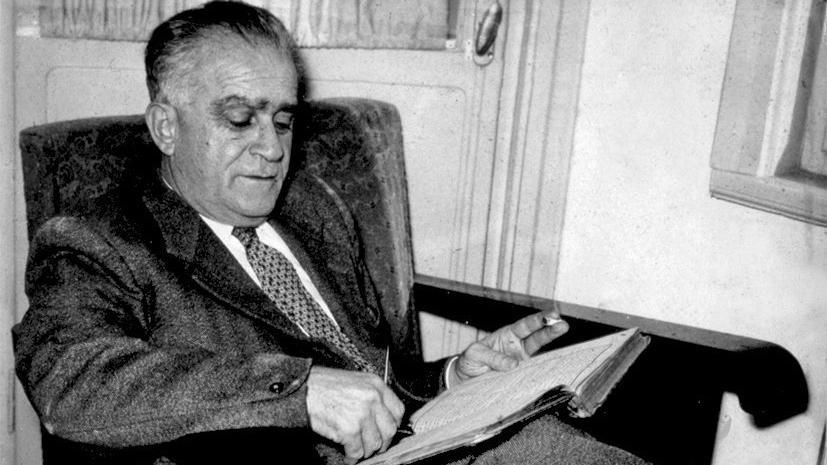
Ahmet Hamdi Tanpınar (Anadolu Agency)
Ahmet Hamdi Tanpınar’s final years were marked by health problems. In January 1962, during a period of worsening bronchitis, he collapsed at the faculty on 23 January 1962 and was hospitalized. The same record notes that he passed away at 5:40 a.m. on 24 January.
The cause of death was recorded as a heart attack or heart condition. His funeral prayer was held at Süleymaniye Camii; he was then buried next to Yahya Kemal’s grave in Rumelihisarı. On his tombstone are inscribed the lines: “Neither within time nor entirely outside it.”
Ahmet Hamdi Tanpınar’s relationship with literary and cultural circles during his lifetime took shape within both a close circle of friends and a critical and intellectual environment. Among those in his close circle, Hasan Âli Yücel and Ahmet Kutsi Tecer stand out; this circle formed a continuous area of contact for Tanpınar’s literary life and daily relationships.
The approach toward Tanpınar among his contemporaries appeared in different forms within the literary debates and cultural climate of the time. Among various figures of the era, names such as Nurullah Ataç, Sabahattin Eyüboğlu, Mazhar Şevket İpşiroğlu, and Adalet Cimcoz are mentioned together in the context of evaluations of Tanpınar’s writings. This context shows that Tanpınar was not only engaged through his literary output but also participated in the intellectual and evaluative atmosphere of the cultural debates of the time.
The number of critical writings directed at Tanpınar during his lifetime is considered within certain limits. Approximately 35–40 writings on Tanpınar were produced during the roughly thirty-year period from the 1930s until his death; this provides a framework for understanding his visibility and level of debate during the era. This picture indicates that despite Tanpınar’s prolific output in the fields of novel, short story, essay, and literary history, the number of critical and evaluative texts about him remained limited.
Tanpınar’s position among his contemporaries is not only determined by the “number of writings” but also by how his works and ideas were positioned. It is noted that some of the ideas Tanpınar expressed during his lifetime encountered resistance as “not taken seriously” or were viewed as “poetic fantasy.” This situation requires that his position among contemporaries be understood as a combination of continuous relationships within his close circle and varying levels of reception within the cultural atmosphere of the time.
When evaluating Tanpınar’s place in literature and cultural life alongside his contemporaries, the role of his students and academic circle also becomes visible. Among Tanpınar’s students, M. Orhan Okay is mentioned as the one who published the most writings on him and later produced book-length studies; this information allows us to recognize Tanpınar not only as a writer but also as an academic figure who left an imprint on a generation through his lectures and teaching. In Orhan Okay’s own account, interest in Tanpınar increased not during his student years but many years after his death, particularly after the publication of his articles, essays, and letters; this process shows that Tanpınar’s position among his contemporaries became broader over time through expanded reading and evaluation.
After Tanpınar’s death, his visibility in literature and cultural life increased significantly; the main dynamics of this increase include newly published texts, compilation and publication activities, bibliographic studies, theses, and special issues and dossier preparations. It is clearly stated in relevant evaluations that interest in Tanpınar intensified progressively after his death.
This intensification became particularly evident from the 1970s onward. From the 1970s, numerous works and articles were written on Tanpınar’s life, memories, personality, and major themes and ideas in his works; theses were prepared; this period is presented as a turning point. In the same context, it is noted that Tanpınar’s views and ideas began to be more widely understood and valued only after a decade following his death, in the 1970s; particular emphasis is placed on the efforts of Mehmet Kaplan and the impact of certain publications.
In the expansion of posthumous perception, the compilation and publication of Tanpınar’s previously scattered writings and personal texts play a significant role. The compilation and publication of his letters; the preparation and publication of his diaries with notes and explanations; the compilation of lecture notes taken by his students created a publishing ground that allowed Tanpınar to be read not merely as a “novelist and poet” but more comprehensively as a “essayist, thinker, and teacher.” In this context:
Another important factor in the posthumous perception of Tanpınar is the publication of some of his works after his death or their reissue in new editions. In this context:
The expansion of Tanpınar’s perception is also marked by the quantitative growth of academic and critical production. The second edition of the collection A Rose in the Darkness: Writings on Tanpınar includes a detailed bibliography of 855 articles and 27 books published up to 2007, along with selected writings; this reveals the volume of literature on Tanpınar. Additionally, various bibliographic studies have been prepared; talks and speeches delivered at conferences and commemorative events honoring Tanpınar have been published; and various journals have prepared special issues, dossiers, or special sections; all of these indicate that posthumous perception expanded not only through books and theses but also through periodical publications and cultural events.
In this framework, Tanpınar’s posthumous perception is summarized in three main channels:
Accessed January 21, 2026.https://dergipark.org.tr/tr/pub/tullis/article/437633
Anadolu Ajansı. "Türk Edebiyatının Zaman Avcısı: Ahmet Hamdi Tanpınar." *AA*. Accessed January 21, 2026.https://www.aa.com.tr/tr/kultur/turk-edebiyatinin-zaman-avcisi-ahmet-hamdi-tanpinar/3116553
Apaydın, Ümit. *Ahmet Hamdi Tanpınar ve Nurettin Topçu’nun Eserlerinin Kültür ve Uygarlık Kavramları Açısından Karşılaştırılması*. Master's thesis, Ondokuz Mayıs Üniversitesi Sosyal Bilimler Enstitüsü, 2006.https://tez.yok.gov.tr/UlusalTezMerkezi/tezDetay.jsp?id=aDlCskiCrTgVM5ElqZyX0g&no=N3KTX8k49ZDV8aFm-uoQ2w
Avşar, Ziya. "Klasik Türk Edebiyatı Yorumcusu Olarak Tanpınar." The Journal of Turkic Language and Literature Surveys (TULLIS) 3, no. 1 (2018): 1–9.
Balcı, Yunus. “Bir Sanatkârın Bilim Adamı Olarak Portresi: Ahmet Hamdi Tanpınar.” *Journal of Turkish Studies* (2009). Accessed January 21, 2026.https://turkishstudies.net/turkishstudies?mod=makale_tr_ozet&makale_id=13799
Doğramacıoğlu, Hüseyin. “Ahmet Hamdi Tanpınar’ın Edebiyat Tarihi Araştırmacılığı Üzerine.” *Journal of Turkish Studies* (2010). Accessed January 21, 2026.https://turkishstudies.net/turkishstudies?mod=makale_tr_ozet&makale_id=14533
Evis, Ahmet. “Ahmet Hamdi Tanpınar Şiirlerinde Varoluşsal Problem ve Yalnızlık.” *Selçuk Üniversitesi Türkiyat Araştırmaları Dergisi* 41 (2017): 195–212. Accessed January 21, 2026.https://dergipark.org.tr/tr/pub/sutad/article/318020
Gündüz, Olgun. “Türkiye’nin Batılılaşma Serüveninde Özgün Bir Portre: Ahmet Hamdi Tanpınar.” *Uludağ Üniversitesi Fen-Edebiyat Fakültesi Sosyal Bilimler Dergisi* 3, no. 3 (2002): 13–28. Accessed January 21, 2026.https://dergipark.org.tr/tr/pub/sosbilder/article/246968
Korkut, Ece. “Ahmet Hamdi Tanpınar’ın Şiir Dili ve Evreni.” *Hacettepe Üniversitesi Edebiyat Fakültesi Dergisi* 26, no. 1 (2009). Accessed January 21, 2026.https://dergipark.org.tr/tr/pub/huefd/article/500923
Koç, Murat. “Ahmet Hamdi Tanpınar’ın Kültür ve Sanat Dünyasında Paris.” *Türk Kültürü İncelemeleri Dergisi* 25 (2011): 127–150. Accessed January 21, 2026.https://dergipark.org.tr/tr/pub/tkidergi/article/1305668
MSGSÜTanpınar Merkezi and Application Center. "Ahmet Hamdi Tanpınar." Tanpınar Center. Accessed January 21, 2026.http://tanpinarmerkezi.msgsu.edu.tr/94.html
Okay, M. Orhan. “Abdülhalim Memduh’tan Ahmet Hamdi Tanpınar’a Edebiyat Tarihlerinde Yenileşmenin Sınırları.” *Türkiye Araştırmaları Literatür Dergisi* 8 (September 2006): 9–22. Accessed January 21, 2026.https://dergipark.org.tr/tr/pub/talid/article/530614
Okay, M. Orhan. “Tanpınar, Ahmet Hamdi.” *TDV İslâm Ansiklopedisi*. Accessed January 21, 2026.https://islamansiklopedisi.org.tr/tanpinar-ahmet-hamdi
Okumuş, Salih, and İdris Şahin. “Ahmet Hamdi Tanpınar’ın Romanlarında Zaman ve Mekân Bağlamında Yabancılaşmanın Tezahürleri.” *Ordu Üniversitesi Sosyal Bilimler Enstitüsü Sosyal Bilimler Araştırmaları Dergisi* 3, no. 5 (2012): 108–120. Accessed January 21, 2026.https://dergipark.org.tr/tr/pub/odusobiad/article/290086
Sakallı, Cemal. “Edebiyat Tarihçisi Olarak Tanpınar.” *Mersin Üniversitesi Dil ve Edebiyat Dergisi* 9, no. 2 (2013): 13–31. Accessed January 21, 2026.https://dergipark.org.tr/en/pub/mersinjll/article/207852
Sazyek, Esra. “Anılarda Tanpınar.” *Journal of Turkish Research Institute* 62 (2018): 201–226. Accessed January 21, 2026.https://dergipark.org.tr/tr/pub/ataunitaed/article/688353
Sağlam, M. Halil. “Ahmet Hamdi Tanpınar’ın Beş Şehir Denemesinde Millî Kültür.” Uluslararası Toplumsal Bilimler Dergisi 6, no. 2 (2022): 236–269. Accessed January 21, 2026.https://dergipark.org.tr/tr/pub/toplumsalbilimler/article/1152469
TRT Haber. "Türk Edebiyatının Usta Kalemi: Ahmet Hamdi Tanpınar." YouTube Video. Accessed January 21, 2026.https://www.youtube.com/watch?v=huxRQN4hEGs
TYB Akademi. "Ahmet Hamdi Tanpınar." *TYB Akademi: Dil, Edebiyat ve Sosyal Bilimler Dergisi*, no. 5. Accessed January 21, 2026.https://www.tybakademi.com/5-ahmet-hamdi-tanpinar/
Uçan, Hilmi. “Entelektüelin Kimliği ve Bir Entelektüel Olarak Tanpınar.” *Türk Dünyası İncelemeleri Dergisi* 8, no. 2 (2008): 117–126. Accessed January 21, 2026.https://dergipark.org.tr/tr/download/article-file/406373
Yavuz, Hilal. “Atılmış Hayat Parçaları: Tanpınar’ın Huzur Romanında Hafıza ve Mekân İlişkisi.” Monograf: Edebiyat Eleştirisi Dergisi 5 (2016): 69–84. Accessed January 21, 2026.http://monografjournal.com/sayilar/5/atilmis-hayat-parcalari-monograf-sayi-5.pdf
Yesevi Üniversitesi. "Ahmet Hamdi Tanpınar." *Türk Edebiyatı İsimler Sözlüğü*. Accessed January 21, 2026.https://teis.yesevi.edu.tr/madde-detay/ahmet-hamdi-tanpinar
Yılmaz, Dursun. “Gerçeği Kurgulayanlar: Ayarcı (Tanpınar) ve Barnum’un Manipülasyon Stratejileri.” *İnönü Üniversitesi İletişim Fakültesi Elektronik Dergisi* 10, no. 2 (2025): 1059–1087. Accessed January 21, 2026.https://dergipark.org.tr/tr/pub/inifedergi/article/1737127
Özcan, Nezahat. “Tanpınar’ın Günlüklerinden Bakıldığında Aydaki Kadın.” *Türkbilig* 20 (2010): 226–247. Accessed January 21, 2026.https://dergipark.org.tr/tr/download/article-file/143205
Özgür, Nejla. *Modernleşme ve Aydın Kavramları Çerçevesinde Edebiyat Bağlamında Aykırı Eserler Veren Romancı/Aydınlar: Ahmet Hamdi Tanpınar, Yusuf Atılgan, Oğuz Atay*. Master's thesis, İstanbul Bilgi Üniversitesi Sosyal Bilimler Enstitüsü, 2010.https://tez.yok.gov.tr/UlusalTezMerkezi/tezDetay.jsp?id=S72vBWQgRhQ8um-ShwJOTw&no=rXz35W6pTl5l-H0eQaWYig
Şahin, İbrahim. “Tanpınar Biyografisine ve Poetikasına Katkı.” *TÜRÜK Uluslararası Dil, Edebiyat ve Halkbilimi Araştırmaları Dergisi* 8, no. 23 (2020): 15–50. Accessed January 21, 2026.http://www.turukdergisi.com/Makaleler/1228480010_12.Prof.Dr%20İ.Şahin%2015-50.pdf
Şenderin, Zübeyde. “Ahmet Hamdi Tanpınar’ın Hikâyelerinde Karakter Yaratımında Çocukluk Yıllarının Rolü.” *Gazi Türkiyat* 1, no. 2 (2008): 169–184. Accessed January 21, 2026.https://dergipark.org.tr/tr/pub/gaziturkiyat/article/90214
[1]
TYB Akademi. “Ahmet Hamdi Tanpınar.” TYB Akademi: Dil, Edebiyat ve Sosyal Bilimler Dergisi, Sayı 5. Erişim 21 Ocak 2026. https://www.tybakademi.com/5-ahmet-hamdi-tanpinar/
[2]
Yesevi Üniversitesi. “Ahmet Hamdi Tanpınar.” Türk Edebiyatı İsimler Sözlüğü. Erişim 21 Ocak 2026. https://teis.yesevi.edu.tr/madde-detay/ahmet-hamdi-tanpinar

Ahmet Hamdi Tanpınar
Profession | Poet novelist short story and essay writer literary historian academic | ||||||||
|---|---|---|---|---|---|---|---|---|---|
Birth | 23 June 1901, Istanbul | ||||||||
Burial | Rumelihisarı Cemetery (next to Yahya Kemal Beyatlı's grave) | ||||||||
Academic Position | Istanbul University Faculty of Letters, Modern Turkish Literature (19th century) | ||||||||
Literary Genres | Poetry, novel, short story, essay, literary criticism | ||||||||
Major Works | History of Turkish Literature of the 19th Century, Huzur, The Institute for Setting Clocks, Mahur Beste, Those Outside the Stage, The Woman on the Moon (incomplete, published posthumously), Five Cities, Poems | ||||||||
Fields of Study | Modern Turkish literature, literary history, aesthetics, art history, mythology | ||||||||
Death | 24 January 1962, Istanbul | ||||||||
No Discussion Added Yet
Start discussion for "Ahmet Hamdi Tanpınar" article
Life
Birth and Family
Childhood and Early Education
Mother’s Death and Psychological Impact
Education
Darülfünun Years
Influence of Yahya Kemal Beyatlı
Formation of Academic Identity
Professional Life
Teaching Years
Güzel Sanatlar Akademisi Period
Istanbul University and Professorship
Overseas Assignments and Travels
Political and Administrative Roles
Parliamentary Service
Ministry of National Education Inspectorate
Literary Identity
Poet
Novelist
Mahur Beste
Huzur
Sahnenin Dışındakiler
Saatleri Ayarlama Enstitüsü
Aydaki Kadın
Short Story and Essay Writing
Short Story Writing
Essay Writing
Reflections in Diaries and Letters
Letters
Diaries
Literary History and Academic Work
History of 19th-Century Turkish Literature
Concept of Literary History
Method and Stylistic Features
Art and Aesthetic Understanding
Concept of Time
Dream and Memory
Music, Architecture, and Plastic Arts
Approach to the East–West Issue
Key Themes in the Novels
Time and Space
Alienation and the Individual
Civilizational Change
Critique of Modernization
Poetic World
Concept of Poetry
Sources of Poetics
Pursuit of Pure Poetry
Cities and Spatial Perception
Istanbul
Anatolian Cities
Paris and European Experience
Death
Date of Death and Final Days
Place in Literature and Cultural Life
Position Among Contemporaries
Perception of Tanpınar After His Death