


This article was automatically translated from the original Turkish version.
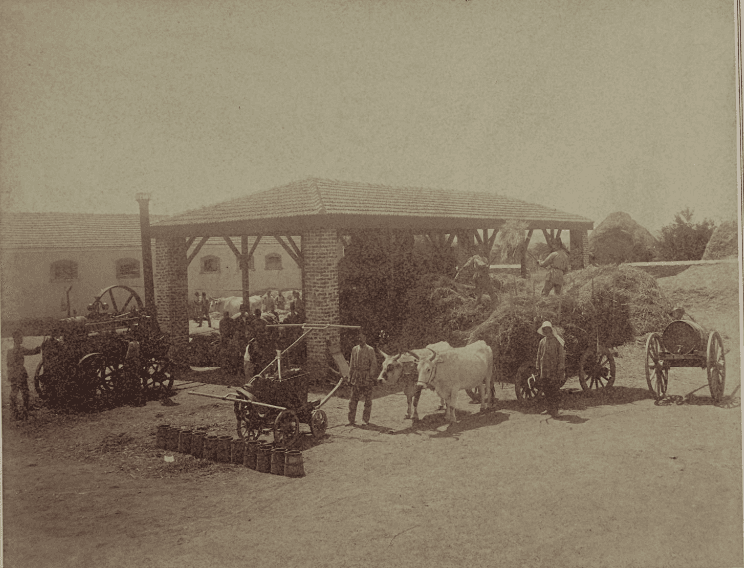
Threshing Machine and Hangar at Selanik Hamidiye Ziraat Ameliyat Mektebi
Founding Period | Tanzimat Period | ||||||||
|---|---|---|---|---|---|---|---|---|---|
First School | Ayamama Agricultural School (1848 / Istanbul) | ||||||||
Most Comprehensive School | Halkalı Higher Agricultural School (1892–1928) | ||||||||
Lessons | Agriculture Animal Husbandry Chemistry Land Surveying Forestry Veterinary Medicine Horticulture | ||||||||
Provincial Schools | Edirne Ankara Bursa Thessaloniki | ||||||||
Legal Regulation | Regulation on Agricultural Education (1912) | ||||||||
Republican Period | Ankara Higher Institute of Agriculture (1933) | ||||||||
Agriculture Schools are educational institutions established during the Ottoman Empire and the early years of the Republic of Türkiye to teach modern agricultural techniques, train qualified personnel, and enhance agricultural production. These schools emerged as part of the modernization efforts that began with the Tanzimat period, driven by the need to renew agriculture.
In the 19th century, although agriculture formed the foundation of the Ottoman state’s economy, it was carried out using traditional and primitive methods. Tanzimat administrators placed importance on agricultural education to implement scientific methods, update existing practices, and meet the raw material needs of industry. In particular, the effort to make cotton suitable for industrial use led to the recruitment of experts from America and the idea of establishing an educational institution to promote modern agriculture. The primary goals of agriculture schools were to diversify and increase agricultural output, encourage the cultivation of export-oriented products, satisfy the raw material needs of domestic industry from within the country, and modernize agricultural tools and methods.
The first modern agricultural educational institution in the Ottoman Empire, the Ziraat Tâlimhânesi (Agriculture School), began its establishment in 1847 at the Yeşilköy Ayamama Farm in Istanbul and started accepting students in 1848. This school also holds the distinction of being the country’s first active vocational-technical school. Its initial purpose was to improve cotton cultivation and supply high-quality raw material to a printing factory, but its mission later expanded to teaching modern methods across all areas of agriculture.
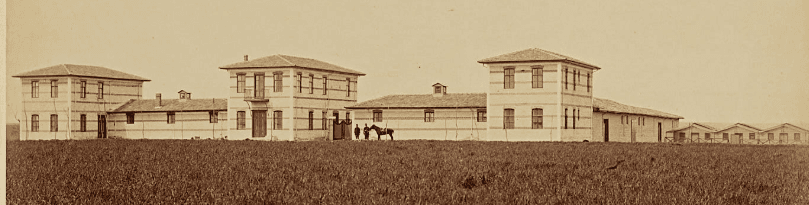
Ayamama Farm during the reign of Abdülhamid II (Istanbul University Library)
The school’s curriculum was primarily practical and included subjects such as arithmetic, geography, geometry, biology (ilm-i nebatat and hayvanat), agriculture, horticulture, sufficient veterinary science, sugar production, sericulture, and Merino sheep breeding. The teaching staff included American expert Dr. Davis, director Hüseyin Efendi, and later Ağaton Efendi. The first students were selected from the Mekteb-i Tıbbiye, and by 1849 the student population exceeded 50.
In 1850 the school was placed under the Ministry of Public Works (Nafia Nezareti). However, due to unfavorable conditions at Ayamama Farm—including harsh climate, student illnesses, and insufficient teaching materials and books—the students were temporarily transferred to the Mekteb-i Tıbbiye in 1851. The school was closed by the end of 1851 or in 1852 on the grounds that it failed to deliver the expected benefits and did not train students for rural areas. This first attempt operated for approximately four years before being shut down due to inadequate planning and financial difficulties.
Approximately 40 years after the closure of the Ayamama Agriculture School, efforts to establish a modern agricultural school led to the founding of the Halkalı Agriculture School. Land in Halkalı was purchased in 1883, its regulations were published in 1884, and construction of the school building began. With completion of construction in 1891, the school officially commenced agricultural education in October 1892. However, since veterinary students had already begun their education in Halkalı from 1891, the school was for a time known as the Halkalı Agriculture and Veterinary School. The veterinary classes were transferred in 1894 to the newly established Mülkiye Veterinary School in Istanbul due to space constraints and administrative difficulties.
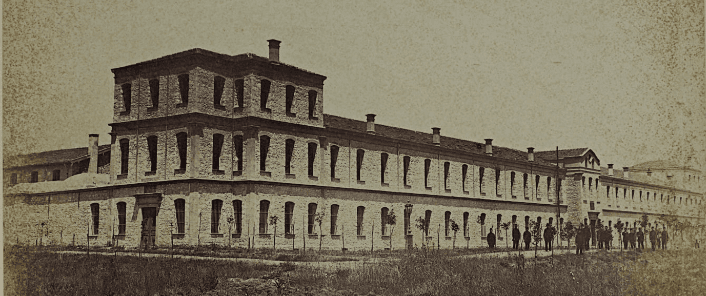
Side View of Halkalı Agriculture School (Istanbul University Library)
In 1893, the higher classes of the Forestry School were also relocated to Halkalı, and the school began offering forestry education. According to the 1903 regulations, the school’s name was changed to Halkalı Higher Agriculture and Forestry School and its duration of study was extended to four years. Forestry education was separated from Halkalı in 1909–1910 with the establishment of an independent Higher Forestry School in Bahçeköy.
According to the 1884 regulations of the Halkalı Agriculture School, the duration of education was three years and it was planned to admit 30 free boarding students annually. The curriculum included theoretical and practical subjects such as algebra, mechanics, geometry, land surveying, chemistry, agriculture, horticulture, forestry, irrigation, animal husbandry, agricultural economics, agricultural law, and French.
The Halkalı Agriculture School underwent various administrative and structural changes, occasionally faced land-related problems, and considered relocation. Although the school was forced to close during World War I and the Armistice years, it reopened during the Republic period. The Halkalı Agriculture School, which played a leading role in popularizing modern agriculture through education, methods, and tools, was closed in 1928 and its students were transferred to the Higher Forestry School in Istanbul.
To provide agricultural education outside Istanbul, schools were established in various provinces:
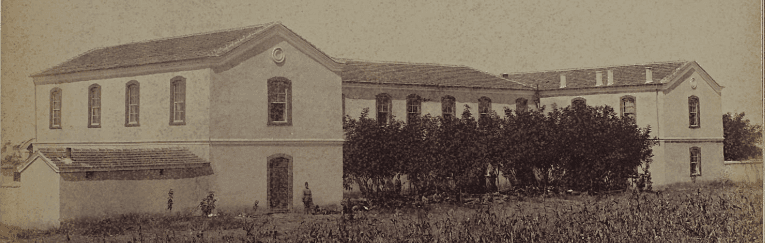
Thessaloniki Agriculture School (Istanbul University Libraryi)
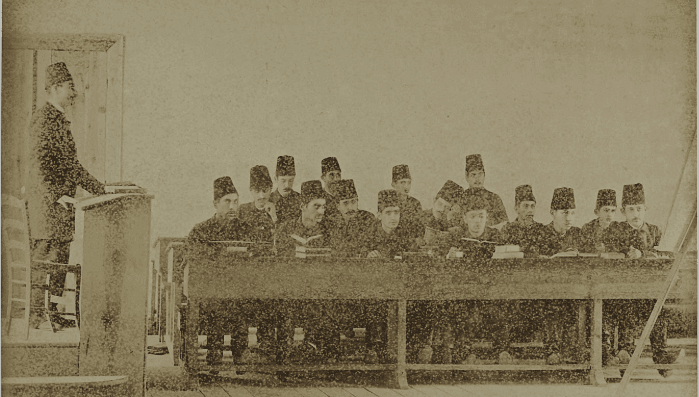
Classroom of Hüdavendigâr Hamidiye Agriculture Practical School (Istanbul University Library)
In addition to general agricultural education, specialized schools were established in specific fields:
Established on 6 March 1917 in Istanbul by the Himaye-i Etfal Cemiyeti for orphaned and homeless children. The dormitory provided practical and theoretical agricultural education in areas such as vegetable growing, horticulture, floriculture, beekeeping, and poultry farming. It continued its activities during the early years of the Republic but closed in 1931 due to agricultural education reforms and financial difficulties in the 1930s.
The “Regulations on Agricultural Education” of 10 February 1912 designed agricultural schools as a four-tiered system comprising labor schools, farm schools, agricultural practical schools, and regional agricultural schools, but full implementation was prevented due to World War I.
The legacy of agricultural education inherited from the Ottoman Empire was restructured through comprehensive reforms in the early years of the Republic. During this period, the state adopted the goal of creating a modern agricultural culture. The Law No. 1109 of 1927 planned the reform of existing agricultural schools and the establishment of new institutes.
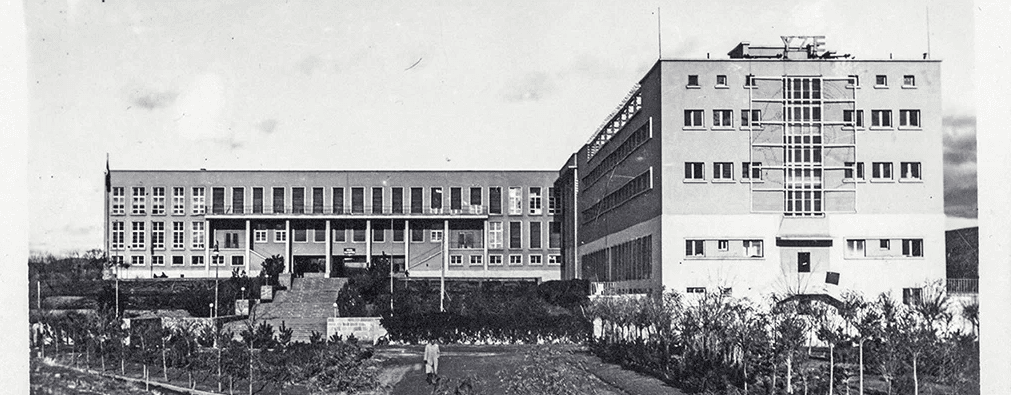
Ankara Higher Institute of Agriculture (Maarif Ansiklopedisi)
In 1930 a Higher Agriculture School was opened in Ankara, and in June 1933 it was transformed into the Ankara Higher Institute of Agriculture (AYZE). The institute provided education at the faculty level in agriculture, veterinary medicine, forestry, and agricultural arts; conducted scientific research; and contributed to the dissemination of modern agricultural techniques. AYZE was closed in 1948, and its faculties were attached to Ankara and Istanbul universities.
The agriculture schools established during the Ottoman period faced numerous challenges, including financial difficulties, lack of qualified personnel, insufficient teaching materials, unsuitable physical conditions, and instability. Additionally, external factors such as capitulations and Düyun-u Umumiye shaped agricultural policies and, consequently, agricultural education priorities according to foreign interests rather than national needs. Despite all these difficulties, these institutions laid a crucial foundation for establishing a modern awareness of agriculture, introducing new techniques, and taking steps toward agricultural development. With comprehensive reforms during the Republic era and the establishment of the Ankara Higher Institute of Agriculture, agricultural education acquired a more systematic and scientific structure.
Demirel, M., and Doğanay, F. K. “Osmanlı’da Ziraat Eğitimi: Halkalı Ziraat Mektebi.” *Uludağ Üniversitesi Fen-Edebiyat Fakültesi Sosyal Bilimler Dergisi* 12, no. 21 (2011): 183–199. Accessed May 18, 2025.https://dergipark.org.tr/en/pub/sosbilder/issue/23065/246474
Dölen, Emre. “Ankara Yüksek Ziraat Enstitüsü.” *Türk Maarif Ansiklopedisi*. Accessed May 29, 2025.https://turkmaarifansiklopedisi.org.tr/ankara-yuksek-ziraat-enstitusu/#yazar-1
Istanbul University Library. *Nadir Eserler Koleksiyonu, II. Abdülhamid Han Fotoğraf Albümleri*. Accessed May 29, 2025.
Sarıkaya, M. “Ziraat Mektepleri.” *Kafdağı* 2, no. 1 (2017): 24–37. Accessed May 18, 2025.https://dergipark.org.tr/tr/pub/kafdagi/issue/49526/634127
Yıldırım, Mehmet Ali. “Osmanlı’da İlk Çağdaş Zirai Eğitim Kurumu: Ziraat Mektebi (1847–1851).” *OTAM Ankara Üniversitesi Osmanlı Tarihi Araştırma ve Uygulama Merkezi Dergisi* 24 (July 2008): 223–240. Accessed May 18, 2025.https://doi.org/10.1501/OTAM_0000000552
Çeşme, Volkan. “Osmanlı’da Ziraati Modernleştirme Sürecinde Halkalı Ziraat Mektebi (1892–1928): Kuruluşu ve İdari Yapısı.” *Osmanlı Bilimi Araştırmaları* 15, no. 2 (2014): 39–80. Accessed May 18, 2025.https://dergipark.org.tr/en/download/article-file/13413

Threshing Machine and Hangar at Selanik Hamidiye Ziraat Ameliyat Mektebi
Founding Period | Tanzimat Period | ||||||||
|---|---|---|---|---|---|---|---|---|---|
First School | Ayamama Agricultural School (1848 / Istanbul) | ||||||||
Most Comprehensive School | Halkalı Higher Agricultural School (1892–1928) | ||||||||
Lessons | Agriculture Animal Husbandry Chemistry Land Surveying Forestry Veterinary Medicine Horticulture | ||||||||
Provincial Schools | Edirne Ankara Bursa Thessaloniki | ||||||||
Legal Regulation | Regulation on Agricultural Education (1912) | ||||||||
Republican Period | Ankara Higher Institute of Agriculture (1933) | ||||||||
No Discussion Added Yet
Start discussion for "Agricultural Schools" article
Founding Reasons and Objectives
The First Agriculture School: Ayamama Agriculture School (1847/1848 – 1851/1852)
Halkalı Higher Agriculture School (1892 – 1928)
Agriculture Schools in the Provinces
Special-Purpose Agriculture Schools
Kalender Agriculture Dormitory (1917–1931)
Legal Regulations in Agricultural Education
Agricultural Education in the Republic Era and the Ankara Higher Institute of Agriculture
General Evaluation