

 Recently Added:
This article was automatically translated from the original Turkish version.
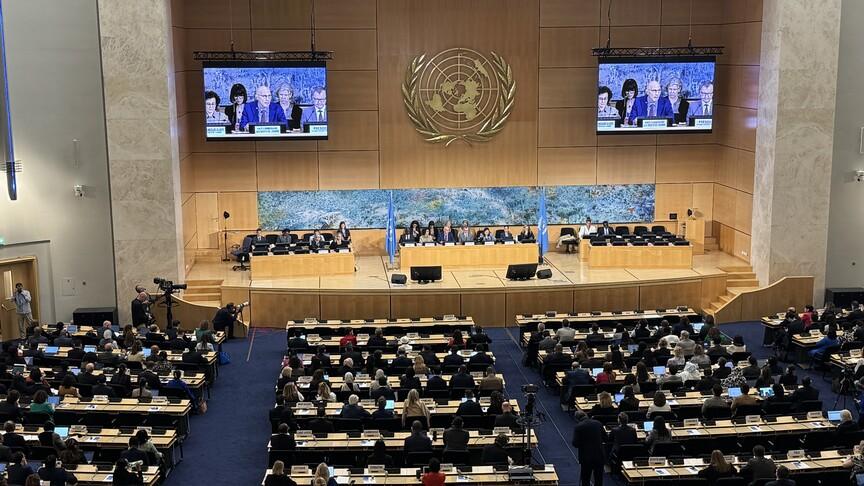
Sixty-Second Session of the United Nations Human Rights Council is the meeting period scheduled to begin on 15 June 2026 in Geneva, Switzerland, and continue until 7 July 2026. The session will last four weeks. The Presidency of the Council for 2026 is held by Ambassador Sidharto Reza Suryodipuro, Permanent Representative of Indonesia to the UN Office in Geneva. The session is expected to address the human rights situation in conflict zones.
Ambassador Suryodipuro, Permanent Representative of Indonesia to the UN Office in Geneva, noted that the session will take place in Geneva from 15 June to 7 July. On the first day of the meeting, he indicated that the annual report of the UN High Commissioner for Human Rights, Volker Türk, would be presented, followed by a discussion on the human rights situation in Iran. It was also stated that the situation in the occupied Palestinian territories would be addressed and a related report presented on the first day.
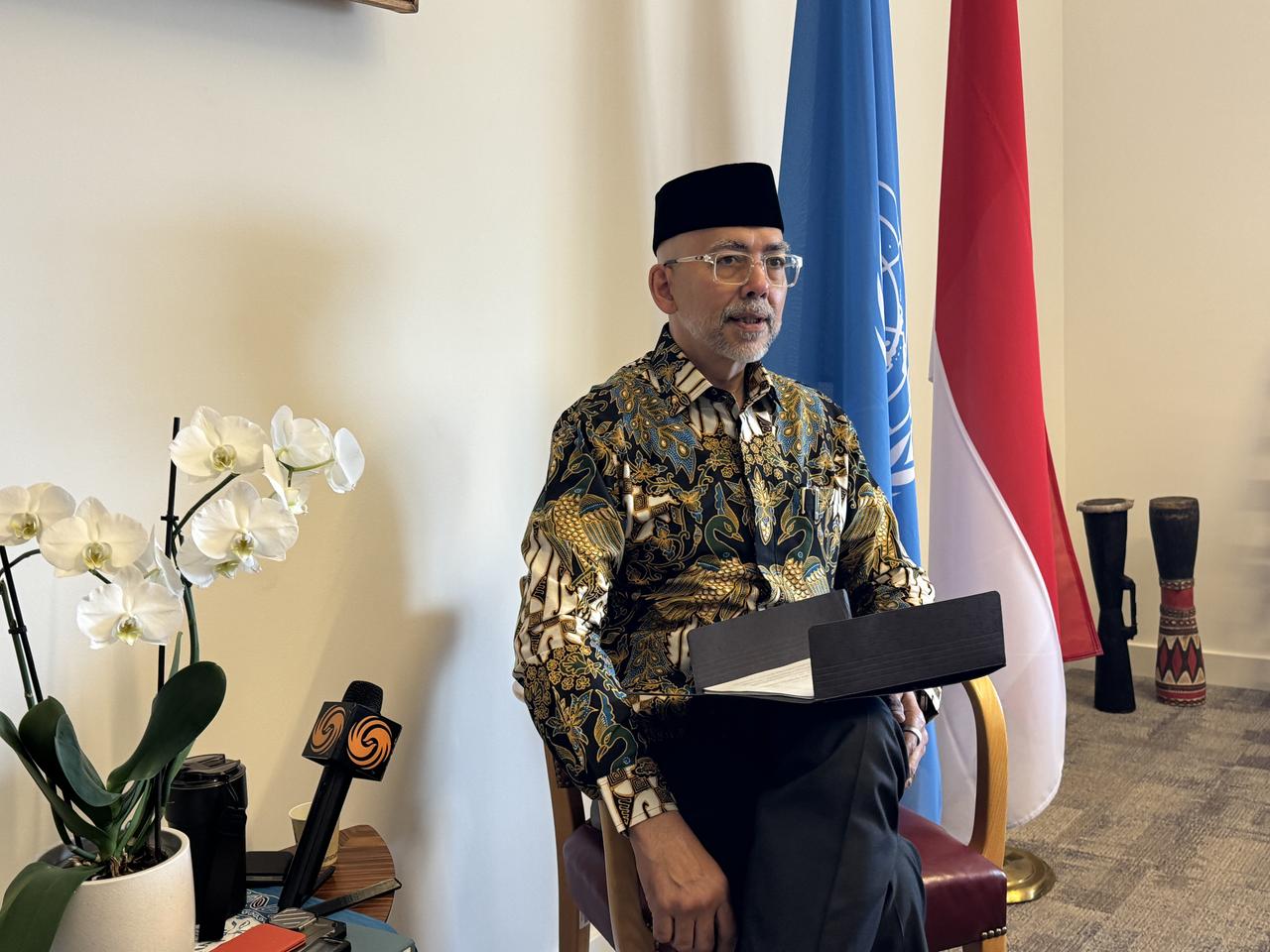
Ambassador Sidharto Reza Suryodipuro, Permanent Representative of Indonesia to the United Nations Office in Geneva and President of the United Nations (UN) Human Rights Council (HRC) for 2026, 10 June 2026 (Anadolu Agency)
Suryodipuro announced that thematic issues such as climate finance, women and girls in sports, and state support for the right to health would be addressed during the session. The Council is also expected to examine the ongoing human rights situations in Sudan, Eritrea, Democratic Republic of the Congo, Venezuela, Burundi, Belarus, Nicaragua and Myanmar.
Suryodipuro stated that 26 draft resolutions will be voted on during the session, and that this number could increase. The European Union, meanwhile, indicated that approximately 25 resolutions are expected to be adopted. In response to a question regarding nuclear weapons spending and efforts to prevent it, Suryodipuro noted that the issue had previously been addressed by the Council but that no such agenda item is scheduled for this session.
The Sixty-Second Session coincides with the twentieth anniversary of the Human Rights Council. The Council held its first session in Geneva on 19 June 2006. According to a European Union source, over the past twenty years the Council has conducted over ninety regular and special sessions, adopted thousands of resolutions and statements, and established numerous investigations and accountability mechanisms. High Commissioner Türk emphasized, on the occasion of the twentieth anniversary, the launch of the Global Alliance for Human Rights, an initiative aimed at building connections and partnerships with communities worldwide over a two-year period.
A special panel entitled “Twenty Years, One Council: What we have built, and where we go next” has been organized to mark the twentieth anniversary.
The session opened with the presentation of the annual report by UN High Commissioner for Human Rights Volker Türk on the global human rights situation. The opening session took place on 15 June 2026 and was live-streamed on UN Web TV.
In his opening remarks, Türk stated that serious human rights challenges persist globally and attacks on international law are causing severe humanitarian consequences. Emphasizing the importance of upholding international law, Türk asserted that efforts must be made to raise and end such violations wherever and whenever they occur.
Referring to attacks on international law, Türk said, “We must raise this everywhere and always, and work to bring it under control and end it.” He underscored that the establishment of human rights has improved lives, prevented divisions, and created opportunities, and stressed that human rights must remain at the forefront of the era’s urgent issues, from guidelines on artificial intelligence to climate crises and the Ebola outbreak to the FIFA World Cup. Türk encouraged the G7 leaders, who met in Évian-les-Bains, France, to place human rights at the center of their discussions.
In his opening remarks, Volker Türk expressed satisfaction at the agreement reached between the United States and Iran on a peace deal that envisions an immediate and lasting ceasefire, the reopening of the Strait of Hormuz, and a framework for further negotiations. Türk stated, “I welcome the agreement between the United States and Iran on a peace deal that envisions an immediate and lasting ceasefire, the reopening of the Strait of Hormuz, and a framework for further negotiations. The conflict has had a devastating impact on human rights across the region and globally.”
Türk noted that recent developments demonstrate that deep regional differences cannot be resolved through military means, and condemned Israel and the United States for their use of force against Iran, which has resulted in civilian casualties. Türk reiterated his call for the public release of US investigation findings regarding the attack on the Şeceretü’t-Tayyibe Girls’ Primary School in Minab on 28 February.
On the first day of the session, oral updates on Iran by the Office of the High Commissioner and on Sudan by the Independent International Commission of Inquiry are scheduled.
Türk assessed the situation in Gaza and the West Bank during his opening remarks. He emphasized that Israeli authorities have increasingly confined Palestinians to a shrinking area and imposed restrictions on life-saving aid.
Türk highlighted that Israel and Israeli settlers have accelerated demolitions and land annexations in the occupied West Bank, reporting that 57 people have been killed and approximately 1,300 injured this year. Türk also recalled that hundreds have been detained and 23 land seizure orders have been issued in the West Bank. He stated: “Some senior Israeli officials have publicly spoken about removing all Palestinians from Gaza and eliminating any possibility of a viable Palestinian state. All of this is entirely unlawful. Everyone with influence must exert pressure to achieve a ceasefire, end the unbearable suffering of Palestinians, and ensure accountability.”
Special Rapporteur on human rights and climate change, Elisa Morgera, presented to the Council her report titled “Transforming Food Systems for a Safe Climate and Health for All” (A/HRC/62/44).
The report examines human rights obligations and responsibilities regarding the transformation of food systems to mitigate the impacts of climate change and adapt to changing conditions. Morgera proposes a holistic approach to transformation that includes decarbonizing food systems, moving away from fossil fuels, and eliminating toxic substances. An interactive dialogue with the Special Rapporteur on this report is scheduled for 19 June 2026.
The annual panel discussion on climate change and human rights focuses on practical approaches to accelerate climate finance within the context of addressing the adverse impacts of climate change. The panel is organized under Council resolution 59/25 as part of the Sixty-Second Session. In this context, the 2026 Geneva Rights and Climate Talks event is also being held alongside the Council session.
The Working Group on human rights and transnational corporations and other business enterprises is presenting two reports to the Council during the session. The first is titled “Agri-business, Food Security and Human Rights” (A/HRC/62/36), which addresses the design and implementation of sustainable and rights-based food security programs in the food and agribusiness sector. The second is an addendum titled “Indigenous Peoples’ Free, Prior and Informed Consent, Business and Human Rights” (A/HRC/62/36/Add.2).
Special Rapporteur on extreme poverty and human rights, Elena Carolina Díaz Galán, presented to the Council the report by her predecessor, Olivier De Schutter, titled “The Manufacturing of Poverty” (A/HRC/62/42). The report clarifies the central role of strategies in combating poverty and introduces as a contribution to the transformation agenda the document “Roadmap for Eradicating Poverty Beyond Growth” (A/HRC/62/42/Add.2).
The European Union is submitting a resolution on the human rights situation in Eritrea during the Sixty-Second Session. This resolution aims to renew the mandate of the Special Rapporteur’s independent monitoring and reporting function. The European Union also indicated that it will prioritize the rights of women and girls and continue to advocate for gender equality during the session.
The European Union announced its active participation in negotiations and interactive dialogues on issues including Ukraine, Palestine, Belarus, Afghanistan, Burundi, Venezuela, Myanmar, the Democratic Republic of the Congo, South Sudan and Sudan, as well as on topics such as business and human rights, health, climate change, extreme poverty, migrant rights, internally displaced persons, peaceful assembly and association, anti-personnel mines, and the elimination of racial discrimination.
“Team Europe” will see EU member states, in their national capacities, contribute to the session through resolutions and joint initiatives on issues such as countering the negative effects of disinformation, the right to education, extrajudicial executions, freedom of expression, judicial independence, and the rights of women and girls. It was also reported that Team Europe plans to organize side events on various topics including the EU’s anti-racism strategy, academic freedom, and the situation in Ukraine.
The Sixty-Second Session of the Human Rights Council is expected to include appointments to expert mechanisms related to the environment and special procedures mandate holders. Among the appointees will be the Special Rapporteur on the implications for human rights of the environmentally sound management and disposal of hazardous substances and wastes and the Special Rapporteur on the promotion and protection of the right to freedom of opinion and expression.
Anadolu Ajansı. "BM İnsan Hakları Konseyi'nin 62. Oturumu 15 Haziran'da Cenevre'de Başlayacak." Accessed June 16, 2026.https://www.aa.com.tr/tr/dunya/bm-insan-haklari-konseyinin-62-oturumu-15-haziranda-cenevrede-baslayacak/3962425
Anadolu Ajansı. "BM İnsan Hakları Konseyinin 62. Oturumu Cenevre'de Başladı." Accessed June 16, 2026.https://www.aa.com.tr/tr/dunya/bm-insan-haklari-konseyinin-62-oturumu-cenevrede-basladi/3967529
European External Action Service. “The EU at the 62nd Session of the Human Rights Council.” EEAS. Accessed June 16, 2026.https://www.eeas.europa.eu/delegations/un-geneva/eu-62nd-session-human-rights-council_en
Geneva Environment Network. “Environment @ 62nd Session of the UN Human Rights Council.” Geneva Environment Network. Accessed June 16, 2026.https://www.genevaenvironmentnetwork.org/resources/updates/environment-62nd-session-of-the-un-human-rights-council/
Office of the United Nations High Commissioner for Human Rights. “62nd Session of the Human Rights Council (15 June - 7 July 2026).” *OHCHR*. Accessed June 16, 2026.https://www.ohchr.org/en/hr-bodies/hrc/regular-sessions/session62/regular-session
Office of the United Nations High Commissioner for Human Rights. “Appointments at the 62nd Session of the Human Rights Council (15 June – 7 July 2026).” OHCHR. Accessed June 16, 2026.https://www.ohchr.org/en/hr-bodies/hrc/sp/hrc62
United Nations. “62nd Session.” United Nations Indico. Accessed June 16, 2026.https://indico.un.org/event/1023344/

The 62nd Session of the United Nations Human Rights Council is being held in Geneva from 15 June to 7 July 2026. The session will address the human rights situation in countries such as Iran, Palestine, Sudan, Myanmar and the Democratic Republic of the Congo, as well as thematic issues including climate change, the right to health, business and human rights, and extreme poverty. Around 26 draft decisions are expected to be discussed, various rapporteur reports presented, and new special rapporteurs appointed during the session.
No Discussion Added Yet
Start discussion for "62nd Session of the United Nations Human Rights Council (2026)" article
June 16, 2026
Schedule and General Framework
June 16, 2026
Twentieth Anniversary of the Council
June 16, 2026
Opening Session and the High Commissioner’s Annual Report
June 16, 2026
Environment and Climate Agenda
June 16, 2026
Business and Human Rights
June 16, 2026
Extreme Poverty
June 16, 2026
European Union’s Agenda at the Session
June 16, 2026
Appointments