This article was automatically translated from the original Turkish version.
+1 More
History | 12 January 2010 | ||||||||
|---|---|---|---|---|---|---|---|---|---|
Magnitude | 7.0 Mw | ||||||||
Epicenter | Léogâne town | ||||||||
Depth | Approximately 13 kilometers | ||||||||
Affected Population | Approximately 3.5 million people (15% of the total population) | ||||||||
Loss of Life | Estimated 222,000 to 316,000 deaths | ||||||||
Shelter Crisis | 1.3 to 1.5 million homeless | ||||||||
Economic Damage | 7.8 billion US dollars (equivalent to 120% of the country's GDP) | ||||||||
Secondary Disasters | Cholera outbreak | ||||||||
Türkiye's Assistance | 1 million dollars in cash aid, 40 tons of humanitarian supplies, field hospital, AKUT/Red Crescent teams | ||||||||
Primary Causes | Seismic gap on the fault line, unplanned urbanization, poor quality building stock | ||||||||
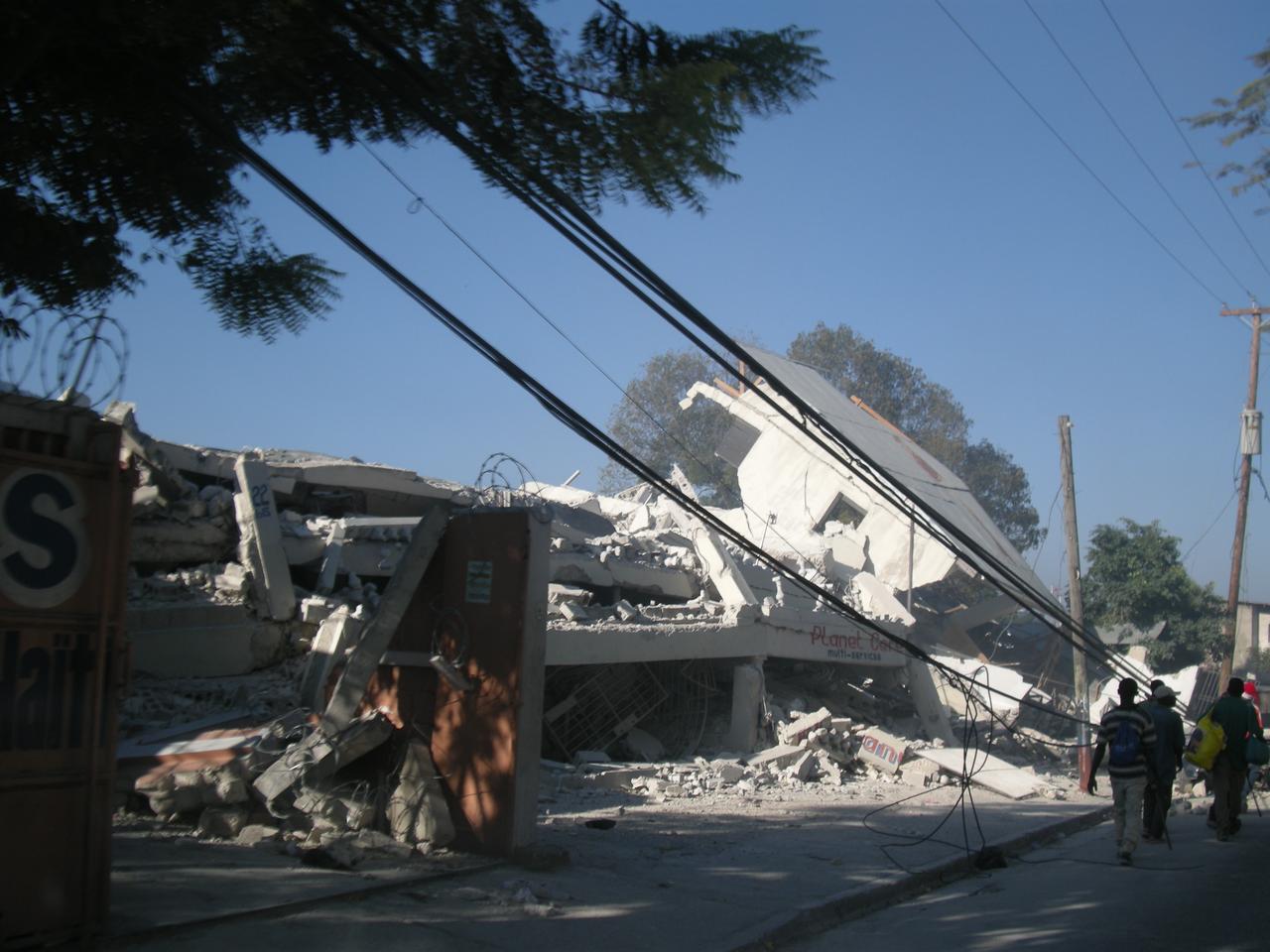
The 2010 Haiti earthquake was a seismic event of magnitude 7.0 that occurred on January 12, 2010 at 16:53 local time, near the town of Léogâne approximately 25 kilometers southwest of Haiti’s capital, Port-au-Prince. This rupture, occurring at a depth of about 13 kilometers beneath the surface, is identified by seismological data as the most destructive earthquake recorded in the region over the past 200 years.【1】 Triggered by the sudden release of accumulated energy along the Enriquillo-Plantain Garden fault line, which lies at the boundary between the Caribbean and North American tectonic plates, the disaster was followed by numerous strong aftershocks ranging in magnitude from 5.5 to 5.9.【2】
Haiti lies within a seismically active zone characterized by a transform fault boundary where the North American and Caribbean plates move relative to each other at a rate of approximately 20 millimeters per year. The 2010 earthquake occurred along the southern branch of this system, the Enriquillo-Plantain Garden fault.【3】 The shallow focal depth of the earthquake, approximately 13 kilometers, allowed seismic energy to reach the surface with minimal attenuation, resulting in extreme ground acceleration that imposed severe loads on structures. The region’s limestone and alluvial soil composition amplified seismic wave intensity in localized areas, triggering secondary geological hazards such as soil liquefaction and landslides.
2010 Haiti Earthquake Footage (CBS News)
The humanitarian crisis triggered by the earthquake constituted one of the deadliest civil disasters in modern history; official reports estimate that approximately 316,000 people lost their lives and more than 300,000 were injured.【4】 Over 1.3 million people were left homeless, and approximately half a million were forced to relocate to safer areas.【5】
The earthquake severely weakened Haiti’s administrative capacity; the deaths of numerous public officials and United Nations Stabilization Mission in Haiti (MINUSTAH) personnel significantly disrupted emergency response and coordination efforts. Beyond physical destruction, an outbreak of cholera in October 2010, fueled by overcrowded shelters and inadequate sanitation, resulted in an additional 6,000 deaths by mid-2011.【6】
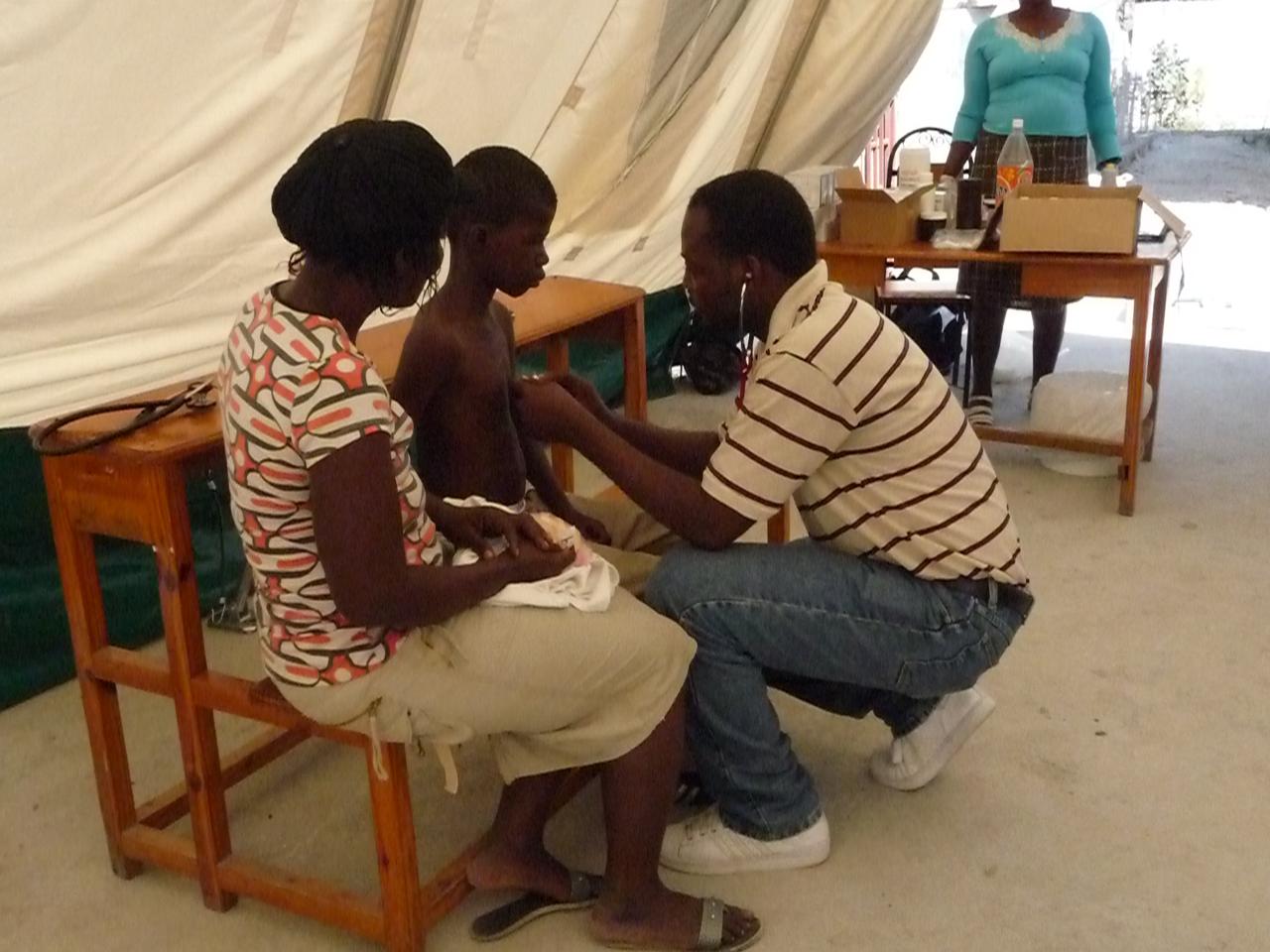
Six Mobile Health Centers, Each Providing Around 1,000 Daily Medical Consultations and Serving a Population of 50,000 to 100,000, Médecins du Monde (Flickr)
The urban fabric of Haiti’s capital, Port-au-Prince, and surrounding areas was largely rendered nonfunctional by the earthquake; a significant portion of buildings, including critical state institutions such as the Presidential Palace, the Parliament Building, and the Palace of Justice, were completely destroyed. In Léogâne, the epicentral area, 80 to 90 percent of the building stock was reduced to rubble.【7】 Across the country, 105,000 buildings collapsed entirely.【8】 Social infrastructure suffered comparable devastation; 4,000 educational institutions and over 50 health centers were rendered unusable, severely restricting public access to essential services.【9】 The complete collapse of energy and communication networks, coupled with ports and roads buried under debris, became major obstacles to logistical operations and international aid coordination for months.
The high level of destruction caused by the disaster stems fundamentally from Haiti’s chronic socio-economic vulnerabilities and inadequate building regulation systems prior to the earthquake. As the country with the lowest Human Development Index in the Western Hemisphere, over 70 percent of Haiti’s population lived below the poverty line, and 86 percent of Port-au-Prince’s residents resided in poorly constructed, non-engineered concrete buildings. These factors were primary contributors to the elevated loss of life. Economic analyses indicate that the total material damage caused by the earthquake amounted to $7.8 billion USD, equivalent to 120 percent of Haiti’s 2009 gross domestic product.【10】
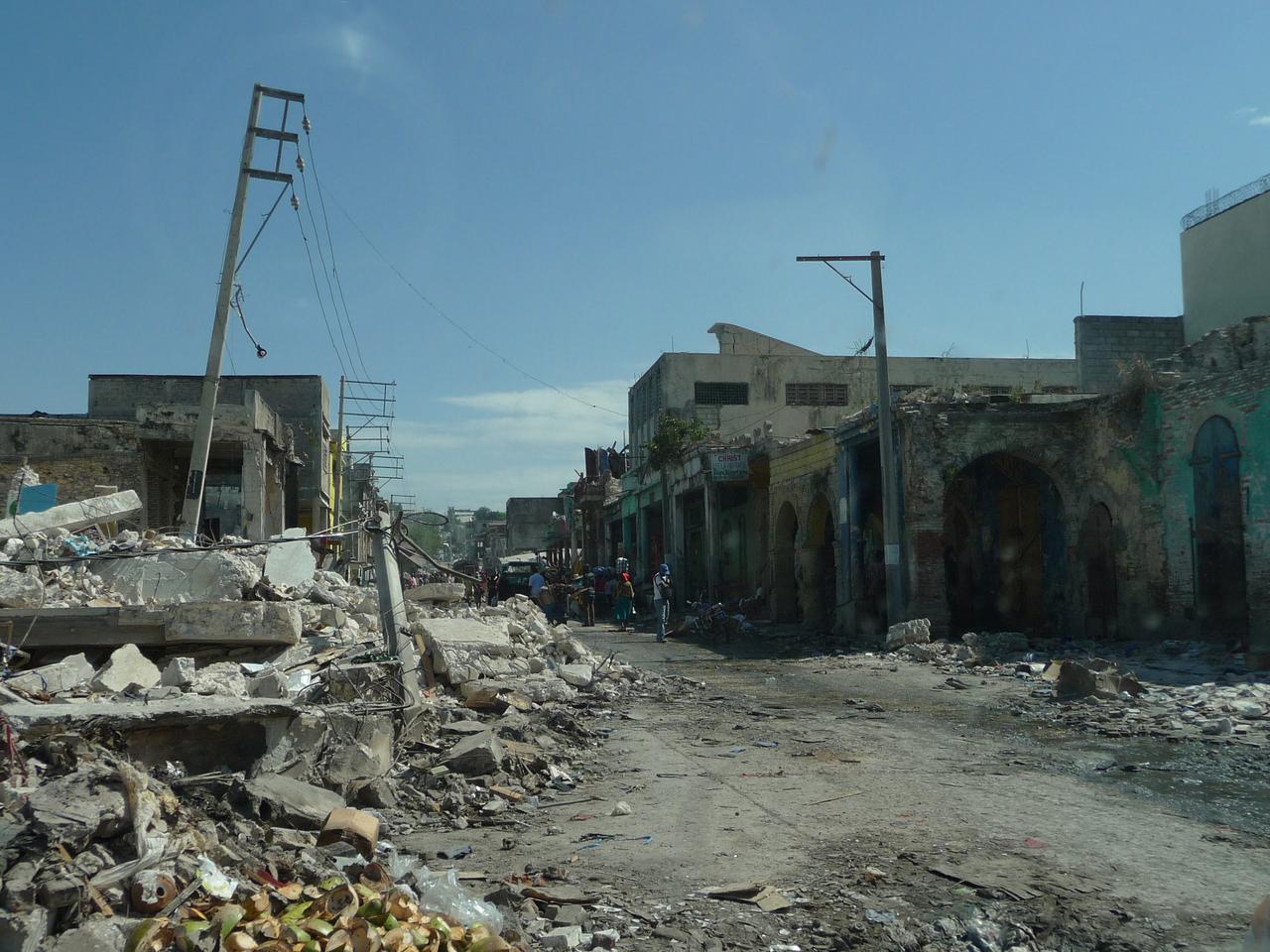
2010 Haiti Earthquake (Flickr)
The primary technical cause of the high casualty rate in the Haiti earthquake was the complete absence of seismic design principles in the building stock. The majority of structures in the city exhibited “soft-story” irregularities, characterized by inadequate reinforcement detailing, low-quality concrete, and insufficient column-beam connections. Engineering assessments revealed that the compressive strength of the concrete was far below international standards and that the use of plain reinforcing bars rendered the bond between concrete and steel ineffective. Furthermore, the close proximity of buildings led to a “pounding effect” during shaking, causing structurally sound buildings to be destroyed by collapsing neighbors. In the post-disaster reconstruction process, a strategy was adopted that integrated local materials such as earthquake-resistant wood and bamboo with modern engineering techniques.【12】
In the aftermath of the earthquake, the international community launched a humanitarian operation providing food, medical supplies, and technical personnel. The Republic of Türkiye actively participated in this effort, contributing $1 million in cash aid along with 40 tons of medical equipment, a field hospital, and specialized teams from AKUT and the Turkish Red Crescent.【13】 Long-term recovery initiatives were shaped by the Post-Disaster Needs Assessment (PDNA) report, coordinated at the Prime Ministerial level, which prioritized shelter, food security, and the restructuring of state institutions. A three-year perspective identified a $11.5 billion investment requirement, with reconstruction efforts mandated to encompass not only physical infrastructure but also disaster risk management, environmental sustainability, and urban deconcentration strategies aimed at reducing central population density.【14】
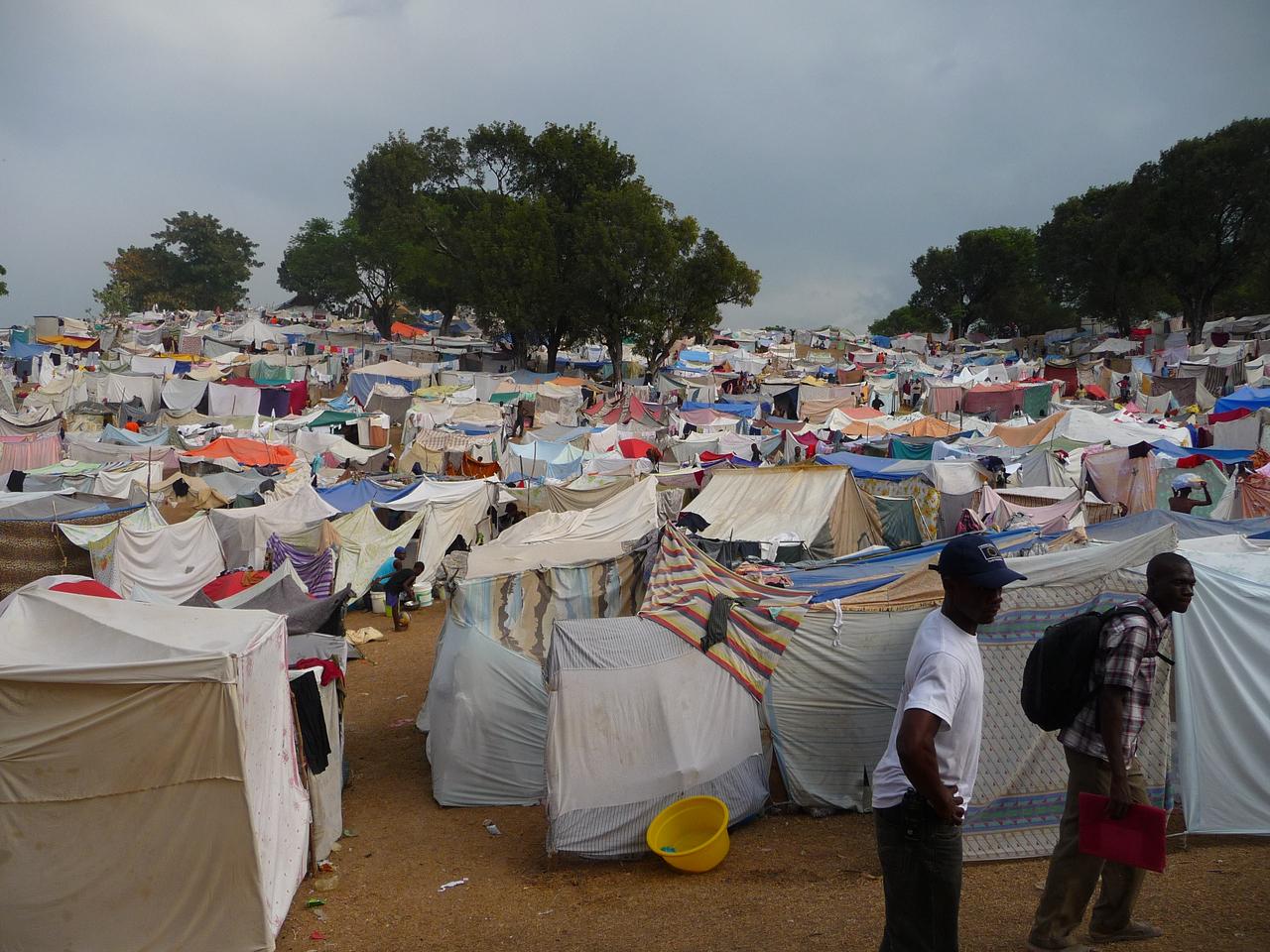
A Temporary Shelter Site Housing Approximately 20,000 People, Pétionville Country Club (Flickr)
Anadolu Ajansı. "2010'da Haiti depremi 316 bin can aldı." Accessed December 22, 2025.https://www.aa.com.tr/tr/dunya/2010da-haiti-depremi-316-bin-can-aldi/53768
BBC News Türkçe. "Haiti'de deprem felaketi." BBC. Accessed December 22, 2025.https://www.bbc.com/turkce/haberler/2010/01/100112_haiti_earthquake
CBS News. "Haiti Earthquake Caught on Tape." YouTube Video. Date Published: January 15, 2010. Accessed December 22, 2025.https://www.youtube.com/watch?v=CcFVxl8oclY
DISASTERS EMERGENCY COMMITTEE. "2010 Haiti Earthquake Facts and Figures." *dec.org*. Accessed December 22, 2025.https://www.dec.org.uk/article/2010-haiti-earthquake-facts-and-figures
DesRoches, Reginald, Mary Comerio, Marc Eberhard, Walter Mooney, Glenn J. Rix. "Overview of the 2010 Haiti Earthquake." escweb.wr.usgs.org. Accessed December 22, 2025.https://escweb.wr.usgs.gov/share/mooney/142.pdf
EU Civil Protection and Humanitarian Aid. "Haiti: Earthquake 2010." Flickr. Accessed December 22, 2025.https://www.flickr.com/photos/eu_echo/6793158186/in/photostream/
EU Civil Protection and Humanitarian Aid. "Haiti: Earthquake 2010." Flickr. Accessed December 22, 2025.https://www.flickr.com/photos/eu_echo/6793162432/in/photostream/
EU Civil Protection and Humanitarian Aid. "Haiti: Earthquake 2010." Flickr. Accessed December 22, 2025.https://www.flickr.com/photos/eu_echo/6939273569/in/photostream/
GFDRR. "Haiti– 2010– PDNA estimated the earthquake impacts equivalent to 120% of GDP." gfdrr.org. Accessed December 22, 2025.https://www.gfdrr.org/en/haiti-2010-pdna-estimated-earthquake-impacts-equivalent-120-gdp
Türkiye Cumhuriyeti Dışişleri Bakanlığı. "No: 11, 16 Ocak 2010, Deprem Felaketi Nedeniyle Ülkemizin Haiti'ye Yaptığı İnsani Yardımlar Hk." mfa.gov.tr. Accessed December 22, 2025.https://www.mfa.gov.tr/no_-11_-16-ocak-2010_-deprem-felaketi-nedeniyle-ulkemizin-haiti_ye-yaptigi-insani-yardimlar-hk_.tr.mfa
[1]
BBC News Türkçe, "Haiti'de deprem felaketi," BBC, erişim 22 Aralık 2025, https://www.bbc.com/turkce/haberler/2010/01/100112_haiti_earthquake
[2]
BBC News Türkçe, "Haiti'de deprem felaketi," BBC, erişim 22 Aralık 2025,
[3]
DesRoches, Reginald, Mary Comerio, Marc Eberhard, Walter Mooney, Glenn J. Rix. "Overview of the 2010 Haiti Earthquake." escweb.wr.usgs.org, sayfa 2, erişim 22 Aralık 2025, https://escweb.wr.usgs.gov/share/mooney/142.pdf
[4]
Anadolu Ajansı, "2010'da Haiti depremi 316 bin can aldı," Anadolu Ajansı, erişim 22 Aralık 2025, https://www.aa.com.tr/tr/dunya/2010da-haiti-depremi-316-bin-can-aldi/53768
[5]
Anadolu Ajansı, "2010'da Haiti depremi 316 bin can aldı," Anadolu Ajansı, erişim 22 Aralık 2025, https://www.aa.com.tr/tr/dunya/2010da-haiti-depremi-316-bin-can-aldi/53768
[6]
DISASTERS EMERGENCY COMMITTEE, "2010 Haiti Earthquake Facts and Figures," dec.org, erişim 22 Aralık 2025, https://www.dec.org.uk/article/2010-haiti-earthquake-facts-and-figures
[7]
DesRoches, Reginald, Mary Comerio, Marc Eberhard, Walter Mooney, Glenn J. Rix. "Overview of the 2010 Haiti Earthquake." escweb.wr.usgs.org, sayfa 1, erişim 22 Aralık 2025, https://escweb.wr.usgs.gov/share/mooney/142.pdf
[8]
DISASTERS EMERGENCY COMMITTEE, "2010 Haiti Earthquake Facts and Figures," dec.org, erişim 22 Aralık 2025,
[9]
DISASTERS EMERGENCY COMMITTEE, "2010 Haiti Earthquake Facts and Figures," dec.org, erişim 22 Aralık 2025,
[10]
GFDRR, "Haiti– 2010– PDNA estimated the earthquake impacts equivalent to 120% of GDP," gfdrr.org, erişim 22 Aralık 2025, https://www.gfdrr.org/en/haiti-2010-pdna-estimated-earthquake-impacts-equivalent-120-gdp
[12]
DesRoches, Reginald, Mary Comerio, Marc Eberhard, Walter Mooney, Glenn J. Rix. "Overview of the 2010 Haiti Earthquake." escweb.wr.usgs.org, sayfa 9-10-11, erişim 22 Aralık 2025,
[13]
GFDRR, "Haiti– 2010– PDNA estimated the earthquake impacts equivalent to 120% of GDP," gfdrr.org, erişim 22 Aralık 2025,
[14]
GFDRR, "Haiti– 2010– PDNA estimated the earthquake impacts equivalent to 120% of GDP," gfdrr.org, erişim 22 Aralık 2025,

History | 12 January 2010 | ||||||||
|---|---|---|---|---|---|---|---|---|---|
Magnitude | 7.0 Mw | ||||||||
Epicenter | Léogâne town | ||||||||
Depth | Approximately 13 kilometers | ||||||||
Affected Population | Approximately 3.5 million people (15% of the total population) | ||||||||
Loss of Life | Estimated 222,000 to 316,000 deaths | ||||||||
Shelter Crisis | 1.3 to 1.5 million homeless | ||||||||
Economic Damage | 7.8 billion US dollars (equivalent to 120% of the country's GDP) | ||||||||
Secondary Disasters | Cholera outbreak | ||||||||
Türkiye's Assistance | 1 million dollars in cash aid, 40 tons of humanitarian supplies, field hospital, AKUT/Red Crescent teams | ||||||||
Primary Causes | Seismic gap on the fault line, unplanned urbanization, poor quality building stock | ||||||||
No Discussion Added Yet
Start discussion for "2010 Haiti Earthquake" article
Geological Formation and Fault Mechanism
Demographic Losses and Social Impact
Infrastructure Damage and Contributing Factors
Urban Planning and Structural Engineering Analysis
International Aid and Strategic Recovery Process