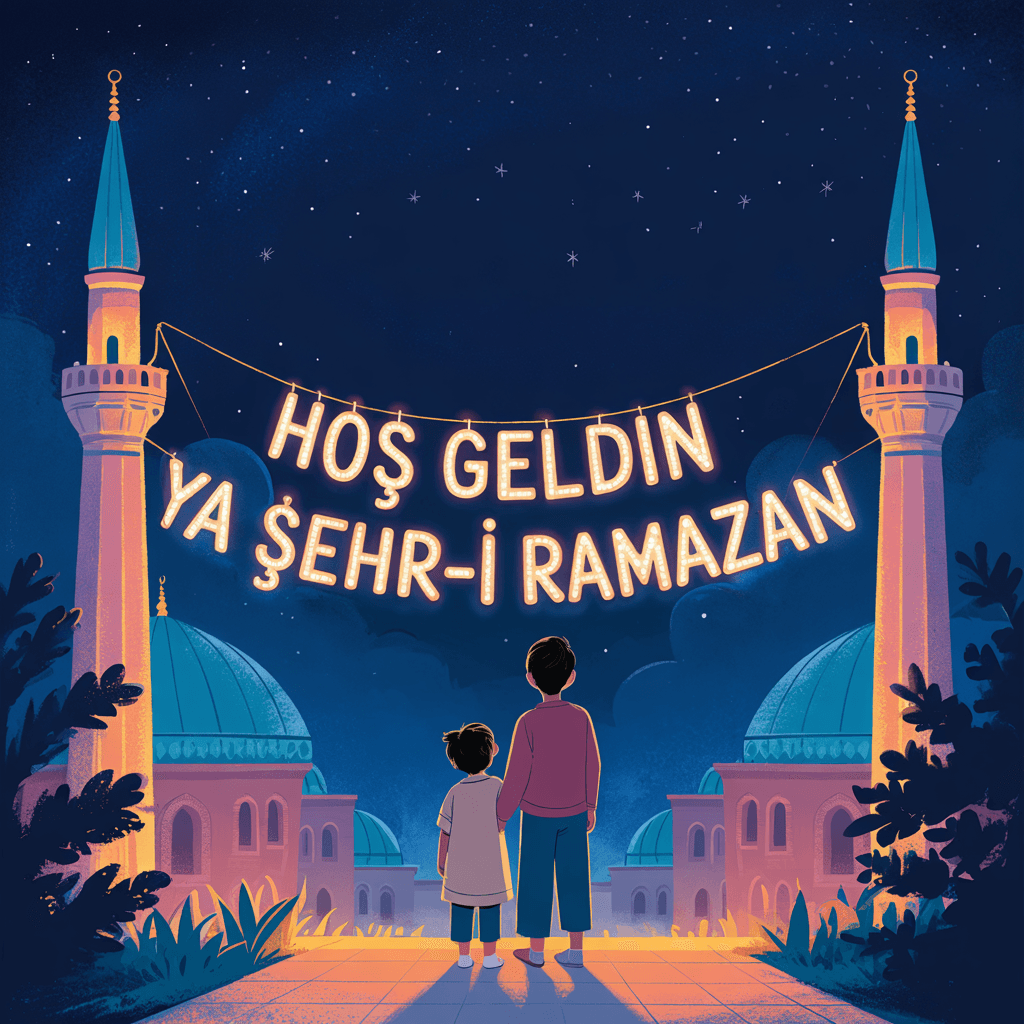


What is Mahya?
Mahya are illuminated texts and shapes hung between the minarets of mosques during the month of Ramadan. Traditionally made with oil lamps, today they are typically created using light bulbs. The word “mahya” derives from the Persian term “mâhiyye,” meaning “monthly,” as these displays are used exclusively during Ramadan. These luminous inscriptions adorn the nights of Ramadan and offer people beautiful messages and reminders.
How Did Mahya Originate?
During the Ottoman period, mosques were decorated with oil lamps during sacred nights. Over time, these decorations evolved into forming letters and phrases between the minarets. It is believed that the mahya tradition began in the 1600s. According to tradition, the muezzin of the Fatih Mosque, Hattat Hafız Ahmed Kefevi, devised an arrangement that Sultan Ahmed I greatly admired and subsequently ordered to be implemented in all mosques. From that day forward, mahyas were installed throughout Ramadan, illuminating the nights with radiant light.
How Are Mahyas Installed?
In the past, mahyas were made using oil lamps. Preparations began months in advance. Master artisans decided what text to display and which motifs to include. Wicks were made from reeds, lamps were cleaned, and carefully positioned. Mahya craftsmen performed their work with great precision; often, a small model was drawn for each inscription, and only if approved would it be executed.
Today, mahyas are created using electric bulbs. However, their preparation and installation still require great care. Each letter or motif is attached to special cables stretched between the minarets.
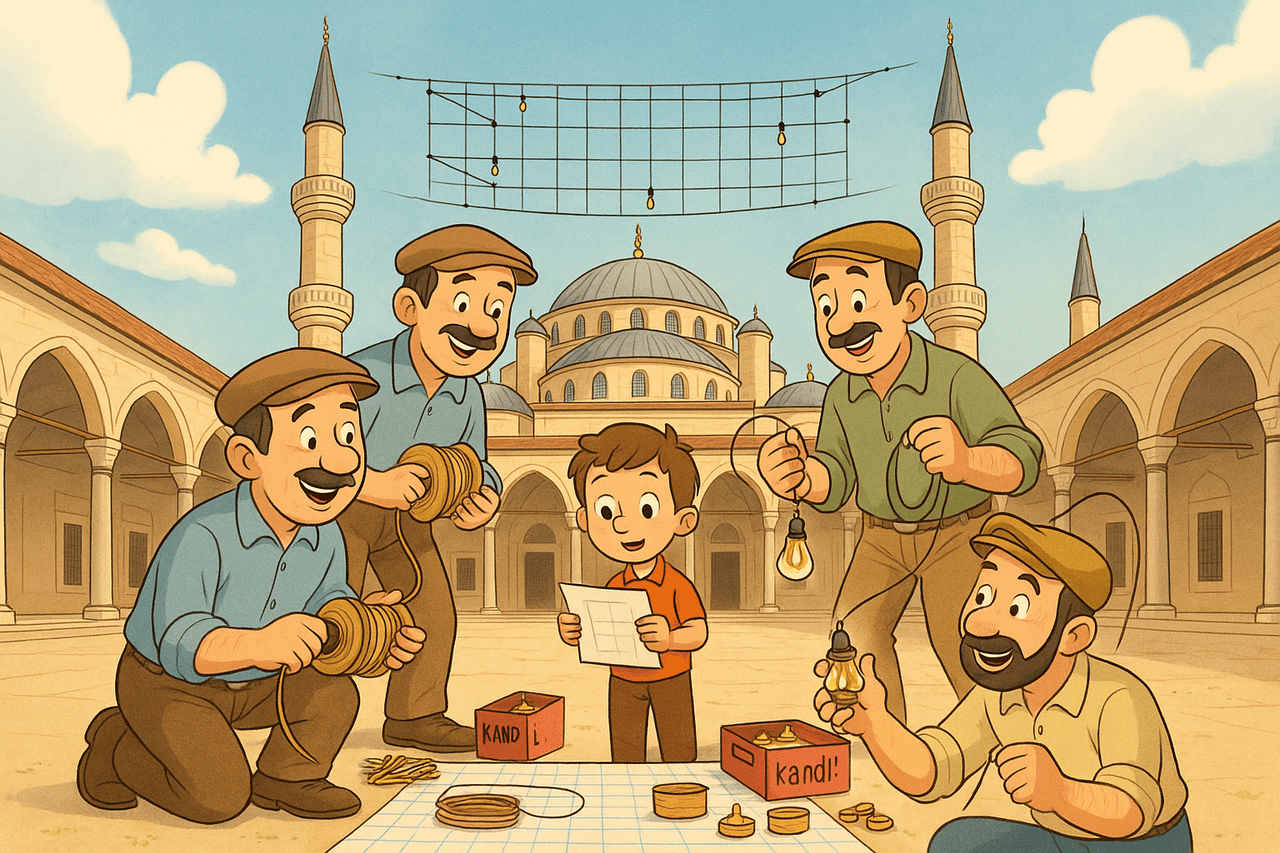
(Generated by Artificial Intelligence.)
What Is Written on Mahyas?
Mahyas typically feature beautiful phrases. At the beginning of Ramadan, inscriptions such as “Welcome, O Month of Ramadan,” and “Sultan of the Eleven Months” are displayed. Toward the end of Ramadan, farewell messages like “Goodbye” or “May your holiday be blessed” take their place. Additionally, reminder phrases such as “Bismillah,” “Maşallah,” “Ya Rahim,” and “Avoid waste” are commonly used.
Sometimes, instead of text alone, motifs such as flowers, ships, bridges, the moon, and stars are illuminated. These designs add unique beauty to the mahyas.
Why Are Mahyas Important?
Mahyas are not only visually appealing; they also remind people of values such as unity, love, sharing, and solidarity. They have even been used during times of war or major historical events. For example, during World War I, messages such as “Do not forget the migrants” appeared on mosque mahyas, and in the early years of the Republic, the phrase “Sovereignty belongs to the nation” was displayed. Through mahyas, people received messages and shared emotions.

(Generated by Artificial Intelligence.)
Journey Through Time
Four hundred years ago, when the first mahyas were installed in Ottoman mosques, they were made with oil lamps, and preparations took months. Today, mahyas made with electricity continue this tradition in a modern form.