


What Is a Mounting Stone?
What Is a Binek Taşı?
A binek taşı is the term given to stone structures used during the Ottoman period to facilitate mounting and dismounting from horses or horse-drawn carriages. They were placed along roadsides, in front of residences, and in the courtyards of mosques and madrasas.
These stones provided significant convenience, especially for the elderly, women, and officials.
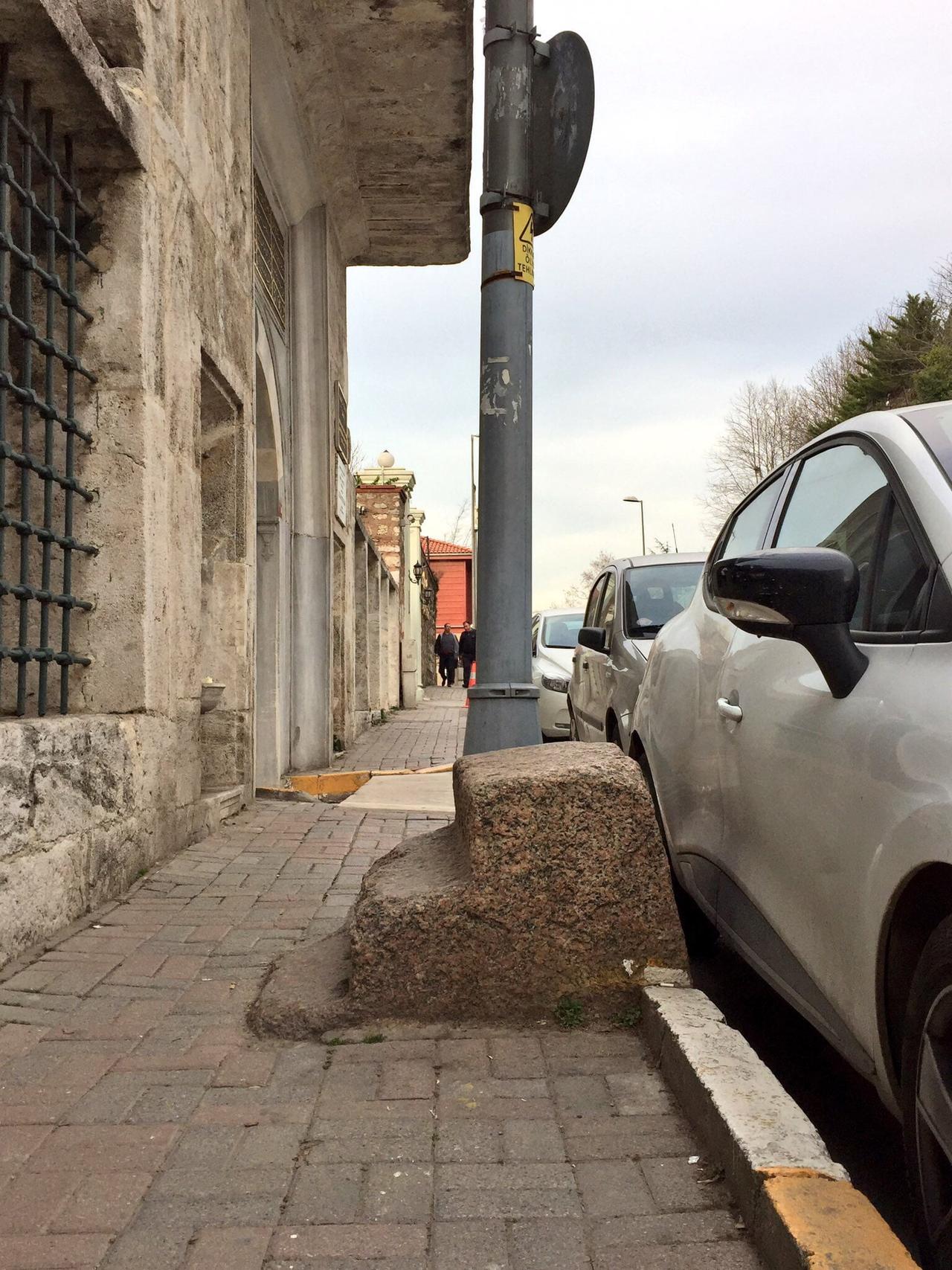
Binek Taşı, Beylerbeyi Camii (Cultural Inventory)
Where Did It Originate?
The origins of binek taşları extend back to the Anatolian Seljuks. The close relationship between nomadic Turks and horses continued in Ottoman cities, and binek taşları became an integral part of urban life.
What Did They Look Like?
- The stones were typically made from durable materials such as limestone or basalt.
- They could have square, rectangular, or circular bases.
- Some featured steps, inscriptions, or decorative elements.
- Binek taşları in front of large residences were often more ornate.

(Generated by artificial intelligence)
What Did They Signify?
Binek taşları were not merely practical tools.
- In Ottoman society, riding a horse was a sign of status and nobility.
- An ornate binek taşı indicated that the homeowner was a person of importance.
- Expressions such as “saying farewell in front of the binek taşı” appear in literature and folk tales.
Where Can They Be Seen Today?
Although many binek taşları have disappeared, they can still be found in cities such as Istanbul, Bursa, Edirne, Amasya, and Safranbolu.
Some are displayed in museums or in front of public buildings.