

History of Ceramic Art
What Is Çini?
Çini refers to glazed wall tiles or ceramic household items made from kiln-fired clay, decorated with motifs in various patterns and colors. The earliest examples of çini are found in Egypt and Mesopotamia, with variations emerging across different periods and regions.
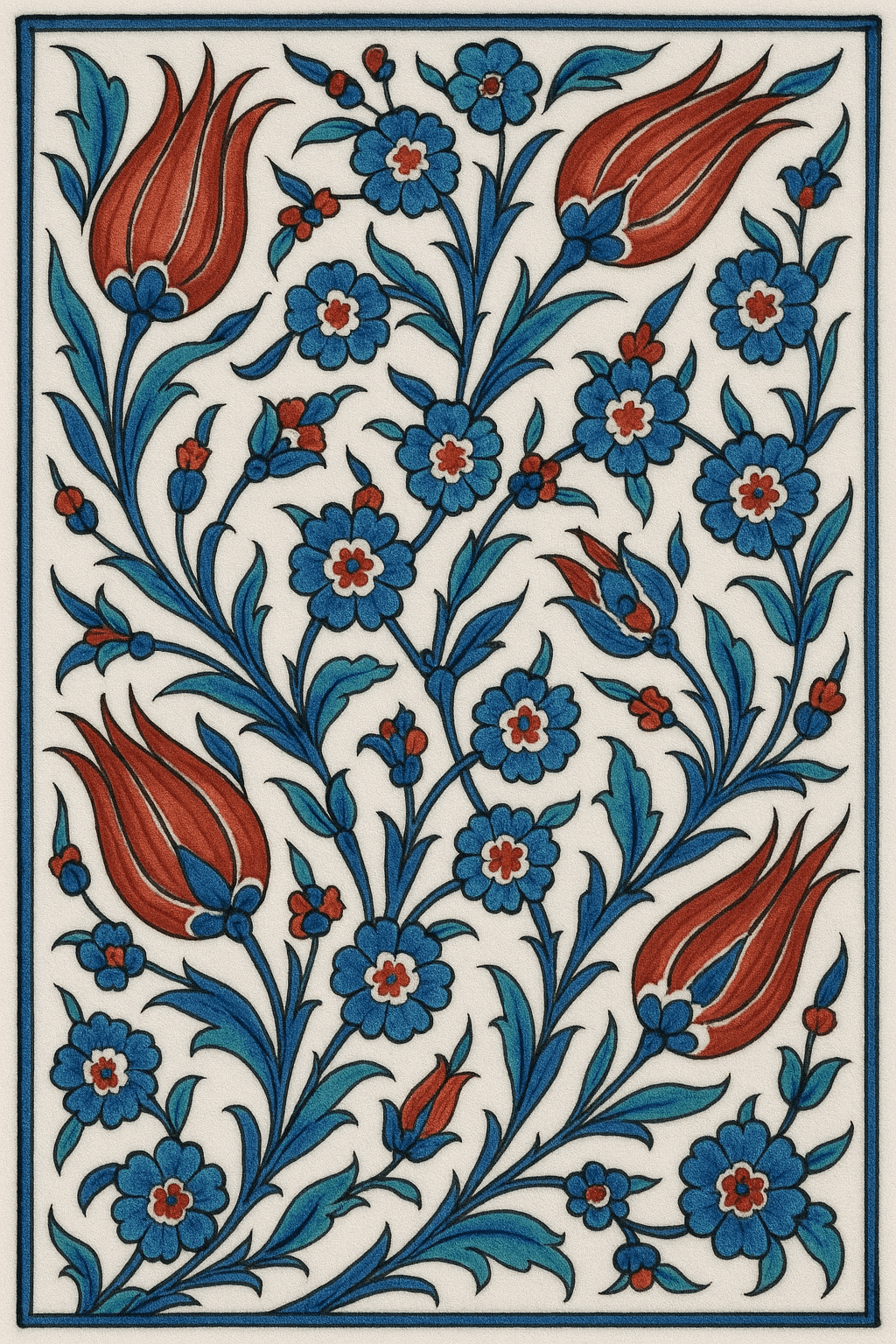
(Generated by artificial intelligence.)
Turkish Çini Art From Past to Present
Anatolian Seljuks
The art of çini, which began with the Uyghur Turks, became widespread in Anatolia during the 13th century with the use of glazed mosaics and bricks. The Anatolian Seljuks began incorporating çini in the decorative elements of their elaborate structures such as madrasas, mosques, tombs, palaces, and pavilions.
Principality Period
The Principality Period served as the transition from the Seljuks to the Ottomans. Although few rich examples of çini survive from this era, its role remains significant.
Ottoman Period
Çini was used as decorative element in certain buildings and külliyes. A broad palette of colored glaze techniques was employed. Examples from the 15th century include the Çinili Köşk Museum in Istanbul and the Mosque of Sultan Murad II in Edirne.
This technique continued into the 16th century and can be seen in numerous examples such as the Tomb of Prince Mehmet.
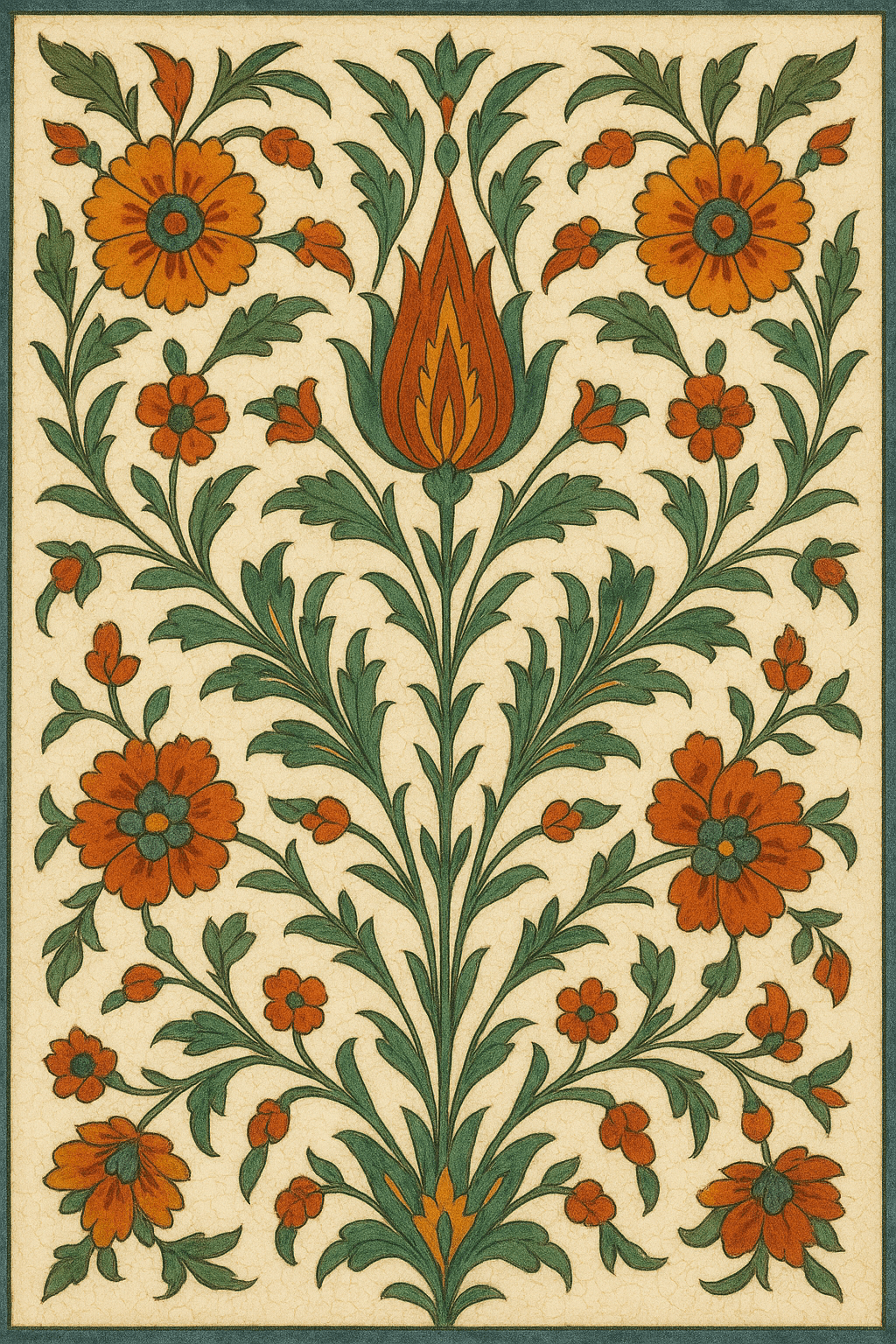
(Generated by artificial intelligence.)