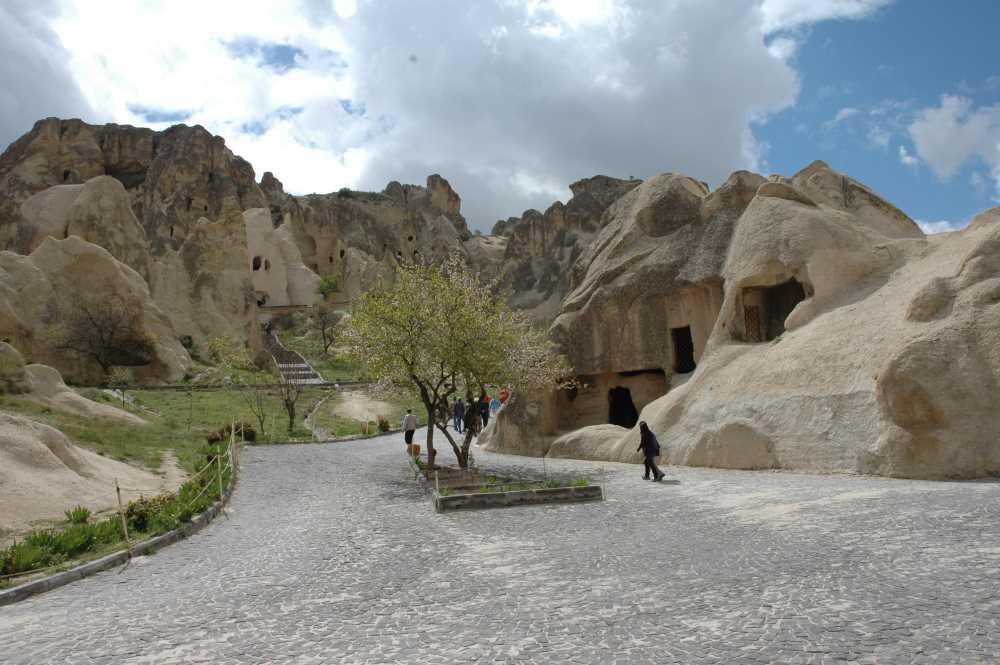


Göreme Open Air Museum
The region hosted a vibrant monastic life from the 4th century CE until the 13th century. After Saint Basilius, Bishop of Caesarea, arrived in the area in the 4th century, the valley became a critical center for the teaching and dissemination of Christianity. Göreme is regarded as one of the earliest places in the world where this monastic educational system was established.
Throughout history, the first Christians fleeing persecution under the Roman Empire took refuge in these valleys between 70 and 330 CE, freely practicing their faith. After Christianity was legalized, numerous churches were built in the region as acts of gratitude; it is said that at one point as many as 365 churches existed here.
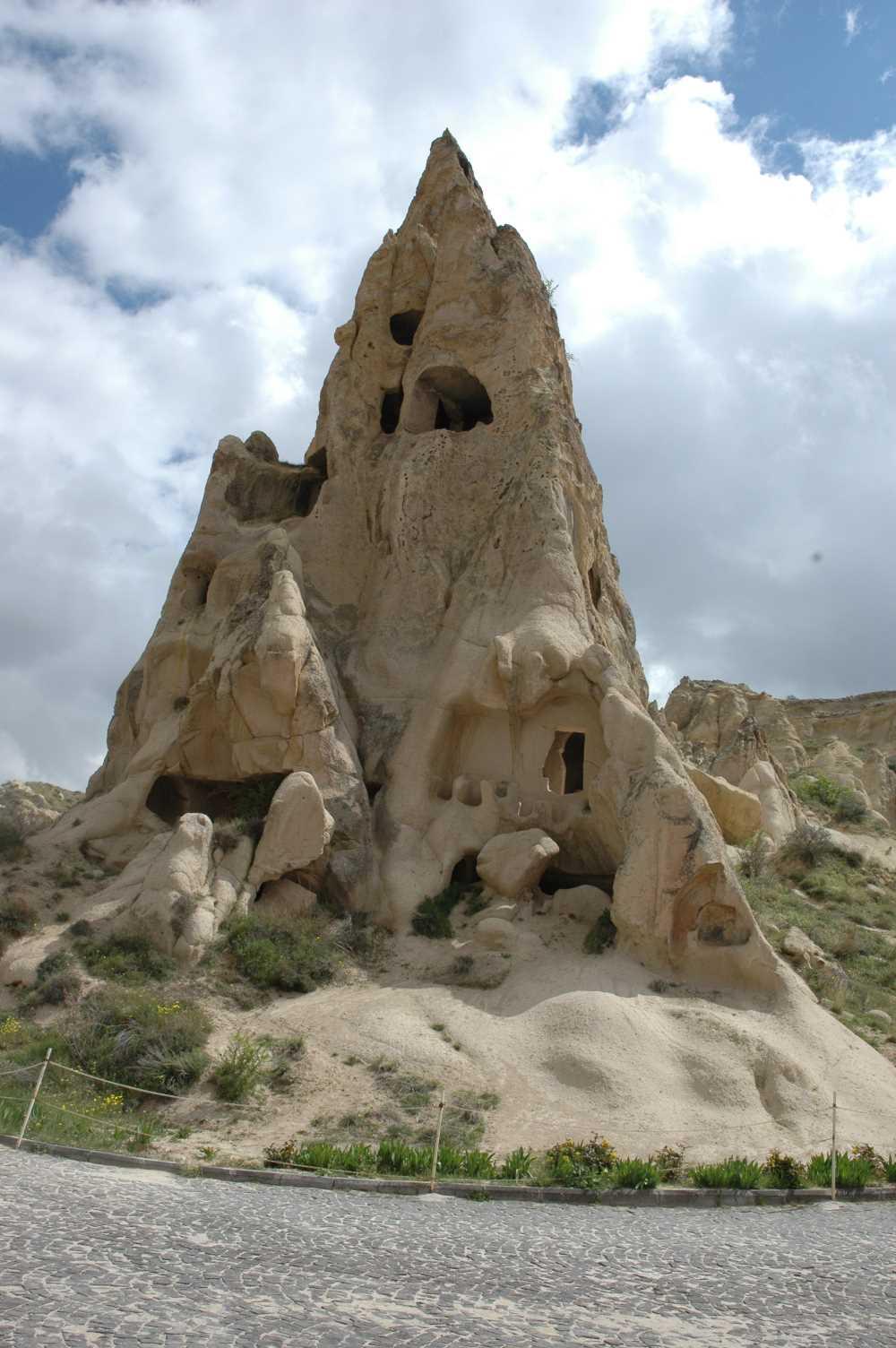
Göreme Open Air Museum (Kültür Portalı)
🏛️ Architecture Within the Rocks
Almost every rock formation within the museum area has been carved with spaces for social and religious life. Among these structures, the following stand out:
- Religious Spaces: Churches, chapels, and basilicas; typically built with a single nave and barrel-vaulted (semi-cylindrical ceiling) architecture.
- Social Areas: Kitchens, dining halls, storage rooms, and living quarters used for daily life.
- Interesting Details: Tandirs used for cooking, rock-cut tables designed for large groups, and şırahaneler where grape juice was produced can still be seen today.
🎨 Art on the Walls: Frescoes
The walls of the churches are adorned with magnificent paintings depicting the beliefs and stories of the era. Two primary techniques were used in these decorations:
- Direct painting on the rock surface.
- Secco (on dry plaster) and Fresco (on wet plaster) techniques.
The paintings depict scenes from the Old and New Testaments, including the life of Jesus Christ, the Virgin Mary, the Twelve Apostles, and the Last Supper. In the early periods, geometric patterns were preferred, but over subsequent centuries, detailed religious figures became dominant.
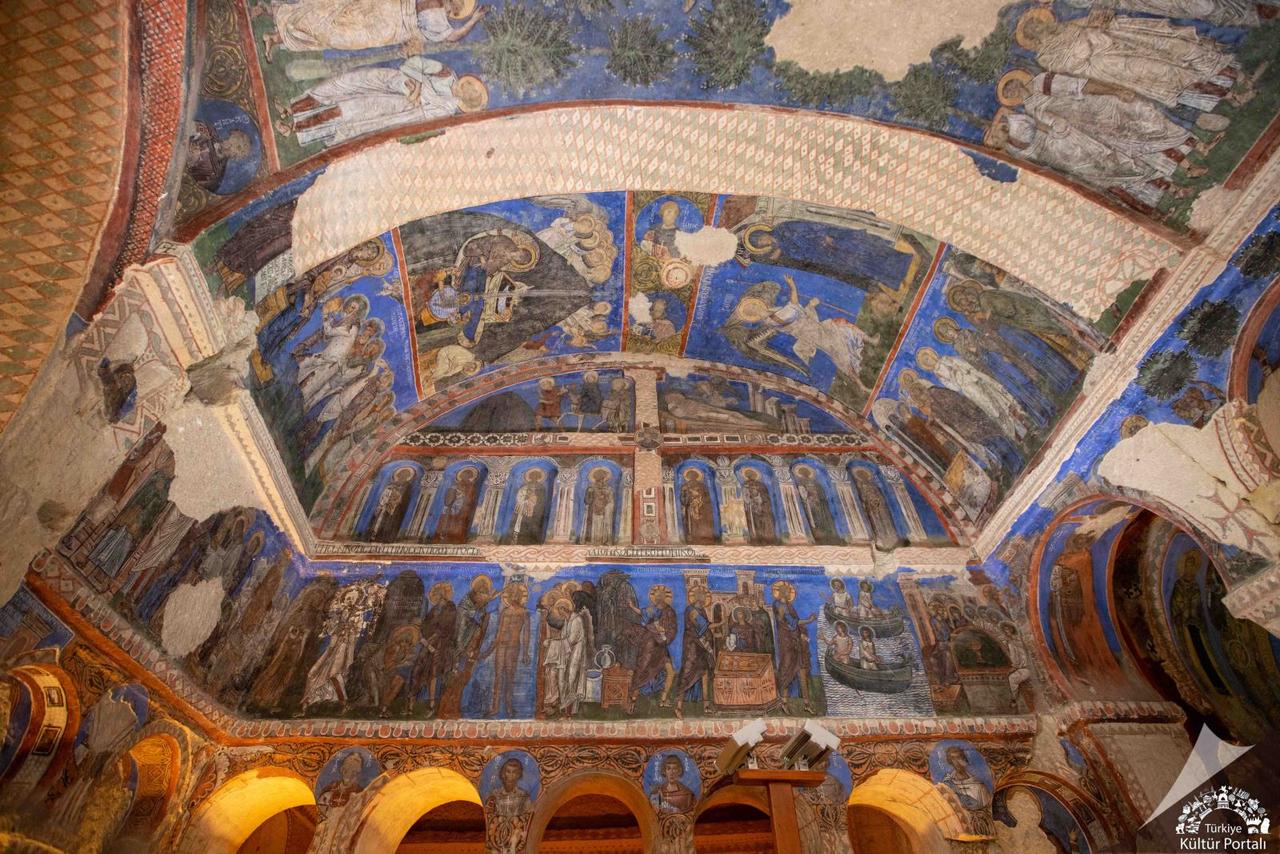
Frescoes of the Dark Church (Kültür Portalı)
📍 Key Sites in the Museum
The main structures open to visitors within the museum include:
- Nunnery and Monastery: A multi-level complex near the entrance resembling an educational center.
- Chapel of Saint Basilius: A rectangular structure dated to the 11th century.
- Dark Church: Due to minimal light entering its interior, its frescoes have remained vivid and almost as if painted yesterday.
- Other Significant Structures: Apple Church, Saint Barbara Church, Snake Church, Sandal Church, and the largest church outside the valley, Tokalı Kilise.
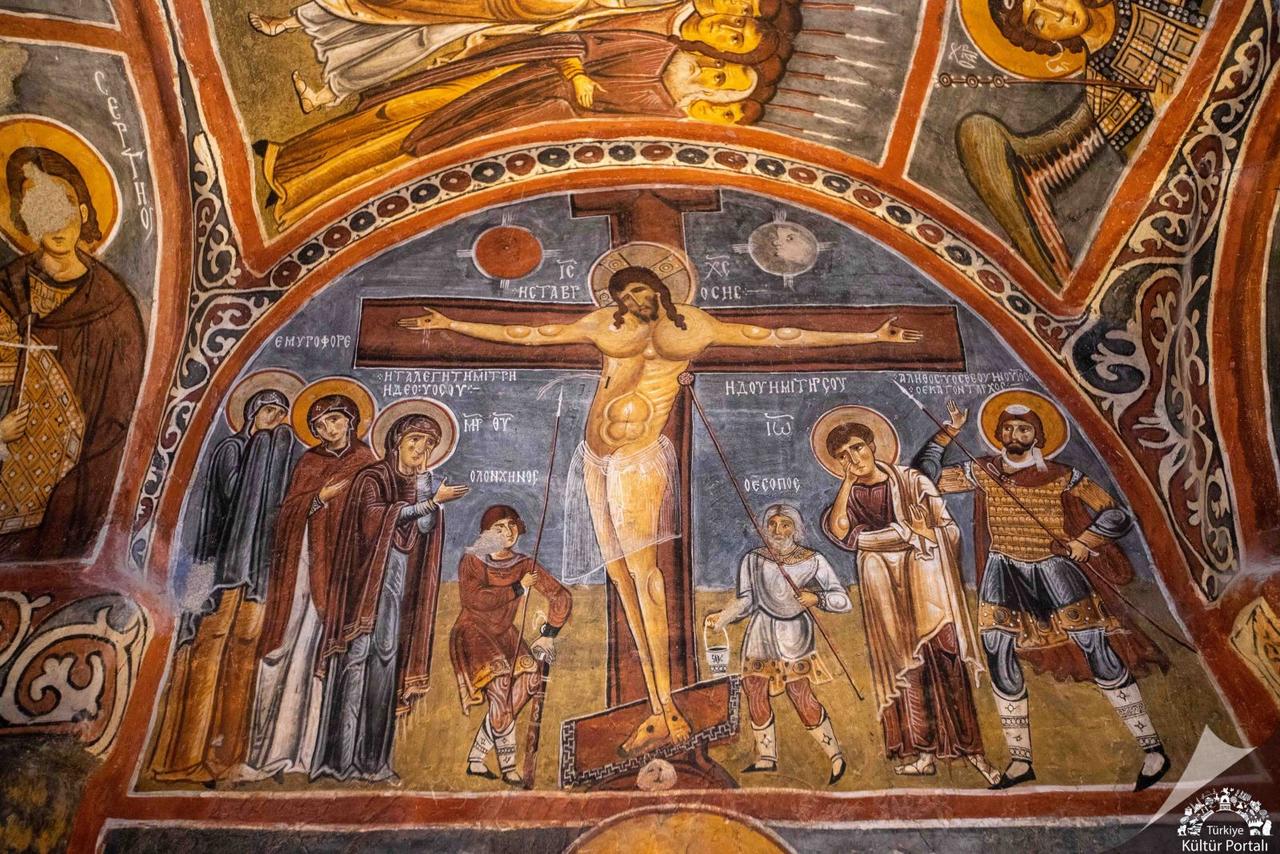
Frescoes of the Dark Church (Kültür Portalı)