

Gökyüp Çömleği
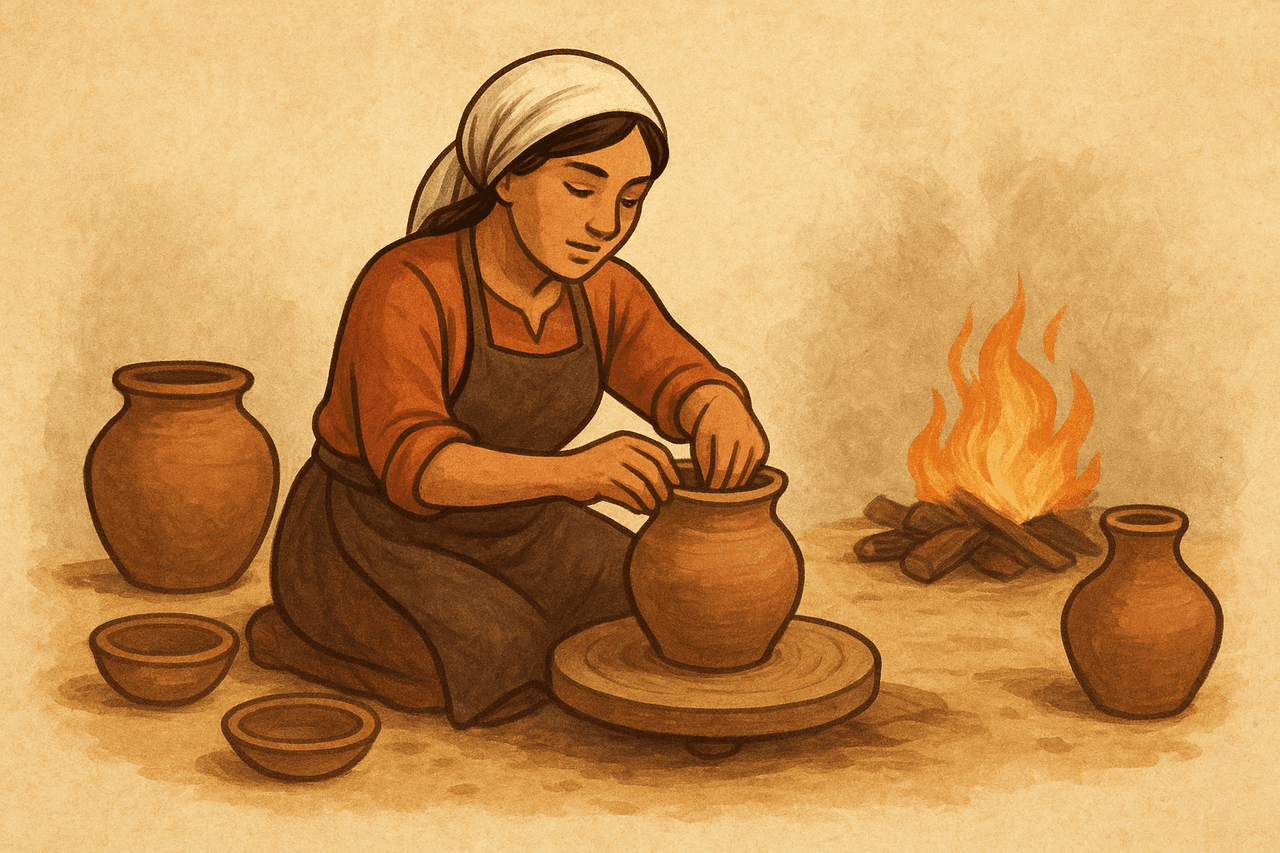
Gökeyüp pottery consists of ceramic vessels produced in the village of Gökeyüp, located in the Salihli district of Manisa, using traditional methods.
No potter’s wheel is used; women shape the clay by hand on a rotating table and fire the vessels in open fires.
(Generated by Artificial Intelligence.)
History
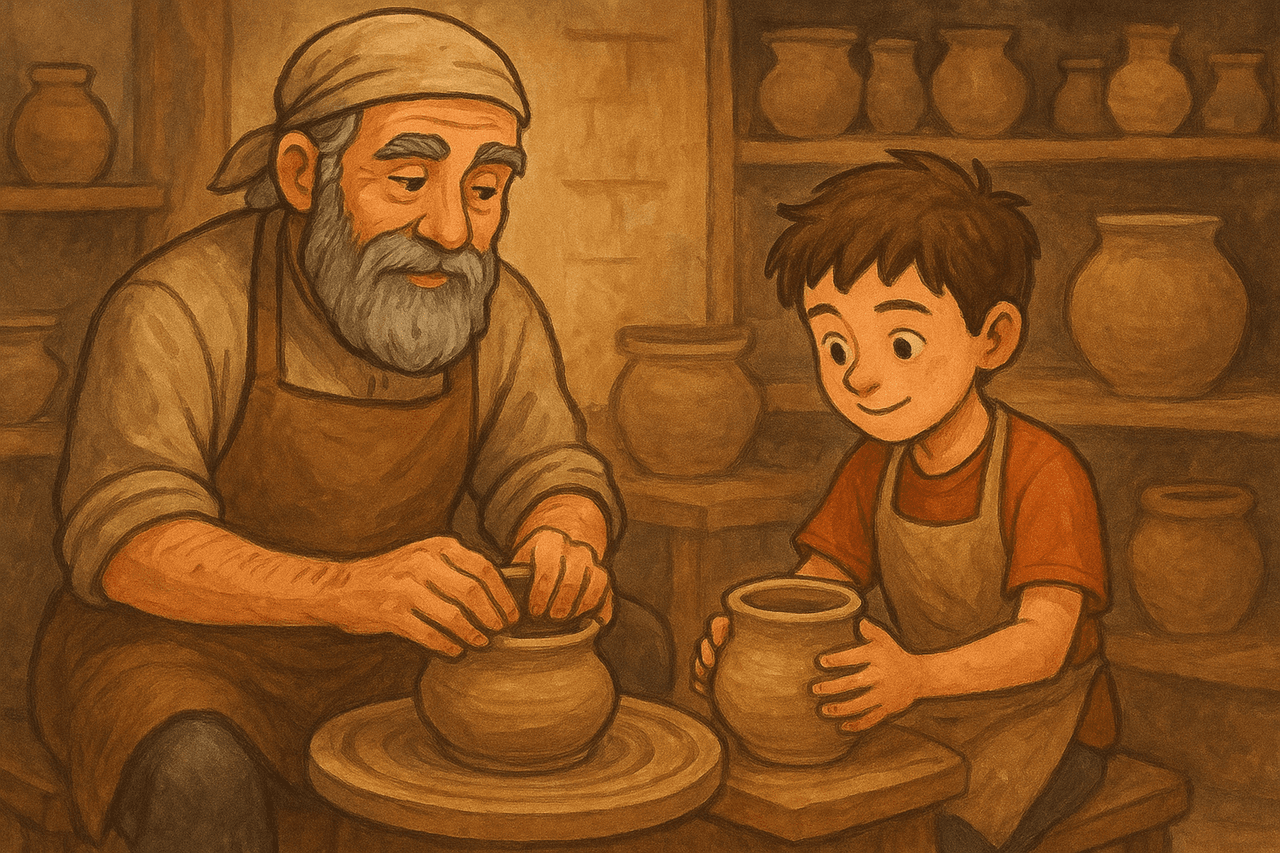
Gökeyüp pottery is a tradition dating back to ancient times. The local population recounts that their ancestors brought this knowledge with them from Horasan. Archaeological findings reveal traces of Lydian and Roman cultures in the region. The village name appears in Ottoman documents from the 17th century onward.
How Is It Made?
- Raw material preparation: Sandy clay from Sarısu is mixed with muscovite schist, a metamorphic rock rich in mica minerals and exhibiting foliation.
- Hand shaping: The clay is raised using the coiling and smoothing technique on a flat surface.
- Glazing: The vessels are coated with liquid clay.
- Open-fire firing: The vessels are fired in fires fueled by wood, straw, and manure in household courtyards.
- Distinctive appearance: Mica particles and the darkening caused by the fire impart a glossy finish to the pottery.
(Generated by Artificial Intelligence.)
Forms and Types
Gökeyüp pottery has specific names according to function:
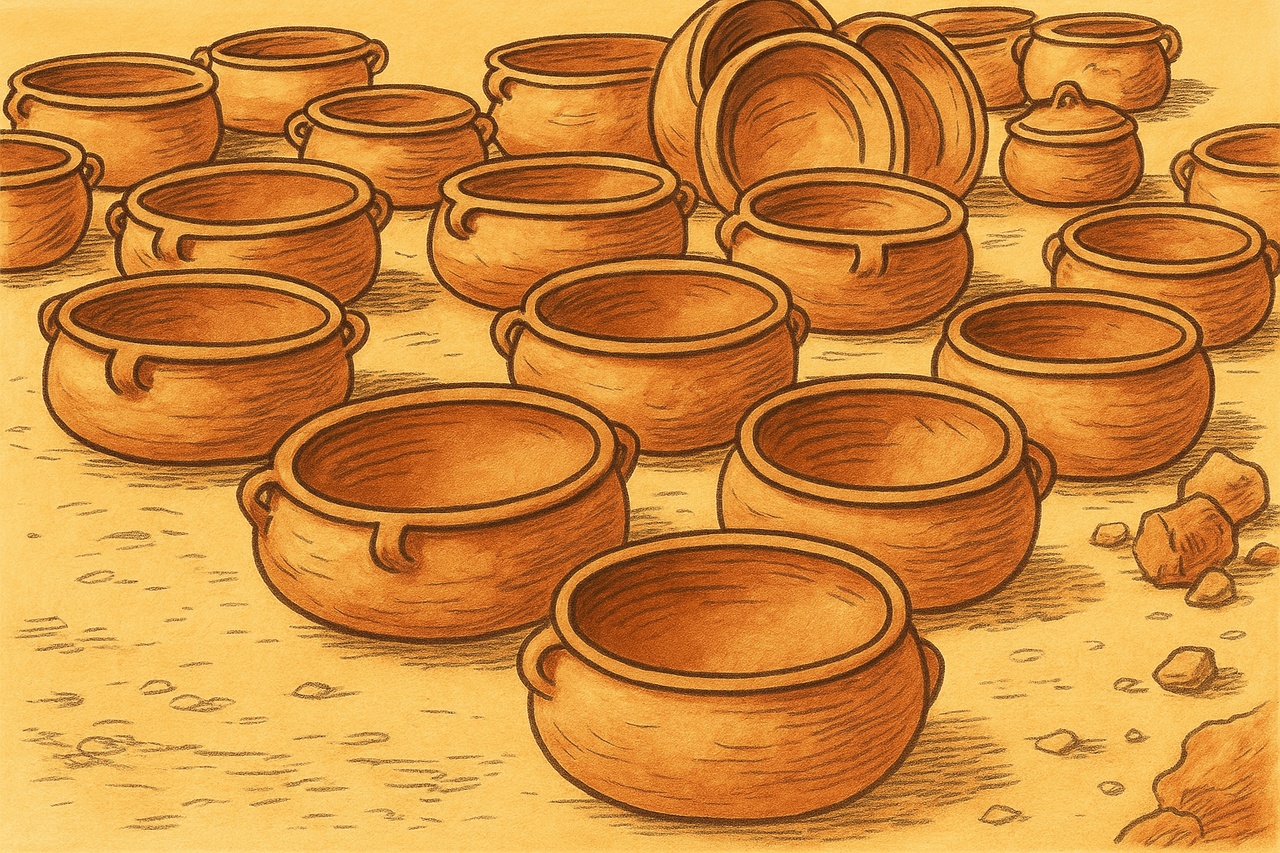
- Mikri: Small lidded earthenware pot
- Arapbaşı: Medium-sized earthenware pot
- Sayı: Large earthenware pot
- Kabarak: Wide-based vessel
- Koşaf çömleği: Four-handled lidded pot
- Tepsi / içi: Tray for oven-cooked dishes
- Tava: Handle-equipped vessel for roasting coffee
- Fish plate, cup, cooking pot: Everyday kitchen utensils
Cultural Features
In Gökeyüp, the majority of pottery production is carried out by women. Men prepare the soil, while women process the clay, shape the vessels, and fire them. For this reason, Gökeyüp pottery is known as a tradition sustained by women’s labor.
Economic and Current Status
Once the village’s primary source of livelihood, pottery making is now practiced less frequently. Approximately 1,500 vessels are produced annually. Most are sold to traders who visit the village, while some find markets in local bazaars. On 28 January 2025, it received official protection through registration as a geographical indication under the “geographical indication” designation.