

`nahil` Related Article Results
How to Praise
Nahıl övme is a traditional wedding ritual practiced especially in Ürgüp and surrounding villages of Nevşehir. This custom is performed to invoke good fortune for the groom, enhance his social standing, and ensure a blessed beginning to his new life. It is typically carried out on the night connecting Wednesday to Thursday, as part of the “güvey donatma” ceremony. Nahıl consists of a wooden framework approximately 1.5 to 2 meters in height. The framework is decorated with graph paper, adorned wi
EN
Melahat Pamuk
 Os
OsOsmanlı’nın Görkemli Süsleme Sanatı: Nahıl Geleneği
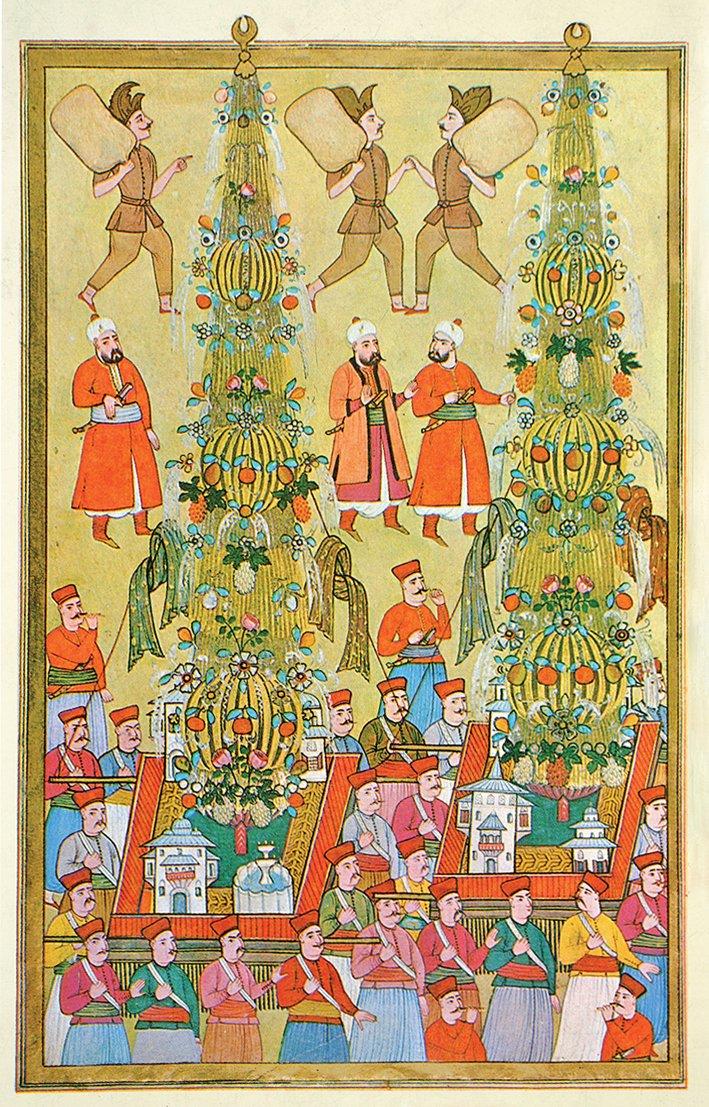
Osmanlı İmparatorluğu'nda düğünler, sünnet törenleri ve şenlikler denilince akla gelen en ikonik görüntü, göğe yükselen devasa süslü ağaçlardır. Arapça "hurma ağacı" anlamına gelen Nahıl, sadece bir dekorasyon öğesi değil; bereketin, gücün ve sanatın sokağa taşmış halidir. Sünnet alayında taşınan iki nahıl (Surname-i Vehbi,TSMK.,III.Ahmed,nr3593,vr.161-DİA) " image-element-format="right" image-source="https://cdn.t3pedia.org/media/uploads/2026/01/01/8UxeBjzaYmSukpWrywVgMzO2vzNwKOYS.jpg"> Nahı
TR
Esmanur Kalaycık
Nahıl Övme
Nahıl övme, Nevşehir’in özellikle Ürgüp ve civar köylerinde uygulanan geleneksel bir düğün ritüelidir. Bu gelenek, evlenecek olan erkeğin uğurunun açılması, toplum içindeki saygınlığının artması ve yeni hayatına uğurlu başlaması dileğiyle icra edilmektedir. Genellikle çarşambayı perşembeye bağlayan gece yapılan “güvey donatma” töreni kapsamında gerçekleştirilir. Nahıl, ortalama 1,5–2 metre yüksekliğinde bir tahta iskeletten oluşur. Bu iskelet, grafon kâğıtlarıyla süslenir; düz, bükümlü, çiçek şe
TRMelahat Pamuk
ThThe Ottoman Empire's Grand Decorative Art: The Nahıl Tradition
In the Ottoman Empire, when weddings, circumcision ceremonies, and festivals are mentioned, the most iconic image that comes to mind is the towering ornate trees rising toward the sky. The Nahıl, meaning “date palm tree” in Arabic, was not merely a decorative element; it was a manifestation of abundance, power, and artistry brought into the streets. Two nahılls carried during a circumcision procession (Surname-i Vehbi, TSMK., III. Ahmed, nr. 3593, vr. 161-DİA) " image-alternate="" image-element-
EN
Esmanur Kalaycık
ThThe Ottoman Empire's Magnificent Decorative Art: The Nahıl Tradition
Ottoman Empire weddings, circumcision ceremonies, and festivals are most iconically associated with towering, elaborately decorated trees rising toward the sky. The Nahıl, derived from the Arabic term meaning “date palm tree,” was more than just a decorative element; it was a public manifestation of abundance, power, and artistry. Sünnet alayında taşınan iki nahıl (Surname-i Vehbi,TSMK.,III.Ahmed,nr3593,vr.161-DİA) " image-element-format="right" image-source="https://cdn.t3pedia.org/media/upload
ENEsmanur Kalaycık