

`material` Related Article Results

Impact Test
Impact test is a standardized mechanical testing method used in engineering to measure the mechanical behavior of materials under dynamic and sudden loading. Unlike static loading, impact tests apply sudden high-velocity loads to the material, thereby determining whether the material exhibits ductile or brittle behavior under rapid and high-speed loading. The value representing the material’s resistance to such loads is referred to as impact resistance or impact energy. The importance of these t
EN
Muzaffer Yalçın

Furniture and Space Formation
Furniture and spatial shaping refer to the guiding interventions made through furniture elements that influence the physical arrangement, functional organization, and perceptual experience of an interior space. In this approach, furniture is not merely a supplementary fixture; it is regarded as a fundamental design component that defines how the space is used, sets its boundaries, and establishes its atmosphere. Furniture placement directly affects spatial decisions such as the balance of fullne
EN
Esra Özkafa

Epoxy Adhesive
Epoxy adhesives are two-component thermoset polymer systems composed primarily of epoxy resins and appropriate curing agents. Due to their superior technical properties including high mechanical strength chemical resistance thermal stability and excellent adhesion to a variety of surfaces these adhesives have become the industrial standard for structural bonding applications. Chemical Structure and Reaction Mechanism Epoxy adhesives are typically oligomeric or polymeric systems containing epoxy
EN
Muhammed Erdem
Elasticity (Young's) Modulus
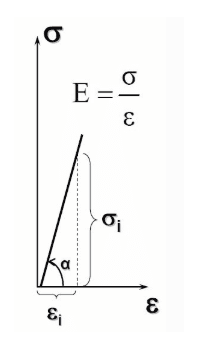
Discovery The concept of the modulus of elasticity was first introduced by Thomas Young in 1807. Definition Also referred to in some sources as Young's modulus, the modulus of elasticity (E) is a value that represents a material's resistance to deformation under load. This value (E) serves as a measure of how stiff or flexible a material is. A higher value indicates that the material will deform less compared to one with a lower value. Determination and Base Unit This value is calculated from th
ENElyesa Köseoğlu
Brittle Material
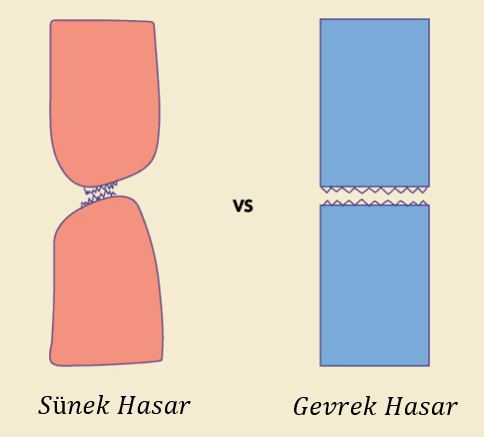
Brittle materials are materials that generally have low deformation capacity, exhibit elastic behavior behavior, and are prone to fracture under high stress. Such materials are commonly used in engineering applications where hardness and durability requirements are paramount. However, the fracture behavior of brittle materials presents challenges in time engineering design. Knyamed. "Ductile vs. Brittle Fracture." Accessed February 26, 2025. https://knyamed.com/blogs/difference-between/ductile-v
ENElyesa Köseoğlu
 Is
IsIsotropic Material
Isotropic materials are defined as materials whose physical and mechanical properties are identical in all directions. In such materials, parameters such as the modulus of elasticity, thermal conductivity, and electrical conductivity like are the same in all directions and independent of the chosen coordinate system. Isotropic Materials Uniform Properties: Isotropic materials exhibit identical mechanical properties in all directions. This means that characteristics such as strength and stiffness
ENElyesa Köseoğlu
Orthotropic Material
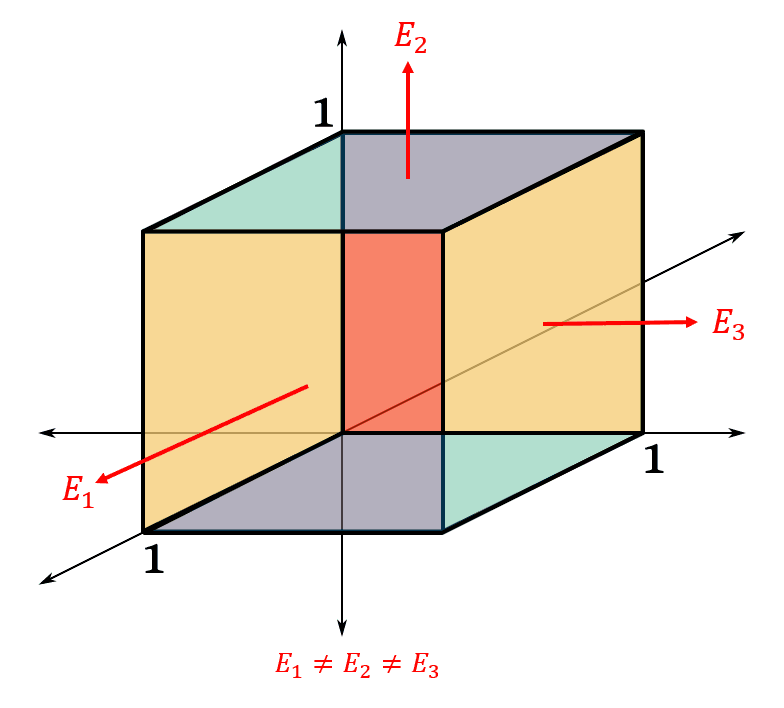
Orthotropic materials are a type of material that exhibits distinct mechanical properties along three mutually perpendicular axes (Cartesian coordinate system: x, y, z). 【1】 In orthotropic materials, mechanical properties may differ along three perpendicular axes (x, y, z directions), but each direction has a constant value. That is: The elastic modulus in the x direction (Eₓ) is constant, The elastic modulus in the y direction (Eᵧ) is constant, The elastic modulus in the z direction (E_z) is co
ENElyesa Köseoğlu
CrCreep
Creep is defined as the time-dependent plastic deformation of materials under constant temperature and constant load. This phenomenon is a critical damage mechanism in engineering components operating at high temperatures for extended periods. Creep deformation can be observed across a wide range of materials including metals, ceramics, and polymers, and plays a significant role in determining the service life of materials. Creep Curve and Stages A typical creep curve consists of three main stag
ENMuzaffer Yalçın
GlGlass Fiber Reinforced Polymers (GFRP)
Glass fiber-reinforced polymers (GFRP) are composite materials formed by dispersing high-strength glass fibers within a polymer matrix. These materials are known for their superior properties, including light weight, high mechanical strength, high fatigue resistance, and corrosion resistance. GFRP has critical applications in many industries such as construction, automotive, marine, energy, and infrastructure. Development Process and History The foundations of GFRP emerged in the 1930s due to th
ENMuhammed Erdem
PCB Manufacturing
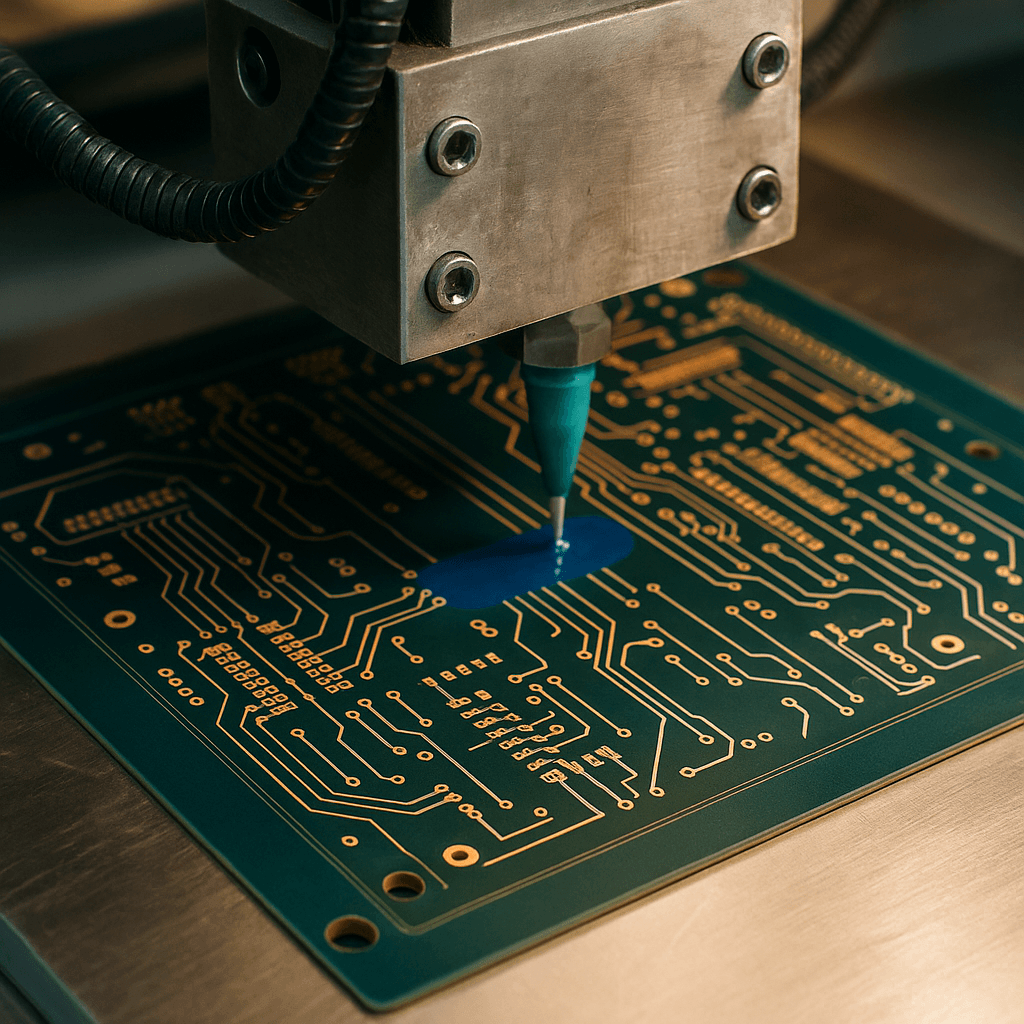
A Printed Circuit Board (PCB) is a plate on which electronic components are mounted and electrical connections between these components are provided through conductive pathways. PCBs form the fundamental building block of modern electronic devices and play a critical role in transforming a concept or circuit into a functional and reliable product. The design and manufacturing process is a complex procedure involving a series of engineering steps that directly affect the performance, cost, and re
EN
Ömer Said Aydın