

`h-ii-region` Related Article Results
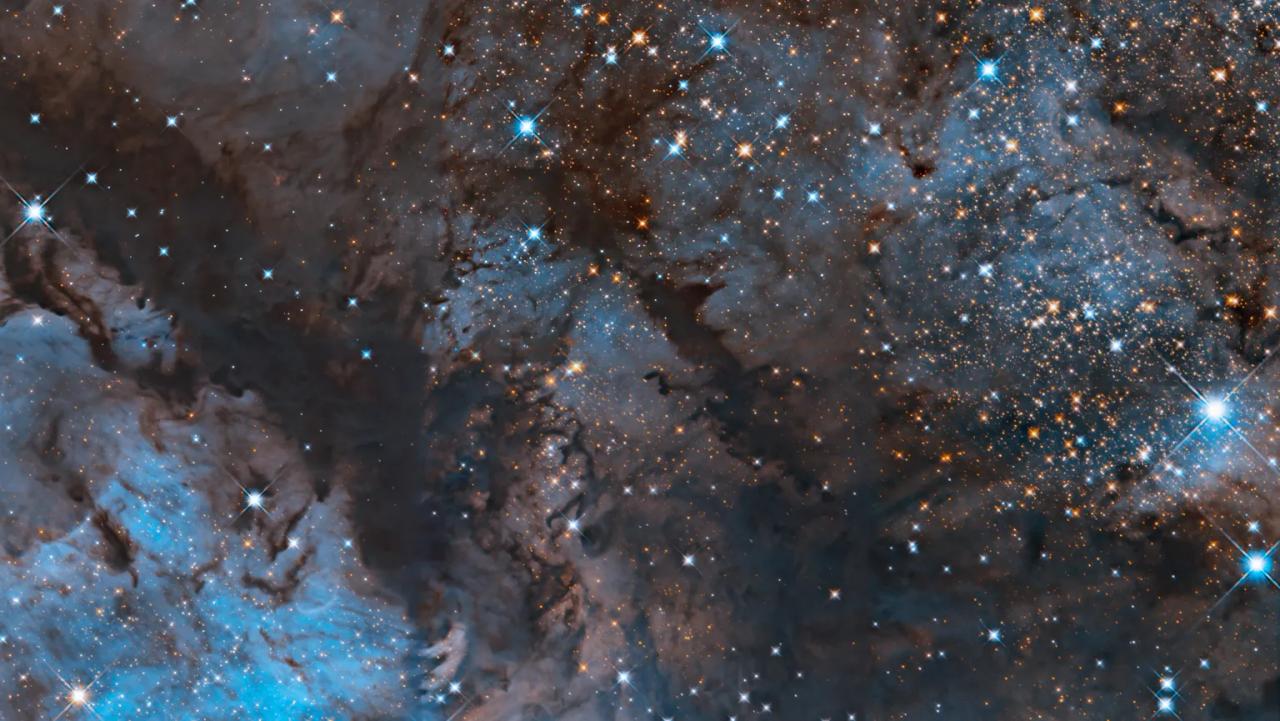
Omega Nebula (M17)
The Omega Nebula, also known as Messier 17 (M17), the Swan Nebula or the Horseshoe Nebula, is a large, bright, and active star-forming region located within the Milky Way Galaxy. It is observable through telescopes during summer months in the southern hemisphere and tropical regions of the northern hemisphere. The nebula is of significant astronomical interest due to its intense star formation, ionized gases, and complex internal structure. General Properties Catalog Designations: Messier 17, NG
EN
Osman Özbay
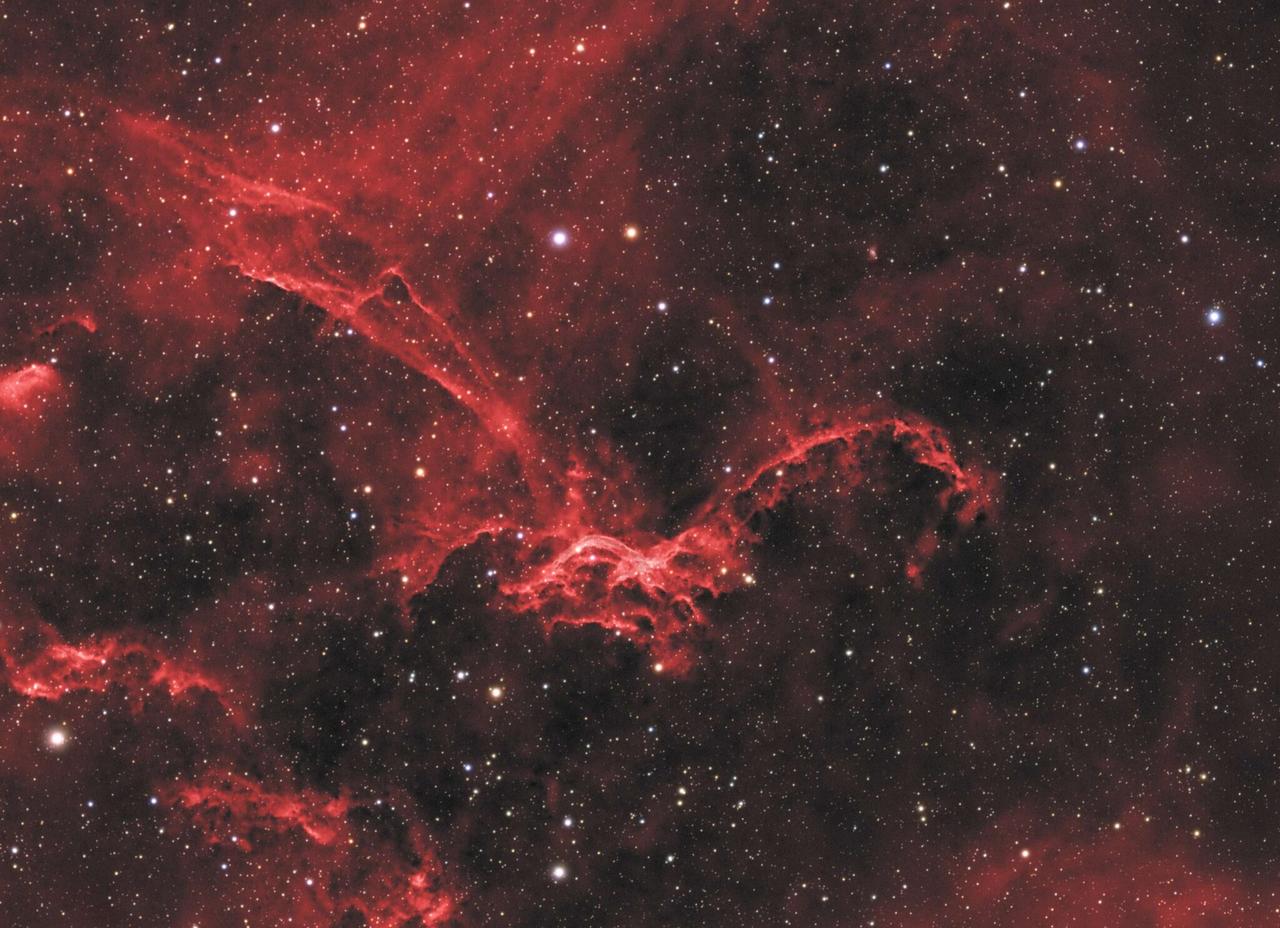
Flying Dragon Nebula (Sh2-114)
Flying Dragon Nebula (Sh2-114) is an irregular emission nebula composed of highly ionized gas located within the Milky Way Galaxy. Due to its complex morphology and faint brightness, this object has been relatively understudied in astronomical literature for many years. The nebula derives its name from its structure, which resembles a dragon when observed through telescopes in optical wavelengths. Location and General Properties Sharpless 2-114 (Sh2-114) is listed in the Sharpless Catalogue, com
ENOsman Özbay
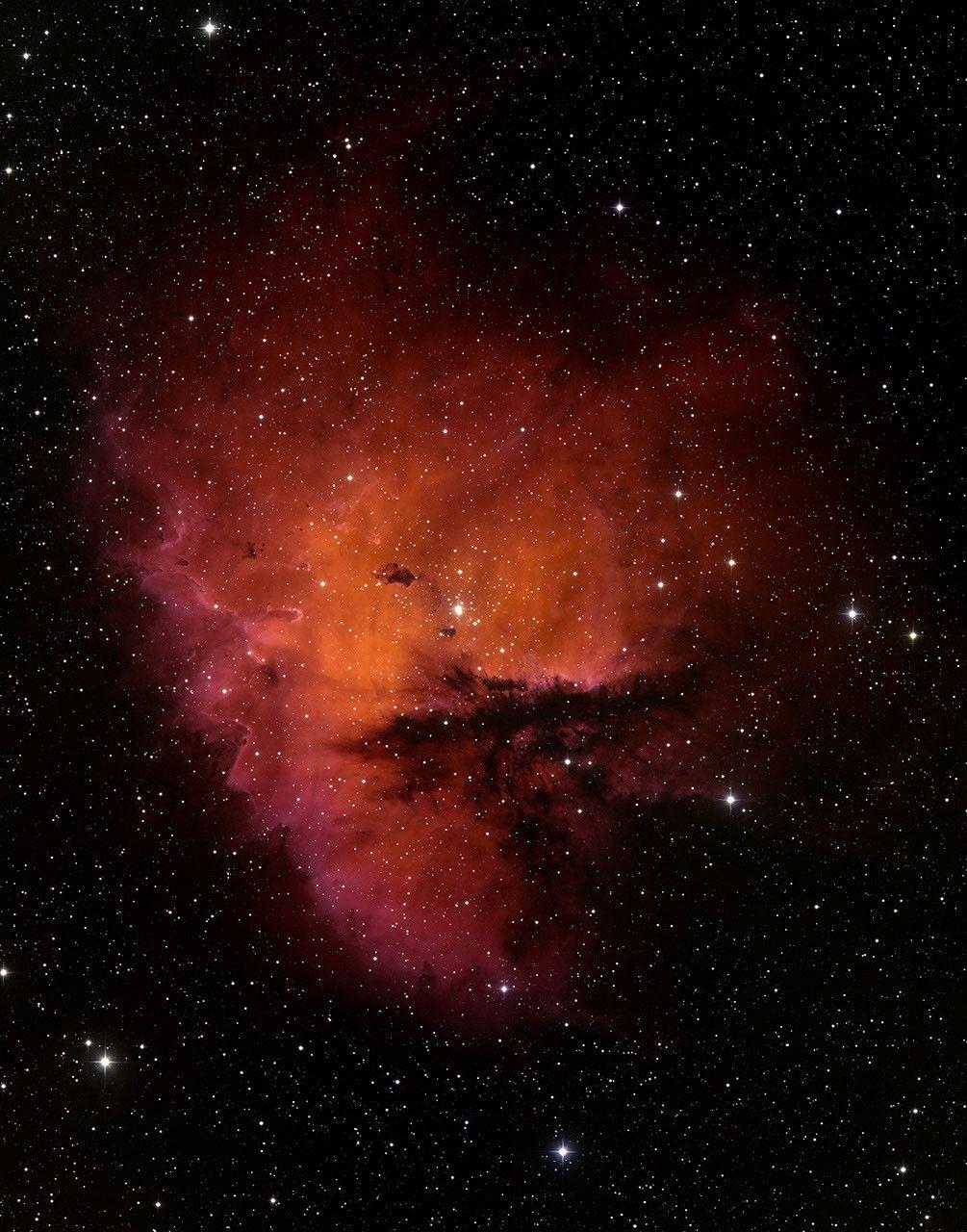
Pacman Nebula (NGC 281)
NGC 281 is an emission nebula located in the direction of the Cassiopeia constellation and classified as an H II region. Commonly known in astronomy as the "Pacman Nebula" due to its visual resemblance to the classic video game character, this nebula is regarded both as a star-forming region and as an OB association containing young stars. It was first discovered in 1883 by American astronomer Edward Emerson Barnard. Physical and Observational Properties Position and Distance NGC 281 lies within
ENOsman Özbay
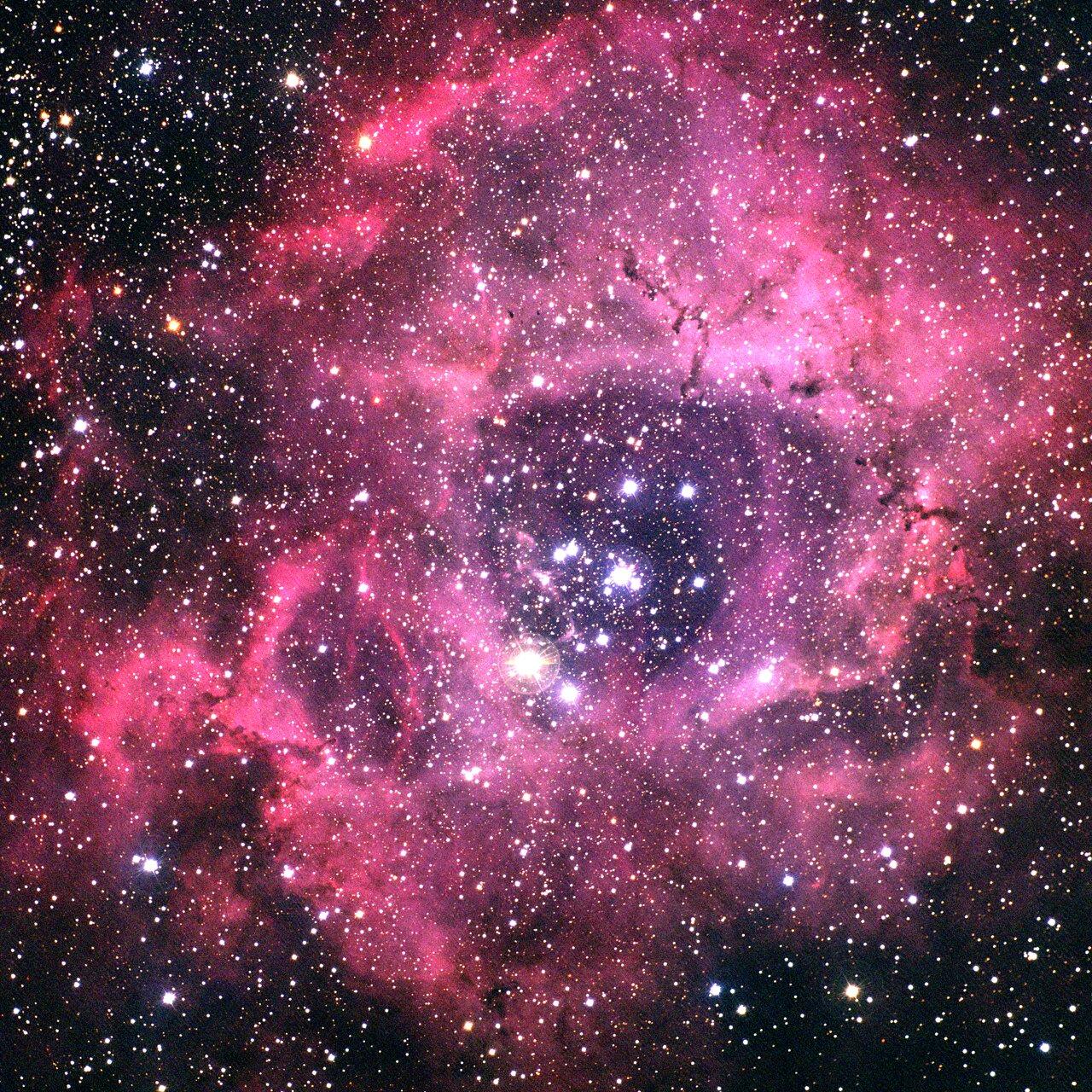
Rozet Nebula
The Rosette Nebula is a large and widespread emission nebula located in the constellation Monoceros (Unicorn). Although commonly referred to as NGC 2237, different regions of the nebula complex are cataloged separately as NGC 2237, NGC 2238, NGC 2239, NGC 2244 and NGC 2246. Structurally an H II region, the Rosette Nebula glows brightly due to ionized hydrogen gas energized by ultraviolet radiation from young stars within it. Location and General Properties Catalog Designations: NGC 2237, NGC 223
ENOsman Özbay
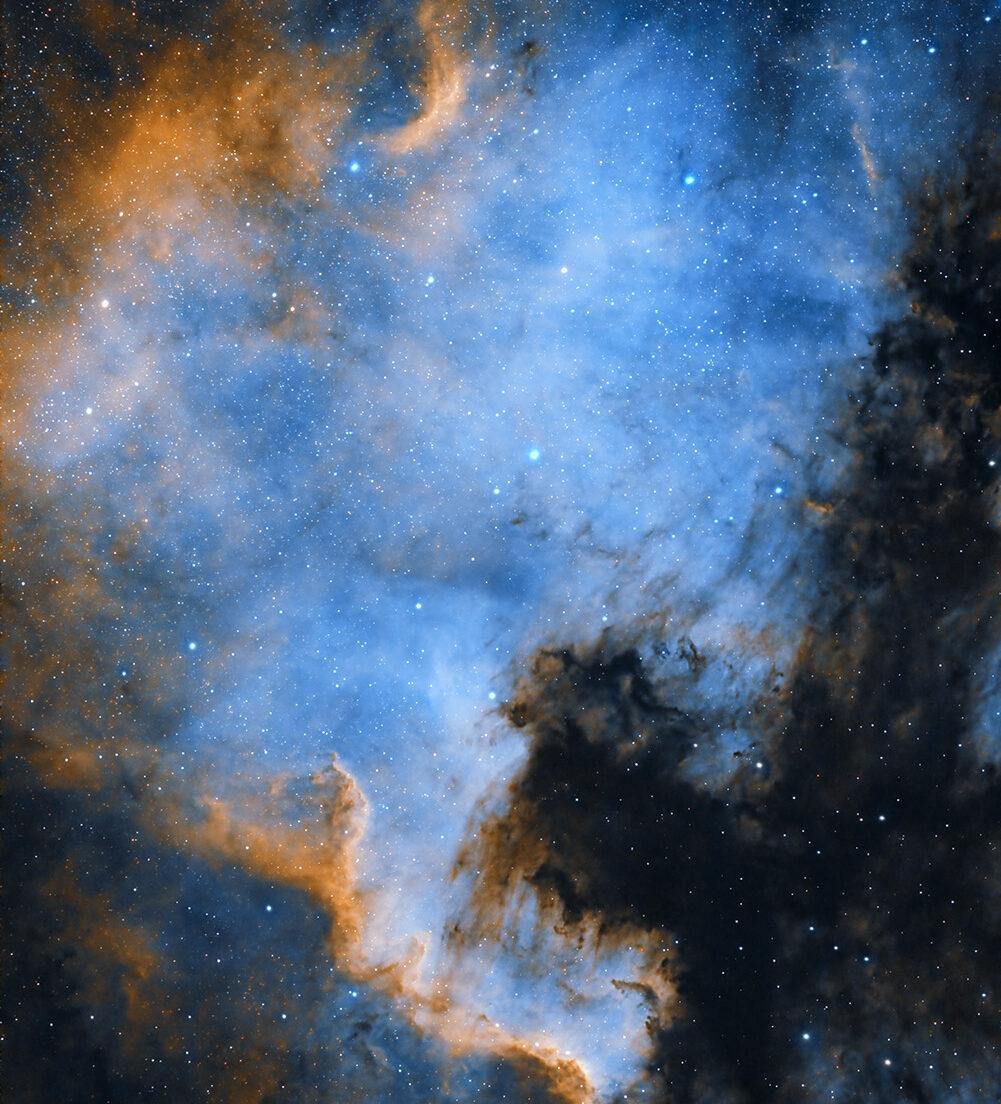
North American Nebula (NGC 7000)
NGC 7000 is a large and extensive emission nebula located in the direction of the Cygnus constellation. At a distance of approximately 1,800 light-years from Earth, its visible shape resembles the continent of North America, earning it the name North America Nebula. It was first cataloged by William Herschel in 1786, but its distinction is difficult in non-telescopic observations due to the high density of stars in the region. NGC 7000 spans about 120 x 100 arcminutes in the sky, making it a neb
ENOsman Özbay