

`daily-use` Related Article Results

Between Kaş and Göz
In some situations, we want to describe how something—a task, a promise, or a circumstance—happened in an extremely short amount of time. This is precisely what the expression “kaşla göz arasında” conveys: as if everything was over before you could even blink! Where Does It Come From? 🧐 The origin of this expression lies in how quickly human movements can occur. Raising an eyebrow or blinking the eye are both actions that take just a fleeting moment. The phrase uses these rapid movements as a m
EN
Nida Üstün

When the Fish Comes Out of the Poplar
If someone tells you, “When the fish climbs up the poplar tree,” have you ever wondered what that means? Actually, this phrase is used to describe something that will never happen in real life. Let’s explore together what this interesting expression really means! Where Does It Come From? 🐟 This expression is based on the fact that fish live in water and cannot climb up a poplar tree—that is, to the top of a tree. For centuries, people have used such playful and imaginative phrases to describe s
ENNida Üstün
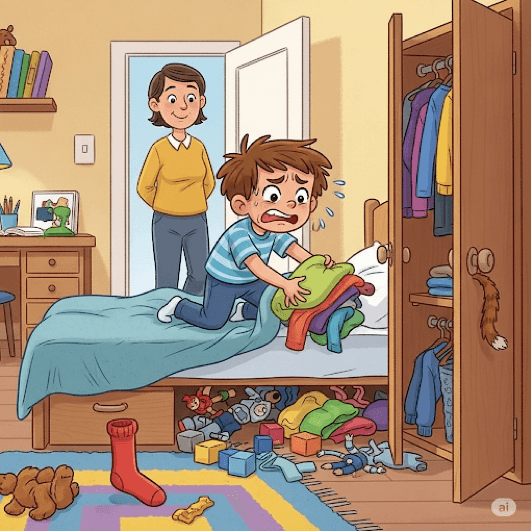
Eye Makeup
Have you ever seen a magician? Magicians captivate our eyes with their tricks—they show us something different from what is actually happening. To fool someone refers to behaviors aimed at deceiving, misleading, or presenting something as better than it really is by concealing the truth. For example, cheating in a game or decorating an item to make it appear far more valuable than it is are both examples of fooling someone. Where Does It Come From? 🤨 The exact origin of this expression is unkno
ENNida Üstün

To have one’s mind in a state of confusion
The expression “to have one’s mind a hand’s breadth in the air” is used to describe someone who is absent-minded or lost in thought, unable to focus their attention on anything. 🤔 Where Does It Come From? The exact origin of this expression is not known. However, the use of measurements like “a hand’s breadth” demonstrates that such terms have long been part of the language. People imagined that when someone was absent-minded, their mind had drifted away from their body. They expressed this dis
ENNida Üstün

The nail removes the nail
The saying “a nail removes a nail” means attempting to solve a problem or difficulty by using another problem or situation of a similar nature. Just as one might remove a nail driven into wood by striking it with another nail, this expression describes using a method of the same kind to confront a challenge. Sometimes this phrase is also used when trying to fix a bad situation by introducing an even worse one. Where Does It Come From? The origin of this saying comes from the daily practices of c
ENNida Üstün
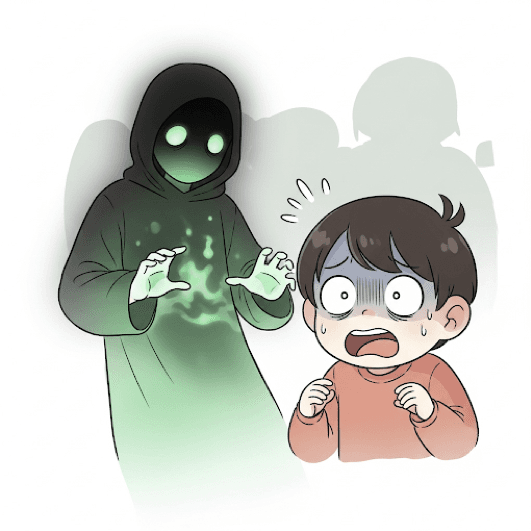
Neck Breaking
The expression "ödü kopmak" describes someone being extremely frightened, even experiencing a sudden and intense surge of fear. Imagine suddenly seeing someone appear right beside you or hearing a very loud noise. The shock and terror you feel in that moment perfectly capture the meaning of this expression. Let’s explore where this interesting phrase comes from and how it is used. Origin When we are very afraid, our hearts race, our hands sweat, and we feel a strange sensation in our stomach. Th
ENNida Üstün

In the process of making a fishhook, one ends up losing an eye
It may seem strange that helping someone could actually cause a larger problem, right? The idiom “Kaş yapayım derken göz çıkartmak” precisely describes this situation: it means unintentionally harming someone while trying to do them a favor. Where Does It Come From? The exact origin of this idiom is unknown, but it may date back to ancient times. It is believed that people once shaped their eyebrows for beautification purposes, and sometimes unintended accidents occurred during this process. The
ENNida Üstün
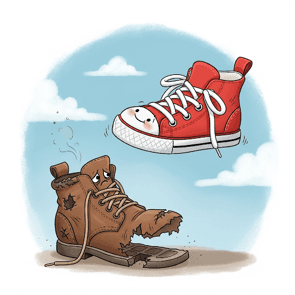
To throw one's shoe onto the chessboard
The expression "to throw a shoe onto the roof" means that a person has lost their position or importance, and someone else has taken their place. This phrase is commonly used when something better has replaced an object, or when a more successful person emerges in a particular role. 👟 Where Does It Come From? The origin of this expression dates back to ancient times, to the shoemakers’ guilds known as lonca. At that time, if a shoemaker failed to repair a customer’s shoe on time or to a satisfa
ENNida Üstün

Ipe Un Sermek
To Sprinkle Flour on a Rope The expression "İpe un sermek" means to find various excuses to avoid doing something or to delay it. Just as flour sprinkled on a rope cannot stick and will immediately fall off, this idiom describes an attempt to prevent something from happening by inventing implausible reasons. Where Does It Come From? Although the exact origin of this expression is unknown, there is a plausible story behind it. In the past, people would hang their laundry on ropes to dry after was
ENNida Üstün

To Smooth the Legs
"To roll up one's pants" is an idiom meaning to prepare for a task and immediately take action. Just as we roll up our sleeves before starting work, this expression shows that we are approaching a challenge or duty with determination. It is used when we are fully ready to carry out a task. Where Does It Come From? 🧐 The origin of this idiom dates back to very ancient times. In those days, people would roll up the legs of their trousers when working in the fields, doing tasks near water, or perf
ENNida Üstün