

`anger` Related Article Results

Riding the Cubes
What Does It Mean? The expression “to climb onto the pots” means to become extremely angry or furious in response to a situation. In such cases, the person clearly shows their irritation and may react harshly toward those around them. This idiom is used to convey the intensity of someone’s anger. Where Does It Come From? The exact origin of the expression “to climb onto the pots” is unknown, but it began to be used to describe situations in which people become excessively angry in everyday life.
EN
Zelal Çakar

The Pirate Function of Nerves: "Anger Outbursts"
The Universal Nature of Anger Stressors, internal conflicts, and social pressures encountered in human life can sometimes disrupt emotional regulation. During intense episodes of anger, the nervous system departs from its normal functioning; conscious behavior is replaced by impulsive reactions. In this context, anger outbursts can be interpreted as a temporary shift in the nervous system’s operation toward a rogue mode of functioning. The individual is emotionally overwhelmed: control has been
EN
Ayşenur Bayraktar

Intermittent Explosive Disorder
Intermittent Explosive Disorder (IED) is a clinical condition classified under the category of Impulse-Control Disorders in the DSM-5 diagnostic criteria. The core feature of this disorder is the individual’s inability to resist impulses, urges, or provocations that may result in harm to oneself or others. Within the framework of psychodynamic theories, this condition is described as a weakening or collapse of the self-regulatory mechanism between the impulsive "id" and the controlling "superego
EN
Nida Üstün

Go to the fire with a pickaxe
“To go to a fire with a bellows” is an idiom. This idiom means to make a bad situation worse. What Does It Mean? This idiom means to escalate a problem or conflict instead of calming it down. In other words, the person makes things more difficult rather than resolving the situation. An image symbolizing the idiom (generated by artificial intelligence.) " image-element-format="right" image-height="1536" image-source="https://cdn.t3pedia.org/media/uploads/2026/03/28/usKLvd4yKKEtzjV4MfK8kfUIaKvuz3D
EN
Eylül BOLAT

Spitting Fire
Have you ever felt so angry that it seemed like flames were bursting out from within you? In our language, we have a wonderful expression to describe this intense emotion: Ateş püskürmek. This idiom is used to convey that someone is extremely angry. What Does This Idiom Mean? Ateş püskürmek means that a person is so enraged by their anger that they may even speak harshly to the person they are upset with. In reality, flames do not come out of our mouths, but the intensity of our anger can be so
EN
Şehrinaz İrem Canbaba
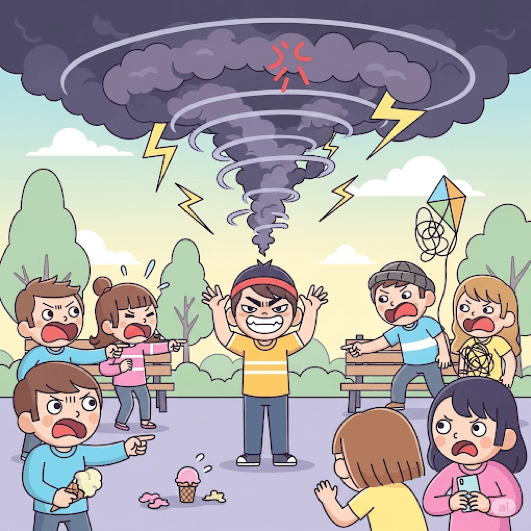
Storm Removal
Have you ever seen how, when someone becomes extremely angry, they affect everyone around them? The expression to stir up a storm describes exactly such a situation. It is used when a person becomes very angry or when an event causes major chaos. It refers to a person or situation that upends everything around them like a storm. Where Does It Come From? The origin of this expression lies in the power of nature. A real storm throws everything into disarray with its wind, rain, and lightning. The
ENNida Üstün