


This article was automatically translated from the original Turkish version.
Zero waste is defined as a waste management philosophy that encompasses preventing waste, using resources more efficiently, reviewing the causes of waste generation to prevent or minimize its creation, and ensuring separate collection at the source and recovery of waste when it is generated. As the global population and living standards rise, increased consumption intensifies pressure on natural resources, disrupting ecological balance. Disposing of waste without evaluating it through recycling and recovery leads to significant material and energy losses. In light of this, the zero waste approach, grounded in the efficient use of natural resources, is implemented as a comprehensive system aimed at preventing waste in production and consumption processes, reducing environmental risks, and reintegrating waste into a circular economy.
Waste is a term describing any substance or material discarded, abandoned, or legally required to be disposed of by its producer or the person who physically holds it. Municipal solid waste includes various materials originating from households, commercial establishments, industrial facilities, and gardens. When examining the global composition of solid waste, organic waste constitutes the largest share, followed by recyclable materials such as paper, cardboard, plastic, glass, and metal. Zero waste is a waste management philosophy that includes preventing waste, using resources more efficiently, and reviewing the causes of waste generation to prevent or minimize it. When waste is generated, the core principle of this approach is its separate collection at the source and its recovery. This goal entails the absolute reduction of waste volume and the establishment of effective collection systems. Zero waste is a comprehensive system based on the finite nature of natural resources, aiming to increase efficiency across all processes and minimize environmental risks.
The zero waste approach represents a transition from the traditional linear economic model to a circular economy model. The linear economy, which became widespread after the Industrial Revolution, operates on the principle of “take-make-use-dispose.” This model leads to continuous depletion of natural resources and high volumes of waste generation. In contrast, the circular economy functions on the principle of “take-make-use-recycle-reuse as raw material.” In this system, resources are used efficiently, product lifespans are extended, and materials are reintegrated into production processes without generating waste. The concept of zero waste is fundamentally based on the “cradle-to-cradle” approach, which designs a product’s life cycle for infinite reuse. This approach anticipates that waste generated in one process becomes the raw material for another, directly imitating nature’s waste-free ecological cycles. Concepts supporting the circular economy model, such as clean production, are integrated into this philosophy as efficiency strategies adopted by businesses to reduce the environmental impact of production.【1】

Sıfır Atık (Anadolu Ajansı)
The fundamental implementation steps of zero waste have been conceptualized in international literature as the 5R and 7R frameworks. The 5R framework consists of the steps: refuse, reduce, reuse, recycle, and rot. Some expanded models add repair and re-think as additional steps, forming the 7R framework.【2】 In the waste management hierarchy, preventing and reducing waste at the source occupies the highest tier. The “refuse” step requires questioning the need for a product and avoiding alternatives that generate waste. The “reuse” phase includes renting instead of purchasing, favoring deposit-based products, and extending product service life. Reusing products and materials is the most efficient waste evaluation method prior to recycling, as it requires significantly less energy and natural resources. The “recycle” and “rot” steps involve converting end-of-life materials into raw materials or soil through physical and biological methods.
The emergence of the zero waste goal is directly linked to the consumption habits of modern industrial societies and growing population dynamics. Rising expectations of prosperity and demand for comfortable living in modern societies necessitate massive industrial production. Increased demand for consumption creates a production-consumption cycle that forms the root cause of today’s waste problem. Humanity’s consumption-oriented relationship model has laid the groundwork for water and air pollution as well as biodiversity loss. All anthropogenic mass created by human activity globally now exceeds the total weight of living biomass on Earth. In just the last 50 years, natural resource use has tripled, reaching an annual consumption of 90 billion tons. Globally, 2.01 billion tons of municipal solid waste are produced annually, with projections indicating this will rise to 3.4 billion tons by 2050. This environmental degradation has made zero waste policy a global imperative.【3】
Adopting zero waste practices delivers numerous environmental, economic, and operational benefits. Preventing waste reduces costs and enhances performance through cleaner environments. Keeping waste in the cycle as secondary resources reduces demand for primary raw materials and dependence on imports. Within integrated solid waste management, reducing waste at the source, recovering, composting, and generating energy from waste collectively minimize the need for landfill sites. Although incineration reduces the volume of solid waste by converting it into gas emissions, it does not eliminate the necessity for disposal due to toxic ash residues. Preventing waste generation is not merely about lowering disposal costs; it also prevents greenhouse gas emissions, energy consumption, and damage to natural resources. This approach, central to climate change mitigation policies, plays a critical role in helping countries achieve sustainable development goals by preventing emissions from regular landfills and reintegrating waste into the economy.
The historical roots of environmental cleanliness and waste management practices in Türkiye extend back to the Ottoman Empire. The “Environmental Cleanliness Prohibition Decree” issued by Kanuni Sultan Süleyman in the mid-16th century is among the earliest written documents regulating cleanliness rules in urban areas. Global environmental awareness, which emerged in the 1960s in response to pollution caused by rising industrial production and consumption in the Western world, found institutional expression in Türkiye’s national agenda from the 1980s onward. The first legal foundation for modern waste management was laid with Law No. 2772 on the Environment, published in the Official Gazette on 11 August 1983.【4】 This law integrated the “polluter pays” principle into Turkish legal system, requiring those causing pollution or degradation to bear the costs of prevention, limitation, and environmental improvement. The Waste Management Regulation, which entered into force on 2 April 2015, expanded the legal framework of national waste policy by detailing administrative and technical principles regarding waste reduction at the source, collection, transportation, recovery, and disposal.
In 2017, under the leadership of the Ministry of Environment, Urbanization and Climate Change and under the patronage of First Lady Emine Erdoğan, the National Zero Waste Project was launched. Initially implemented in the Presidential Complex and the Ministry’s service buildings, it was subsequently gradually extended to all public institutions, municipalities, educational institutions, and industrial facilities. During the installation phase of the zero waste system in buildings, desk-side trash bins were removed and color-coded recycling equipment for different waste types was installed in corridors, while staff received training on waste prevention and separation. This initiative, targeting efficient natural resource management, was expanded in 2019 to include aquatic ecosystems through the Zero Waste Blue project, launched to protect water resources and seas. Led by Türkiye, this initiative gained global recognition when the United Nations General Assembly adopted 30 March as the International Zero Waste Day.【5】
Standards for establishing, monitoring, and certifying the zero waste management system were legally established by the Zero Waste Regulation published in the Official Gazette No. 30829 on 12 July 2019. The regulation mandates the efficient use of raw materials and natural resources, separate collection of waste at the source, and its recovery.【6】 Under the regulation, a minimum dual-collection system is required for buildings and campuses, with blue-colored collection equipment designated for recyclable waste and grey-colored equipment for other waste. A zero waste certification system comprising four levels—basic, silver, gold, and platinum—has been developed to standardize institutions, organizations, and enterprises that complete system implementation. Basic-level certification is mandatory for local administrations, shopping centers, airports, industrial zones, accommodation facilities with a capacity of 250 rooms or more, and chain supermarkets. Silver, gold, and platinum certification levels are awarded based on specific recovery rates and scoring criteria.
Administrative and economic tools have been introduced to ensure effective institutional oversight of the zero waste policy. A law published in the Official Gazette on 24 December 2020 established the Türkiye Environmental Agency to strengthen national coordination of waste management and deposit systems. Concurrently, the Regulation on Participation Fee for Recovery came into force to prevent waste generation at the source. Under the extended producer responsibility framework, producers are obligated to cover the waste management costs of their products and meet recycling targets. In line with the strategy to reduce plastic use, a fee was introduced for shopping bags, and it became mandatory to display the zero waste logo and eco-friendly slogans on them. To ensure the reliability of system data, the Integrated Environmental Information System and the Zero Waste Information System were created, making it a legal requirement for businesses to register their waste declarations online.【7】
Türkiye’s waste management strategy is supported by long-term national action plans centered on climate change and circular economy principles. Through the National Waste Management and Action Plan covering 2016 to 2023, regional recovery and disposal facility capacities have been planned for all waste types. In line with circular economy goals, a ten-year National Waste Management Strategy and Plan covering 2025 to 2035 has been prepared.【8】 This plan aims to terminate waste acceptance at unregulated dumpsites by 2028, achieve separate collection of 70% of packaging waste, and recover at least 60% of municipal waste. To achieve the 2053 Net Zero Emissions target, draft legislation was updated and the Climate Law was adopted by the Grand National Assembly of Türkiye on 2 July. The National Circular Economy Strategy and Action Plan, issued by the Presidency, plans to reduce waste costs and generate an annual economic contribution of 350 billion Turkish lira across seven sectors ranging from packaging to textiles.【9】
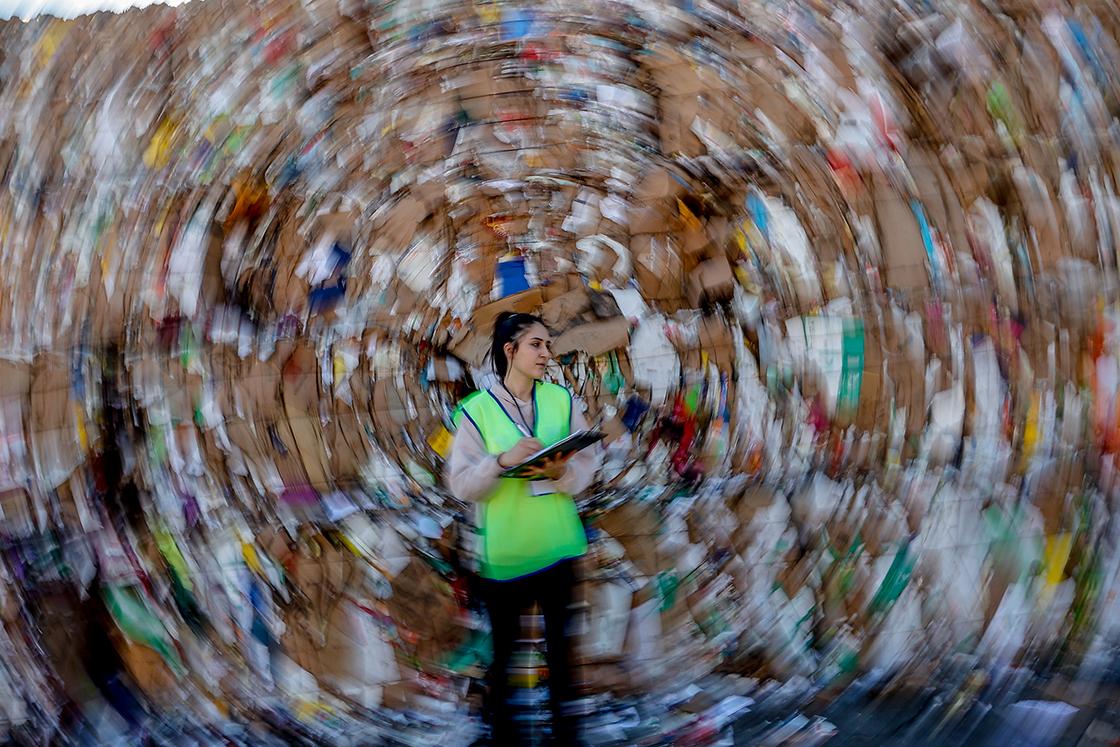
Sıfır Atık (Anadolu Ajansı)
Under legislation, waste classification relies on specific coding systems for the management and registration of waste types. Wastes are defined in legal lists by six-digit codes, and an asterisk (*) next to these codes categorizes them into two main groups based on hazardousness. Wastes marked with an asterisk are classified as hazardous waste, and their collection, storage, transportation, and treatment are subject to special regulations. Wastes not marked with an asterisk in Annex-4 waste list and lacking hazardous properties are classified as non-hazardous waste. Hazardous wastes are classified according to their physical, chemical, or biological characteristics, as they pose risks to the environment and human health. In this context, the source, transportation method, and treatment processes of wastes are recorded to ensure traceability.
Wastes are categorized into subgroups according to their origin and operational processes: municipal solid waste, packaging waste, construction and demolition waste, and excavated soil. Municipal solid waste includes materials originating from households, commercial establishments, household-like activities of industrial facilities, and gardens. Packaging waste refers to materials used during the transportation, protection, storage, and sale of products from producer to consumer. Construction and demolition waste arises from the repair, renovation, replacement, demolition, or destruction of any type of infrastructure due to natural disasters. Excavated soil refers to rock and soil material generated during excavation activities prior to construction or land development. In waste management systems, separate collection at the source is the fundamental rule; blue-colored collection equipment is used for packaging and other recyclable waste, brown for biodegradable organic waste, and grey for other waste.
Material-based waste classification determines recovery processes according to waste characteristics. The category of dry recyclable waste includes paper and cardboard, plastic, glass, and metal waste. Paper waste encompasses cellulose-based materials such as newspapers, magazines, notebooks, and cardboard boxes, whose recycling reduces the amount of raw material used. Plastic waste consists of synthetic polymer materials that constitute the majority of industrial end-products; water bottles, packaging bags, and containers fall into this group. Glass waste refers to materials whose primary components are sand, soda, and lime, shaped by melting at high temperatures. Metal waste includes aluminum or iron and steel-based beverage cans, tins, and items. Globally, dry recyclable waste accounts for approximately 38% of total waste.
Biodegradable waste and other organic materials constitute the largest group by volume and mass in waste composition. Organic waste, which makes up 44% of global municipal solid waste, includes food scraps, vegetable and fruit peels, and plant debris from parks and gardens. Wood waste arises when timber products, pallets, and household items reach the end of their useful life. Rubber and leather waste consists of shoes, bags, and end-of-life tires, while textile waste includes clothing and fabric scraps. Vegetable oils, such as olive, sunflower, corn, and canola oil, become waste after use. Organic-based wastes are converted into compost, a soil conditioner, through aerobic or anaerobic decomposition. These wastes, with high biological degradability, are recovered in recycling processes for use as fertilizer or biogas production.
Waste from electrical and electronic equipment (EEE), batteries, and accumulators, resulting from technological advancements, constitute waste categories requiring special treatment. Electrical and electronic equipment waste refers to the discarded forms of devices designed for use with alternating current up to 1,000 volts or direct current up to 1,500 volts, operating dependent on electric current or electromagnetic fields. Waste batteries are the end-of-life forms of portable devices that store chemical energy and convert it into electrical energy. Accumulators are rechargeable battery systems based on the reaction between lead and sulfuric acid, used in vehicles and industry for automatic starting, lighting, or ignition. These waste types carry environmental risk potential due to the heavy metals and chemical components they contain. These wastes must be collected in specialized collection equipment and recovered in appropriate facilities. Red-colored equipment is used for waste batteries, and purple-colored equipment for waste electrical and electronic equipment.
To properly plan the processing, transportation, and disposal of waste, waste characterization and physical analyses are required. Physical properties of solid waste include moisture content, particle size, density, mechanical properties, and abrasiveness. Moisture content can reach up to 70% in organic waste and directly affects processing technologies by increasing the weight of absorbent materials such as paper. Particle size is a key parameter in designing mechanical separation and size-reduction operations. The density of uncompacted solid waste ranges between 90 and 150 kilograms per cubic meter, increasing up to 420 kilograms per cubic meter after compaction in transport vehicles. Mechanical properties, indicating pressure and tensile stresses, are used to calculate compaction forces needed for landfill slope determination and volume reduction. Abrasiveness caused by materials such as glass, sand, and stone in waste structure is another important physical parameter affecting the lifespan of mechanical equipment.
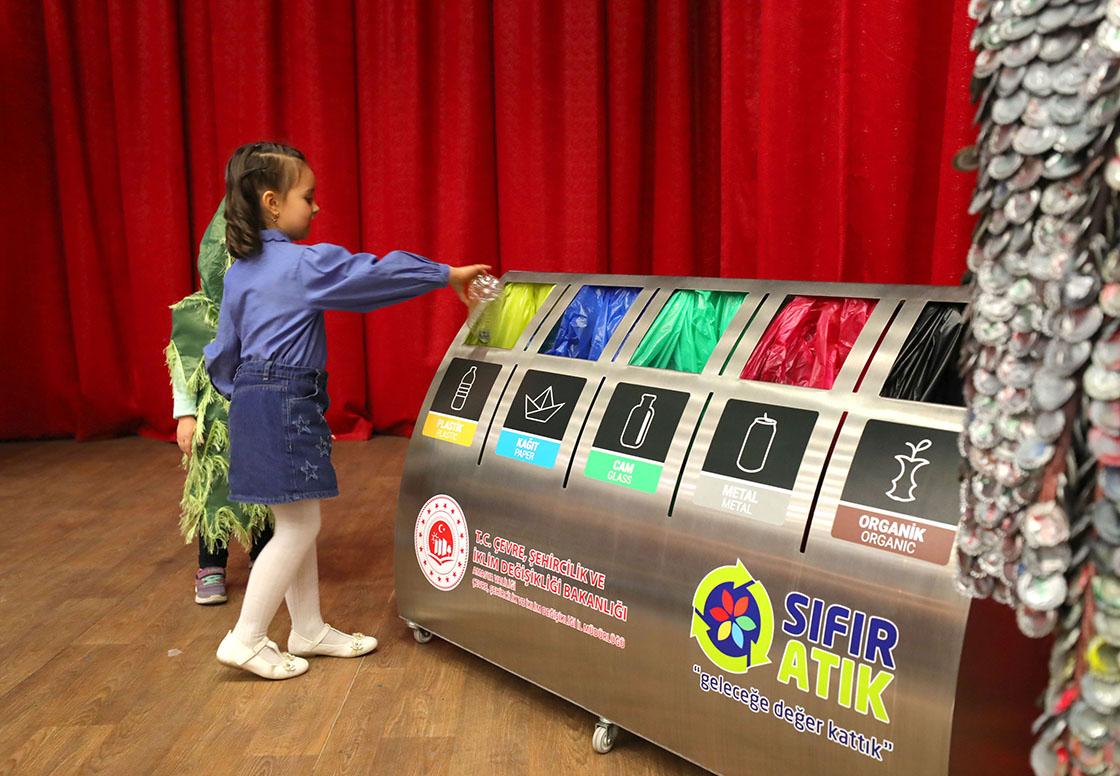
Sıfır Atık (Anadolu Ajansı)
In addition to physical properties, the chemical composition and calorific value of solid waste determine the feasibility of energy recovery and biological treatment processes. The calorific value of solid waste expresses the potential energy contained in waste in kilojoules per kilogram in energy recovery facilities. The high calorific values of plastic and paper waste enable their use in producing fuel from waste. Chemical analyses are conducted in two groups: proximate analysis and elemental analysis. In proximate analysis, moisture content, volatile matter, fixed carbon, and ash content are measured; in elemental analysis, percentages of carbon, hydrogen, oxygen, nitrogen, and sulfur are determined. The biodegradability parameter indicates the suitability of municipal waste’s organic fraction for treatment processes such as composting and biomethanization. These specific characteristics form the technical framework for processing and disposal processes in integrated waste management systems.
The establishment of a zero waste management system within institutions, organizations, or building campuses follows a systematic roadmap consisting of seven stages: identifying focal points, assessing the current situation, planning, determining and securing needs, training and awareness, implementation, and finally monitoring and reporting. The first stage, identifying focal points, involves forming a working team responsible for establishing, operating, and monitoring the zero waste management system. This team includes primary and alternate responsible persons, as well as cleaning, maintenance-repair, and temporary storage personnel. In the second stage, assessing the current situation, the types, quantities, frequency of generation, and sources of waste within the institution are analyzed in detail. During this analysis, all waste-generating units—offices, cafeterias, food preparation areas, infirmaries, IT departments, parks and gardens, maintenance-repair, and printing—are individually examined to create an institutional waste inventory.
Using data obtained from the current situation assessment, a customized zero waste management plan is developed. In the planning phase, standard operating procedures are established for waste collection, transportation, temporary storage, and specifying who, when, and how these operations will be carried out. These procedures strictly define measures to be taken before collection, collection routes, emergency response methods, record-keeping processes, and procedures for declaring and delivering waste to licensed facilities. In the fourth stage, determining and securing needs, the required collection equipment is identified and procured based on staff numbers and waste volume. Personal desk-side trash bins within offices are removed, and multi-compartment waste collection bins are installed in corridors at easily accessible locations. The distance between bins is positioned at 50-meter intervals to maximize visibility and accessibility.
In building and campus systems, nationally standardized color codes and labeling systems are used to ensure separate collection at the source. In dual-collection systems where all recyclable waste is collected in a single container, blue-colored or blue-labeled collection equipment is used, while grey or dark grey equipment is preferred for other waste. In multi-collection systems where waste is separated by type, the color scale is more detailed: blue for paper and cardboard, yellow for plastic, green for glass, grey for metal, turquoise for composite waste, and brown for organic waste. White-colored equipment with lockable lids and warning labels is used for medical waste, expired medications, and contaminated materials. Purple equipment is installed for waste electrical and electronic equipment, dark blue for vegetable oil waste, and pink for textile waste. It is mandatory that labels clearly identifying waste types on collection equipment are easily readable and that zero waste logos are placed according to standards.
Training and awareness is one of the most fundamental steps for ensuring the continuity and effectiveness of the system. After equipment installation, technical training on waste prevention, reduction, separation, and recovery is provided to institutional staff, cleaning personnel, and all individuals responsible for system operation. Training programs use photographs and visuals to demonstrate practical implementation, improving staff habits regarding waste prevention and disposal. During the implementation phase, waste collected in bins is gathered separately by type by designated personnel without mixing. Waste is transferred to temporary storage areas using covered internal transport vehicles. Medical waste originating from infirmaries or health units is transported independently by specialized medical waste personnel. Organic waste such as vegetable and fruit scraps, tea leaves, and green leaves from cafeterias or gardens is composted on-site and converted into soil-enhancing fertilizer.
The construction of temporary storage areas for safely holding waste before it is sent to licensed recovery or disposal facilities is subject to strict standards. Temporary storage areas are constructed with enclosed roofs to protect waste from all external influences and impermeable floors. Special absorbent materials are provided to prevent leaks and spills, and a grating system is installed to collect leachate and prevent it from reaching receiving environments. Hazardous and non-hazardous waste are stored separately in distinct compartments and containers. Each waste item entering the temporary storage area is labeled with information including waste code, hazardous properties, risks, and date of entry. Hazardous waste may be stored for a maximum of 180 days, while non-hazardous waste is limited to one year. For hazardous waste in temporary storage, regardless of quantity, liability insurance is mandatory.
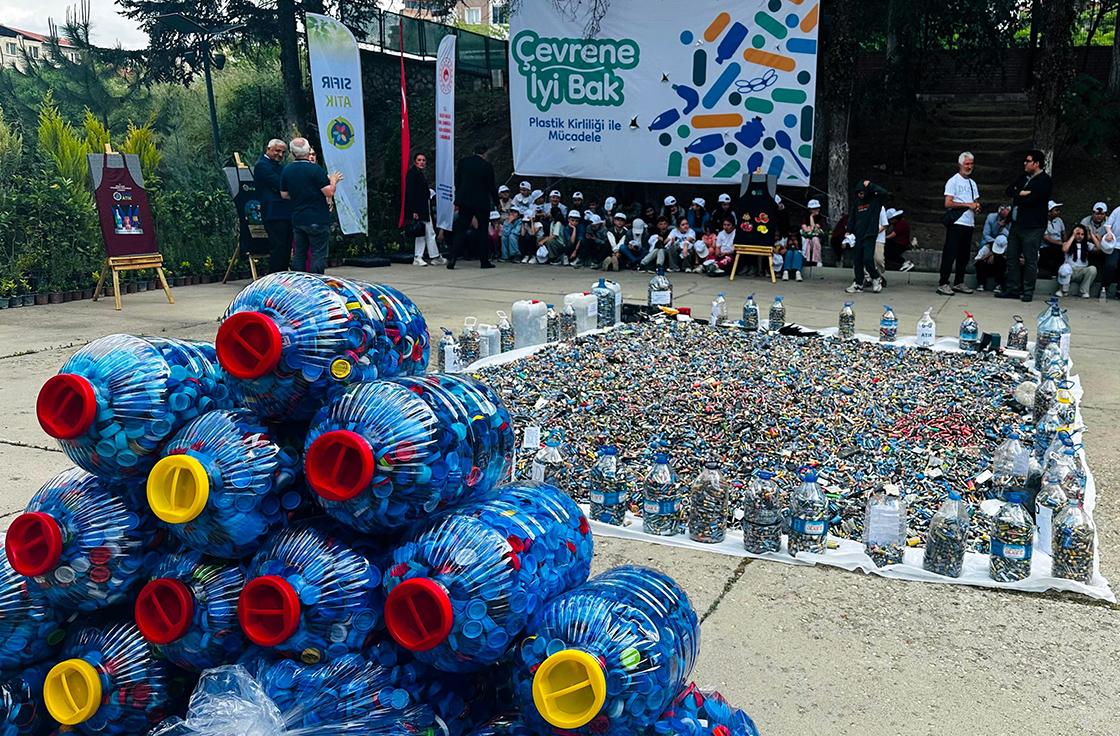
Sıfır Atık (Anadolu Ajansı)
In zero waste systems implemented at municipal and local government levels, waste drop-off centers and mobile waste drop-off centers serve as critical infrastructure. Municipalities with populations over 100,000 are required to establish at least one waste drop-off center with a minimum area of 600 square meters, with each unit having at least 300 square meters. These centers are designed with lighting systems, impermeable floors, and security measures in accessible locations. In high-density areas such as squares, markets, school zones, and large residential complexes, mobile waste drop-off centers are positioned to allow waste separation into at least seven distinct categories. These centers directly accept paper, glass, metal, plastic, waste electrical and electronic equipment, waste batteries, and vegetable oil waste. Local administrations direct collected waste to first, second, or third-type collection and separation facilities according to their capacities.
The final stage of system implementation—monitoring and reporting—is conducted to measure performance and record environmental data. Mass balance records for all collected, recovered, or disposed waste are maintained chronologically. Waste-producing institutions and organizations are required to declare these data via online systems. Regular waste declarations are generated through system registration, and the statistical data directly inform system optimization. Legal transport forms are completed during waste shipment to licensed facilities, and all documentation is retained for at least five years for inspection purposes. An effective data recording and monitoring mechanism ensures full traceability of waste and guarantees transparent and precise reporting of economic and environmental gains.
Online data networks are used to register, monitor, and statistically evaluate zero waste practices. Institutions and enterprises as waste producers are required to register via the Integrated Environmental Information System (IEIS) in accordance with their waste management plans. Regular recording and declaration of waste collected and sent for recovery within buildings and campuses form the system’s foundation. Declarations of collected waste and waste quantities sent to licensed facilities are carried out using the Online Environmental Information System infrastructure. These records contain legal information on waste type, waste code, waste quantity, waste source, and the facility to which waste is sent.【10】
Specific legal reporting periods have been defined for submitting waste data via the Zero Waste Information System. Monthly data on separately collected waste at the source must be entered electronically into the Zero Waste Information System by the 15th of the following month. Additionally, all waste data and related information for the previous year must be fully transferred to the system by the end of March each year. Data on all generated and separately collected waste and the facilities to which they are delivered must be separately reported in January and July. For traceability, records must be retained by institutions for at least five years as a legal requirement.
Buildings, campuses, and local administrations establishing zero waste systems are required to first obtain a basic-level zero waste certificate to formalize their systems. As the system progresses, higher certification levels are achieved based on performance and accomplishments. The zero waste certification rating system consists of three advanced levels: silver, gold, and platinum. The scoring criteria and detailed requirements for these levels are based on standards established by legal regulations. The national zero waste certification system includes a total of 63 criteria grouped under headings such as procurement, waste prevention, reuse, recycling, zero waste analysis, hazardous waste management, and diversion rates from disposal. Twenty-one criteria apply to silver level, twenty-one to gold, and the remaining twenty-one to platinum.
For certain institutions, organizations, and enterprises, obtaining either the basic-level certificate or advanced-level certifications is mandatory. Municipalities with populations over 50,000, organized industrial zones, airports, ports, train and bus terminals are included in this requirement. Among commercial and corporate structures, shopping centers, accommodation facilities with 250 rooms or more, and chain supermarkets are also required to obtain certification. In the education sector, universities must obtain certification at specified levels. For institutions, organizations, and enterprises not on this list, obtaining a zero waste certification is voluntary.
The zero waste certification application process involves an administrative review conducted via information systems. The applying institution or organization uploads all required written and visual documentation to the Zero Waste Information System. Applications are evaluated electronically by the relevant provincial directorate within 30 calendar days. If deemed necessary, the administration conducts on-site inspections of the applicant’s facilities or buildings. If any deficiencies are identified in the application file or field practices, the provincial directorate formally notifies the applicant. The applicant is granted 30 calendar days from the notification date to rectify the deficiencies.
Maintaining the continuity of advanced zero waste certifications and optimizing the system requires meeting advanced criteria. Criteria for silver, gold, and platinum levels include replacing individual office printers with shared printers activated by employee ID cards, reducing consumption of packaged products, and installing drinking water dispensers in common areas. Reusing surplus food by distributing it through relevant associations or institutions to those in need, or donating it to animal shelters, is an evaluation criterion. Establishing systems for separate collection of food waste in cafeterias is prioritized in the scoring system. Creating incentive systems for collecting waste electrical and electronic equipment is an integral part of advanced certification processes.
One of the final and most important steps in the certification process is conducting annual zero waste analyses to measure system performance. The annual physical audit of recycling flows is carried out within the system, and the target audience is included in these audit and analysis processes. Based on annual audit results, the system’s current performance is analyzed, deficiencies are identified, and future waste reduction targets are set and monitored. The data obtained are used to quantitatively report the environmental gains from zero waste practices and the economic benefits within the circular economy. Transparently compiling and declaring this data ensures institutions maintain their advanced zero waste certifications or advance to higher certification levels.
The environmental and economic impacts of zero waste practices are shaped within the framework of preventing waste, efficiently using natural resources, and transitioning from a linear to a circular economy model. Waste minimization enables the production of more output per unit of raw material used in production processes. Keeping resources within closed-loop systems reduces price fluctuations of raw materials and enables economic growth with less resource use. As enterprises reduce waste disposal costs, new raw materials derived from recovered materials generate economic returns. The transition to environmentally friendly systems directly influences the creation of new job opportunities, increased green employment, and reduced greenhouse gas emissions. Under the National Circular Economy Strategy and Action Plan, a planned transformation process covering seven sectors—from packaging to textiles—aims to minimize waste management costs. These macro-scale planning efforts target adding 350 billion Turkish lira annually to the economy and creating over 100,000 new jobs. An annual financial allocation of 11 to 18 billion Turkish lira is designated for establishing, operating, and optimizing integrated waste management and monitoring infrastructure.
After eight years of implementing zero waste policy in Türkiye, significant economic inputs have been generated through separate collection and recovery of waste. As the system was expanded nationwide, the total economic contribution ranged between 256 and 365 billion Turkish lira. The 256 billion Turkish lira value added to the economy through recycling and recovery is equivalent to the annual electricity bills of ten million households, the construction cost of ten city hospitals, or more than 500 schools. By reintegrating waste as secondary raw materials into the economy, substantial savings have been achieved in petroleum and primary raw material use. This system has enabled fossil fuel savings equivalent to 5.46 billion to 87 million barrels of oil. The 5.46 billion liters of oil saved is equivalent to the total annual fuel consumption of all motor vehicles in Türkiye. In terms of minimizing natural resource consumption, 650 million tons of raw material have been saved. Processing and recovering waste instead of incinerating or landfilling it has resulted in energy savings between 227.3 billion and 530 million kilowatt-hours. The 227.3 billion kilowatt-hours of energy saved can meet the annual electricity needs of 40 million households.【11】
Through waste collection, transportation, and separation operations within the system, millions of tons of materials have been reintegrated into the economy. Since the project’s inception, between 74.5 and 90 million tons of waste have been recycled. The mass and material distribution of collected waste includes 32.5 million tons of paper and cardboard, 9.1 million tons of plastic, 6.4 million tons of metal, 3.1 million tons of glass, and 23.4 million tons of organic and other recyclable waste categories.【12】 In terms of protecting forest ecosystems and biodiversity, intensive recycling of paper and cardboard waste has prevented the industrial cutting of between 613 million trees.【13】 These saved trees correspond to a forest area of 1.95 million decares, equivalent to approximately 10,000 square kilometers of the Amazon rainforest or six percent of all forested land in Türkiye. In protecting freshwater resources, 1.71 trillion liters of water have been conserved, equivalent to the seven-year water consumption of a metropolis like Istanbul. This volume of water is sufficient to provide daily showers for ten billion people for one year.【14】
Systematic increases in recovery rates have reduced the volume of waste sent to regular landfills, resulting in spatial and operational savings. The recovery rate, which stood at 13% in 2017, surpassed 37% by 2025.【15】 As a result of recovery activities, volume savings of between 69 and 284 million cubic meters have been achieved from landfill sites.【16】 The preserved 284 million cubic meters of land area equates to approximately 40,000 football fields. In combating climate change and global warming, diverting waste from landfills into the circular economy has prevented emissions of greenhouse gases such as methane and carbon dioxide. Regular landfilling produces a net emission of 291,000 tons of carbon dioxide equivalent per ton of disposed waste, whereas recovery processes like biomethanization reduce this emission to negative values, mitigating climate change impacts. Zero waste practices have prevented 3.9 million tons of greenhouse gas emissions.【17】 The legal implementation of charging for plastic bags has reduced single-use plastic bag consumption by 65%. This measure has prevented the generation of 550,000 tons of plastic waste, achieved an economic saving of 3.8 billion Turkish lira, and halted 22,746 tons of greenhouse gas emissions.【18】 To promote waste prevention strategies across society, zero waste education has reached 28 million individuals, supporting structural transformation.
The root of the waste problem lies in mass production processes and rising societal expectations of welfare in modern industrial societies. Production processes generally consist of input, processing, and output stages, during which industrial waste is generated alongside final products due to the use of raw materials and energy. Increased societal welfare and quality of life have accelerated individualization trends and, with the shift to nuclear family structures, increased per capita living space and housing sizes. This growing pursuit of comfort and consumption intensity has created conditions for rapid depletion of natural resources and waste generation reaching unprecedented levels. Breaking linear consumption habits and transforming the zero waste philosophy into a social norm requires establishing a strong sociological foundation. Education, which creates lasting behavioral change in individuals, is a fundamental system that sustains societies and reshapes consumption trends. Preventing and reducing waste at the source is possible only through creating awareness at both individual and collective levels, beyond mere mechanical and technological solutions.
Zero Waste Foundation Introduction Film (Zero Waste Foundation)
Establishing and sustaining a zero waste management system within institutions, organizations, and administrative enterprises necessitates a systematic internal education plan. In the system implementation phase, the first step is identifying focal point personnel who will represent the institution and manage the operational process. Detailed technical training is provided to assigned focal points on the general principles of the zero waste approach, specific waste types generated in service buildings, methods for separate collection at the source, and temporary storage area standards. Simultaneously, personnel are trained on determining collection cycles for waste, developing the zero waste management plan, and declaring data via the Integrated Environmental Information System (IEIS). The trained focal point personnel are responsible for transferring this technical knowledge to all other administrative staff and especially to field cleaning personnel. Practical waste separation skills are reinforced through real-life examples and photographic visuals using a question-and-answer method.
Awareness initiatives in educational institutions are structured as an integrated system where theoretical knowledge is supported by administrative measures and practical applications. To encourage active student participation, ecological clubs and supportive teacher groups are established, and zero waste themes are incorporated into curricula and projects. Organized events are held at the end of the year to recycle unusable notebooks and books or reuse surplus school supplies. In cafeterias and dining halls, single-use plastic plates, cups, and wet wipes are replaced with washable and reusable alternatives. Portion sizes for school meals are adjusted to prevent food waste. In schools with kitchens and gardens, organic food waste is composted in backyard composting systems, allowing students to directly observe biological decomposition cycles. In administrative processes, digital communication systems are used to prevent unnecessary paper waste.
To standardize environmental education for children and youth nationwide and leverage pedagogical opportunities of the digital age, the Ministry of Environment, Urbanization and Climate Change, the Ministry of National Education, and TEMA Foundation have jointly launched the Zero Waste Education Portal. Through this portal, students are introduced to the 5D model explaining the fundamental steps of waste management. The 5D concept comprises: “Think, Don’t Consume If Not Necessary (Refuse),” “Consume Less,” “Evaluate, Repair (Reuse),” “Repurpose, Use for a Different Purpose,” and “Recycle.” In line with interactive learning goals, digital games such as “Find the Hidden Object,” “Waste to Recycling,” “Catch the Waste,” and “Match the Waste” have been integrated into the portal. To concretize the environmental burden of consumption habits, visual content titled “The Life Story of a T-Shirt,” explaining the life cycle of textile products, supports the concept of recycling.【19】
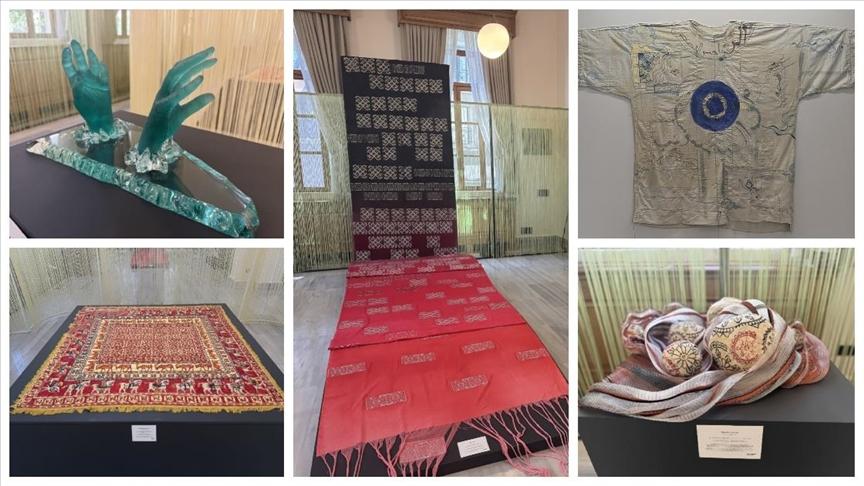
Sıfır Artı Sergisi (Anadolu Ajansı)
Mass media, social media platforms, and artistic activities serve as effective tools for disseminating educational efforts and managing public perception. Art exhibitions are visual awareness elements that transform discarded objects into tangible cultural artifacts. The “Zero Plus” exhibition held at the historic Maraşlı Rum Primary School in Balat focuses on the high water consumption and environmental pollution caused by the textile industry through artworks made from waste textile fabrics. The exhibited pieces, inspired by historical heritage such as the Pazyryk Carpet, remind modern society of Turkey’s ancient practices of repair and reuse. To raise international awareness, the “Zero Waste Blue – Drop by Drop Exhibition” was opened in New York under United Nations General Assembly events. This exhibition emphasized the protection of water, seas, and lake ecosystems, and the “Zero Waste Goodwill Declaration” was signed by participants, ensuring global participation.
The comprehensive educational, communication, and public perception management strategies implemented have created a broad participation mechanism reflected in statistical data. Nationwide zero waste-focused education programs have reached 28 million individuals. Through these educational efforts, increased public awareness has directly contributed to reintegrating waste into the economy and laid the foundation for massive environmental outcomes such as saving 613 million trees from being cut down. The combination of theoretical education with legal and administrative measures, such as charging for plastic bags in retail transactions, has directly influenced consumer behavior. This integration of administrative and educational interventions has enabled the weakening of single-use consumption culture, the retention of items through repair and reuse, and the establishment of a holistic environmental participation consciousness centered on resource efficiency.
The Zero Waste Coordination Council has been established under legal provisions to evaluate, guide, and promote zero waste management applications administratively at the national level. This organizational structure convenes under the chairmanship of a representative from the Ministry of Environment, Urbanization and Climate Change to determine the general framework and institutional strategies of the waste management system. The council’s organizational structure is shaped by active and broad participation from representatives of the Türkiye Environmental Agency, public institutions, and relevant sectors. The council’s administrative and operational working principles are based on scheduling regular meetings, recording decisions, providing secretariat services for follow-up, and ensuring all meeting procedures fully comply with legal standards. Strategic decisions made by the council directly ensure the prevention of waste generation, separate collection at the source, and optimization of recycling and recovery processes on a benefit-cost basis. As an administrative mechanism, the council forms the foundational basis for action plans prepared for local administrations and institutions.
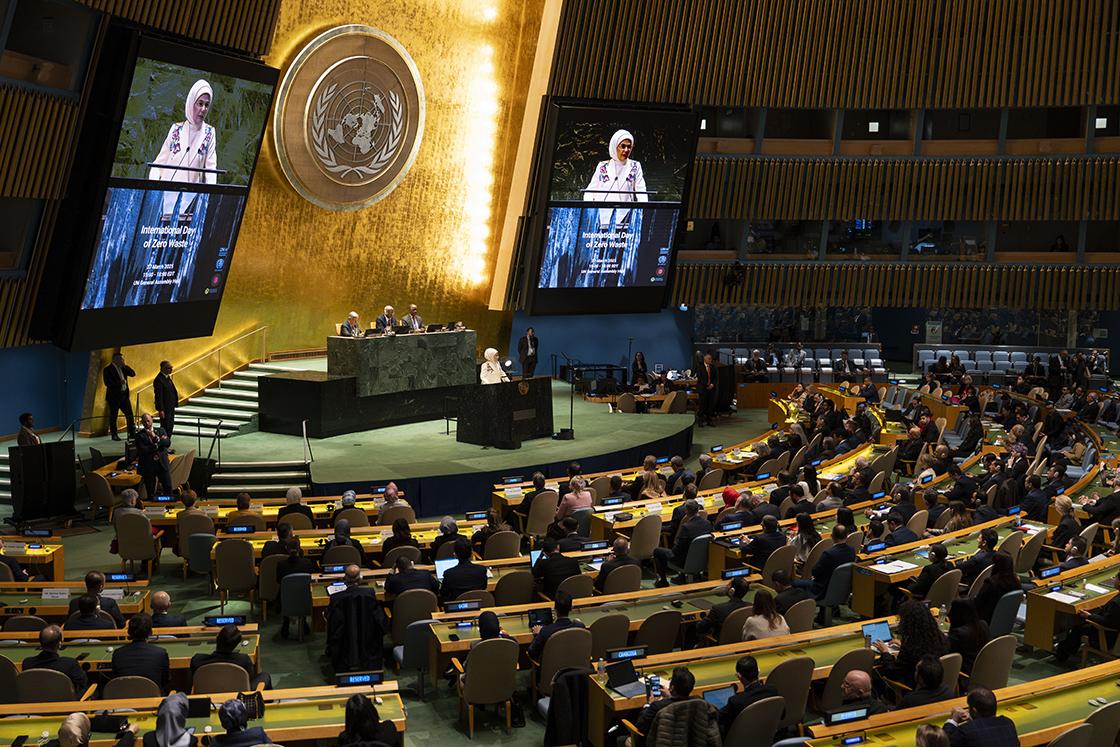
Zero Waste Foundation Honorary President Emine Erdoğan at the UN General Assembly (Anadolu Ajansı)
Zero Waste Foundation: Officially established in 2023, the Zero Waste Foundation operates with the goals of raising public awareness of zero waste, organizing educational activities, supporting academic research, and developing sustainable quality projects. To achieve these goals, the foundation conducts multi-dimensional institutional collaborations and coordination mechanisms with public institutions, private sector representatives, and civil society organizations. The foundation assumes a strong advocacy mission for protecting ecological systems, with First Lady Emine Erdoğan serving as its honorary president. The foundation’s institutional structure is built on listening to the environmental demands of all stakeholders, filtering them through collective intelligence, and presenting actionable, direct, and concrete solutions to public administrations. Directly integrating citizens living in rural areas and villages into waste management processes is one of the foundational pillars of the foundation’s efforts to enhance social participation.
International and Strategic Activities: In addition to its national activities, the Zero Waste Foundation conducts strategic international actions that shape global environmental policies. Under the foundation’s direct organizational support, the International Zero Waste Forum has been organized. This forum is a global consultation platform bringing together over sixty speakers, more than a hundred country representatives, 118 different institutions and organizations, and United Nations-level officials. The most important output of this global platform, centered on sustainability and circular economy, is the Istanbul Declaration, officially announced to the international public via the digital communication platform NSosyal. Additionally, the foundation has assumed guiding institutional roles during the 31st Conference of the Parties to the United Nations Framework Convention on Climate Change (COP31), positioning itself at the center of international environmental diplomacy. In events held in New York, USA, the “Zero Waste Blue – Drop by Drop Exhibition” focused on protecting lakes and marine ecosystems, and the “Zero Waste Goodwill Declaration” was opened for international signature with the official participation of Australian Minister for Climate Change and Energy Chris Bowen.【20】
COP31 Preparations and Applications: In the context of Türkiye hosting COP31 in Antalya, the foundation has implemented special institutional preparations and operational measures. To standardize the oversight and management of this process, the foundation developed the “Sustainable COP31 Framework” and established a digital-based “Zero Waste Application Platform” to strengthen data monitoring infrastructure. In line with ecological protection efforts during the organization, regional projects such as the Eber Lake Action Plan, directly aimed at conserving natural habitats, are led by the foundation. Within organizational initiatives, large-scale awareness events such as the “Zero Plus” art exhibition, which highlights how waste can regain material and artistic value through textile materials and found objects, are organized. During the summit, international senior officials including UN Deputy Secretary-General Guy Ryder, UNEP Executive Director Inger Andersen, and UN-Habitat Executive Director Anaclaudia Rossbach analyzed the ecological consequences of food waste. Reducing global food waste by 20% holds the environmental capacity to completely eliminate world hunger. Zero waste management, by establishing circularity across all processes from production to consumption, is implemented as the most concrete institutional tool supporting the COP31 vision and reintegrating every resource into the economy.【21】
United Nations Resolutions and International Zero Waste Day: The transboundary nature of the waste crisis necessitates placing waste management policies at the center of international diplomacy. The zero waste movement, shaped around the philosophy of “Our Shared Home,” has received official recognition by the United Nations for the protection of the global ecosystem and the establishment of sustainable living standards. On 14 December 2022, the United Nations General Assembly adopted a zero waste resolution proposal prepared under Türkiye’s lead and co-sponsored by 105 countries. As a result of this resolution, 30 March of each year has been declared the International Zero Waste Day. Special events attended by UN Secretary-General António Guterres and UNEP officials ensure global recognition of this day. This diplomatic step establishes an international reference framework for member states to abandon linear economy models and adopt circular systems based on resource efficiency.【22】
Global Institutional Structures and Goodwill Declaration: To assess the global applicability of the zero waste vision and provide strategic guidance, new institutional mechanisms have been established within the United Nations. The chairmanship of the 13-member UN Zero Waste High-Level Panel of Experts is led by Türkiye. As a tangible reflection of global environmental diplomacy, the “Global Zero Waste Goodwill Declaration” was opened for signature at Türkevi during the 78th session of the United Nations General Assembly. This official document has received broad support from state officials to individual participants and has been signed by over 15,000 individuals from 114 countries. High-level international officials such as Australian Minister for Climate Change and Energy Chris Bowen have personally signed this declaration, recording countries’ commitment to integrate their waste management strategies with global climate goals. These official texts ensure that the awareness of waste-free living has evolved from a local environmental policy into an international state policy.
Zero Waste (TEMA Foundation)
International Environmental Diplomacy and Summits: The concept of zero waste is supported internationally through high-level summits, forums, and declarations. The International Zero Waste Forum organized in Istanbul has served as a platform bringing together state leaders, international organization representatives, and experts. The “Istanbul Declaration” resulting from this forum provides a roadmap directly supporting the 2030 Agenda for Sustainable Development and the climate goals of the Paris Agreement. Ocean symposiums held under partnership programs within the G20 summits have facilitated international decisions to protect marine ecosystems. As a result of diplomatic engagements in combating climate change, Türkiye has been granted the presidency and hosting rights for the 31st Conference of the Parties to the United Nations Framework Convention on Climate Change (COP31) for 2026. In these organizational preparations, the international public is informed that reducing global food waste by 20% can completely eliminate world hunger. International policies on food waste are being shaped with the participation of senior officials including UN Deputy Secretary-General Guy Ryder, UNEP Executive Director Inger Andersen, and UN-Habitat Executive Director Anaclaudia Rossbach.
Global Awareness Events and Exhibitions: Various awareness projects are being conducted to present the scale of environmental pollution to the international public through visual and artistic data beyond diplomatic meetings. The “Zero Waste Blue – Drop by Drop Exhibition” opened in New York, USA, has drawn the attention of international delegations to the waste threat facing freshwater resources, seas, and lake ecosystems. Similarly, the “Zero Plus” art exhibition, focusing on the high water consumption and environmental damage caused by the textile industry, is constructed by transforming discarded fabric and materials into artworks. These exhibitions, referencing historical repair cultures such as the Pazyryk Carpet, demonstrate that waste materials can be retained in an aesthetic and material cycle, enabling the international consideration of individual and collective consumption responsibility.
Awards by International Organizations: The wide-ranging transformation generated by Türkiye’s leadership in zero waste practices in environmental, economic, and sociological fields has been officially recognized by international institutions. The model has been awarded the “Sustainable Development Goals Action Award” by the United Nations Development Programme (UNDP) and positioned as a global standard. The award granted by the United Nations Human Settlements Programme (UN-Habitat) documents the project’s contribution to the international urban planning vision by enhancing cities’ waste management capacity. The World Bank, which finances macroeconomic development and environmental projects, has officially endorsed the project’s structural impacts in combating climate change. Additionally, environmental awards received from regional and global organizations such as the Parliamentary Assembly of the Mediterranean (PAM) and the Food and Agriculture Organization of the United Nations (FAO) demonstrate that the zero waste movement is not merely a local waste disposal project but a universal sustainability doctrine guiding ecological restoration.
Anadolu Ajansı. "Emine Erdoğan: Sıfır atık ilkelerini temel alan yaşam modellerini bir an önce hayata geçirmeliyiz." Accessed March 30, 2026.
Anadolu Ajansı. "Küresel çevre hareketi 'Sıfır Atık' 8 yaşında." Accessed March 30, 2026.
Anadolu Ajansı. "Sıfır Atık Vakfı, Eber Gölü için hazırlanacak eylem planına katkı sağlayacak." Accessed March 30, 2026.
Anadolu Ajansı. "Türkiye'de çevre alanında 2025 böyle geçti." Accessed March 30, 2026.
Anadolu Ajansı. "Türkiye, sıfır atık vizyonu ve iklim diplomasisiyle küresel liderliğe yürüyor." Accessed March 30, 2026.
Anadolu Ajansı. “Sıfır Atık Vakfı, İstanbul Deklarasyonu'nu ilk olarak NSosyal'de yayımladı.” Accessed March 30, 2026.
Anadolu Ajansı. “Sıfır atık bilinci 'Sıfır Artı' sergisiyle anlatılıyor.” Accessed March 30, 2026.https://www.aa.com.tr/tr/kultur/sifir-atik-bilinci-sifir-arti-sergisiyle-anlatiliyor/3669223
Kırşehir İl Millî Eğitim Müdürlüğü İşyeri Sağlık ve Güvenlik. "Sıfır Atık." Accessed March 30, 2026.
Ministry of Environment, Urbanization and Climate Change of the Republic of Türkiye. "Sıfır Atık Bir Tercih Değil, Mecburiyettir." Accessed March 30, 2026.
Ministry of Environment, Urbanization and Climate Change of the Republic of Türkiye. "Sıfır Atık Nedir?" Accessed March 30, 2026.https://adana.csb.gov.tr/sifir-atik-nedir-90305
Ministry of Environment, Urbanization and Climate Change. "Atık Getirme Merkezlerinin Kurulması ve İşletilmesi ile Sıfır Atık Uygulamalarına İlişkin Usul ve Esaslar." Accessed March 30, 2026.https://webdosya.csb.gov.tr/db/cygm/duyurular/usulesasagmsau20211231-20220105161839-20220105163645.pdf
Ministry of Foreign Affairs of the Republic of Türkiye. "SIFIR ATIK PROJESİ." Accessed March 30, 2026.
Ministry of National Education. "Sıfır Atık." Accessed March 30, 2026.
Republic of Turkey Presidency General Secretariat General Directorate of Law and Legislation. "SIFIR ATIK YÖNETMELİĞİ." Accessed March 30, 2026.
Samsun Üniversitesi Waste Management Coordination Office. "SıfırAtık Yönetim Accessed March 30, 2026.https://atikyonetimi.samsun.edu.tr/sifir-atik-nedir/
Sıfır Atık. "Mevzuat." Accessed March 30, 2026.https://sifiratik.gov.tr/sifir-atik/mevzuat
Sıfır Atık. "Sıfır Atık Sistem Kurulumu." Accessed March 30, 2026.https://sifiratik.gov.tr/SistemKurulumu
TEMA Vakfı. "Sıfır Atık Eğitim Projesi." Accessed March 30, 2026.https://sifiratiktema.org/
TEMA Vakfı. "Sıfır Atık." YouTube. Accessed March 30, 2026.https://www.youtube.com/watch?v=ijkOwRCtBkg
TRT Haber. "Anadolu Ajansı çevre sorunlarına ve iklim krizine Yeşilhat’la dikkat çekiyor." Accessed March 30, 2026.
TRT Haber. "Türkiye'nin küresel çevre hareketi: Sıfır Atık Projesi." Accessed March 30, 2026.https://www.trthaber.com/haber/gundem/turkiyenin-kuresel-cevre-hareketi-sifir-atik-projesi-939503.html
Yenigün, Kasım, Abdulmenaf Turan, and Tuğrul Çamaş, eds. Sıfır Atık. Ankara: Çevre, Şehircilik ve İklim Değişikliği Bakanlığı. Accessed March 30, 2026.
Zero Waste Foundation. "Hakkımızda." Accessed March 30, 2026.
Zero Waste Foundation. "Sıfır Atık Nedir?" Accessed March 30, 2026.
Zero Waste Foundation. "Zero Waste Foundation | Tanıtım Filmi." YouTube. Accessed March 30, 2026.https://www.youtube.com/watch?v=991Fd-GzjT0
Zero Waste. "Atık Türleri." Accessed March 30, 2026.https://sifiratik.gov.tr/atikTurleri
Zero Waste. "Okullar İçin." Accessed March 30, 2026.https://sifiratik.gov.tr/SistemKurulumu/okullar-icin
Zero Waste. "Sıfır Atık Nedir?" Accessed March 30, 2026.https://sifiratik.gov.tr/sifir-atik/sifir-atik-nedir
Zero Waste. "Sıkça Sorulan Sorular." Accessed March 30, 2026.https://sifiratik.gov.tr/sifir-atik/s-s-s
[1]
Kasım Yenigün, Abdulmenaf Turan ve Tuğrul Çamaş, ed., Sıfır Atık (Ankara: Çevre, Şehircilik ve İklim Değişikliği Bakanlığı) s.116. Erişim 30 Mart 2026. https://sifiratik.gov.tr/sifir-atik/sifir-atik-kitabi#2816
[2]
Yenigün, Turan ve Çamaş, Sıfır Atık. 338.-339.
[3]
Yenigün, Turan ve Çamaş, Sıfır Atık. 27.
[4]
Yenigün, Turan ve Çamaş, Sıfır Atık. 29-30.
[5]
TRT Haber. "Türkiye'nin küresel çevre hareketi: Sıfır Atık Projesi." Accessed March 30, 2026.
[6]
T.C. Cumhurbaşkanlığı Genel Sekreterliği Hukuk ve Mevzuat Genel Müdürlüğü. “SIFIR ATIK YÖNETMELİĞİ.” Erişim 30 Mart 2026. https://mevzuat.gov.tr/mevzuat?MevzuatNo=32659&MevzuatTur=7&MevzuatTertip=5
[7]
T.C. Cumhurbaşkanlığı Genel Sekreterliği Hukuk ve Mevzuat Genel Müdürlüğü. “SIFIR ATIK YÖNETMELİĞİ.” Erişim 30 Mart 2026. https://mevzuat.gov.tr/mevzuat?MevzuatNo=32659&MevzuatTur=7&MevzuatTertip=5
[8]
Anadolu Ajansı. "Türkiye'de çevre alanında 2025 böyle geçti." Accessed March 30, 2026.
[9]
Anadolu Ajansı. "Türkiye'de çevre alanında 2025 böyle geçti." Accessed March 30, 2026.
[10]
T.C. Çevre, Şehircilik ve İklim Değişikliği Bakanlığı. "Sıfır Atık Nedir ?" Erişim 30 Mart 2026. https://adana.csb.gov.tr/sifir-atik-nedir-90305
[11]
Anadolu Ajansı. "Küresel çevre hareketi "Sıfır Atık" 8 yaşında." Erişim 30 Mart 2026. https://www.aa.com.tr/tr/gundem/kuresel-cevre-hareketi-sifir-atik-8-yasinda/3700630
[12]
Anadolu Ajansı. "Küresel çevre hareketi "Sıfır Atık" 8 yaşında." Erişim 30 Mart 2026. https://www.aa.com.tr/tr/gundem/kuresel-cevre-hareketi-sifir-atik-8-yasinda/3700630
[13]
TRT Haber. "Türkiye'nin küresel çevre hareketi: Sıfır Atık Projesi." Accessed March 30, 2026.
[14]
Anadolu Ajansı. "Küresel çevre hareketi "Sıfır Atık" 8 yaşında." Erişim 30 Mart 2026. https://www.aa.com.tr/tr/gundem/kuresel-cevre-hareketi-sifir-atik-8-yasinda/3700630
[15]
TRT Haber. "Türkiye'nin küresel çevre hareketi: Sıfır Atık Projesi." Accessed March 30, 2026.
[16]
Kasım Yenigün, Abdulmenaf Turan ve Tuğrul Çamaş, ed., Sıfır Atık (Ankara: Çevre, Şehircilik ve İklim Değişikliği Bakanlığı) s.377. Erişim 30 Mart 2026. https://sifiratik.gov.tr/sifir-atik/sifir-atik-kitabi#2816
[17]
Yenigün, Turan ve Çamaş, Sıfır Atık. 37.
[18]
Yenigün, Turan ve Çamaş, Sıfır Atık. 377.
[19]
TEMA Vakfı. "Sıfır Atık Eğitim Projesi." Erişim 30 Mart 2026. https://sifiratiktema.org/
[20]
Anadolu Ajansı. "Sıfır Atık Vakfı, İstanbul Deklarasyonu'nu ilk olarak NSosyal'de yayımladı." Accessed March 30, 2026.
[21]
T.C. Çevre, Şehircilik ve İklim Değişikliği Bakanlığı. "“SIFIR ATIK BİR TERCİH DEĞİL, MECBURİYETTİR” Erişim 30 Mart 2026. https://csb.gov.tr/haberler/sifir-atik-bir-tercih-degil-mecburiyettir-304424
[22]
Anadolu Ajansı. "Türkiye'de çevre alanında 2025 böyle geçti." Accessed March 30, 2026.


The Concept and Definition of Zero Waste
Historical Development and Legislation of Zero Waste Policy in Türkiye
Waste Types and Classification
Implementation Stages of the Zero Waste Management System
Zero Waste Information System and Certification Process
Environmental and Economic Impacts
Education, Awareness, and Social Participation
Institutional Structure: Zero Waste Foundation and Coordination Councils
Zero Waste in International Diplomacy and Global Scale