


This article was automatically translated from the original Turkish version.
+1 More
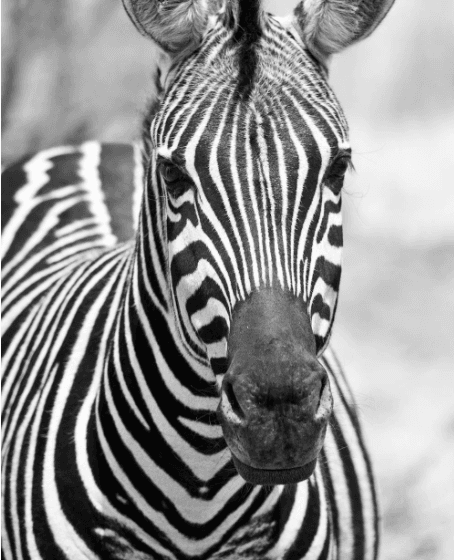
Zebra
Scientific Name | Equus grevyi Equus zebra Equus quagga | ||||||||
|---|---|---|---|---|---|---|---|---|---|
Family | Equids | ||||||||
Class | Mammals | ||||||||
Habitat | Eastern and southern regions of Africa | ||||||||
Lifespan | Average 20–30 years (in the wild) | ||||||||
Size | Length of 2–2.5 m Shoulder height of 1.1–1.5 m | ||||||||
Weight | 200–450 kg | ||||||||
Zebras (Equus quagga, Equus grevyi, Equus zebra) are herbivorous mammals belonging to the Equidae family, recognized by their black-and-white striped coats and widely distributed across the African continent. They typically inhabit open grasslands, savannas, and semi-arid regions. Zebras are divided into three main species distinguished by their stripe patterns and habitats: the plains zebra (Equus quagga), Grevy’s zebra (Equus grevyi), and the mountain zebra (Equus zebra).
Fossil records of zebra ancestors date back approximately 4 million years. The earliest zebras spread across Asia and Africa. The striped coats of modern zebra species evolved as an adaptation to their environments.
The most striking feature of zebras is their black-and-white stripes. Each zebra’s stripe pattern is unique, much like a human fingerprint. Although the exact function of these stripes is not fully understood, various hypotheses have been proposed including camouflage, social recognition, deterring flies, and thermoregulation.
Their average weight ranges from 250 to 300 kilograms and their height varies between 1.2 and 1.5 meters. Plains zebras are shorter and more robust compared to other species. Grevy’s zebra is more slender and taller. Mountain zebras have legs adapted for movement across steep and rocky terrain.
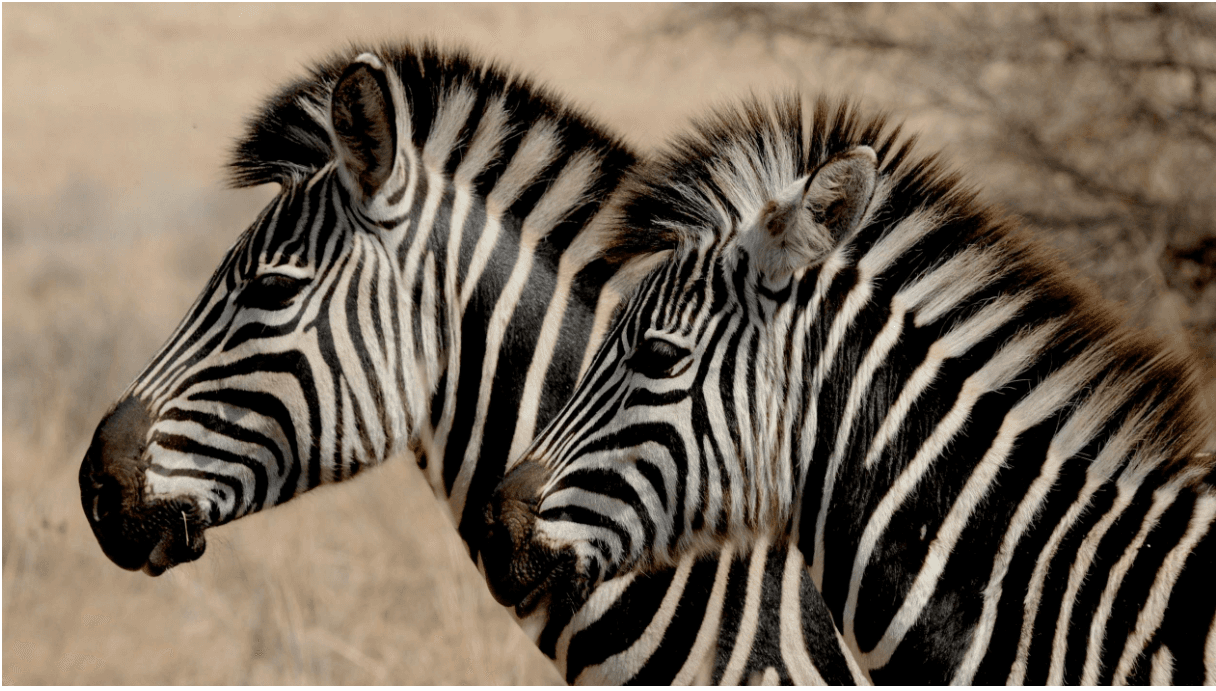
Zebra (Pexels)
Zebras are social animals that live in herds. A typical zebra herd consists of small family groups made up of one stallion, several mares, and their offspring. These family groups can merge to form larger herds. The structure of herds is organized to provide mutual protection during threats.
Zebras exhibit a hierarchical social order. In a family group, the dominant mare leads the group’s movements while the stallion is responsible for its security. The stallion may risk confrontation with predators to protect the herd.
Zebras are herbivores that primarily feed on grasses, leaves, and shoots. Their specialized incisors are adapted for grinding tough grasses. They can migrate over long distances and move in herds to reach water sources.
During dry periods, zebras travel long distances in search of water. They frequently face the risk of predation by crocodiles near water sources. This dynamic significantly influences the movement patterns of zebra herds.
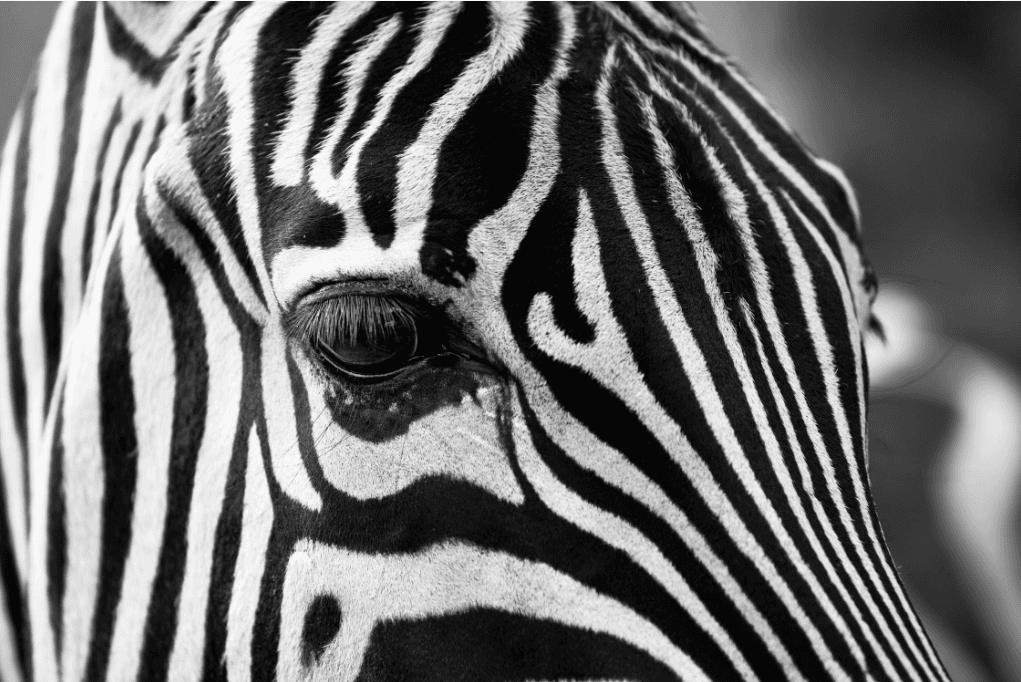
Zebra (Pexels)
The primary threats to zebras in their natural habitats are lions, crocodiles, hyenas, and leopards. Their ability to run at speeds of up to 55 km/h enables them to escape predators.
When threatened, herd members alert each other and form a defensive line by standing together. A zebra’s defense strategy includes powerful kicks with its hind legs and biting its attacker. The stallion may draw the predator’s attention to himself to protect the herd.
Female zebras give birth to a single foal after an average gestation period of 12 months. Foals can stand and walk shortly after birth and follow their mothers. A strong bond forms between mother and foal during this period.
Foals spend their first few days exclusively with their mothers, during which they memorize their mother’s unique stripe pattern. This helps the foal recognize its mother within the herd. Although foals begin grazing within a few weeks, they continue nursing for approximately one year.
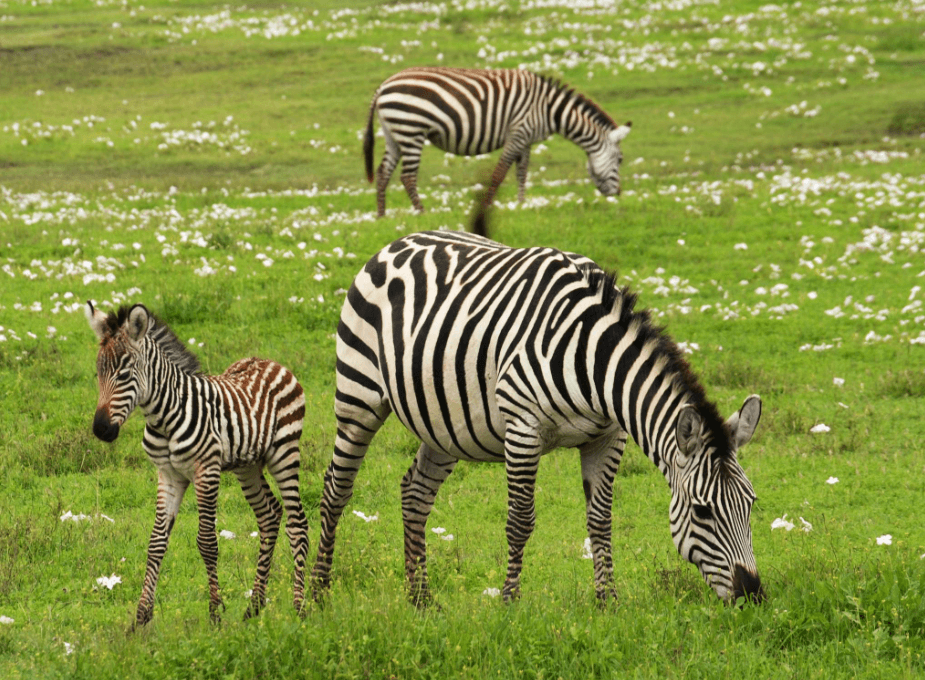
Yavru Zebra (Pexels)
Zebras face threats such as habitat loss, drought, and illegal hunting. Although the plains zebra remains widespread, Grevy’s zebra and the mountain zebra are both endangered. Conservation efforts have focused particularly on Grevy’s zebra.
Protecting the habitats of these species and preventing poaching are critical for the long-term survival of zebra populations.
Zebra (TRT EBA)
IFAW. "Zebras." Accessed May 17, 2025.https://www.ifaw.org/animals/zebras.
Pexels. "Yesil Çim Sahada 3 Zebra Fotoğrafı." Accessed May 17, 2025.https://www.pexels.com/tr-tr/fotograf/yesil-cim-sahada-3-zebra-fotografi-73811/.
Pexels. "Zebra Fotoğrafları." Accessed May 17, 2025.https://www.pexels.com/tr-tr/arama/zebra/.
Pexels. "Zebra’nın Gri Tonlamalı Fotoğrafçılığı." Accessed May 17, 2025.https://www.pexels.com/tr-tr/fotograf/zebra-nin-gri-tonlamali-fotografciligi-39245/.
Pexels. "Zebra’nın Gri Tonlamalı Fotoğrafı." Accessed May 17, 2025.https://www.pexels.com/tr-tr/fotograf/zebra-nin-gri-tonlamali-fotografi-1524628/
Pexels. "İki Beyaz Siyah Zebra." Accessed May 17, 2025.https://www.pexels.com/tr-tr/fotograf/iki-beyaz-siyah-zebra-34106/.
YouTube. "Zebras: Documentary." Accessed May 17, 2025.https://www.youtube.com/watch?v=gnX6qyXwmgw.
Zebra
Scientific Name | Equus grevyi Equus zebra Equus quagga | ||||||||
|---|---|---|---|---|---|---|---|---|---|
Family | Equids | ||||||||
Class | Mammals | ||||||||
Habitat | Eastern and southern regions of Africa | ||||||||
Lifespan | Average 20–30 years (in the wild) | ||||||||
Size | Length of 2–2.5 m Shoulder height of 1.1–1.5 m | ||||||||
Weight | 200–450 kg | ||||||||
Physical Characteristics
Social Structure and Herd Behavior
Diet and Habitat
Predator Defense and Survival Strategies
Reproduction and Foal Development
Conservation Status and Threats