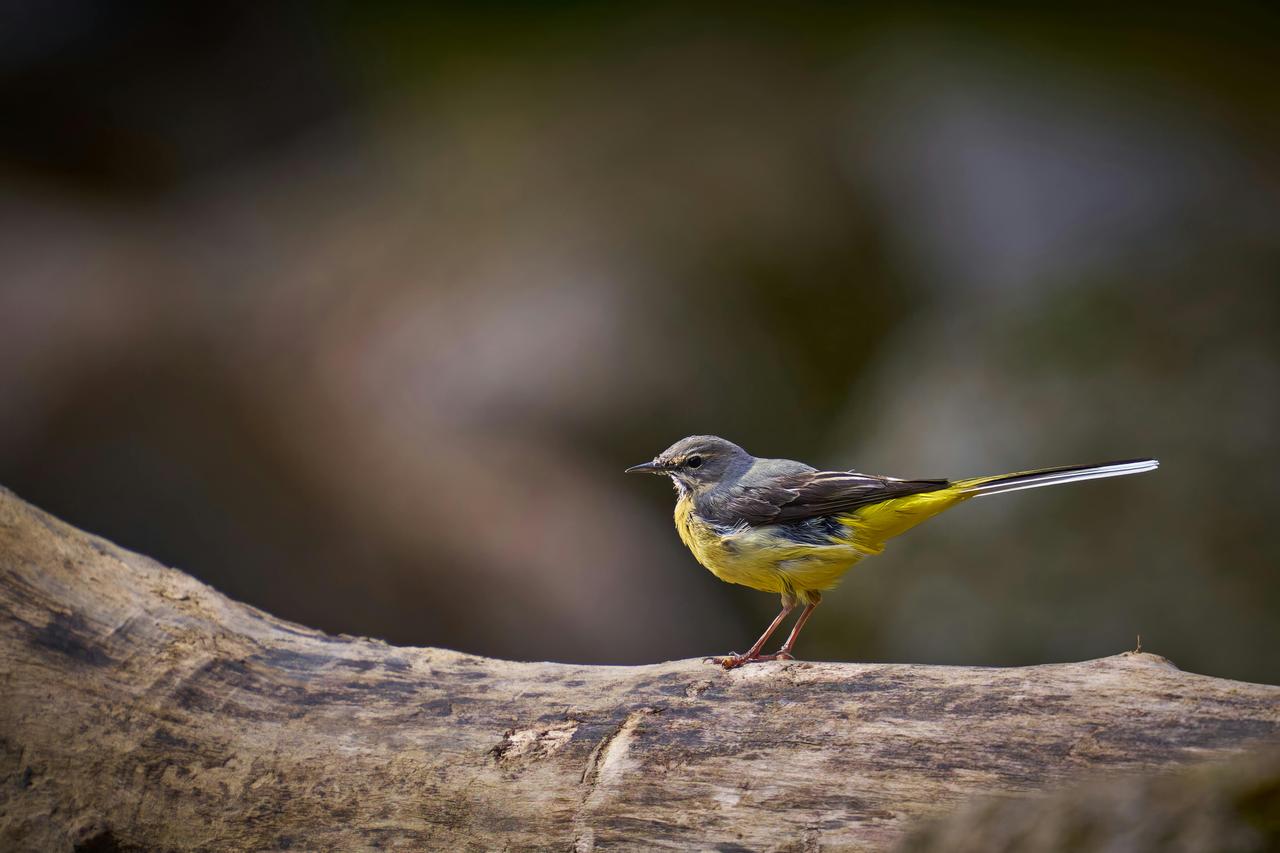


This article was automatically translated from the original Turkish version.
Scientific Name(s) | Motacilla flava | ||||||||
|---|---|---|---|---|---|---|---|---|---|
Team(s) | Passeriformes (Songbirds) | ||||||||
Weight(s)(Text) | 15–23 g | ||||||||
Family(ies) | Motacillidae (Wagtails) | ||||||||
Conservation Status(es) | Least Concern (LC) | ||||||||
Wingspan | 23–27 cm | ||||||||
Order | 15–16 cm | ||||||||
Yellow Wagtail (Motacilla flava) is a small songbird species recognized by its slender, long tail and elegant body.
The tail is black with white edges; the legs are long and black. In males, the underparts are bright yellow and the upperparts are greenish tones; the wings are dark with pale wing bars. Females are duller in coloration: the upperparts are greenish-brown, the underparts are creamy, and the undertail is more yellow. Head patterns are less distinct than in males. Juveniles are more brownish overall, with pale brown underparts and a necklace-like band across the breast; a pale stripe above the eye and a dark eye stripe are noticeable.
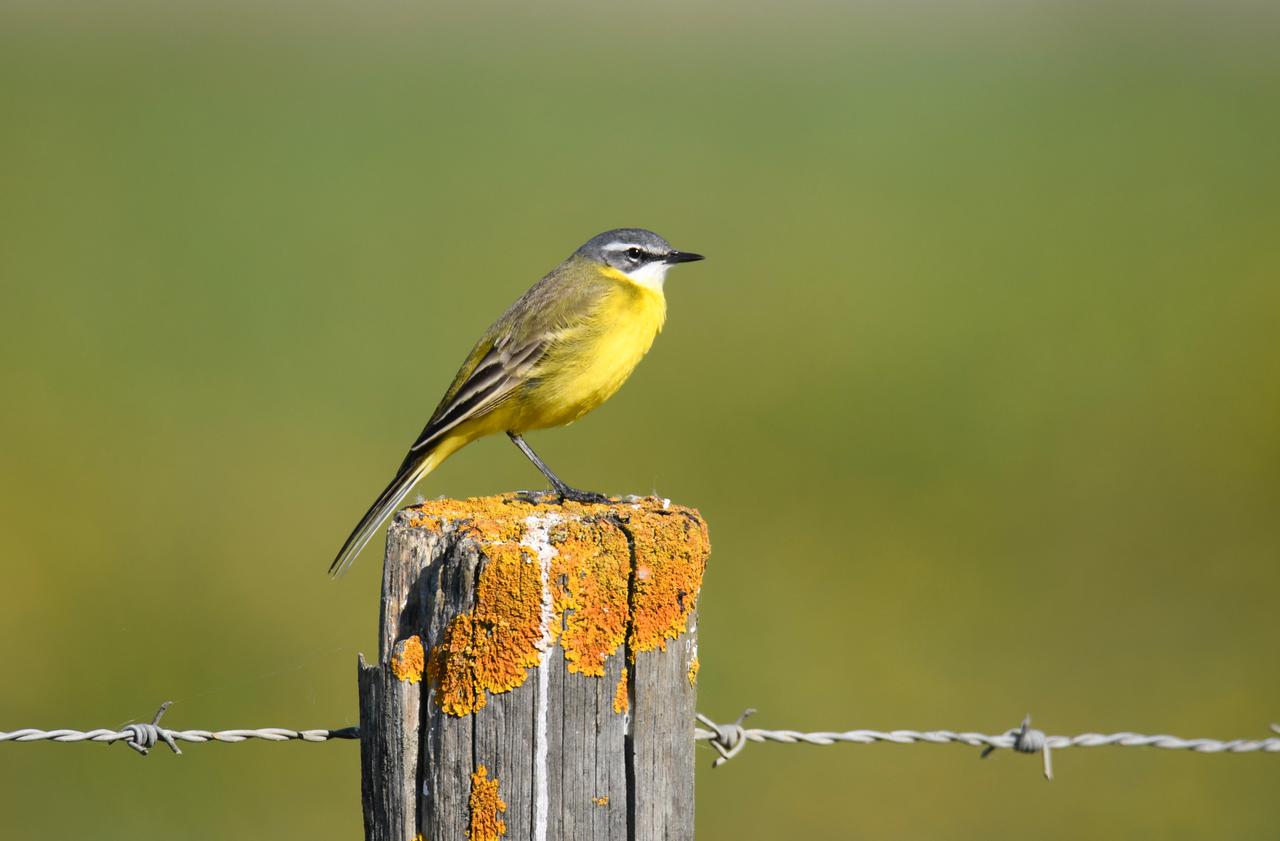
Yellow Wagtail (flickr)
Many subspecies are recognized across Europe and Asia, distinguished by differences in head coloration. Some of these include:
Hybridization occasionally occurs between subspecies, making clear distinctions difficult.
The Yellow Wagtail is found in wet meadows, grasslands, freshwater marshes, and along lake shores. It is also seen in cultivated fields, riverbanks, and open grasslands during migration. It frequently forages around large grazing animals such as cattle, sheep, and horses, feeding on insects disturbed by their movement. During the breeding season, it prefers moist meadows and open areas near water. In Türkiye, it can be observed throughout the country during summer months and migration periods.
The species has a wide distribution across temperate regions of Europe and Asia. A small population also exists in Alaska in North America. In Türkiye, it is observed as a summer migrant. It spends the winter in sub-Saharan Africa and South Asia.
Its primary food consists of small aquatic and terrestrial invertebrates. The diet includes flies (Diptera), true bugs (Hemiptera), beetles (Coleoptera), grasshoppers (Orthoptera), butterflies (Lepidoptera), ants (Hymenoptera), and small crustaceans. During migration and wintering periods, it also consumes seeds and some fruits in addition to Coleoptera and Lepidoptera species. Feeding typically occurs near cattle, sheep, and horses.
The breeding season spans from April to August. The nest, built primarily by the female, is placed close to the ground in shallow depressions and constructed from grass and animal hair. The female lays 4–6 brown-spotted eggs. Incubation lasts approximately 11–13 days and is carried out mainly by the female. Both parents feed the chicks. The young leave the nest after 10–14 days but remain with their parents for several weeks.
The species is monogamous, and pairs defend their breeding territories. Males perform courtship displays involving short, song-filled flights; they circle the female on the ground, droop their wings, and spread their tail.
The Yellow Wagtail is a migratory species. European populations migrate to sub-Saharan Africa for the winter, while Central European populations head to South Asia. Departure from breeding grounds occurs between July and October, with arrival at wintering areas in October. The northward return begins in February and reaches breeding grounds between March and May. Migrations are typically conducted during daylight and in flocks.
The total number of breeding pairs in Europe is estimated at 7.9–14 million (approximately 23–42 million individuals). Globally, the population is considered stable and the species is currently not classified as threatened.
The Yellow Wagtail forages for insects by walking on the ground or making short flights. It is easily recognized by its frequent tail-bobbing motion. Outside the breeding season, it occurs in flocks and forms large congregations during migration. It can perch on trees, reed beds, or tall grasses. Occasional territorial disputes are observed between males.
Flickr. "Alvéola-amarela, Yellow Wagtail JPG." Flickr. Accessed August 16, 2025. https://flic.kr/p/2kNJrrX
Ornito. "Sarı Kuyruksallayan." ornito.org. Accessed August 16, 2025. https://ornito.org/Bird/Detail/402
Pexels. “Doğada Bir Kütük Üzerinde Tüneyen Sarı Kuyruksallayan JPG.” Pexels. Accessed August 16, 2025. https://www.pexels.com/tr-tr/fotograf/dogada-bir-kutuk-uzerinde-tuneyen-sari-kuyruksallayan-31116066/
İzkuş. "Sarı Kuyruksallayan." İzmir Kuş Cenneti. Accessed August 16, 2025. https://izmirkuscenneti.gov.tr/2022/12/02/sari-kuyruksallayan/

Scientific Name(s) | Motacilla flava | ||||||||
|---|---|---|---|---|---|---|---|---|---|
Team(s) | Passeriformes (Songbirds) | ||||||||
Weight(s)(Text) | 15–23 g | ||||||||
Family(ies) | Motacillidae (Wagtails) | ||||||||
Conservation Status(es) | Least Concern (LC) | ||||||||
Wingspan | 23–27 cm | ||||||||
Order | 15–16 cm | ||||||||
No Discussion Added Yet
Start discussion for "Yellow Wagtail (Motacilla flava)" article
Morphological Characteristics
Subspecies
Habitat
Distribution
Diet
Biology and Breeding
Migration
Population Status
Behavior