


This article was automatically translated from the original Turkish version.
Yedigöller Milli Parkı is one of the protected areas in the Western Black Sea Region, notable for its natural lakes, rich vegetation, and biological diversity. Declared a national park in 1965, the area derives its name from seven lakes formed by landslides and has become one of Türkiye’s natural ecosystems. Yedigöller, distinguished by its natural forest structure, abundance of wildlife, and landscape values, is also a site of scientific research and controlled recreational activities.
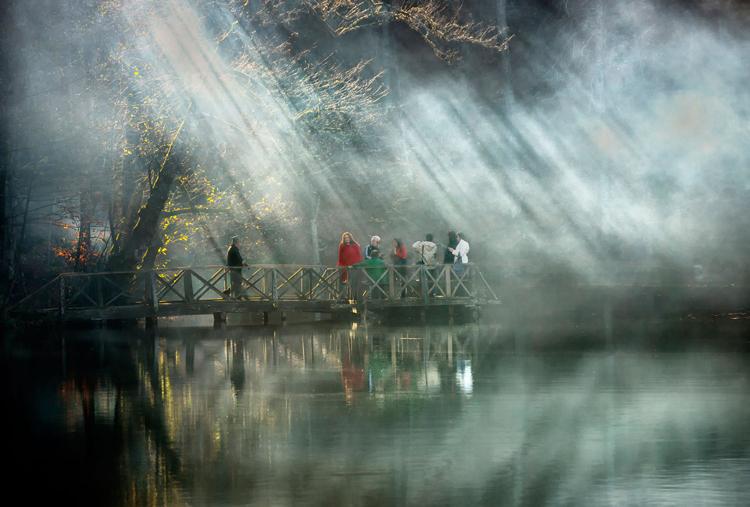
Yedigöller Milli Parkı (Tarım Orman)
Yedigöller Milli Parkı was granted national park status in 1965 and has since become one of Türkiye’s important natural conservation areas. Located within the boundaries of Bolu and close to the provinces of Zonguldak and Düzce, the park covers approximately 1,500 hectares on the Aladağlar in the Western Black Sea Region. The national park takes its name from the seven lakes within its boundaries: Büyükgöl, Deringöl, Seringöl, Nazlıgöl, Küçükgöl, İncegöl and Sazlıgöl. These lakes were formed by natural dams created as a result of landslides along north-south oriented valleys.
Büyükgöl is the lake with the largest surface area in the park and reaches a depth of up to 15 meters.
Nazlıgöl is also known as the “waterfall lake” due to its nourishment from a small waterfall.
Deringöl, as its name suggests, is among the deepest lakes in the park.
Seringöl stands out as part of the natural landscape due to its surrounding vegetation.
Küçükgöl and İncegöl, despite their smaller surface areas, contribute to the continuity of the lake ecosystem.
Sazlıgöl is recognized for its reed beds along the shoreline and serves as an important habitat for birds.
Each of these lakes is integrated with its surrounding ecosystem and contributes to the region’s hydrological and biological diversity. Subsurface water connections between the lakes have also been identified.
The park’s topography is generally rugged and plateau-like. The area is characterized by landslide-formed lakes resulting from geological activity along the North Anatolian Fault. The Yedigöller basin features a rich forest structure and is among Türkiye’s significant flora and fauna regions. The park contains natural old-growth forests, stream-side ecosystems, lakeside meadows, and slope forests.
Mixed deciduous forest formations dominate the vegetation of Yedigöller Milli Parkı. A total of 567 plant species belonging to 236 genera and 64 families have been identified in the park, including 51 endemic and 5 rare species. Broadleaf species such as beech, oak, hornbeam, maple, and linden are abundant, while coniferous species such as Turkish pine and fir are also prevalent. The vegetation exhibits striking color changes during spring and autumn. Additionally, a variety of fungi, mosses, and ferns have been observed throughout the park.
Yedigöller Milli Parkı supports a rich variety of wildlife. Within its boundaries, mammals such as bear, wolf, fox, roe deer, red deer, wild boar, badger, squirrel, and pine marten are found, along with bird species including goshawk, eagle, owl, and woodpecker. Over 100 bird species have been recorded in the park, making it an important site for nature photography and birdwatching.
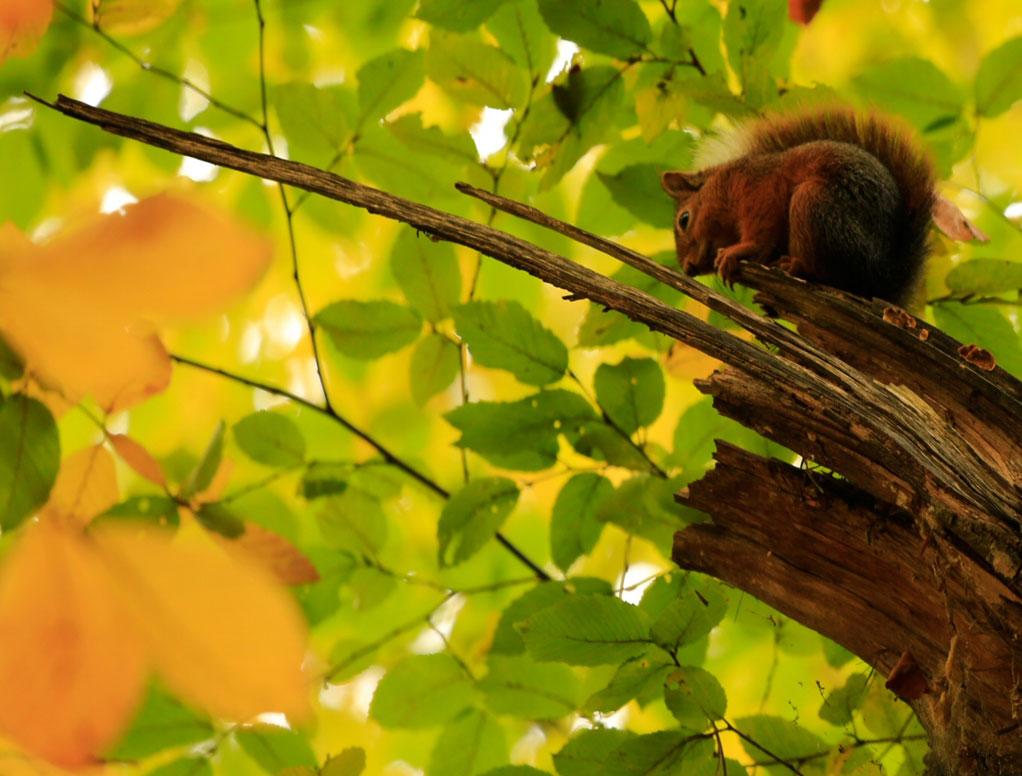
Yaban Hayatı (Kültür Portalı)
Under its national park status, the area is protected by the General Directorate of Nature Conservation and National Parks under the Ministry of Agriculture and Forestry. Scientific research is conducted within the park, and recreational activities are managed to ensure minimal impact on the natural environment. Designated camping areas, hiking trails, observation decks, and picnic zones are provided to visitors under regulated conditions.
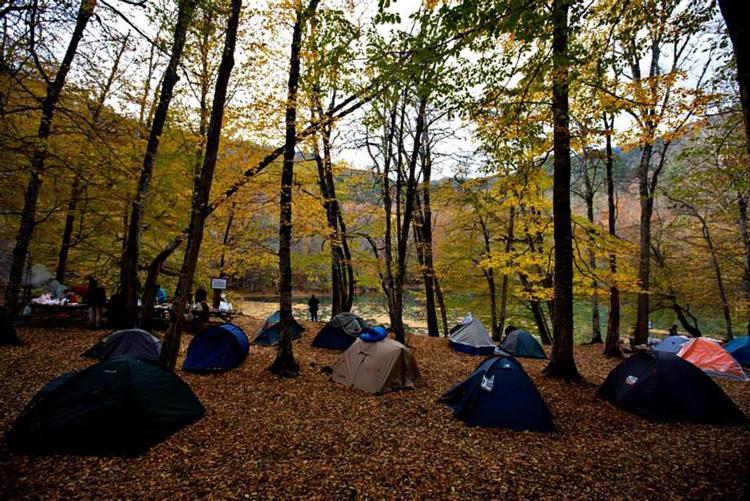
Kamp Alanı (Tarım Orman)
Yedigöller Milli Parkı is a natural heritage site that serves as a model for the conservation and sustainable use of ecosystems. With its landslide lakes, rich vegetation, diverse wildlife, and protected natural structure, it holds a prominent place among Türkiye’s national parks.
Bolu Valiliği. "Yedigöller Milli Parkı." Bolu Valiliği Resmî Web Sitesi. Accessed June 17, 2025.http://www.bolu.gov.tr/yedigoller-milli-parki.
Ekolojik Evim. "Yedigöller Milli Parkı: Bolu’nun Saklı Cenneti." Ekolojik Evim. Accessed June 17, 2025.https://www.ekolojikevim.org/post/yedig%C3%B6ller-milli-park%C4%B1-bolu-nun-sakl%C4%B1-cenneti.
Ministry of Culture and Tourism. "Yedigöller Milli Park." *Ministry of Culture and Tourism,Bolu İl Directorate of Culture and Tourism*. Accessed June 17, 2025.https://bolu.ktb.gov.tr/TR-354569/yedigoller-milli-parki.html.
Ministry of Culture and Tourism. "Yedigöller Milli Park." *Türkiye Kültür Portalı*. Accessed June 17, 2025.https://www.kulturportali.gov.tr/turkiye/bolu/gezilecekyer/yedigoller-milli-parki.
Tarım ve Orman Bakanlığı 9. Bölge Müdürlüğü. "Bolu Yedigöller Milli Parkı." T.C. Tarım ve Orman Bakanlığı 9. Bölge Müdürlüğü Resmî Web Sitesi. Accessed June 17, 2025.https://bolge9.tarimorman.gov.tr/Menu/54/Bolu-Yedigoller-Milli-Parki.
Tokcan, Mehmet. “Yedigöller Milli Parkı ile Sarımustan İşletme Ormanı’nın Hemerobi Dereceleri ve Bitki Toplumları Üzerine Araştırmalar.” PhD thesis, İstanbul Üniversitesi, 2015. Accessed June 17, 2025.https://nek.istanbul.edu.tr/ekos/TEZ/53866.pdf

No Discussion Added Yet
Start discussion for "Yedigöller National Park" article
Establishment and Location
Natural Structure and Ecosystem
Vegetation and Biological Diversity
Wildlife
Conservation and Management