


This article was automatically translated from the original Turkish version.
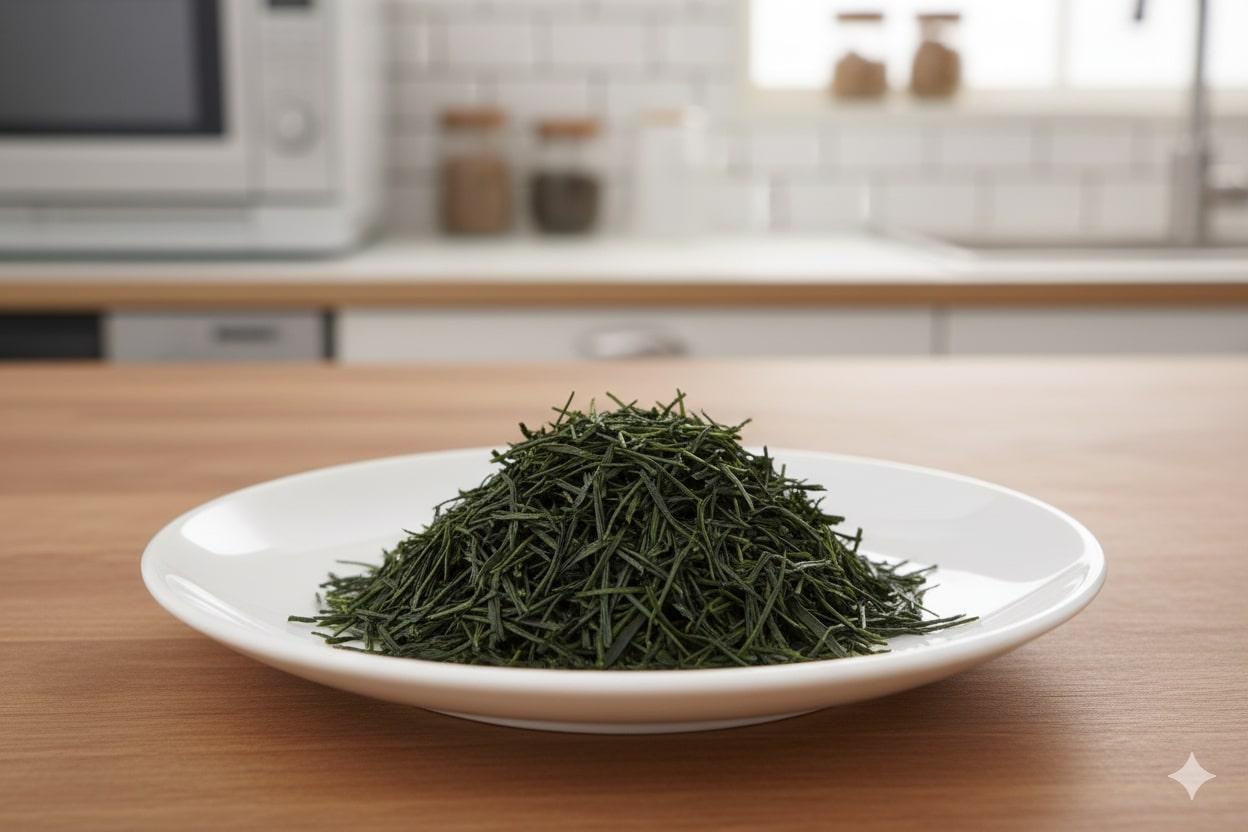
Yame Dentou Hongyokuro (Generated by Artificial Intelligence.)
Geographical Indication | Yame Dentou Hongyokuro | ||||||||
|---|---|---|---|---|---|---|---|---|---|
Registration Number | 5 | ||||||||
Class | Processed Food Ingredients | ||||||||
Protection Date | 22.12.2015 | ||||||||
Production Area | Fukuoka Prefecture, Japan (Yame City and surrounding area) | ||||||||
Product Type | Gyokuro | ||||||||
Applicant | Traditional Authentic YAME GYOKURO Promotion Association | ||||||||
Yame Dentou Hongyokuro is a certified Geographical Indication (GI) product traditionally produced in the mountainous areas around Yame City in Fukuoka Prefecture, Japan. This tea, whose name means "Traditional Authentic Yame Gyokuro," is known among Japanese teas for its distinctive "covered aroma," a seaweed-like fragrance.
The origins of Yame tea are said to date back to 1423, when a Zen monk who founded the Reigan-ji Temple in the Kuroki district of Yame City planted tea seeds brought from the Ming Dynasty and taught local residents the art of tea production. Tea cultivation spread throughout the mountainous regions between 1820 and 1840. Initially, the tea seeds in circulation were mostly Sencha varieties. However, it was later recognized that the region was particularly suitable for Gyokuro production, and in around 1904, Gyokuro cultivation began in Hoshino Village within Yame City. Subsequently, Gyokuro production expanded to the semi-mountainous areas of Yame.
About Yame Dentou Hongyokuro (Geographical Indication Product Information Website)
Yame Dentou Hongyokuro is a traditional variant of Gyokuro, a high-quality Japanese tea. Unlike conventional Gyokuro teas, which are shaded using synthetic materials, the fresh leaves of this tea are covered with natural materials such as rice straw. This natural shading method creates an optimal temperature and humidity environment for the growth of tea buds. Additionally, the tea plants are allowed to grow naturally to ensure each bud receives adequate nutrients, resulting in a harvest surface that differs from the rounded, half-sphere shape typical of conventional Gyokuro.
The aroma is intense; the concentration of compounds responsible for the "covered aroma" is more than five times that of Sencha from the same region (unshaded tea) and approximately twice that of standard Gyokuro.
The production area for this tea encompasses the mountainous regions surrounding Yame City in Fukuoka Prefecture. This semi-mountainous geographical region is characterized by a significant temperature difference between morning and evening. This large diurnal temperature variation reduces plant respiration at night, promoting the accumulation of flavor-enhancing compounds such as amino acids. The techniques for processing raw tea have been passed down through generations and continuously refined. Each year, competitions and workshops are held to preserve and enrich the traditional method of hand-rolling, which forms the foundation of raw tea processing. These traditional techniques ensure the authenticity and superior quality of Yame Dentou Hongyokuro.
Geographical Indication Product Information Website. "05 Yame Dentou Hongyokuro." YouTube. Accessed October 23, 2025. https://www.youtube.com/watch?v=_jm2OxFaSA4
Japan Geographical Indication. "Yame Dentou Hongyokuro." Information Website on Japan Geographical Indication Products. Accessed October 23, 2025. https://pd.jgic.jp/en/register/entry/5.html
Ministry of Agriculture, Forestry and Fisheries. "Product Summary (Registration No.5) — 八女伝統本玉露 (Yame Dentou Hongyokuro)." MAFF. Accessed October 23, 2025. https://www.maff.go.jp/e/policies/intel/gi_act/register/s5.html

Yame Dentou Hongyokuro (Generated by Artificial Intelligence.)
Geographical Indication | Yame Dentou Hongyokuro | ||||||||
|---|---|---|---|---|---|---|---|---|---|
Registration Number | 5 | ||||||||
Class | Processed Food Ingredients | ||||||||
Protection Date | 22.12.2015 | ||||||||
Production Area | Fukuoka Prefecture, Japan (Yame City and surrounding area) | ||||||||
Product Type | Gyokuro | ||||||||
Applicant | Traditional Authentic YAME GYOKURO Promotion Association | ||||||||
No Discussion Added Yet
Start discussion for "Yame Dentou Hongyokuro" article
History
Characteristics and Quality Differences
Production Area and Methods