


This article was automatically translated from the original Turkish version.
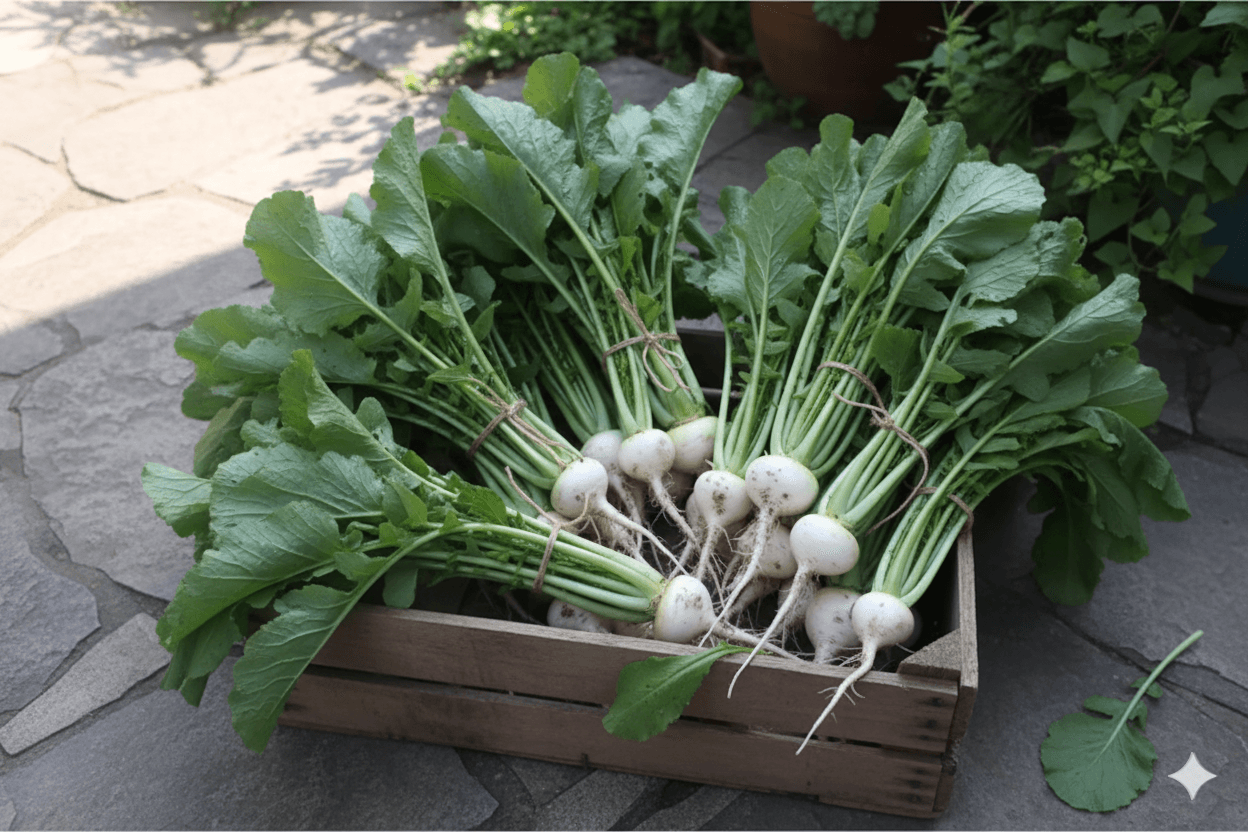
Yamauchi Kabura (Generated with Artificial Intelligence.)
Registration Number | 16 | ||||||||
|---|---|---|---|---|---|---|---|---|---|
Geographical Indication Name | Yamauchi Kabura | ||||||||
Class | Vegetables/Grains/Legumes | ||||||||
Protection Date | 07.09.2016 | ||||||||
Production Area | Fukui Prefecture, Yamauchi Area (Wakasa-cho) | ||||||||
Applicant | Yamauchi Kabura Association | ||||||||
Variety | Yamauchi kabura (Local/Traditional) | ||||||||
Yamauchi Kabura is a turnip variety cultivated in the Yamauchi area of Wakasa-cho, Mikatakaminaka District, Fukui Prefecture, Japan, and registered under the Japan GI (Japan GI mark) system as a geographical indication product.
The product is based on a local cultivar known as Yamauchi kabura and is registered under registration number 16 in the Vegetables main class, within the category of vegetables / cereals / legumes. Yamauchi Kabura is defined by its morphological characteristics, cooking properties, and region-specific seed management practices.
Yamauchi Kabura exhibits distinct morphological differences from the commonly known round and smooth-skinned turnips:
Both the root and leaves of Yamauchi Kabura are used in traditional Japanese cuisine, particularly in the preparation of miso soup. In this application, unlike ordinary turnips which tend to disintegrate and turn to pulp during cooking, Yamauchi Kabura is noted for retaining its structural integrity when cooked.
Yamauchi Kabura (Geographical Indication Product Information Website)
It is also commonly prepared as a salted pickle. In this method, finely chopped leaves and root sections cut in a fan shape are pickled with salt. This preparation is said to enhance the crisp texture of Yamauchi Kabura, particularly its root portion.
The Yamauchi kabura cultivar, which forms the basis of Yamauchi Kabura production, is geographically restricted exclusively to the designated production area (the Yamauchi region); it is not cultivated outside this area.
To ensure the continuity and purity of the variety, seeds are collectively collected and managed by local farmers engaged in its production. A specific selection process is applied for seed selection:
The Yamauchi kabura variety is a traditional cultivar of the Yamauchi region. A document from 1916 titled "Toba Village Magazine" states: "High-quality vegetables (leafy vegetables) are cultivated, and the name Yamauchi Kabura has been widely known since ancient times."【1】 This record indicates that the variety has been cultivated since the Meiji period (1868–1912).
According to recent producer reports, some farmers were cultivating the variety on a small scale using their own seeds by the late 1950s. However, production was temporarily suspended in 1987 due to the aging of producers.
In subsequent years, with the renewed interest in traditional vegetables, cultivation has been restarted since 1996, centered on existing producers. From that date to the present, the cultivated area has expanded steadily.
Geographical Indication Product Information Site. "16 Yamauchi Kabura." YouTube. Accessed October 24, 2025. http://www.youtube.com/watch?v=iYx0ASdwmWs.
Japan Geographical Indication. "Yamauchi Kabura." Information Website on Japan's Geographical Indications. Accessed October 24, 2025. https://pd.jgic.jp/en/register/entry/16.html.
[1]
Japan Geographical Indication, "Yamauchi Kabura," Information Website on Japan's Geographical Indications, erişim 24 Ekim 2025, https://pd.jgic.jp/en/register/entry/16.html

Yamauchi Kabura (Generated with Artificial Intelligence.)
Registration Number | 16 | ||||||||
|---|---|---|---|---|---|---|---|---|---|
Geographical Indication Name | Yamauchi Kabura | ||||||||
Class | Vegetables/Grains/Legumes | ||||||||
Protection Date | 07.09.2016 | ||||||||
Production Area | Fukui Prefecture, Yamauchi Area (Wakasa-cho) | ||||||||
Applicant | Yamauchi Kabura Association | ||||||||
Variety | Yamauchi kabura (Local/Traditional) | ||||||||
Morphological and Physical Characteristics
Food Use and Cooking Properties
Cultivar Specificity and Seed Management
Historical Background