This article was automatically translated from the original Turkish version.
+2 More
History | Last Sunday of January | ||||||||
|---|---|---|---|---|---|---|---|---|---|
Person Who Proposed the Day | Raoul Follereau | ||||||||
Day Observed in India | January 30 - Anniversary of Mahatma Gandhi's Death | ||||||||
Purpose | Eliminating misconceptions about the disease Contributing to the prevention of disabilities related to the disease Strengthening the social participation of people affected by leprosy Raising awareness about leprosy Encouraging early diagnosis and treatment | ||||||||
World Leprosy Day is an international observance held annually on the last Sunday of January to raise public awareness about leprosy. The establishment of this day aims to combat social ignorance regarding the disease, increase efforts to prevent its spread, and prevent deformities and disabilities that may arise in untreated individuals. World Leprosy Day holds global significance due to the continued presence of the disease in many countries and its long-standing association with social stigma. The condition referred to in society as leprosy is medically defined as leprosy or Hansen’s disease.
The causative agent of leprosy, Mycobacterium leprae, was identified in 1873 by Gerhard Armauer Hansen, and following this discovery the disease was also named Hansen’s disease. The origin of World Leprosy Day dates back to 1954, when it was proposed by Frenchman Raoul Follereau to counter the widespread belief that leprosy had been eradicated and to highlight its continued existence worldwide.
Globally, World Leprosy Day is observed each year on the last Sunday of January. In India, however, it is commemorated on January 30, the anniversary of Mahatma Gandhi’s death, and carries special meaning within the country’s historical and social context. In 2025, World Leprosy Day was observed on January 26, with the theme “Unite. Act. Eliminate” selected for the year.
The primary purpose of World Leprosy Day is to reduce misconceptions and fears stemming from ignorance about leprosy. The day emphasizes that the disease is bacterial in origin, spreads through prolonged and close contact, and is treatable today with multidrug therapy. It highlights that disabilities can be prevented through early diagnosis and seeks to reduce the discrimination and stigma faced by those affected by the disease.
Additionally, World Leprosy Day is recognized as a global awareness and information initiative that underscores leprosy’s status as a neglected tropical disease, its persistence in socioeconomically disadvantaged regions, and the importance of access to healthcare services.
The symptoms of leprosy vary depending on the type and progression of the disease. They typically appear after a long incubation period. Patients may develop sudden, non-scaly, non-circular patches on any part of the body, which may sometimes be itchy. In some cases, copper-red, shiny lesions may appear on the skin.
As the disease affects the nervous system, pain may develop in the nerves of the arms and legs, and inward bending or contractures of the fingers may occur. Facial paralysis, leading to immobility of the lower eyelids and inability to close them, is also a recognized symptom.
When the upper respiratory tract is involved, recurrent nosebleeds and nasal congestion may occur. In advanced stages, facial swelling may develop, raised nodules may appear on the skin, and in some cases, a “lion face” appearance may be observed. Nerve damage can lead to deformities, muscle paralysis, and loss of function in the hands and feet.
Leprosy spreads through droplets from the nose and mouth during prolonged and close contact with untreated patients. Daily brief interactions are not considered sufficient for transmission. Due to the slow multiplication rate of Mycobacterium leprae, symptoms typically appear only after a long period.
Leprosy is classified into two main types and two borderline types based on the body’s immune response to the disease. The main types are lepromatous and tuberculoid; the borderline types are borderline and indeterminate leprosy.
This form occurs when the body’s resistance is significantly compromised. The causative bacteria are numerous and highly active. The skin develops numerous small, symmetrical, poorly defined, shiny copper-red patches on the trunk. Over time, loss of sensation occurs in these areas. Hard nodules called lepromas form on the face, neck, nipples, and genital organs. Although nerve damage is relatively less common in this type, involvement of internal organs is more prominent.
This type primarily affects the peripheral nervous system. Facial paralysis may develop. Paralysis of nerves supplying certain hand muscles can result in a “claw hand” appearance. Due to damage to sensory nerves, the ability to perceive heat, touch, and pain may be lost. Reduced function of sweat glands leads to increased skin dryness and scaling.
Borderline leprosy is an intermediate form between lepromatous and tuberculoid types. During its progression, it tends to evolve toward one of the two main types, and its features become more dominant accordingly.
This type typically presents as a single skin lesion that includes sensory loss. Over time, the lesion may spread outward or resolve in the center.
Leprosy is a curable disease when diagnosed early. Treatment duration typically ranges from six to twelve months, depending on the type of leprosy. Shortly after treatment begins, the patient’s infectiousness disappears. In Türkiye, treatment is provided free of charge. If diagnosis is delayed or treatment is not received, deformities and physical disabilities may develop within 10 to 20 years.

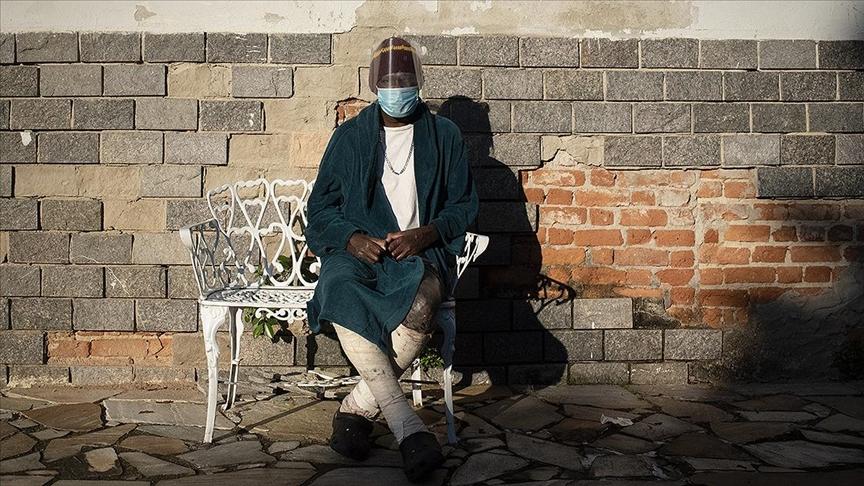
Disability Resulting from Leprosy(Anadolu Ajansı)
Leprosy is one of the tropical diseases currently found in more than 120 countries.【1】 World Health Organization data show that in 2020, 128,375 new cases were reported globally, and in 2021, this number increased by approximately 10 percent to over 140,500. In 2021, India recorded 75,394 new cases and was the country with the highest burden of the disease. Leprosy was least common in Europe, with only 14 cases reported in 2021. According to data released by the Turkish Ministry of Health, three new cases were detected in Türkiye in 2021, with a total of 485 leprosy patients reported in the country.【2】
In December 2025, new cases of leprosy were detected in Croatia and Romania. Authorities stated that these cases were imported and posed no risk of widespread transmission.【3】
Warning: The content in this article is provided solely for general encyclopedic information. The information here should not be used for diagnosis, treatment, or medical advice. Always consult a physician or qualified healthcare professional before making any decisions regarding health. The author and KÜRE Encyclopedia assume no responsibility for any consequences arising from the use of this information for diagnostic or therapeutic purposes.
Anadolu Ajansı. "Cüzzam, 24 Ülkede Genel Sağlık Sorunları Arasında." Anadolu Ajansı, January 26, 2019. Accessed December 5, 2025.https://www.aa.com.tr/tr/saglik/cuzzam-24-ulkede-genel-saglik-sorunlari-arasinda/1375401
Anadolu Ajansı. "Tarihin En Eski Bulaşıcı Hastalıklarından Cüzzam Hala Etkisini Sürdürüyor." Anadolu Ajansı, January 29, 2023. Accessed December 5, 2025.https://www.aa.com.tr/tr/saglik/tarihin-en-eski-bulasici-hastaliklarindan-cuzzam-hala-etkisini-surduruyor/2800586
Sakarya İl Sağlık Müdürlüğü Serdivan Devlet Hastanesi. "Dünya Cüzzam Günü." Accessed December 5, 2025.https://serdivandh.saglik.gov.tr/TR-1060309/dunya-cuzzam-gunu.html
T.C. Ministry of HealthKırıkkale İl Health Directorate. "24–31 January World Leprosy (Leprosy) Week." January 23, 2024. Accessed December 5, 2025.https://kirikkaleism.saglik.gov.tr/TR-300853/24-31-ocak-dunya-cuzzam-lepra-haftasi.html#:~:text=Halk%20aras%C4%B1nda%20C%C3%BCzzam%20ad%C4%B1yla%20da,sakatl%C4%B1klara%20yol%20a%C3%A7abilen%20bir%20hastal%C4%B1kt%C4%B1r.
UNN. “Cases of Leprosy Recorded in Croatia and Romania, Authorities Assure There Is No Risk of Spread.” Accessed December 28, 2025.https://unn.ua/en/news/cases-of-leprosy-recorded-in-croatia-and-romania-authorities-assure-there-is-no-risk-of-spread
World Health Organization. "World Leprosy Day 2025." January 26, 2025. Accessed December 5, 2025.https://www.who.int/news-room/events/detail/2025/01/26/default-calendar/world-leprosy-day-2025
World Health Organization. "World Leprosy Day." Accessed December 5, 2025.https://www.who.int/campaigns/world-leprosy-day
[1]
World Health Organization. "World Leprosy Day." Erişim 5 Aralık 2025. https://www.who.int/campaigns/world-leprosy-day
[2]
Anadolu Ajansı. "Tarihin En Eski Bulaşıcı Hastalıklarından Cüzzam Hala Etkisini Sürdürüyor." Anadolu Ajansı, 29 Ocak 2023. Erişim 5 Aralık 2025. https://www.aa.com.tr/tr/saglik/tarihin-en-eski-bulasici-hastaliklarindan-cuzzam-hala-etkisini-surduruyor/2800586
[3]
UNN. “Cases of Leprosy Recorded in Croatia and Romania, Authorities Assure There Is No Risk of Spread.” Erişim 28 Aralık 2025. https://unn.ua/en/news/cases-of-leprosy-recorded-in-croatia-and-romania-authorities-assure-there-is-no-risk-of-spread

History | Last Sunday of January | ||||||||
|---|---|---|---|---|---|---|---|---|---|
Person Who Proposed the Day | Raoul Follereau | ||||||||
Day Observed in India | January 30 - Anniversary of Mahatma Gandhi's Death | ||||||||
Purpose | Eliminating misconceptions about the disease Contributing to the prevention of disabilities related to the disease Strengthening the social participation of people affected by leprosy Raising awareness about leprosy Encouraging early diagnosis and treatment | ||||||||
History
Purpose
Symptoms
Transmission
Classification of Leprosy
Lepromatous Leprosy
Tuberculoid Leprosy
Borderline Leprosy
Indeterminate Leprosy
Treatment
Global Prevalence