This article was automatically translated from the original Turkish version.
+1 More
Official Name | White Ribbon Day (Bosnian: Dan bijelih traka) | ||||||||
|---|---|---|---|---|---|---|---|---|---|
Commemoration Day | 31 May | ||||||||
Commemoration Site | Prijedor, Bosnia and Herzegovina, Worldwide | ||||||||
Number of Sacrifices | Approximately 3,176 civilians (102 of them children) | ||||||||
Collection Camps | Omarska, Keraterm, Trnopolje, Manjača | ||||||||
Symbol | White armband White ribbon | ||||||||
White Ribbon Day (Bosnian: Dan bijelih traka) is an annual commemoration held on 31 May to remember the massacres carried out in 1992 by Serb forces against non-Serb civilians in the town of Prijedor and its surroundings in northern Bosnia and Herzegovina.
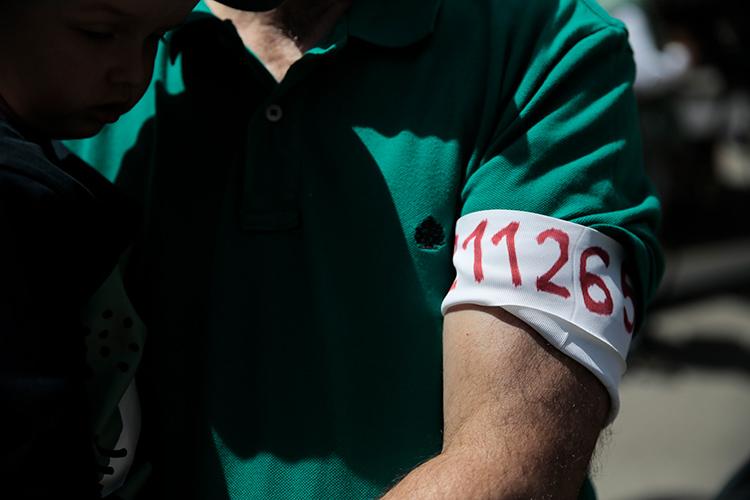
At the outset of the Bosnian War, Serb forces seized the town of Prijedor in April 1992. On 31 May 1992, local radio broadcasts issued by Bosnian Serb authorities mandated that all non-Serb citizens must hang white flags or sheets from their windows and wear white ribbons or armbands on their arms whenever leaving their homes.【1】 This order, issued approximately 50 years after Nazi Germany’s decree forcing Jews to wear the yellow Star of David, became one of the modern examples in Europe of forced classification and discrimination targeting an ethnic or religious group.
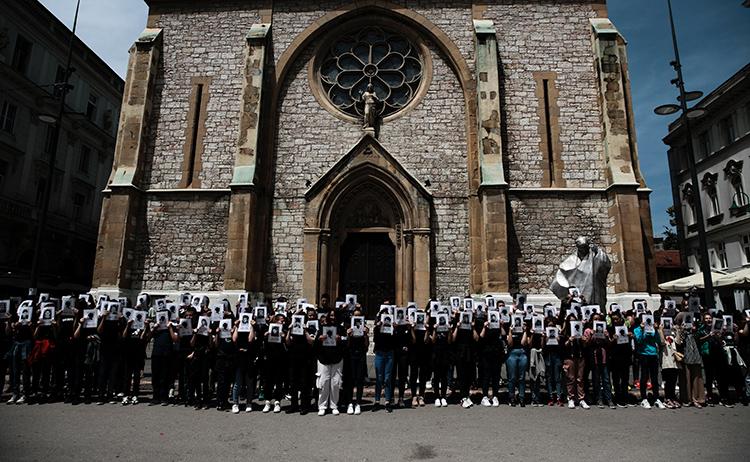
White Ribbon Day in Prijedor (Anadolu Ajansı)
Thousands of non-Serb civilians identified by the white ribbon requirement were taken to detention camps such as Omarska, Keraterm, Trnopolje and Manjača. In these camps and during attacks around Prijedor, civilians were subjected to systematic torture, executions and massacres. Records indicate that a total of 3,176 people were killed in the Prijedor municipality during the war, including 102 children. Approximately 30,000 to 31,000 civilians were held in detention camps and tens of thousands were forcibly displaced from their homes. The International Commission on Missing Persons (ICMP) revealed in 2013 that the Tomasica mine, containing the remains of more than 600 victims of the war, was one of the largest mass graves in Prijedor.【2】
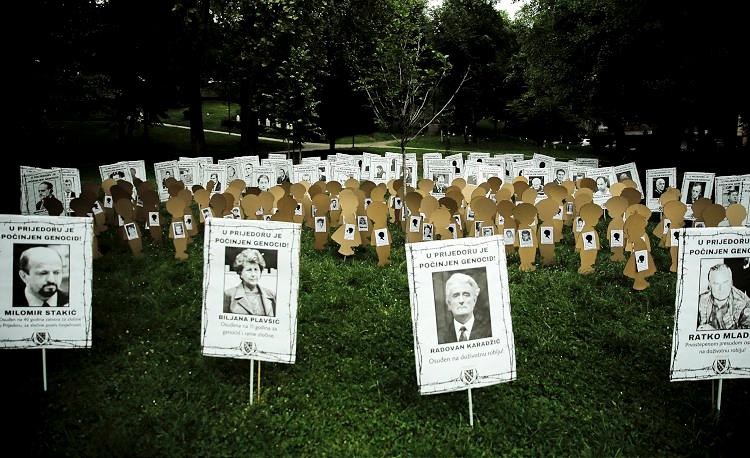
Photographs of War Criminals Radovan Karadžić and Ratko Mladić, Alongside the Names and Deaths of Children Killed in the War, Were Displayed at a Ceremony in Sarajevo (Anadolu Ajansı)
Since 2012, 31 May has been observed as White Ribbon Day to ensure that the tragedy and human rights violations in Prijedor are not forgotten. On this day, individuals tie white ribbons around their arms to draw attention to the dangers of discrimination and hate crimes, honor the victims, and show solidarity with those affected in Prijedor. Events are organized in Türkiye and many other countries, with Bosnia and Herzegovina at the center.
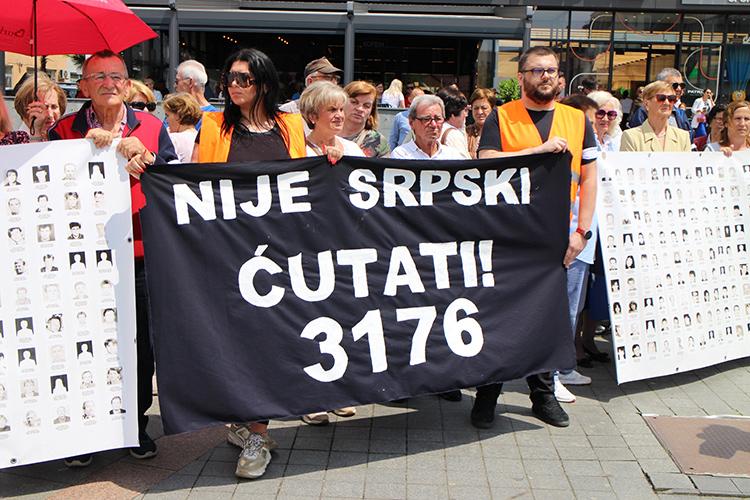
White Ribbon Day Commemoration (Anadolu Ajansı)
Despite these commemorative efforts, the local Serb administration in Prijedor has for years blocked the construction of memorials for the victims of the Omarska detention camp and the 102 children killed during the war. This obstruction is viewed by victims’ families and activists as a major barrier to justice and remembrance. Local authorities have also taken steps to prohibit public commemorative events and ban the use of the term “genocide.”【3】
These bans and restrictions on commemorative ceremonies have been characterized as political pressure against victims’ families and have drawn international criticism. Despite these obstacles, White Ribbon Day commemorations continue as part of the ongoing struggle to remember the massacres in Prijedor and ensure public awareness of the truth.
Anadolu Ajansı. "Bosna Hersek'te Beyaz Kurdele Günü." Accessed December 9, 2025.https://www.aa.com.tr/tr/dunya/bosna-hersekte-beyaz-kurdele-gunu/2602325#:~:text=On%20binlerce%20ki%C5%9Fi%20ise%20do%C4%9Fduklar%C4%B1,abonelere%20sunulan%20haberler%2C%20%C3%B6zetlenerek%20yay%C4%B1mlanmaktad%C4%B1r.
Anadolu Ajansı. "Bosna Hersek'teki savaşın kurbanları Beyaz Kurdele Günü'nde anıldı." Accessed December 9, 2025.https://www.aa.com.tr/tr/dunya/bosna-hersekteki-savasin-kurbanlari-beyaz-kurdele-gununde-anildi/2259579
Anadolu Ajansı. "Bosna'da beyazın en 'kara' olduğu gün." Accessed December 9, 2025.https://www.aa.com.tr/tr/dunya/bosnada-beyazin-en-kara-oldugu-gun/241263
Anadolu Ajansı. "Bosna'da katliamın simgesi: Beyaz kurdeleler." Accessed December 9, 2025.https://www.aa.com.tr/tr/dunya/bosnada-katliamin-simgesi-beyaz-kurdeleler-/581510
Remembering Srebrenica. "White Armband Day." Srebrenica.org. Accessed December 9, 2025.https://srebrenica.org.uk/what-happened/history/white-armband-day
[1]
Remembering Srebrenica, "White Armband Day," Srebrenica.org, erişim 9 Aralık 2025, https://srebrenica.org.uk/what-happened/history/white-armband-day
[2]
Remembering Srebrenica, "White Armband Day," Srebrenica.org, erişim 9 Aralık 2025,
[3]
Anadolu Ajansı, "Bosna'da beyazın en "kara" olduğu gün," Anadolu Ajansı, erişim 9 Aralık 2025, https://www.aa.com.tr/tr/dunya/bosnada-beyazin-en-kara-oldugu-gun/241263

Official Name | White Ribbon Day (Bosnian: Dan bijelih traka) | ||||||||
|---|---|---|---|---|---|---|---|---|---|
Commemoration Day | 31 May | ||||||||
Commemoration Site | Prijedor, Bosnia and Herzegovina, Worldwide | ||||||||
Number of Sacrifices | Approximately 3,176 civilians (102 of them children) | ||||||||
Collection Camps | Omarska, Keraterm, Trnopolje, Manjača | ||||||||
Symbol | White armband White ribbon | ||||||||
Background and History
Commemoration and Obstructions