


This article was automatically translated from the original Turkish version.
Water footprint is an indicator that measures the direct and indirect volumes of water used in the production processes of goods and services, evaluating water consumption in all its dimensions. This concept represents the total volume of water consumed or polluted by an individual sector product basin or country during its production processes. In other words the water footprint encompasses not only direct water use but also water consumption and pollution caused by production activities. In this context the water footprint reveals the “invisible” dimensions of water use and considers not only water flowing from taps but all water consumed in the production of a product. This measurement aims to assess impacts on both local and global water resources.
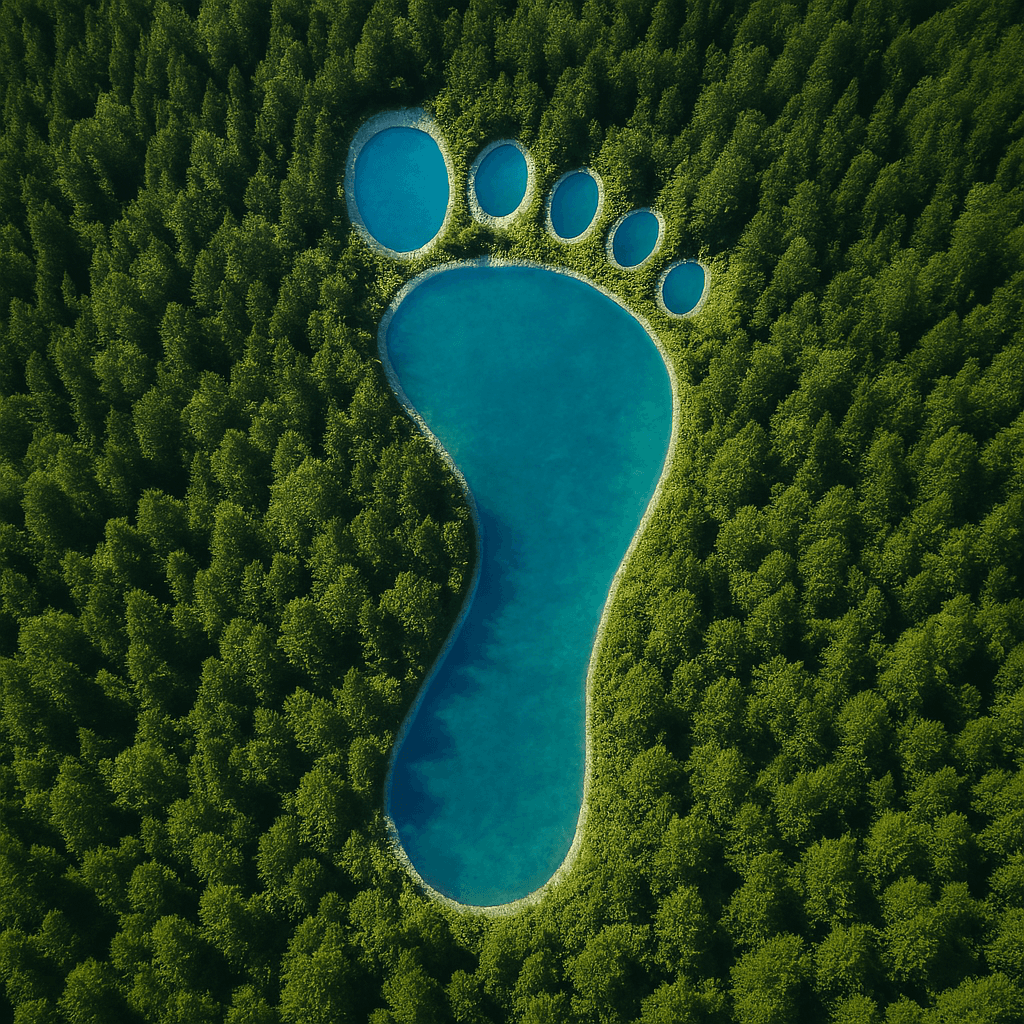
A visual representing the water footprint (generated by artificial intelligence.)
The water footprint consists of three main components: blue water footprint green water footprint and grey water footprint.
The blue water footprint represents the volume of surface and groundwater used for producing a product. This type of water is typically sourced directly from freshwater sources such as drinking water irrigation water and industrial water. Blue water use occurs across various sectors including irrigated agriculture industry and domestic consumption. Blue water also includes elements such as evaporation loss water absorbed by plants and drainage water. In agriculture the blue water footprint encompasses factors such as evaporation water uptake by plants and losses through drainage.
Blue Water Footprint for Irrigated Agriculture (volume/time) = Evaporated Blue Water + Blue Water Incorporated in the Product + Drainage Volume
The green water footprint represents the total volume of rainfall water used for producing a product. This water is stored in the soil and consumed by plants through evapotranspiration. Green water includes water temporarily accumulated in the soil and absorbed by plants. It must be understood that this water does not flow directly into streams or mix with groundwater. In agricultural production green water specifically refers to water supplied directly by rainfall without the need for irrigation.
Green Water Footprint (volume/time) = Evaporated Green Water + Green Water Incorporated in the Product
The grey water footprint represents the volume of freshwater required to assimilate pollutants and restore water quality to its natural state. It quantifies the amount of water needed to dilute pollutants to a level that does not exceed ambient water quality standards. The grey water footprint varies depending on the intensity of pollution and is typically calculated to understand the impact of pollutants on water sources. It is the most significant component of the water footprint for environmental pollutants and is closely associated with industrial and domestic waste.
Grey Water Footprint (volume/time) = Pollutant Load / (Measured Maximum Concentration in Receiving Water Body – Natural Concentration in Receiving Water Body)

A visual representing blue green and grey water footprints (generated by artificial intelligence.)
The water footprint enables analysis of a country’s or sector’s water consumption profile. Understanding the relationship between water consumption and water resources is critical for sustainable water management. The concept of the water footprint helps improve understanding of water scarcity and pollution by tracking water use and contamination in production processes. This contributes to developing strategies for protecting water resources at both local and global scales. In the case of Türkiye the total water footprint has been calculated at 140 billion m³/year. Of this 89 percent originates from the agricultural sector 7 percent from domestic use and 4 percent from industrial production. The agricultural sector plays a particularly important role especially in terms of green water use; a large proportion of water used in crop production comes from green water. This situation demonstrates the agricultural sector’s dependence on rainfall and its vulnerability to drought conditions.
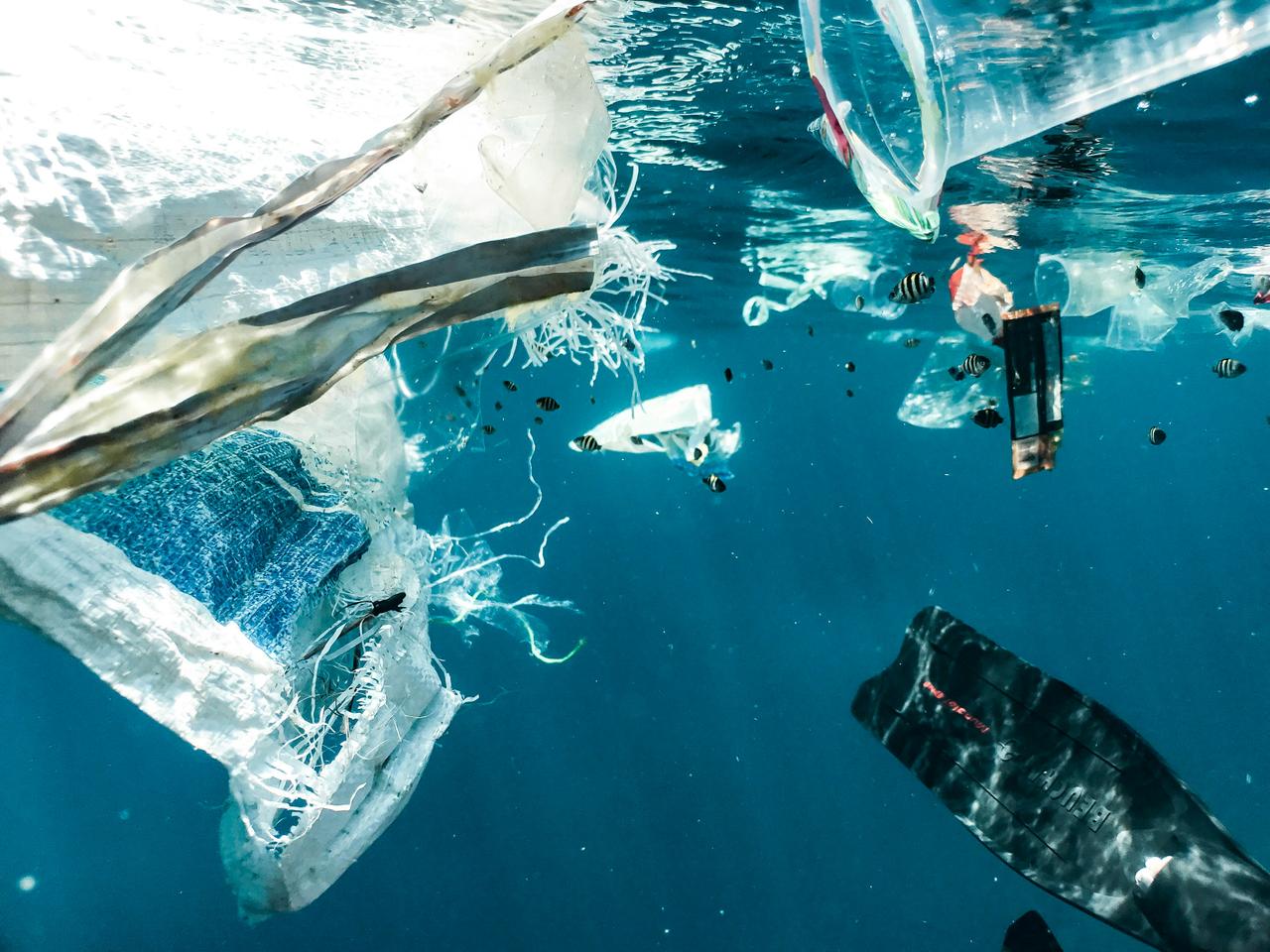
A visual representing water pollution (Naja Bertolt Jensen)
In Türkiye agriculture is the sector that constitutes the largest component of the water footprint. While the majority of water used in this sector is green water blue water also plays a significant role. For example approximately 20 percent of water used in crop production comes from blue water. This highlights the importance of efficient irrigation methods and water resource management. Furthermore the grey water footprint holds a substantial share in domestic and industrial water footprints. In Türkiye the grey water component accounts for 87 percent of domestic water footprint and 92 percent of industrial water footprint. These proportions indicate potential future risks related to water quality.
The water footprint is a critical tool for preserving global water resources. This indicator plays a vital role in achieving sustainable water use. Calculating the water footprint enables more comprehensive water management by accounting for both direct and indirect water consumption. This facilitates more informed decisions regarding efficient resource use combating water pollution and addressing water scarcity.
The water footprint reveals not only individual water consumption but also water use and pollution generated by industrial and agricultural production processes. This comprehensive indicator serves as an essential reference for the sustainable management of water resources. Improved understanding of impacts on water resources at both local and global levels will be made possible through water footprint calculations.
Hess, T. M., A. T. Lennard, and A. Daccache. "Comparing Local and Global Water Scarcity Information in Determining the Water Scarcity Footprint of Potato Cultivation in Great Britain." Journal of Cleaner Production 87 (2015): 666–74.
Hoekstra, A. Y., and M. M. Mekonnen. Global Water Scarcity: The Monthly Blue Water Footprint Compared to Blue Water Availability for the World’s Major River Basins. Value of Water Research Report Series. Delft: UNESCO-IHE, 2011.
Hoff, Holger. "Global Water Resources and Their Management." Current Opinion in Environmental Sustainability 1 (2009): 141–47.
Jefferies, D., I. Munoz, J. Hodges, V. J. King, M. Aldaya, A. Ercin, et al. "Water Footprint and Life Cycle Assessment as Approaches to Assess Potential Impacts of Products on Water Consumption: Key Learning Points from Pilot Studies on Tea and Margarine." Journal of Cleaner Production 33 (2012): 155–66.
Manzardo, A., A. Mazzi, A. Loss, M. Butler, A. Williamson, and A. Scipioni. "Lessons Learned from the Application of Different Water Footprint Approaches to Compare Different Food Packaging Alternatives." Journal of Cleaner Production 112 (2016): 4657–66.
Manzardo, A., J. Ren, A. Piantella, A. Mazzi, A. Fedele, and A. Scipioni. "Integration of Water Footprint Accounting and Costs for Optimal Chemical Pulp Supply Mix in the Paper Industry." Journal of Cleaner Production 72 (2014): 167–73.
Morillo, J. G., J. A. R. Díaz, E. Camacho, and P. Montesinos. "Linking Water Footprint Accounting with Irrigation Management in High Value Crops." Journal of Cleaner Production 87 (2015): 594–602.
Naja Bertolt Jensen. "Plastic pollution and juvenile fish." (Photograph)https://unsplash.com/photos/a-group-of-garbage-floating-in-the-ocean-FxnqdmKBJps
T.C. Ministry of Agriculture and Forestry. "Su Ayakizi." *Su Verimliliği Seferberliği.*https://www.suverimliligi.gov.tr/su-ayak-izi/.
WWF-Türkiye. *Türkiye’nin Su Ayak İzi Raporu: Su, Üretim ve Uluslararası Ticaret İlişkisi.* Istanbul: WWF-Türkiye, 2014. Accessed April 12, 2025.https://wwftr.awsassets.panda.org/downloads/su_ayak_izi_raporweb.pdf

Components of the Water Footprint
Blue Water Footprint
Green Water Footprint
Grey Water Footprint
Economic and Environmental Significance of the Water Footprint
Türkiye’s Water Footprint and Sectoral Distribution
The Role of the Water Footprint in Sustainability and the Future