This article was automatically translated from the original Turkish version.
Original Title | WALL•E (Waste Allocation Load Lifter Earth-Class) | ||||||||
|---|---|---|---|---|---|---|---|---|---|
Turkish Title | Vol.i | ||||||||
Director | Andrew Stanton | ||||||||
Screenwriter | Andrew Stanton Pete Docter Jim Reardon | ||||||||
Production Companies | Pixar Animation Studios, Walt Disney Pictures, FortyFour Studios | ||||||||
Production Year | 2008 | ||||||||
Release Date (USA) | 27 June 2008 | ||||||||
Release Date (Türkiye) | 26 September 2008 | ||||||||
Duration | 98 minutes (1h 38m) | ||||||||
Country | United States of America | ||||||||
Language | English | ||||||||
Budget | 180 million USD | ||||||||
Worldwide Box Office | 527 million USD | ||||||||
Genre | Comedy Science Fiction Adventure Family Animation | ||||||||
Award | 95 nominations 1 Oscar (Best Animated Feature Film) • Total 96 awards | ||||||||
Director of Photography | Danielle Feinberg | ||||||||
Music | Thomas Newman | ||||||||
Technical Specifications | Color • Dolby Digital / DTS / SDDS / Dolby Atmos • Aspect ratio: 2.39:1 | ||||||||
Co-Production | BURN·E (2008) short film | ||||||||
Production Location | Pixar Animation Studios – Emeryville, California, USA | ||||||||
Distribution | Walt Disney Studios Motion Pictures | ||||||||
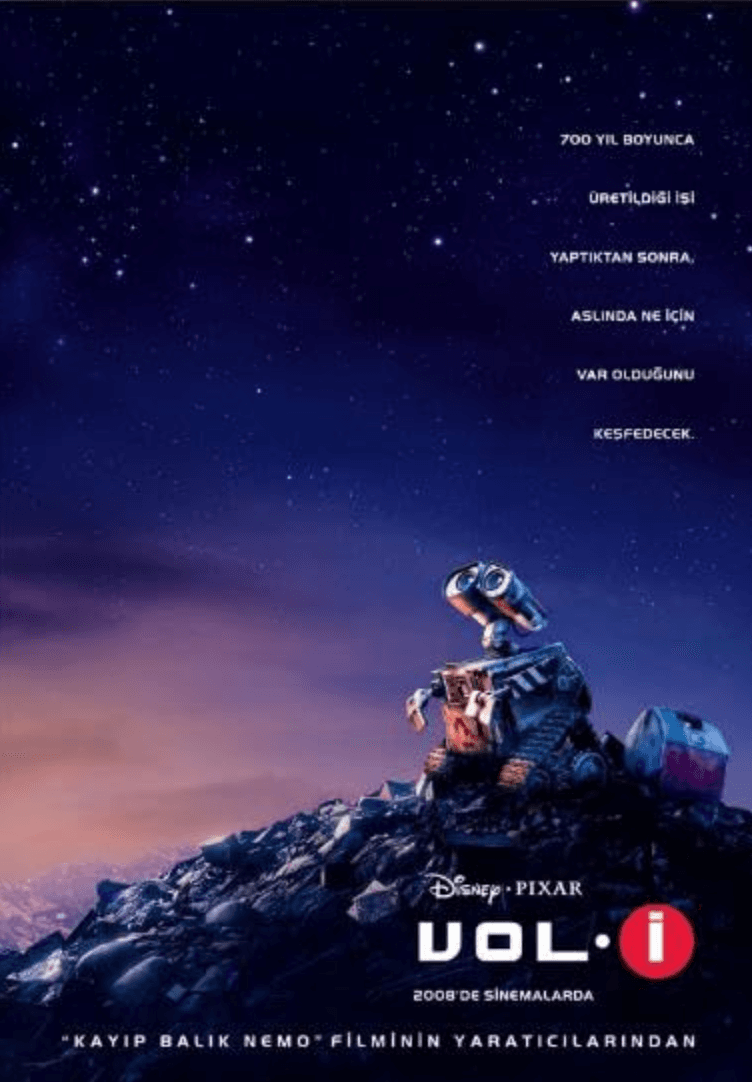
WALL·E (original title: WALL•E: Waste Allocation Load Lifter Earth-Class) is a feature-length animated film produced by Pixar Animation Studios and distributed by Walt Disney Pictures in 2008. Directed by Andrew Stanton, the film was written by Stanton, Pete Docter, and Jim Reardon. Set in a distant future after environmental collapse caused by ecological destruction and consumer habits, humanity has abandoned Earth. Key characters include WALL·E, EVE, Captain, Auto, John, Mary, and M-O. The film stands out in the history of science fiction animation for its critique of environmental issues and its emotional depth.
WALL-E Fragman (Rotten Tomatoes Classic Trailers)
The film opens in a future where Earth is buried under mountains of trash. Humanity, having abandoned the planet due to excessive consumption and pollution, now lives aboard a massive spaceship called Axiom. Meanwhile, the task of cleaning Earth has been assigned to a small garbage-collecting robot named WALL·E. After centuries of solitary work, WALL·E has developed a personality, becoming curious and emotionally expressive. His loneliness ends when he meets EVE, a scanning robot sent to Earth to determine whether plant life has reemerged. WALL·E’s infatuation with EVE and their journey across the galaxy transforms into both a love story and a narrative of humanity’s redemption.
The film critiques the impact of consumer culture and technological dependence. The humans aboard the Axiom have lost their physical mobility and become passive beings whose every need is met by automated systems. These themes stand in sharp contrast to WALL·E’s simple yet deeply human behavior. At its core, the film presents a warning about environmental awareness, centered on hope, human nature, and love.
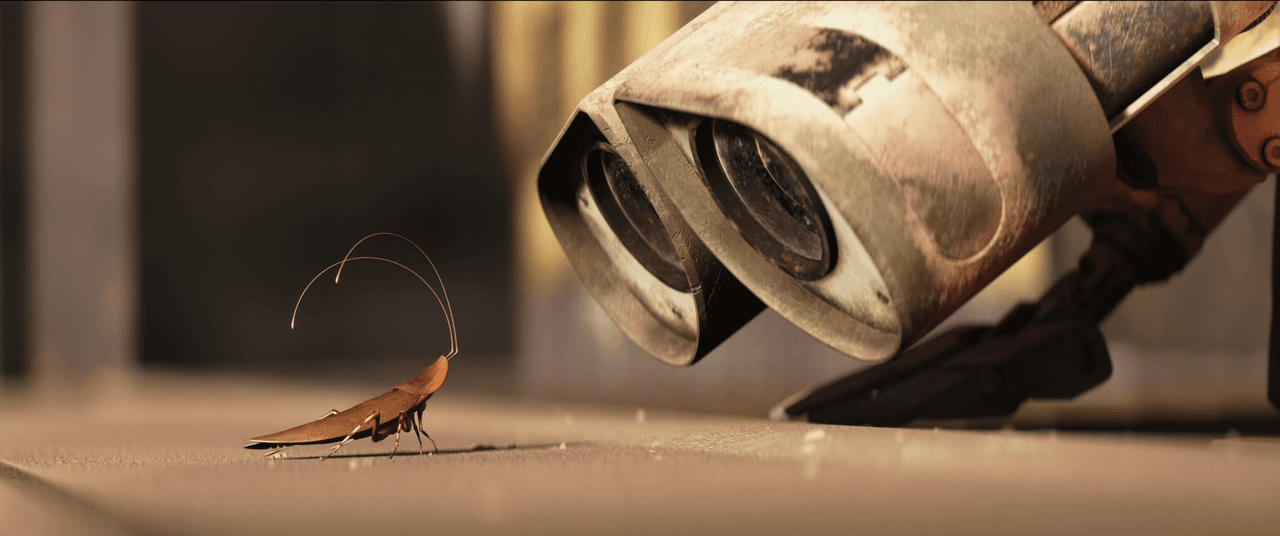
Still from the Film (IMDb)
The last remaining garbage-collecting robot on Earth. His mission is to clean the planet, but over time he develops a personality, becoming curious and solitary. Guided by romantic feelings inspired by the musical Hello, Dolly!, his affection for EVE forms the emotional core of the film.
Buy n’ Large Corporation’s advanced exploration robot, designed to search for signs of life on Earth. Despite its cold, mechanical exterior, EVE forms an emotional bond with WALL·E’s sincerity and becomes the pivotal element in the process that enables humanity to return to Earth.
The captain of the Axiom. He has delegated his duties to the autopilot system, Auto, and lives a sedentary existence. However, through his encounters with WALL·E and EVE, he rediscovers his leadership and makes the decision to return humanity to Earth.
The automated pilot system of the Axiom. An artificial intelligence that deems human control unnecessary, Auto secretly works to prevent humanity’s return to Earth. In the film, Auto symbolizes unconditional dependence on technology.
Two humans living aboard the Axiom. Their encounter with WALL·E leads them to notice each other for the first time. These characters represent humanity’s regained capacity to form emotional connections.
A cleaning robot tasked with removing foreign substances from the Axiom. Throughout the film, it serves as a humorous character that follows WALL·E.

Still from the Film (IMDb)
WALL·E is a production that showcases Pixar’s technical capabilities at an advanced level. Through computer animation, the film meticulously renders both the dystopian atmosphere of Earth and the aesthetic vastness of space. Visual supervisor Danielle Feinberg noted that the interior of WALL·E’s truck was designed with lighting effects “to create a romantic and intimate atmosphere.” The design of the Axiom spaceship was conceived not as a war or exploration vessel but as “a floating sanctuary of consumer culture.” Additionally, the scene “The Walk Home” stands out as one of Pixar’s most complex sequences to date, consisting of ten intricate sets and entirely devoid of dialogue.
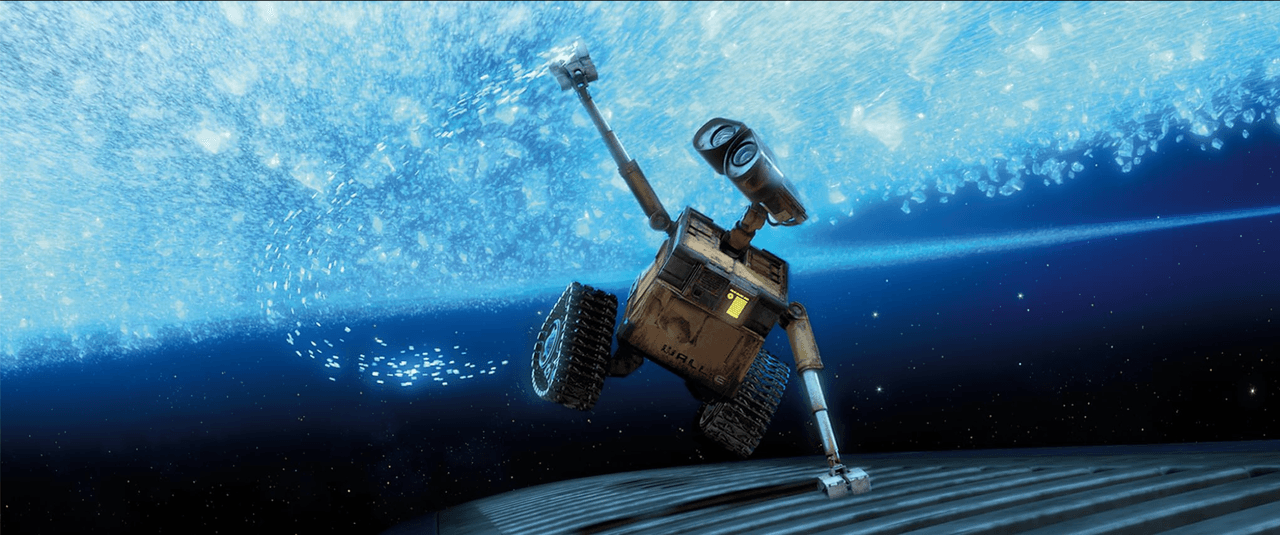
Still from the Film (IMDb)
The film premiered in the United States on June 27, 2008, and in Türkiye on September 26, 2008. With a production budget of $180 million, it earned over $527 million worldwide at the box office. It won one Academy Award and received a total of 96 awards and 95 nominations. It received widespread critical and audience acclaim, achieving an 8.4 rating on IMDb, a 95% Tomatometer score on Rotten Tomatoes, and a 90% audience approval rating.
According to Letterboxd data, the film has been watched by 3.9 million users, with over 739,000 giving it a five-star rating. Reviews frequently highlight Pixar’s mastery in creating character depth through silent storytelling.
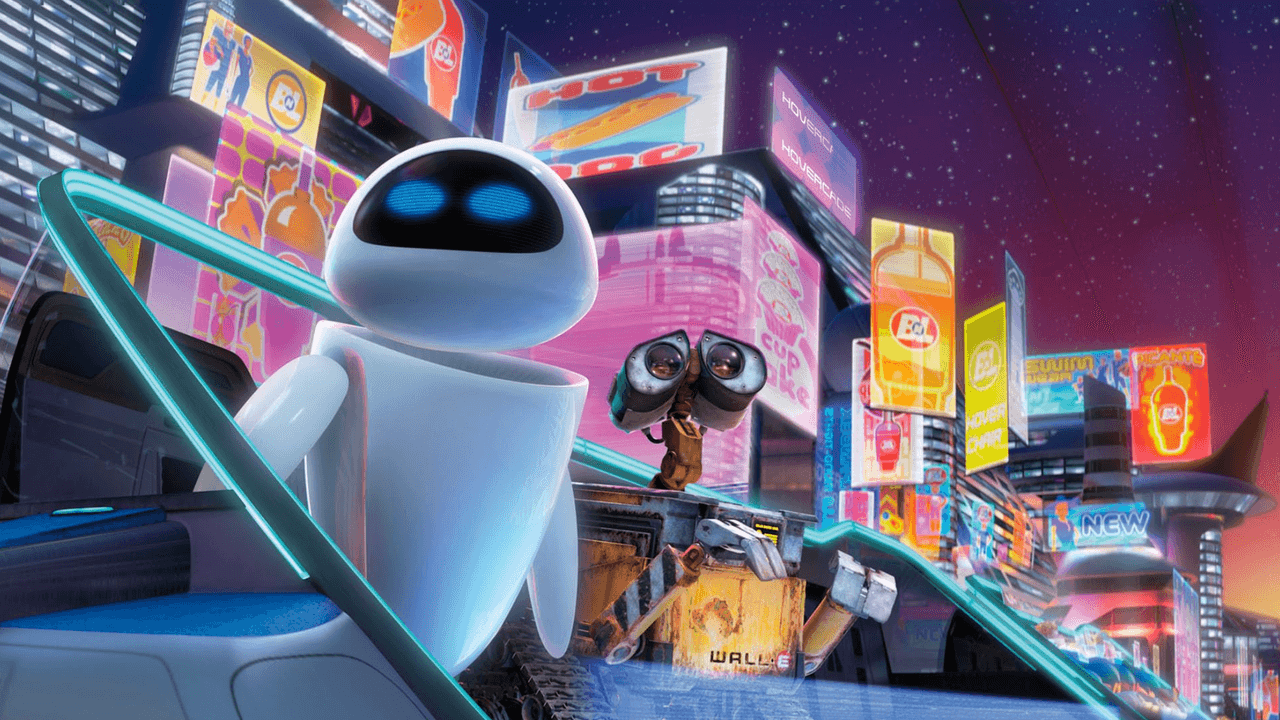
Still from the Film (IMDb)
WALL·E is regarded as one of the most important animated films in cinema history. It has been included in the list “1001 Movies You Must See Before You Die.”
Through its themes promoting environmental awareness and its storytelling evoking the aesthetics of silent cinema, the film has left a lasting impression on both child and adult audiences. It is also considered the pinnacle of Pixar’s approach to portraying human nature through machines.
The film’s universe was expanded by the 2008 short film BURN·E, and the character of WALL·E has appeared in various media, video games, and educational projects.
Beyazperde. “WALL-E.” Beyazperde. Accessed October 11, 2025.https://www.beyazperde.com/filmler/film-123734/#google_vignette
IMDb. “WALL-E (2008).” IMDb. Accessed October 11, 2025.https://www.imdb.com/title/tt0910970/
Letterboxd. “WALL-E.” Letterboxd. Accessed October 11, 2025.https://letterboxd.com/film/walle/
Pixar. “WALL-E.” Pixar. Accessed October 11, 2025.https://www.pixar.com/wall-e
Rotten Tomatoes Classic Trailers. “WALL-E (2008) Trailer #1.” YouTube video. Accessed October 11, 2025.https://www.youtube.com/watch?v=CZ1CATNbXg0
Rotten Tomatoes. “WALL-E.” Rotten Tomatoes. Accessed October 11, 2025.https://www.rottentomatoes.com/m/wall_e

Original Title | WALL•E (Waste Allocation Load Lifter Earth-Class) | ||||||||
|---|---|---|---|---|---|---|---|---|---|
Turkish Title | Vol.i | ||||||||
Director | Andrew Stanton | ||||||||
Screenwriter | Andrew Stanton Pete Docter Jim Reardon | ||||||||
Production Companies | Pixar Animation Studios, Walt Disney Pictures, FortyFour Studios | ||||||||
Production Year | 2008 | ||||||||
Release Date (USA) | 27 June 2008 | ||||||||
Release Date (Türkiye) | 26 September 2008 | ||||||||
Duration | 98 minutes (1h 38m) | ||||||||
Country | United States of America | ||||||||
Language | English | ||||||||
Budget | 180 million USD | ||||||||
Worldwide Box Office | 527 million USD | ||||||||
Genre | Comedy Science Fiction Adventure Family Animation | ||||||||
Award | 95 nominations 1 Oscar (Best Animated Feature Film) • Total 96 awards | ||||||||
Director of Photography | Danielle Feinberg | ||||||||
Music | Thomas Newman | ||||||||
Technical Specifications | Color • Dolby Digital / DTS / SDDS / Dolby Atmos • Aspect ratio: 2.39:1 | ||||||||
Co-Production | BURN·E (2008) short film | ||||||||
Production Location | Pixar Animation Studios – Emeryville, California, USA | ||||||||
Distribution | Walt Disney Studios Motion Pictures | ||||||||
Plot and Themes
Characters
WALL·E (Waste Allocation Load Lifter Earth-Class):
EVE (Extra-Terrestrial Vegetation Evaluator):
Captain:
Auto:
John and Mary:
M-O (Microbe-Obliterator):
Production Process and Visual Design
Release and Achievements
Cultural Impact and Legacy