


This article was automatically translated from the original Turkish version.
Village Youth School
Location | Şanlıurfa / Türkiye | ||||||||
|---|---|---|---|---|---|---|---|---|---|
Construction Date(s) | The construction date is uncertain completed in the 1930s | ||||||||
Completing Person | Mutasarrıf Münir Bey | ||||||||
Original Function | Boarding school for female students | ||||||||
Architectural Feature(s) | cut stone construction U-shaped Two-story | ||||||||
Area(s) | 4200 m² (including outbuildings) | ||||||||
Current Use | Şanlıurfa Provincial Directorate of Culture and Tourism service building | ||||||||
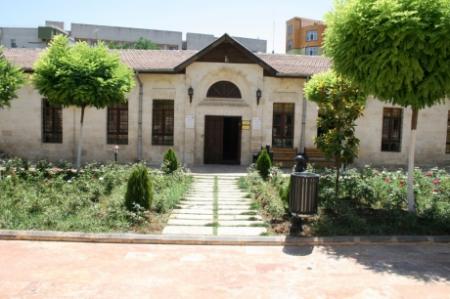
Köy Yatı Mektebi is one of the Republican-era buildings located in Şanlıurfa, completed and opened for service in the 1930s by Mutasarrıf Münir Bey. Constructed with cut stone, the two-story U-shaped building was initially planned as an Industrial School but was later used as a boarding school for female students from surrounding villages. After undergoing restoration in 1993, the building has been used since 2005 as the administrative office of the Şanlıurfa Provincial Directorate of Culture and Tourism. In the building’s courtyard, a “Culture Garden” features replicas of cultural elements such as the Göbeklitepe stelae and the Edessa mosaics.
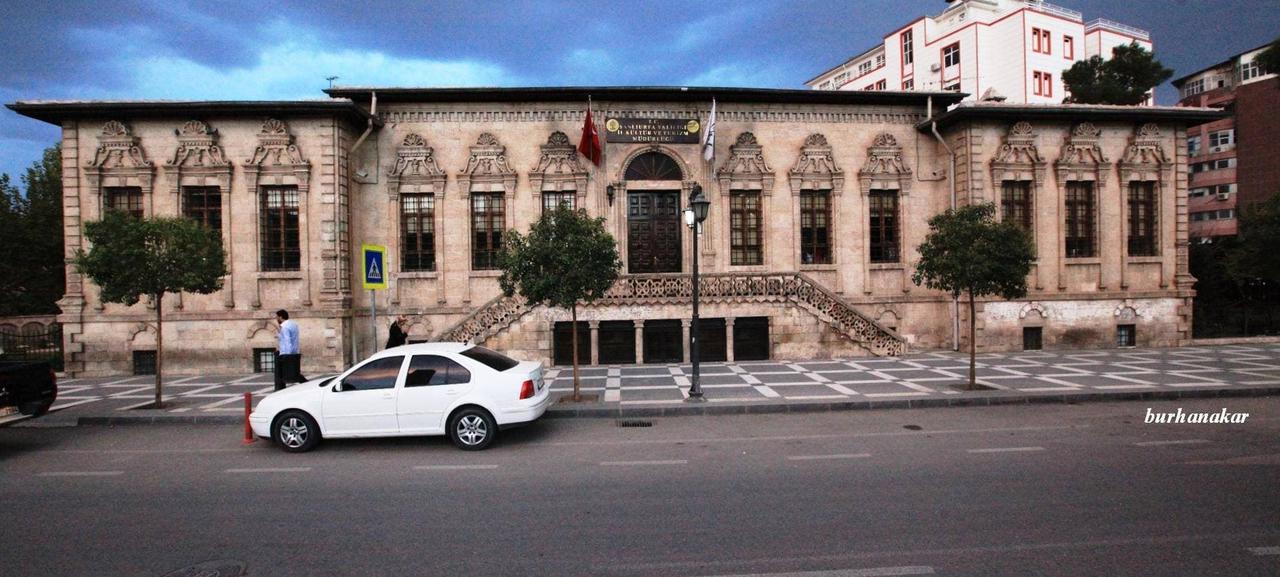
Köy Yatı Mektebi (Şanlıurfa Provincial Directorate of Culture and Tourism)
The exact construction date of the building is unknown, but its construction was left incomplete for a long period and was finally finished and opened for service in the 1930s by Mutasarrıf Münir Bey of that era. Although there were initial plans to relocate the Industrial School to this building, it was later decided to use it as a boarding school for female students from nearby villages. The structure is built of cut stone and features a two-story U-shaped architectural layout.
In 1993, the building underwent comprehensive restoration by the Şanlıurfa Governorship and was subsequently used for a time as an administrative building of the Şanlıurfa Provincial Special Administration. In 2005, it was transferred to the Şanlıurfa Provincial Directorate of Culture and Tourism. Including its outbuildings, the complex covers an area of approximately 4200 m².
As part of the restoration, the courtyard was reorganized and redesigned as a “Culture Garden” suitable for social and cultural activities. Within this framework, replicas of the Haleplibahçe Amazon Mosaics, the Göbeklitepe stelae, and the Edessa mosaics were installed in the garden.
The building is an example of 20th-century applications of Urfa’s traditional stone architecture in terms of its form and material use. The facades of Köy Yatı Mektebi are symmetrically arranged, with stonework prominently featured. The U-shaped internal courtyard layout reflects the spatial organization commonly found in traditional Anatolian educational buildings. The interior spaces have been reconfigured over time to meet changing functional requirements. The cultural replicas placed in the courtyard demonstrate that the building serves not only an administrative function but also a cultural exhibition role.
Since its establishment, Köy Yatı Mektebi has fulfilled a significant educational role as a boarding school for female students and stands as one of the institutions reflecting the Republic’s emphasis on rural education. Today, as the headquarters of the Şanlıurfa Provincial Directorate of Culture and Tourism, it has become the central hub for cultural activities in the region. The Culture Garden in the courtyard hosts social gatherings such as open-air concerts, exhibitions, public events, and ceremonies.
Ministry of Culture and Tourism of the Republic of Turkey. “Müdürlüğümüz Binasının Tarihçesi.” *Şanlıurfa İl Kültür veTurizm Müdürlüğü.* Accessed May 20, 2025.
Şanlıurfa İl Directorate of Culture and Tourism. "Gezi from the Heart of Urfa to the Sunset." Şanlıurfayı Gezelim. Accessed May 20, 2025. https://sanliurfa.ktb.gov.tr/Eklenti/63121,urfanin-kalbinden-gunesin-batisina-gezipdf.pdf?0.
Village Youth School
Location | Şanlıurfa / Türkiye | ||||||||
|---|---|---|---|---|---|---|---|---|---|
Construction Date(s) | The construction date is uncertain completed in the 1930s | ||||||||
Completing Person | Mutasarrıf Münir Bey | ||||||||
Original Function | Boarding school for female students | ||||||||
Architectural Feature(s) | cut stone construction U-shaped Two-story | ||||||||
Area(s) | 4200 m² (including outbuildings) | ||||||||
Current Use | Şanlıurfa Provincial Directorate of Culture and Tourism service building | ||||||||
No Discussion Added Yet
Start discussion for "Village Youth School" article
History
Architectural Features
Cultural and Social Function