


This article was automatically translated from the original Turkish version.
+2 More
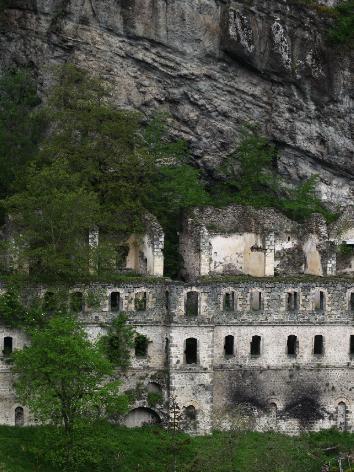
Vazelon Monastery
Founding Date | Between AD 270 and 317 | ||||||||
|---|---|---|---|---|---|---|---|---|---|
Architectural Feature(s) | Cave Church Monks' Cells Ayazma | ||||||||
Founder(s) | Uncertain Belongs to the Byzantine Period | ||||||||
Place(s) | Maçka Türkiye Trabzon | ||||||||
Vazelon Monastery is located in a valley accessible from the villages of Kiremitli and Köprüyanı within the Maçka district of Trabzon Province, toward Gümüşhane. It is reputed that the name “Vazelon” derives from the nearby Mount Zouvalon or Zabulon.
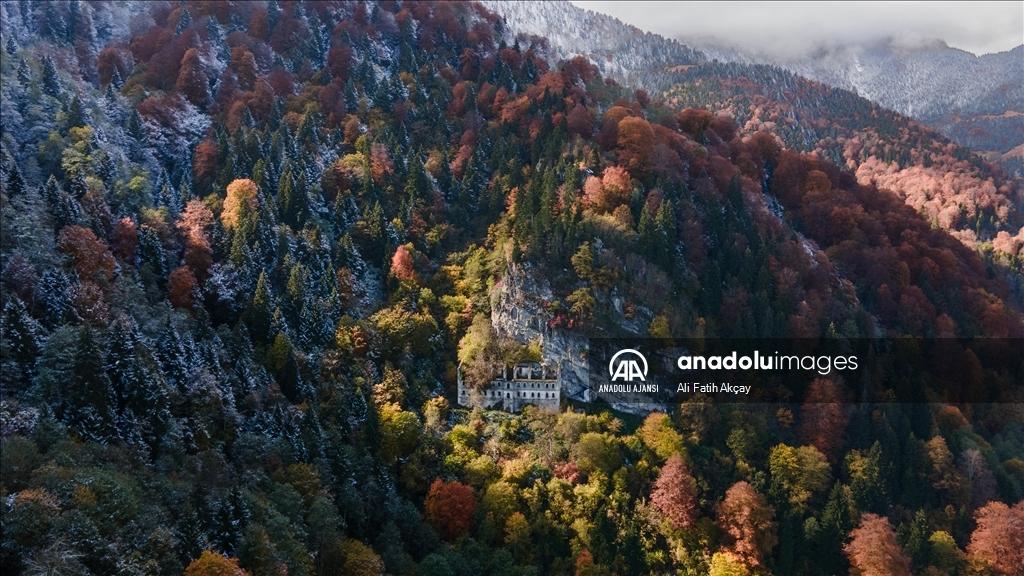
Vazelon Monastery (AA)
The exact date of the monastery’s construction is unknown, but it is estimated to have been built between 270 and 317 AD. In this regard, it is considered older than the Sumela Monastery. Originally constructed before a cave, the complex also includes a holy spring. The structure was repaired in 565 by the Byzantine Emperor Justinianus and expanded and renovated between 644 and 702. It is known that the surviving church and monk cells date from the 19th century.
According to sources, Vazelon Monastery was not merely a place of worship but also an administrative center with authority over other monasteries in the region. Some accounts suggest that part of the material resources used in the construction of Sumela Monastery were sourced from Vazelon. In this way, it played a significant role in the Christian institutional framework of the region.
In addition to its religious functions, the monastery engaged in social and economic activities and exerted influence on the cultural development of its surrounding area. Due to damage over time and particularly destruction caused by treasure hunters, it is now largely in ruins.
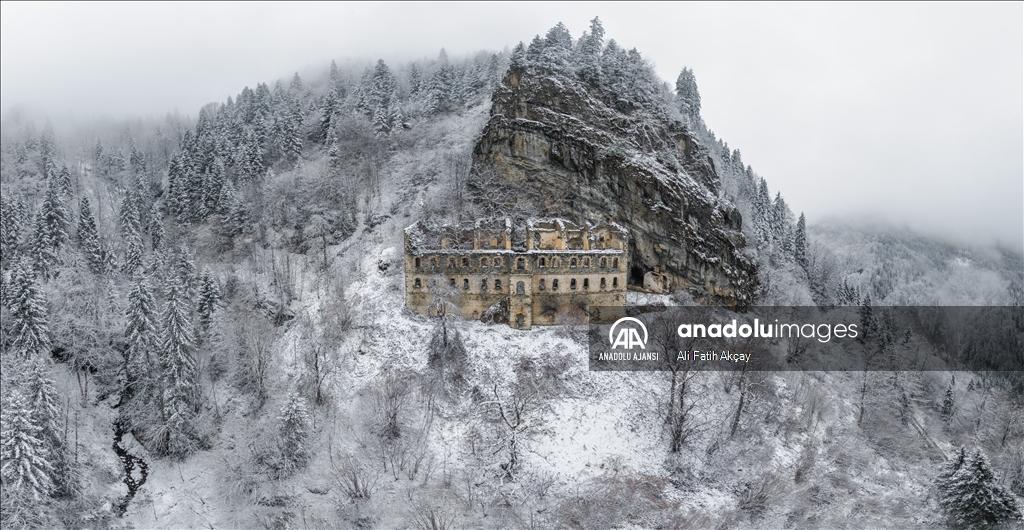
Winter at Vazelon Monastery (
Vazelon Monastery is recognized as an alternative tourism destination within the Maçka region. A field survey revealed that 16 percent of both local residents and visitors stated that the monastery should be developed for tourism. Although not as well known as Sumela Monastery, it stands out due to its historical and cultural value.
Anadolu Ajansı. “Vazelon Manastırı Beyaz Örtüsüyle Görüntülendi.” Accessed May 14, 2025. https://www.aa.com.tr/tr/pg/foto-galeri/vazelon-manastiri-beyaz-ortusuyle-goruntulendi/0.
Anadolu Ajansı. “Vazelon Manastırı ve Çevresinde İki Mevsim Bir Arada.” Accessed May 14, 2025. https://www.aa.com.tr/tr/pg/foto-galeri/vazelon-manastiri-ve-cevresinde-iki-mevsim-bir-arada/0.
Düzgüneş, Ertan and Öner Demirel. "Maçka Bölgesi'nin Alternatif Turizm Potansiyeli Açısından Değerlendirilmesi." İnönü Üniversitesi Sanat ve Tasarım Dergisi 3, no. 7 (2013): 1–11.
T.C.Maçka Kaymakamlığı Governorship. "Manastırlar." Accessed May 14, 2025. http://www.macka.gov.tr/manastirlar.

Vazelon Monastery
Founding Date | Between AD 270 and 317 | ||||||||
|---|---|---|---|---|---|---|---|---|---|
Architectural Feature(s) | Cave Church Monks' Cells Ayazma | ||||||||
Founder(s) | Uncertain Belongs to the Byzantine Period | ||||||||
Place(s) | Maçka Türkiye Trabzon | ||||||||
Historical Development and Architectural Features
Religious and Administrative Significance
Cultural and Social Role
Tourism Potential