


This article was automatically translated from the original Turkish version.
+2 More
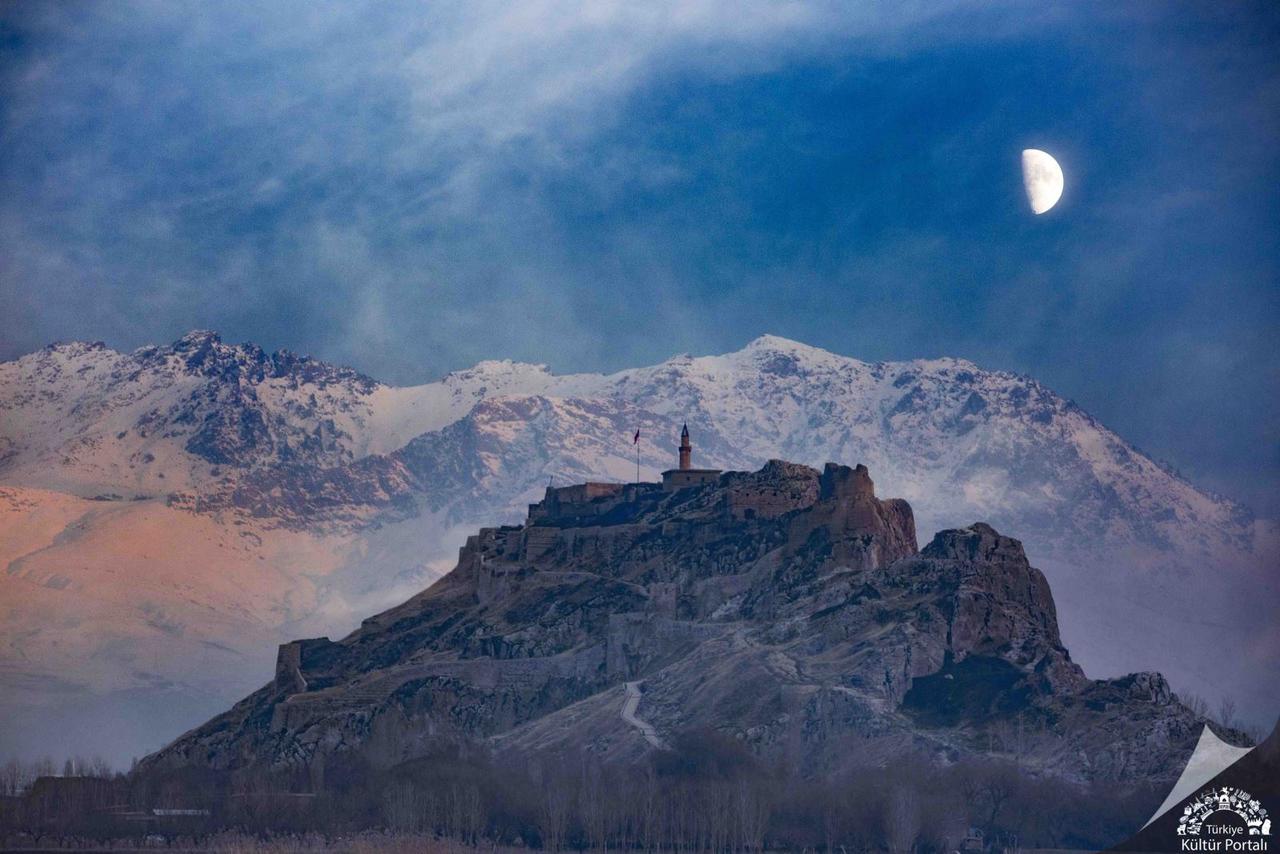
Van Castle
Location | Van city center 5 km from the center 4 km east of Lake Van | ||||||||
|---|---|---|---|---|---|---|---|---|---|
Geographical Features | 1800 m length, 20-120 m width, 100 m height | ||||||||
Establishment | Built by Urartian King Sarduri I between 840-825 BC | ||||||||
Former Name | Tushpa (capital of Urartu) | ||||||||
Age | 2850.855 | ||||||||
Entry | northwest end | ||||||||
Van Kalesi is a historical structure built on a rocky mass extending in an east-west direction within the Van Plain, located five kilometers from the center of Van, Türkiye. The fortress occupies a natural limestone outcrop measuring 1800 meters in length, 20 to 120 meters in width, and approximately 100 meters in height. Its southern face is steep and vertical while its northern side exhibits a gentle slope. The fortress features a three-part layout; its entrance on the northwestern side follows a slight ramp extending from west to east. Situated four kilometers east of Van Gölü, the fortress today attracts tourists with its historical integrity and the panoramic views it offers of the city, the lake, and the mountains.
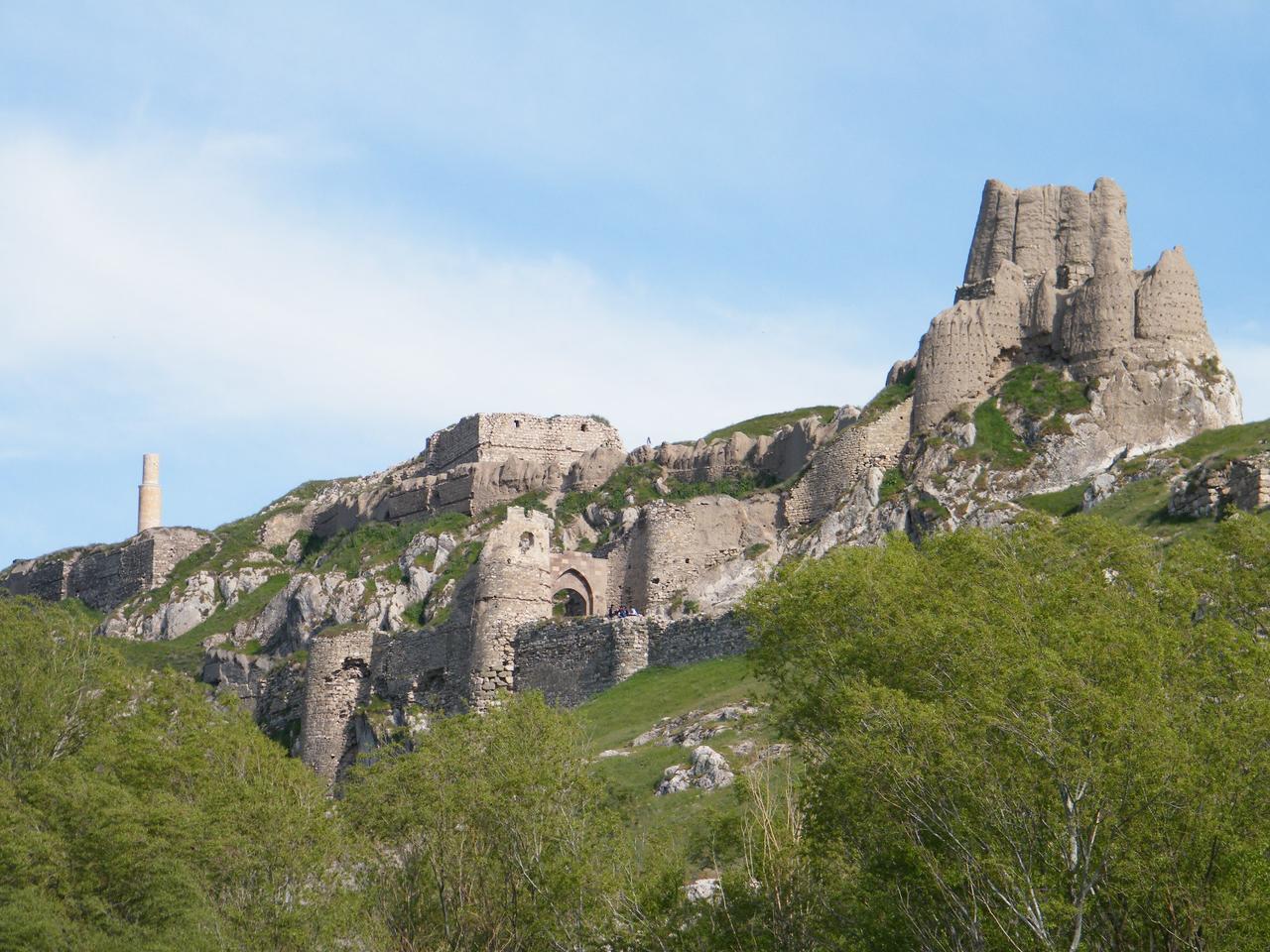
Van Kalesi (Gürpınar Kaymakamlığı)
Van Kalesi was founded by King Sarduri I of Urartu between 840 and 825 BCE. The fortress served as the capital of the Urartian Kingdom, known as Tushpa, for approximately 300 years and was constructed in the mid-9th century BCE. Built under the orders of Sarduri I, it became one of the most important centers of Urartian civilization and was ruled by 13 kings during this period. The structure, with a history spanning nearly 2850 years since 855 BCE, is regarded as one of the oldest in the world and has survived to the present day largely intact. Its status as the Urartian capital diminished when King Rusa II, facing Assyrian invasions, moved the capital to Toprakkale. In subsequent periods, the fortress was repaired by successive ruling powers and notably used as a military base during the Ottoman era.
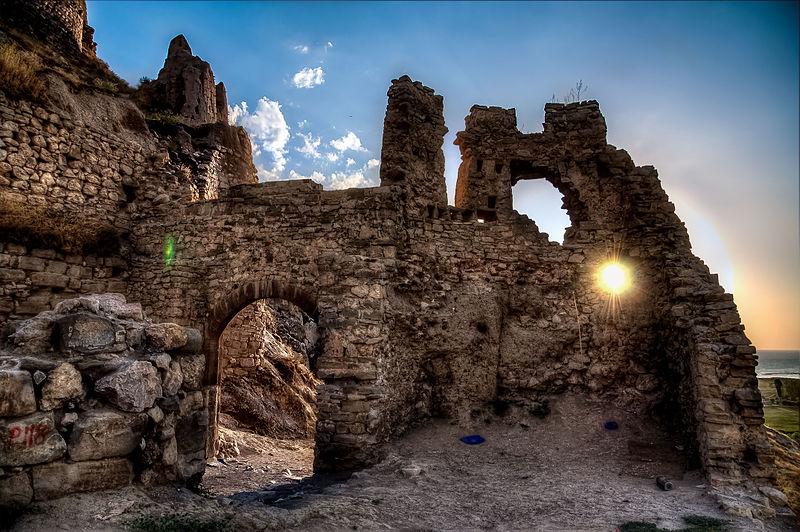
Van Kalesi (YYÜ)
The fortress is surrounded by rock-cut rampart foundations and defensive walls. Significant remains from the Urartian period include the Madır (Sardur) Tower, the Analı-Kız Open-Air Temple, the rock-cut tombs of Kings Argişti I, Menua, and Sarduri II, the Bin Merdivenler (Şeytan Merdivenleri), and cuneiform inscriptions. The Sardur Tower, located immediately west of the entrance, is a rectangular structure measuring 47 meters in length, 13 meters in width, and 4 meters in height. Its stone surfaces bear cuneiform inscriptions in Assyrian script commissioned by Sarduri I; these inscriptions constitute the most important evidence confirming Tushpa as the Urartian capital. Additionally, well-planned royal tombs were carved directly into the main rock face on the southern section of the fortress. The tomb monument of Argişti I and its cuneiform annals at the northwestern end are particularly notable.
After the Urartian period, the fortress persisted until the Ottoman era with no significant remains other than a Persian inscription. During the Ottoman period, the fortress was used exclusively for military purposes. Structures erected during this time include the ramparts and towers on the eastern side, the entrance gate facing northwest, fortification walls, Yukarı Kale, the Süleyman Han Camii and its minaret, and various buildings constructed of adobe and stone. The defensive walls, towers, and bastions were built using rubble stone, adobe, and cut stone, forming the silhouette of the fortress from the north. The fortress is encircled by four distinct walls: two from the Urartian period and two from the Akkoyunlu and Ottoman Turkish periods. Within the fortress during the Ottoman era, there were also mosques, medreses, barracks, and water cisterns. Evliya Çelebi noted that around 300 janissaries and artillerymen lived within the inner fortress, that the Süleyman Han Camii had been converted from a church, and that scaling the fortress walls with arrows was impossible.
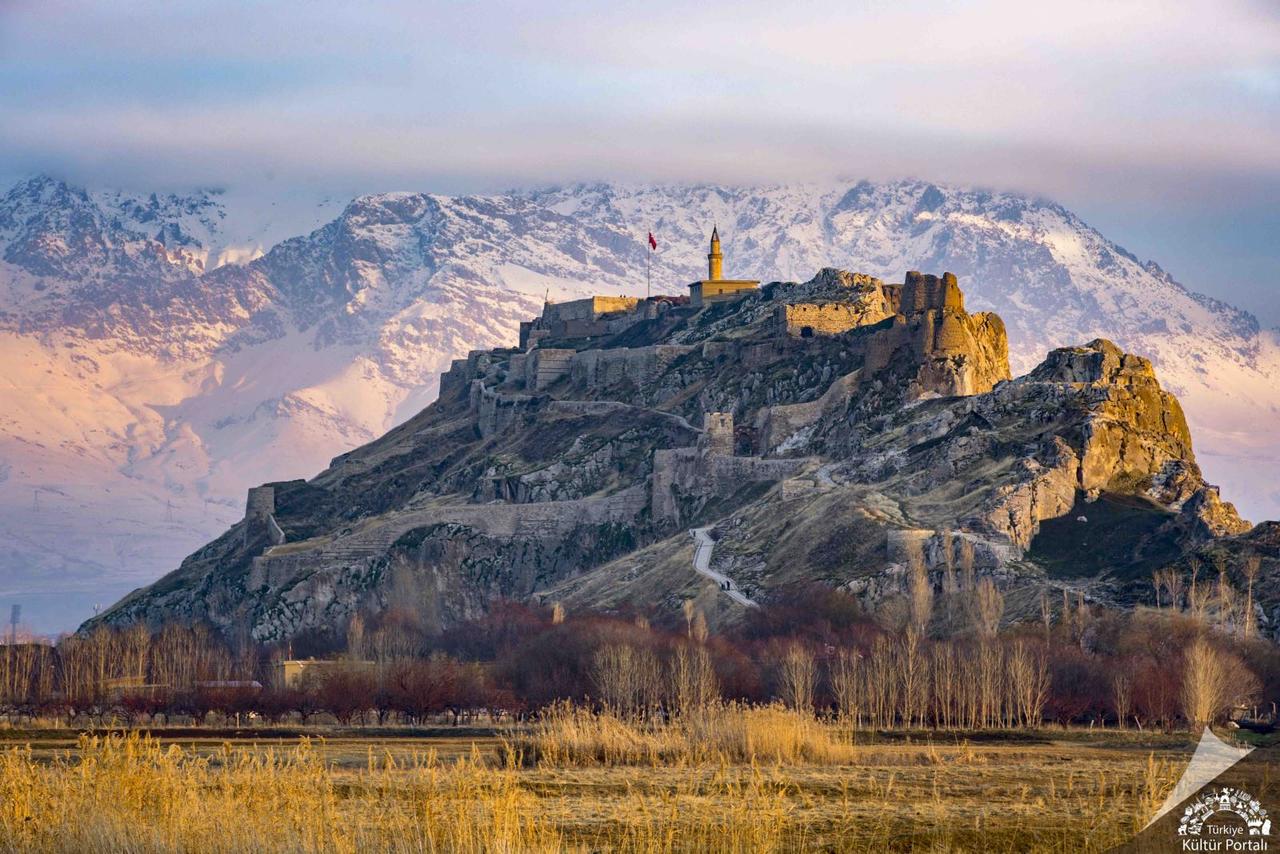
Van Kalesi (Kültür Portalı)
To the south of the fortress lies the Old City of Van, a populated urban center that endured until the Russian-Armenian occupation of 1915. This city, inhabited by approximately 35,000 people including Muslims and minority communities, was destroyed and burned following the withdrawal of Russian forces in 1918 and now exists in ruins. Notable structures from the Old City include the Seljuk-era Ulu Camii and the Ottoman-era Kaya Çelebi and Hüsrev Paşa Mosques. The city was originally built at the foot of the fortress, enclosed by walls, but has survived to the present day only in its ruined state after the destruction of 1915.
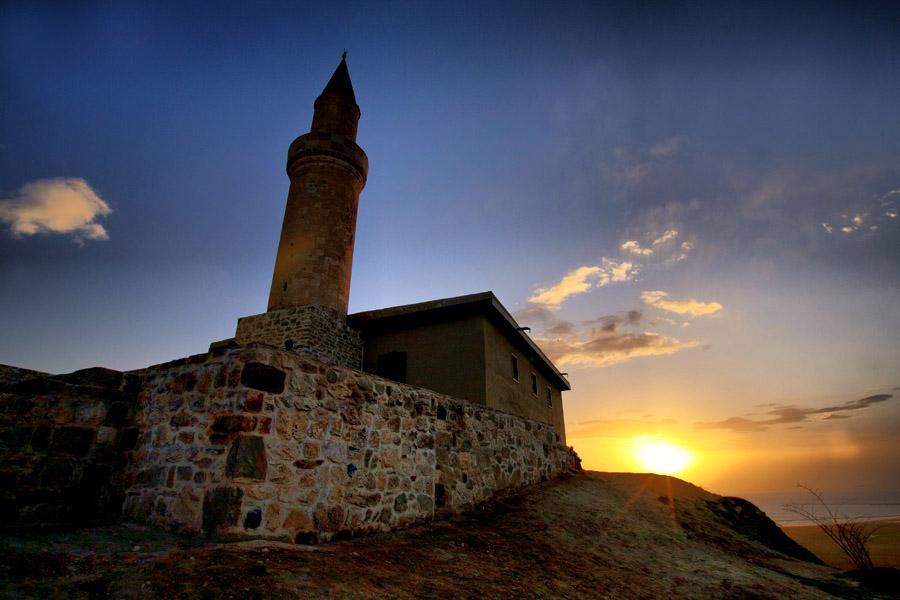
Van Kalesi (YYÜ)
Van Kalesi was added to the UNESCO World Heritage Tentative List in 2016. In addition to its historical fabric, the surrounding lush gardens and natural springs provide visitors with a tranquil resting area. The fortress, accessible via a gentle climb, is also notable for its panoramic views. This hilltop, offering vistas of the millennia-old Nemrut Dağı, presents a landscape of an ancient city where the scent of history is carried by the wind. Excavations conducted by archaeologist Layard in 1889 uncovered valuable artifacts dating from the early and medieval periods. Today, Van Kalesi stands as a unique historical heritage, preserving Urartian cuneiform inscriptions, rock-cut tombs, temples, Ottoman mosques, and magnificent towers.
Kaymakamlığı, Gürpınar. "Gürpınar Kaymakamlığı - Van Kalesi." Gürpınar Kaymakamlığı, Accessed April 1, 2025.http://www.gurpinar.gov.tr/van-kalesi.
Kültür Portalı. "VAN KALESİ | Kültür Portalı." Accessed April 1, 2025.https://www.kulturportali.gov.tr/turkiye/van/gezilecekyer/van-kales.
Ministry of Interior. "T.C. Van Valiliği Resmi Web Sitesi - Van Kalesi." Van Valiliği, Accessed April 1, 2025.http://www.van.gov.tr/van-kalesi.
T.C. Kültür ve Turizm Bakanlığı. "VAN CASTLE." Accessed April 1, 2025.https://muze.gov.tr/muze-detay?SectionId=VKA01&DistId=MRK
Van Yüzüncü Yıl Üniversitesi Bilgisayar Bilimleri Araştırma ve Uygulama. “Tarihin Bekçisi Van Kalesi.” Accessed April 1, 2025.https://www.yyu.edu.tr/Birimler/884/sayfalar/8002

Van Castle
Location | Van city center 5 km from the center 4 km east of Lake Van | ||||||||
|---|---|---|---|---|---|---|---|---|---|
Geographical Features | 1800 m length, 20-120 m width, 100 m height | ||||||||
Establishment | Built by Urartian King Sarduri I between 840-825 BC | ||||||||
Former Name | Tushpa (capital of Urartu) | ||||||||
Age | 2850.855 | ||||||||
Entry | northwest end | ||||||||
History
Architectural Features and Remains
The Old City of Van to the South
UNESCO World Heritage and the Present