


This article was automatically translated from the original Turkish version.
+2 More
Makam | Muhayyerkürdi | ||||||||
|---|---|---|---|---|---|---|---|---|---|
İlk Seslendirme | 2002 | ||||||||
Bestekârı | Mehmet Emin Ay | ||||||||
İlk Yayın | 1986, Divân-ı Hulûsî-i Dârendevî | ||||||||
Güftekârı | Osman Hulûsi Efendi | ||||||||
“Vakt-i Seher” is a ilahi with verses attributed to the Sufi poet of the 20th century Es-Seyyid Osman Hulûsi Efendi. The poem appears in his 1986 published work Divân-ı Hulûsî-i Dârendevî. The Sufi text explores the spiritual significance of the pre-dawn hours and the idea that all creation participates in divine remembrance during this sacred time.
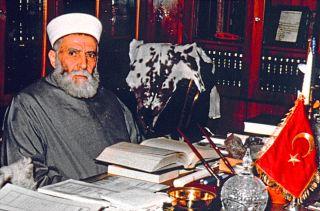
Osman Hulûsi Efendi (İslam Ansiklopedisi)
Born in 1914 in the Darende district of Malatya, Es-Seyyid Osman Hulûsi Efendi received his initial religious education from his father, Hasan Feyzi Efendi, and studied Arabic and Persian. At an early age, he became a disciple of the Nakşibendî-Hâlidî shaykh İhrâmîzâde İsmâil Hakkı Efendi and served for many years as imam and preacher at Şeyh Hamîd-i Velî Camii.
Hulûsi Efendi regarded his poetry as a means of spiritual guidance and remained faithful to the classical divan poetry tradition. In addition to gazelles, he composed a large number of ilahis.【1】
In his Divân, alongside classical-style gazelles, there are approximately sixty ilahis and poems written in syllabic meter.【2】
Vakt-i Seher (Mustafa Demirci)
“Vakt-i Seher” consists of eight stanzas. Each stanza’s second line ends with the refrain “feryâd eder vakt-i seher,” which reinforces the poem’s rhythmic structure and centers the pre-dawn hour as its thematic core.
The poem invokes various elements of creation—the mountains, stones, rose, nightingale, trees, vegetation, flowing water, atoms, humans, and angels—to depict how all existence participates in a divine fervor and cry during the pre-dawn hours. In the final stanza, the poet uses his pen name and shifts to a direct mode of address, inviting the listener to awaken at this sacred time. In this regard, the text exhibits a didactic character rooted in Sufi spiritual guidance.
The mountains and stones rise in fervor, crying out at the hour of dawn
All things are seized by longing, crying out at the hour of dawn
At that hour, the rose blooms in joy, the nightingale, seeing it, sings in ecstasy
All who possess a heart rejoice, crying out at the hour of dawn
At that hour, tongues lament, hearts yearn for the vision of the Divine
Every soul reveals its essence, crying out at the hour of dawn
At that hour, creatures and plants find renewed life
At that hour, all possible beings cry out at the hour of dawn
Eons flow like a river, scattering their splendor in a hundred directions
At that hour, the atoms of the universe cry out at the hour of dawn
At that hour, human and angel alike dance in the orbit of the heavens
Singing “Hû Hû,” they breathe in the water, crying out at the hour of dawn
At that hour, the Essence of Majesty bestows grace upon the lovers
Those who know this secret cry out at the hour of dawn
If you are a lover, Hulûsî, do not lie idle—arise, come to the hour of dawn
Look and see, the entire world lies bare, crying out at the hour of dawn【3】
The poem “Vakt-i Seher” was first performed by the Sufi music artist Prof. Dr. Mehmet Emin Ay. It appears in his 2002 album Hulûs-i Kalb, which features eleven ilahis selected from the Divân.
The piece has since been performed by various artists in subsequent ilahi albums.
Demirci, Mustafa. "Vakt-i Seher." YouTube. Accessed March 3, 2026. https://www.youtube.com/watch?v=IjGF8qWtoa0&list=RDIjGF8qWtoa0&start_radio=1
Hulusi Efendi Vakfı. "Es-Seyyid Osman Hulusi Efendi." Accessed March 3, 2026. https://hulusiefendivakfi.org.tr/es-seyyid-osman-hulusi-efendi/
Hulusi Efendi Vakfı. “Mehmet Emin Ay - Vakti Seher.” YouTube. Accessed March 3, 2026. https://www.youtube.com/watch?v=EmBCc5YxNBI&list=RDEmBCc5YxNBI&start_radio=1
Hulūsi, Osman. "Cûşa Gelir Dağ İle Taş." Kürdi İlâhî. Güfte: M. Emin Ay. Notaya alan: Halil Çay. Accessed March 3, 2026. https://acikders.ankara.edu.tr/pluginfile.php/48137/mod_resource/content/0/cusa_gelir_dag.pdf
TDV İslâm Ansiklopedisi. "Hulusi Efendi, Osman." Accessed March 3, 2026. https://islamansiklopedisi.org.tr/hulusi-efendi-osman
[1]
TDV İslâm Ansiklopedisi "Hulusi Efendi, Osman." TDV İslâm Ansiklopedisi. Erişim tarihi: 3 Mart 2026.https://islamansiklopedisi.org.tr/hulusi-efendi-osman
[2]
TDV İslâm Ansiklopedisi "Hulusi Efendi, Osman." TDV İslâm Ansiklopedisi. Erişim tarihi: 3 Mart 2026.https://islamansiklopedisi.org.tr/hulusi-efendi-osman
[3]
Osman Hulûsi, "Cûşa Gelir Dağ İle Taş," Kürdi İlâhî, güfte: M. Emin Ay, notaya alan: Halil Çay, erişim tarihi: 3 Mart 2026,https://acikders.ankara.edu.tr/pluginfile.php/48137/mod_resource/content/0/cusa_gelir_dag.pdf.

Makam | Muhayyerkürdi | ||||||||
|---|---|---|---|---|---|---|---|---|---|
İlk Seslendirme | 2002 | ||||||||
Bestekârı | Mehmet Emin Ay | ||||||||
İlk Yayın | 1986, Divân-ı Hulûsî-i Dârendevî | ||||||||
Güftekârı | Osman Hulûsi Efendi | ||||||||
No Discussion Added Yet
Start discussion for "Vakt-i Seher (Divine)" article
Author and Literary Context
Structure and Content of the Text
Text
Place in Musical Tradition
