


This article was automatically translated from the original Turkish version.
+1 More
Turkish baths are spaces of cleanliness, purification, and social interaction whose origins trace back to ancient civilizations but acquired a distinct identity through integration with Turkish culture. The word "hamam," derived from the Arabic root "hamm," meaning "heated place," refers to artificially heated structures designed for bathing and has become an inseparable part of Turkish sociocultural life today.
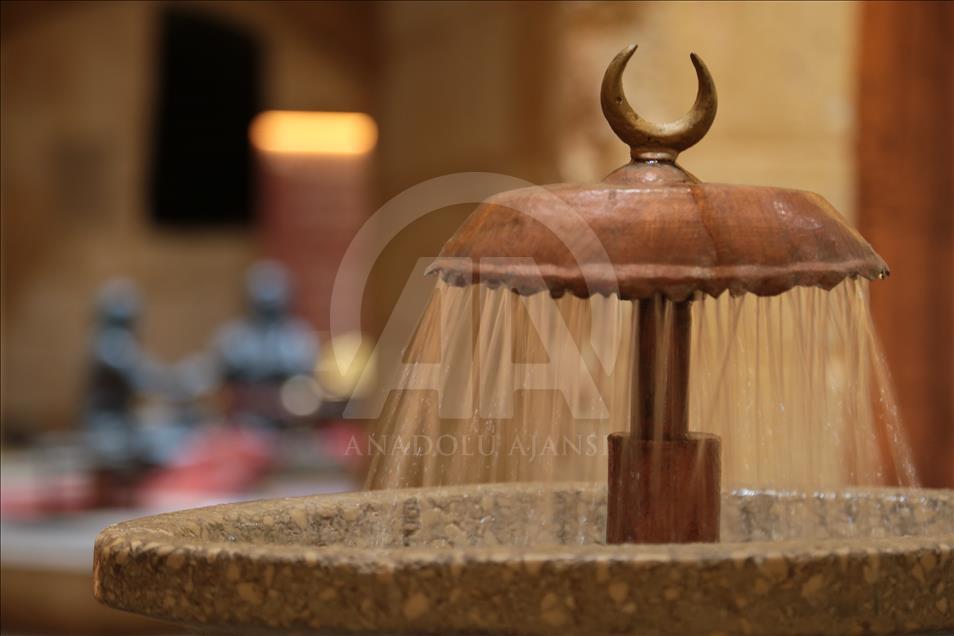
Turkish Bath (AA)
The need for cleanliness has been a fundamental human requirement throughout history. In early times, this practice took place near water sources but, with the advent of settled life, moved indoors due to climatic conditions and the need for privacy. Throughout history, many civilizations developed their own bathing structures; similar facilities were constructed in ancient Greece, Rome, Byzantium, Mesopotamia, ancient Egypt, Iran, and Arab societies.
In Anatolia, the hamam evolved into a uniquely Turkish architectural, functional, and social form known as the Turkish bath, acquiring a distinct cultural meaning through the integration of Turkish cultural elements and traditions.
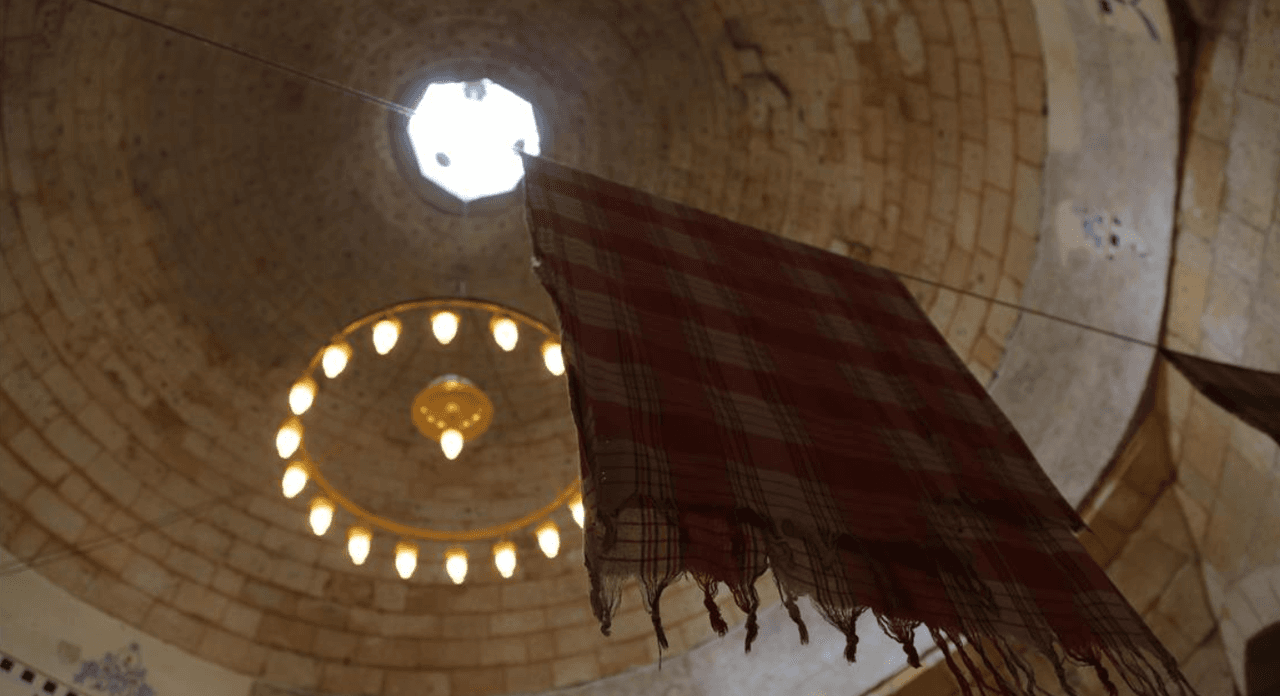
Peştemal (AA)
During their migrations from Central Asia to Anatolia and further into the Balkans, the Turks built civilizational structures—such as caravanserais, baths, madrasas, mosques, and water systems—in every region they settled. During the Seljuk and Ottoman periods, the high value placed on cleanliness and water contributed significantly to the proliferation of baths. The Islamic faith’s emphasis on purity heightened Turkish interest in bath culture, and bathhouses found an important place in architecture, literature, and the fine arts.
During the Ottoman Empire, numerous public baths were constructed in major cities such as Bursa, Edirne, and Istanbul. These structures were made available to the public through the waqf system and gradually transformed from mere places of hygiene into symbolic spaces for socialization and the performance of various folkloric rituals.
Although there are differing views on the uniqueness of Turkish bath architecture, it is widely accepted that bath structures built by Turkish states both within and outside modern-day Türkiye, despite geographical and temporal variations, share common technical features and differ significantly from similar structures in other civilizations. This underscores the development of a distinctive architectural identity for the Turkish bath.
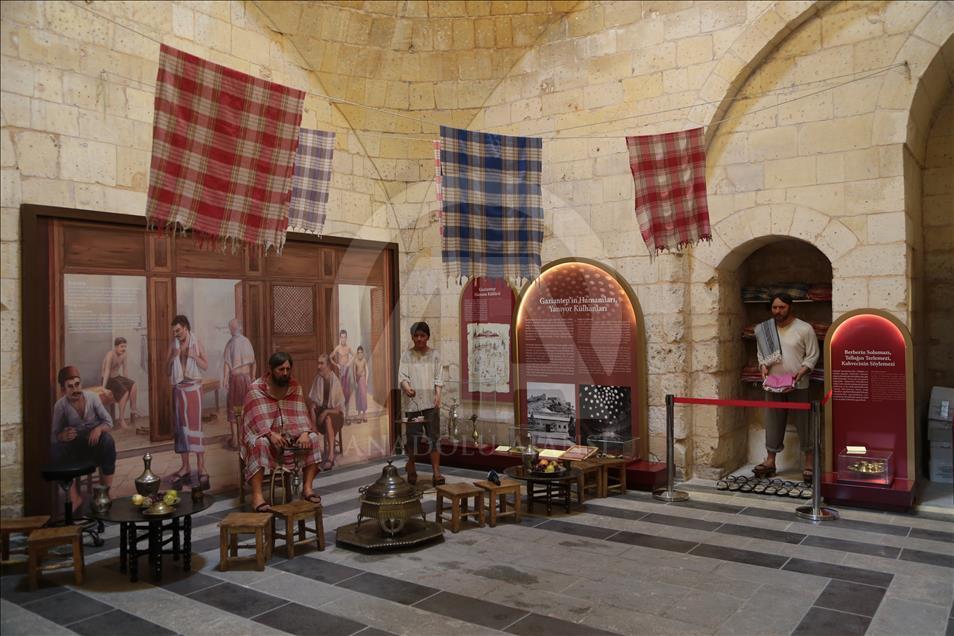
Famous Antep Baths (AA)
A traditional Turkish bath consists of a series of distinct spaces designed to accommodate all stages of the bathing process. Fundamentally, these structures comprise two main volumes: a cold section for preparation and washing, and a heated section composed of interconnected architectural elements that provide hot water and heating.
The main sections and functions of a Turkish bath are as follows:
Turkish baths exhibit a wide variety of floor plans, including square, rectangular, single or multi-ayvan, and single or multi-halvet layouts. For example, the Ani Manuçehr Bath features a four-ayvan and three-to-four corner halvet arrangement, while the Tuz Hisarı Sultan Hanı has a single room without ayvans or halvets. The Göynük Süleyman Paşa Bath has two or three ayvans and two, three, or four halvets. This diversity reflects the flexibility of Turkish architecture and its ability to adapt to local needs.
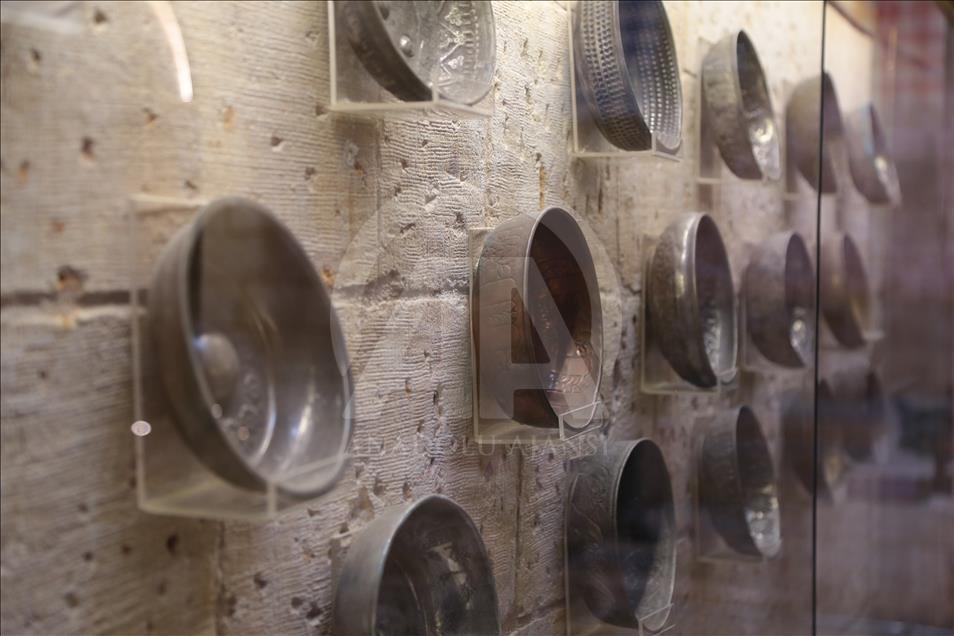
Bath Trays (AA)
Turkish bath culture has acquired an additional dimension through the variety of objects used alongside its rich architecture. These objects are not merely tools for cleansing but have also become integral to social rituals and aesthetic sensibilities. Metal objects used in baths are typically made of tombac, brass, or copper and adorned with exquisite decorative details and craftsmanship reflecting the artistic sensibilities of their periods.
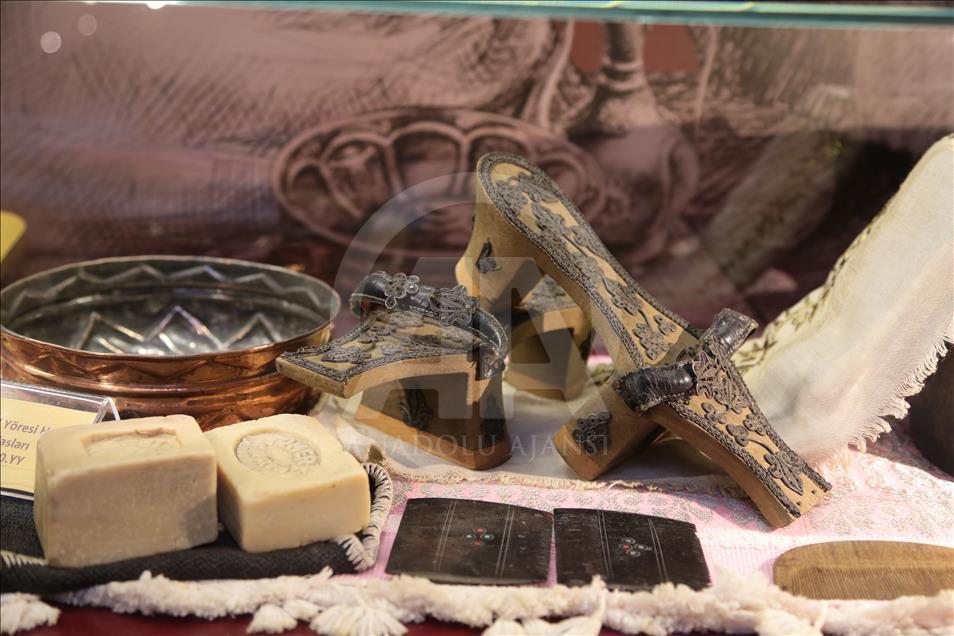
Items Used in the Bath (AA)
The main bath objects are as follows:
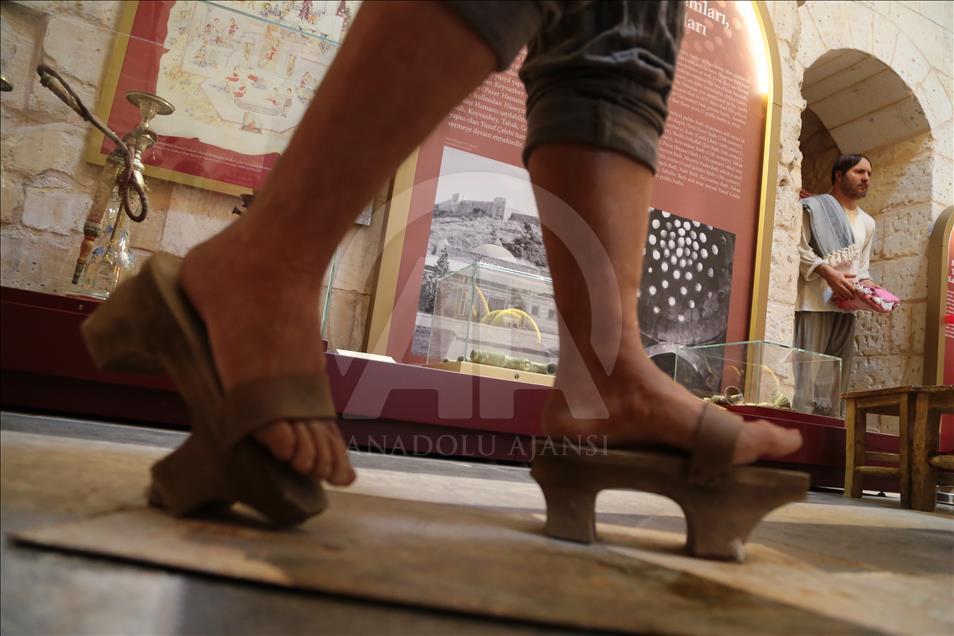
Nalın (AA)
Turkish baths are not merely places of hygiene but significant spaces that have left lasting imprints on the sociocultural life of society. Over time, their functions expanded, and baths became venues for socialization, recreation, and ritual. In the past, exercises could be performed in baths, friendships strengthened, and even initial meetings for marriage arranged. Baths with separate sections or days for men and women served as important social gathering points for both genders.
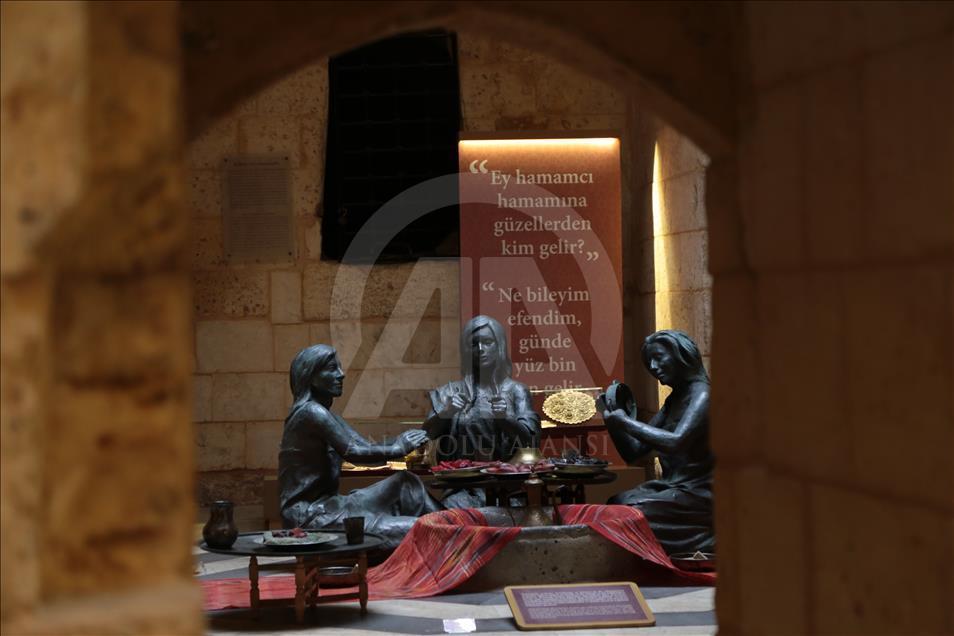
Bridal Bath (AA)
Many traditions associated with bath culture have survived to the present day. Some of these include:
These traditions demonstrate that the bath is not merely a space for physical cleanliness but a multidimensional environment that facilitates spiritual purification, strengthens social bonds, and transmits cultural heritage.
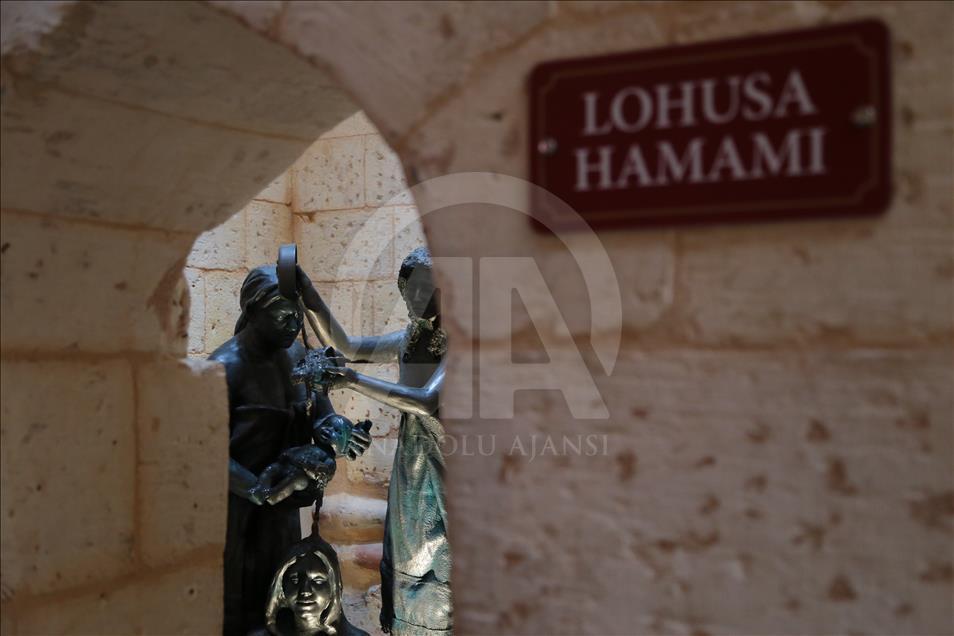
Postpartum Bath (AA)
Baths also functioned as places of rest. Attendants such as tellak (in male baths) and natır (in female baths) are key figures in the bathing ritual.
Turkish baths continue to exist today, having adapted partially to changing conditions, and remain an important part of cultural heritage. In this context, the historical, architectural, functional, and traditional dimensions of the "Turkish bath" are considered within efforts to preserve and sustain both tangible and intangible cultural heritage. Structures such as the Çemberlitaş Hamamı, one of the late works of Mimar Sinan and among the finest examples of bath architecture, are recognized as vital spaces where the traces of social and cultural heritage can be traced. The dedicated preservation of such historic baths is of great importance for the transmission of Turkish bath culture to future generations.
2. Bayezid Turkish Bath Culture Museum (Istanbul University)
Anadolu Ajansı. "Hamam Müzesi Konuklarına Nostalji Yaşatıyor." Accessed July 6, 2025.https://www.aa.com.tr/tr/pg/foto-galeri/hamam-muzesi-konuklarina-nostalji-yasatiyor/147
Avcı, Oğulcan. "Türk Hamamı Mekânları Üzerine Terminolojik Bir Yaklaşım." *Ankara Üniversitesi DTCF Dergisi* 62, no. 2 (2022): 1691-1720.https://dergipark.org.tr/tr/pub/dtcfdergisi/issue/73847/1084118
Avcı, Oğulcan. "Türk Hamamının Özgünlüğü." *Sanat Tarihi Dergisi* 30, no. 2 (2021): 1465-1489. 2025.https://dergipark.org.tr/tr/pub/std/issue/66322/908497
Bozok, Düriye. "Türk Hamamı ve Geleneklerinin Turizmde Uygulanışı." *Balıkesir Üniversitesi Sosyal Bilimler Enstitüsü Dergisi* 8, no. 13 (2005): 62–86.https://dergipark.org.tr/tr/pub/baunsobed/issue/50339/651854
Ertuğrul, Alidost. "Hamam Yapıları ve Literatürü." *Türkiye Araştırmaları Literatür Dergisi* 7, no. 13 (2009): 241-266.https://dergipark.org.tr/tr/download/article-file/653859
Istanbul University. "İstanbul Üniversitesi II. Bayezid Türk Hamam Kültürü Müzesi Tanıtım Klibi." YouTube video, 2:39. July 23, 2015. Accessed July 6, 2025.http://www.youtube.com/watch?v=RGDnDrc0xkg
Kalyoncu, Hülya. "Türk Hamam Kültüründe Metal Objeler ve Objelerin Form ve Bezeme Özellikleri." *Akademik Hassasiyetler* 8, no. 16 (2021): 397-427.https://dergipark.org.tr/tr/pub/akademik-hassasiyetler/issue/64679/944417
Tali, Gürol. "Hamam Kültürü." Social Mentality and Researcher Thinkers Journal 70, no. 70 (2023): 3338-3347.https://www.researchgate.net/publication/370425522_Hamam_Kulturu
Yılmaz, Banu. "Türk Hamam Kültüründe Peştamalın Yeri ve Teknik Özelliklerinin Günümüz Şartlarına Uyarlanması." *Akdeniz Sanat Dergisi* 6, no. 12 (2013).https://dergipark.org.tr/tr/pub/akdenizsanat/issue/27659/291577
Çelik, Elif, and Ali İşık Aydemir. "Türk Hamam Mimarisinin Yapısal ve Mekânsal Özelikleri." *Kent Akademisi* 11, no. 2 (2018): 274-281.https://dergipark.org.tr/tr/pub/kent/issue/38213/409981
Özgen, Özlen. "Kültürel Miras Kapsamında 'Türk Hamamı' Üzerine Bir İnceleme." İletişim Kuram ve Araştırma Dergisi, no. 42 (2016): 111-138.https://dergipark.org.tr/tr/download/article-file/1956820
Ünver, A. Süheyl. "Türk Hamamı." *BELLETEN* 37, no. 145 (1973): 87-94.

No Discussion Added Yet
Start discussion for "Turkish Bath Culture" article
Origins and Historical Evolution of the Hamam
Architectural Structure and Spatial Organization
Objects Used in Bath Culture
Social and Cultural Functions of the Bath
The Place of Turkish Baths in Cultural Heritage and Tourism