


This article was automatically translated from the original Turkish version.
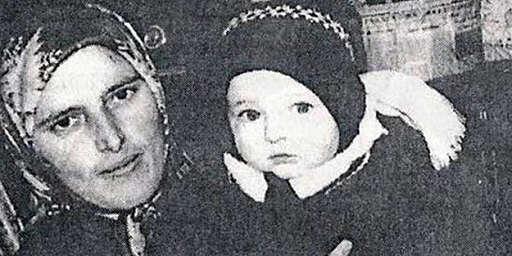
Türkân Bebek, Bulgaristan’da Turk and Muslim minority populations faced forced assimilation policies in the 1980s, and she has become one of its most powerful symbols. On December 26, 1984, while still only 17 months old, she was killed by gunfire from Bulgarian security forces during a peaceful protest she attended with her family.
Under the leadership of Todor Zhivkov, the Bulgarian Communist Party’s “Revival Process” transformed into a campaign of forced assimilation between 1984 and 1985, specifically targeting the Turkish minority through compulsory name changes, the banning of religious practices, the suppression of the Turkish language, and widespread social pressure. During this period, the Muslim identity of Turks was systematically erased. Those who resisted were imprisoned, exiled, or killed. By 1989, these policies had led hundreds of thousands of people to be forcibly migrate to Türkiye.
In December 1984, during a protest in the village of Mogilyane (Yoğurtçular), near Mestanlı (Momchilgrad), 17-month-old Türkân Feyzullah, walking with her mother, was shot in the head by Bulgarian police and killed. In the same incident, a woman named Ayşe Mollahasan also lost her life. Many women and children were injured.
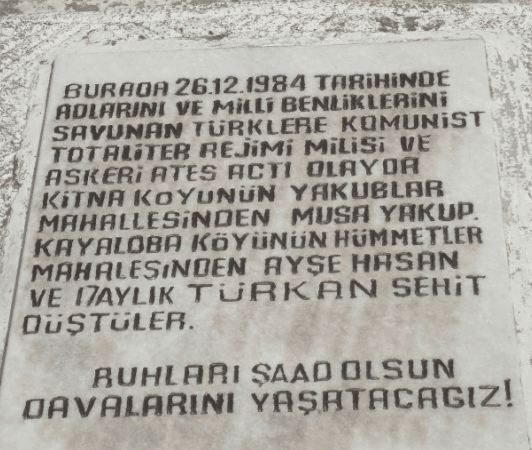
After 1990, as political repression in Bulgaria eased, efforts to reclaim Turkish minority identity intensified, leading to the construction of monuments and fountains in memory of Türkân Bebek. The most well-known is the “Türkân Fountain” in Mogilyane village.
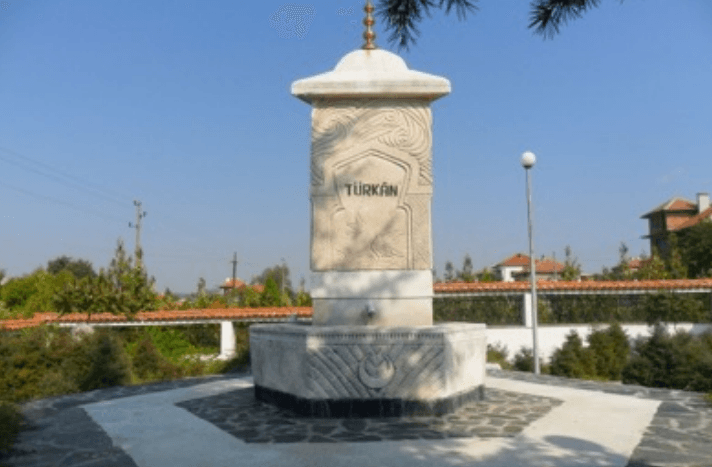
The Türkân Fountain Memorial erected in Mogilyane in 1990 (Mehmet Hacısalihoğlu)
Movement for Rights and Freedoms (MRF) and other political parties and civil society organizations hold annual commemorative ceremonies each December in memory of Türkân Bebek, seen as a testament to the determination of Bulgaria’s Turks to affirm their identity and to keep alive the memory of past suffering.
The death of Türkân Bebek has resonated in artistic works such as poetry, music, and documentaries. The poem “Mestanlı Square” by Süleyman Yusuf Adalı captures the drama of the assimilation process:
And one morning, abandoning
The mountain peaks where they had spent the night,
And pouring tears into their hearts,
They buried their babies,
Their infants frozen by the cold.
And with bare feet treading the snow,
Mehmets, Alis, Ayşes and Zeyneps, in clusters, one by one,
Crossed the village paths,
Climbed over the mountain ridges.
They met.
Their hands, proud and empty as mountains,
Held nothing but clenched fists.
The name of Türkân Bebek also symbolizes the role of Bulgarian Turkish women in resistance. Women emerged not merely as family members but as active participants in the struggle. The number of women who died, were tortured, imprisoned, or exiled during the resistance cannot be underestimated.
Accessed April 11, 2025
Atasoy, Emin and Elif Alkar. "Bulgaristan Müslümanlarını Derinden Etkileyen Yeniden Doğuş Sürecinin Geçiş Döneminde Sorgulanması ve Yargılanması." Uluslararası Yönetim Akademisi Dergisi 1, no. 2 (2018): 54–65.
Hacısalihoğlu, Mehmet. Bulgaristan’da 1984-1989 Zorunlu Asimilasyon ve Etnik Temizlik
Mağdurlarının Anma ve Yas Günleri. Diaspora ve Göç Tarihi Dizisi içinde. YTB Yayınları, 2023.
Yavuz Demir Youtube Kanalı. "TÜRKAN BEBEK TÖRENLE ANILDI." Accessed April 11, 2025.
Zafer, Zeynep. "Bulgaristan’da Zorunlu Asimilasyona Karşı Mücadele ve Kadın." TOBİDER: International Journal of Social Sciences 2, no. 2 (2018): 1–11.

Historical Context: The Revival Process and Forced Assimilation
The Martyrdom of Türkân Bebek
Türkân Fountain and Commemorative Ceremonies
Literary and Artistic Representation
The Role of Women in Resistance and the Symbolism of Türkân Bebek