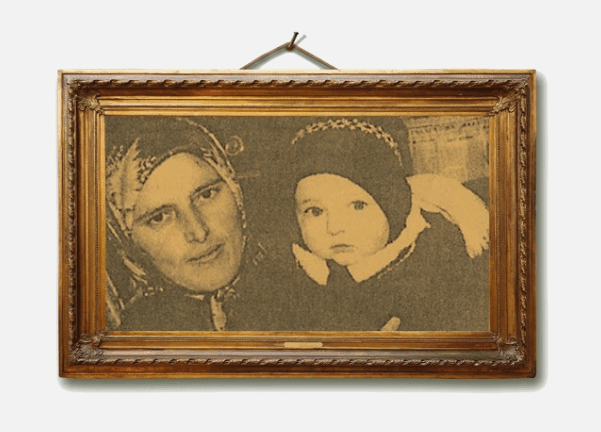

Full Name | Türkan Feyzullah | ||||||||
|---|---|---|---|---|---|---|---|---|---|
Ethnic Origin | Turk | ||||||||
Birth | 1983, Bulgaria | ||||||||
Death | 26 December 1984, Bulgaria | ||||||||
Türkan Bebek (Türkan Feyzullah) was a Turkish child who lost her life at the age of 18 months during peaceful protests against forced name-change policies in Bulgaria on 26 December 1984. The incident occurred during the most intense phase of Bulgaria’s assimilation policies targeting its Turkish and Muslim minorities. Türkan Bebek became one of the civilian victims of this period and has since been remembered as one of the symbolic figures representing the struggle of Bulgaria’s Turkish community for identity, rights and freedom.
Türkan Bebek Ağıdı (A Voice from the Balkans)
Türkan Bebek was born into a family belonging to the Turkish and Muslim minority in Bulgaria. Due to her young age at the time of her death—only 18 months—details about her personal life are limited. Nevertheless, her name is recorded among the youngest civilian casualties of Bulgaria’s forced assimilation campaign.
In the mid-1980s, state policies in Bulgaria mandated the forced alteration of names of the Turkish and Muslim population, restricted cultural and religious practices, and suppressed social resistance through security forces. In December 1984, these policies intensified and were met with peaceful protests, particularly in rural areas.
In December 1984, in the village of Mogilyane (Yoğurtçular), near Mestanlı (Momçilgrad), 18-month-old Türkan Bebek, walking with her mother during a protest, was shot in the head by Bulgarian police gunfire and killed. During the same period, numerous others—including women, children and the elderly—were killed or injured.
Türkan Bebek’s death is one of the emblematic events illustrating the social consequences of Bulgaria’s forced Bulgarization policies between 1984 and 1985. Her death as a young child revealed that the assimilation campaign affected the entire civilian population. In this regard, Türkan Bebek became one of the symbolic names representing human rights violations during that period.
Following the collapse of the socialist regime, the forced assimilation process began to be re-examined in public discourse and academic circles. Within this context, Türkan Bebek has been recognized as a symbolic figure representing the demands of Bulgaria’s Turkish and Muslim minorities for identity, equality and freedom. Monuments and fountains erected in her name serve as sites of remembrance, preserving the collective memory of these events.
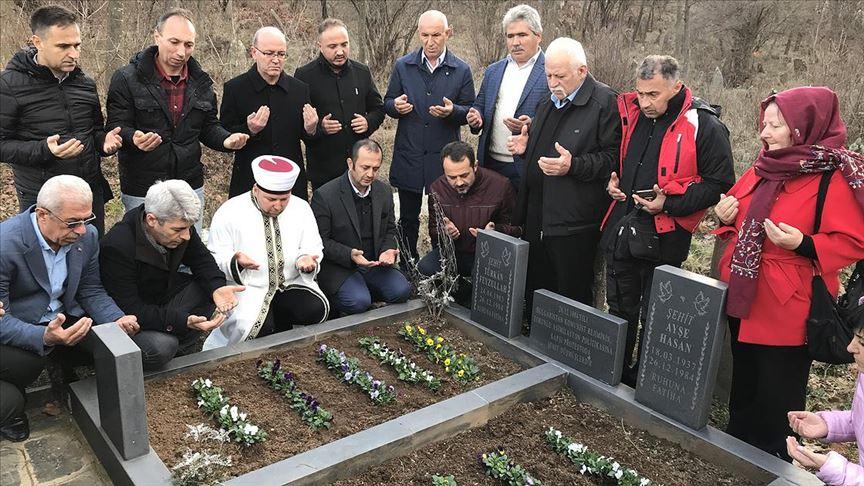
Türkan Bebek, Remembered at Her Grave (AA)
Anadolu Ajansı. "Bulgaristan Türklerinin direnişinin sembolü 'Türkan bebek' ölümünün 35. yılında anıldı." Accessed December 25, 2025. https://www.aa.com.tr/tr/dunya/bulgaristan-turklerinin-direnisinin-sembolu-turkan-bebek-olumunun-35-yilinda-anildi/1680693
Atasoy, Emin, and Elif Alkar. “Bulgaristan Müslümanlarını Derinden Etkileyen Yeniden Doğuş Sürecinin Geçiş Döneminde Sorgulanması ve Yargılanması.” *Uluslararası Yönetim Akademisi Dergisi* 1, no. 2 (2018): 54–65. Accessed https://dergipark.org.tr/en/pub/mana/article/439293
Balkanlardan Bir Ses. "TÜRKAN BEBEK." YouTube. Accessed December 25, 2025. https://www.youtube.com/watch?v=6H_3ajInvOY
YTB. "Bulgaristan Türklerinin Kimlik Mücadelesinin Sembolü: Türkan Bebek." Accessed December 25, 2025. https://ytb.gov.tr/haberler/bulgaristan-turklerinin-kimlik-mucadelesinin-sembolu-turkan-bebek
Zafer, Zeynep. “Bulgaristan’da Zorunlu Asimilasyona Karşı Mücadele ve Kadın.” *TOBİDER: International Journal of Social Sciences* 2, no. 2 (2018): 1–11. Accessed December 25, 2025. https://dergipark.org.tr/tr/download/article-file/600370
Full Name | Türkan Feyzullah | ||||||||
|---|---|---|---|---|---|---|---|---|---|
Ethnic Origin | Turk | ||||||||
Birth | 1983, Bulgaria | ||||||||
Death | 26 December 1984, Bulgaria | ||||||||
Life
Death
Symbolic Significance