


This article was automatically translated from the original Turkish version.
+1 More
Turbojet engines are the first jet engines used in aviation and are propulsion systems that operate using gas turbine technology. Their fundamental operating principle is based on compressing airflow, mixing it with fuel, igniting the mixture, and producing high-velocity exhaust gases. When these exhaust gases are expelled rearward from the engine, they propel the engine forward in accordance with Newton’s action-reaction principle. Turbojet engines are powerful thrust systems that enable aircraft to fly efficiently at high speeds and high altitudes.
The history of turbojet engines extends back to the early 20th century. The earliest principles of jet propulsion encompass an evolution spanning from ancient times to the present, but the foundations of modern turbojet engines were laid particularly in the early 1930s.
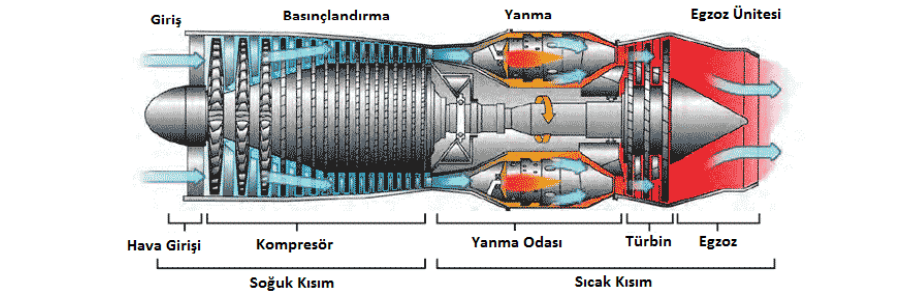
Turbojet Engine Schematic
Subaşı Hilal, Eren Türkoğlu, Kerim Yazıcı, Sefer Çelik, and Özge Erdoğan. PID Control of the Radial Fan of a Turbojet Engine. Master's thesis, Karabük University, 2019. Advisor: Dr. Öğr. Üyesi Cihan Mızrak.
A turbojet engine consists fundamentally of five main components:
Air Intake (Inlet): This section draws air from the atmosphere into the engine. The design of the air intake varies depending on whether the aircraft is flying subsonic or supersonic. The air intake is an important component that affects the engine’s efficiency and performance.
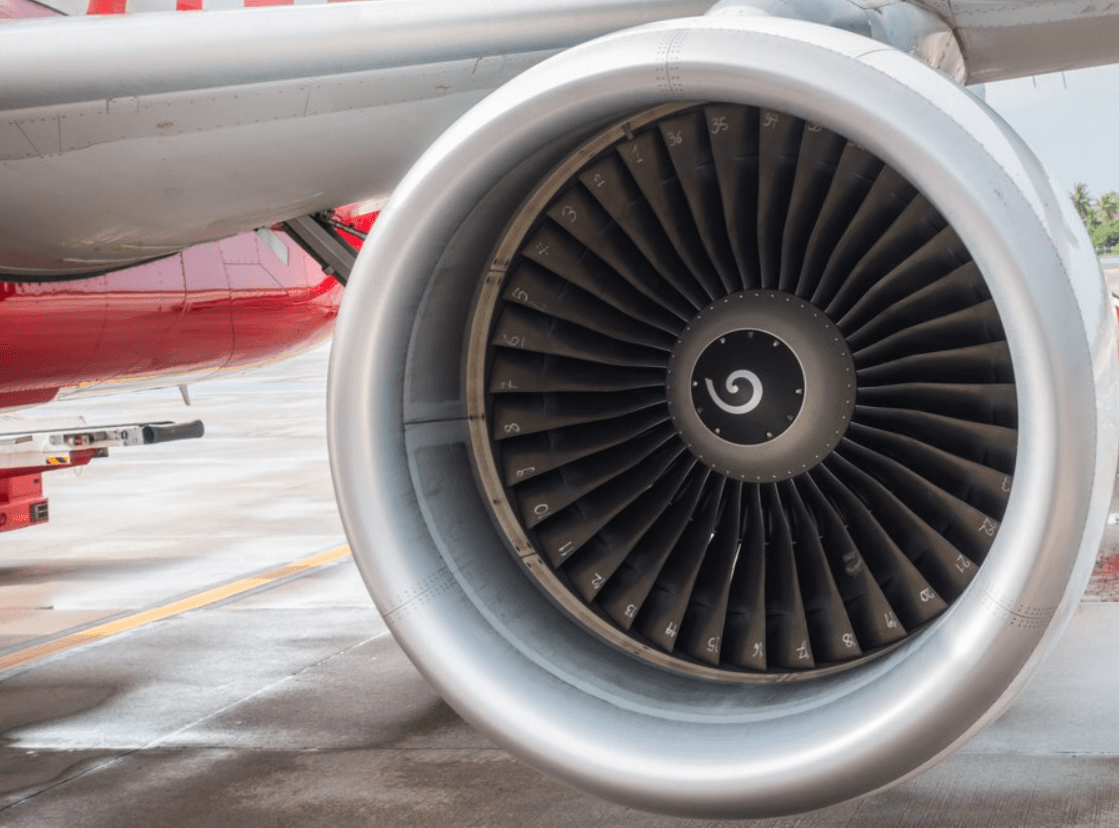
Turbojet Engine Air Intake (Source: Freepik/jannoon028)
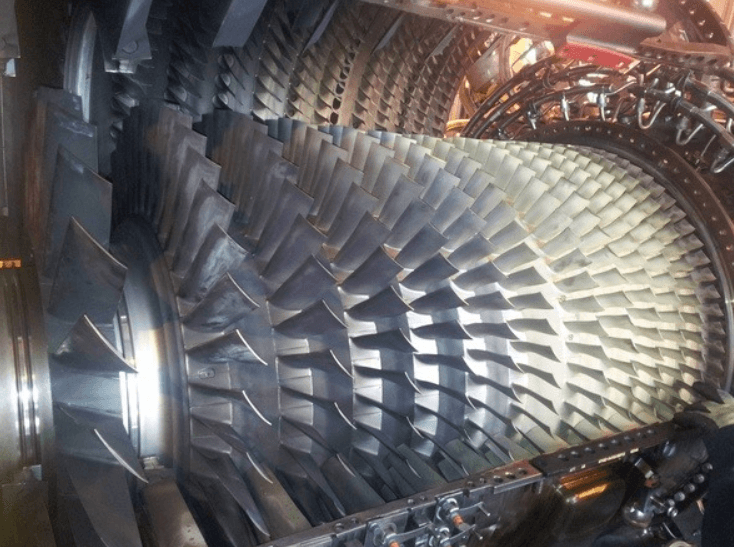
Compressor (Compressor): Air is compressed in the compressor section of the engine. Compressors are typically either axial-flow or centrifugal type. Compression increases air pressure and temperature. This stage determines the engine’s efficiency and power output.
Combustion Chamber (Combustion Chamber): The compressed air is mixed with fuel and ignited here. As a result, high-temperature and high-pressure gases are produced. These high-energy gases are directed toward the engine’s turbine section.
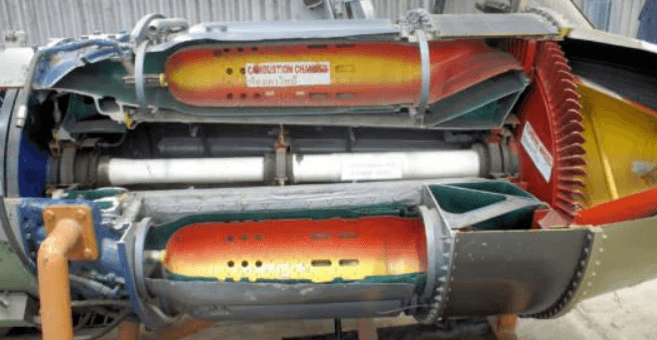
Turbojet Engine Combustion Chamber (Source: DefenceTurk.net)
Turbine (Turbine): The turbine uses the high-energy gases from the combustion chamber to drive the compressor and other components. The turbine ensures the continuous operation of the engine’s cycle.
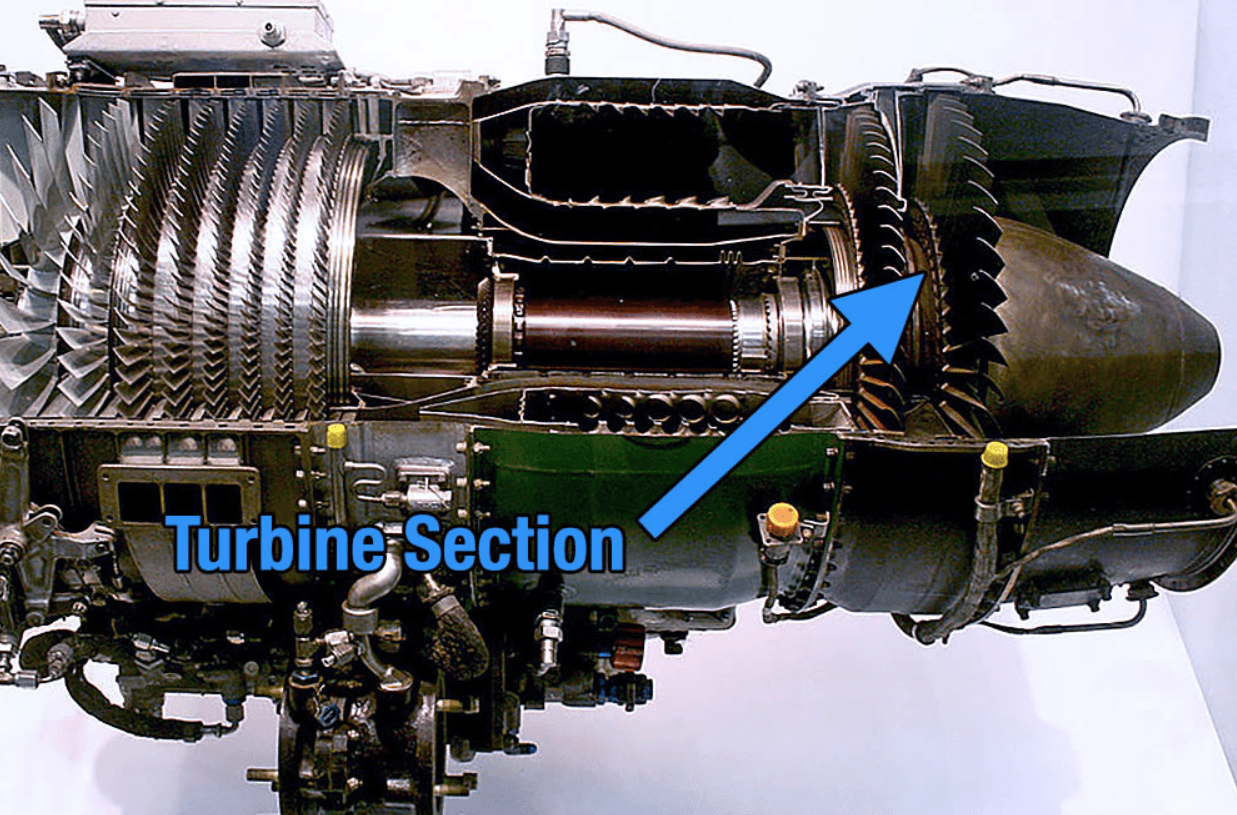
Turbojet Engine Turbine Section (Source: Levtems)
Exhaust Nozzle (Exhaust Nozzle): Gases passing through the turbine accelerate as they exit through the nozzle, pushing against the atmosphere to generate forward thrust. The nozzle optimizes gas velocity and pressure to maximize thrust output.
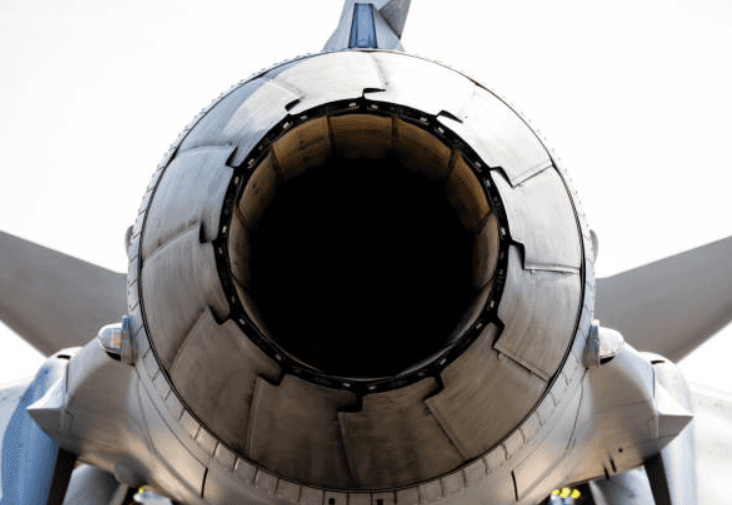
Turbojet Engine Exhaust Nozzle Section (
Turbojet engines first compress incoming air, then mix it with fuel and ignite it, directing the resulting gases to a turbine to generate energy. The turbine provides the necessary energy to sustain the engine’s operation. Finally, the combustion gases are expelled at high speed through the nozzle, generating thrust.
The fundamental principle of the engine is that the high-speed combustion of the fuel-air mixture releases energy that accelerates gases rearward. This rearward thrust propels the aircraft forward.
Turbojet engines are categorized into several types, each with distinct applications and performance characteristics:
In line with its goals of domestic production and technological independence in the defense industry, Türkiye has taken several important steps in recent years. The development of turbojet engines has emerged as a significant milestone in this process. The “Development of Turbojet Engines Project,” carried out by Kale Arge and the Presidency of Defense Industries, has achieved a major success in advancing Türkiye’s indigenous missile propulsion systems.
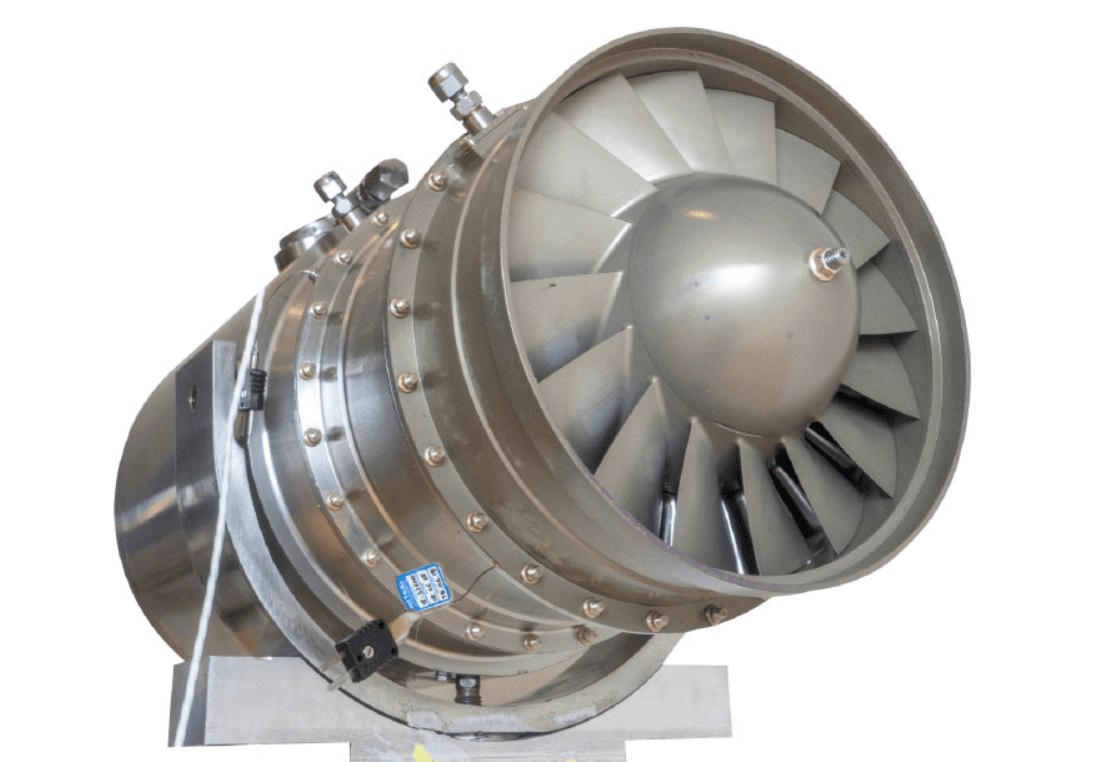
KTJ-3200 Turbojet Engine ( Source: Defence Turkey)
The KTJ-3200, Türkiye’s first national turbojet engine, was developed by Kale Jet Engines and has been deployed in indigenous missile systems. Designed to power the ATMACA and SOM missiles, this engine is entirely produced using domestic resources. The development of the KTJ-3200 represents a significant step for Türkiye’s defense industry. Its domestic production has reduced the country’s dependence on foreign suppliers and provided a critical solution to various export restrictions.
Defence Turkey. "Kale Ar-Ge ve Milli Turbojet Motor Çözümleri." Defence Turkey. Last modified January 4, 2025.https://www.defenceturkey.com/tr/icerik/kale-arge-ve-milli-turbojet-motor-cozumleri-5075.
Ekici, Selçuk, Yasin Şöhret, and Tahir Hikmet Karakoç. Performance Evaluation Parameters for Turbojet Engines.
Kahvecioğlu, Sinem, Ramazan Kale, Dilek Turan, Enis Turhan Turgut, and Nevzat Kaya. Uçak Bilgisi ve Uçuş İlkeleri. Anadolu Üniversitesi Yayını No: 3301, Açıköğretim Fakültesi Yayını No: 2164. Edited by Dilek Turan.
Makaleler.com. "Jet Motoru Nedir, Nasıl Çalışır, Çeşitleri Nelerdir?" Makaleler.com. Accessed January 4, 2025.https://www.makaleler.com/jet-motoru-nedir-nasil-calisir-cesitleri-nelerdir.
Milli Eğitim Bakanlığı. Uçak Bakım: Uçak Motorları. 525MT0035. Ankara: Milli Eğitim Bakanlığı, 2012.
Savunma Sanayiist. "Turbojet Motorların Geliştirilmesi Projesi Başarıyla Tamamlandı." Last modified January 4, 2025.https://www.savunmasanayist.com/turbojet-motorlarin-gelistirilmesi-projesi-basariyla-tamamlandi/#:~:text=Kale%20Jet%20Motorlar%C4%B1%20taraf%C4%B1ndan%20geli%C5%9Ftirilen,Geli%C5%9Ftirilmesi%20Projesi'%20ba%C5%9Far%C4%B1yla%20tamamlanm%C4%B1%C5%9F%20oldu.
Sivil Havacılık Teknoloji Bülteni. Gaz Türbinli Motorların Gelişimi ve Türleri.
Stratus Havacılık. "Jet Motoru Nedir ve Nasıl Çalışır?" Stratus Havacılık. Accessed January 4, 2025.https://stratushavacilik.com/jet-motoru-nedir-ve-nasil-calisir/.
Subaşı, Hilal, Eren Türkoğlu, Kerim Yazıcı, Sefer Çelik, and Özge Erdoğan. Turbojet Motorun Radyal Fanının PID Kontrolü. Master's thesis, Karabük University, 2019. Advisor: Dr. Öğr. Üyesi Cihan Mızrak.
TRT Haber. "Türkiye'nin İlk Milli Turbojet Motoru Test Edildi." TRT Haber, Last modified January 4, 2025.https://www.trthaber.com/haber/savunma/turkiyenin-ilk-milli-turbojet-motoru-test-edildi-533043.html.

Historical Development
Components of Turbojet Engines
Operating Principle of Turbojet Engines
Types of Turbojet Engines
Advantages and Disadvantages of Turbojet Engines
Advantages
Disadvantages
Turbojet Engine Development in Türkiye
Kale Arge and the National Turbojet Engine: KTJ-3200