


This article was automatically translated from the original Turkish version.
+1 More
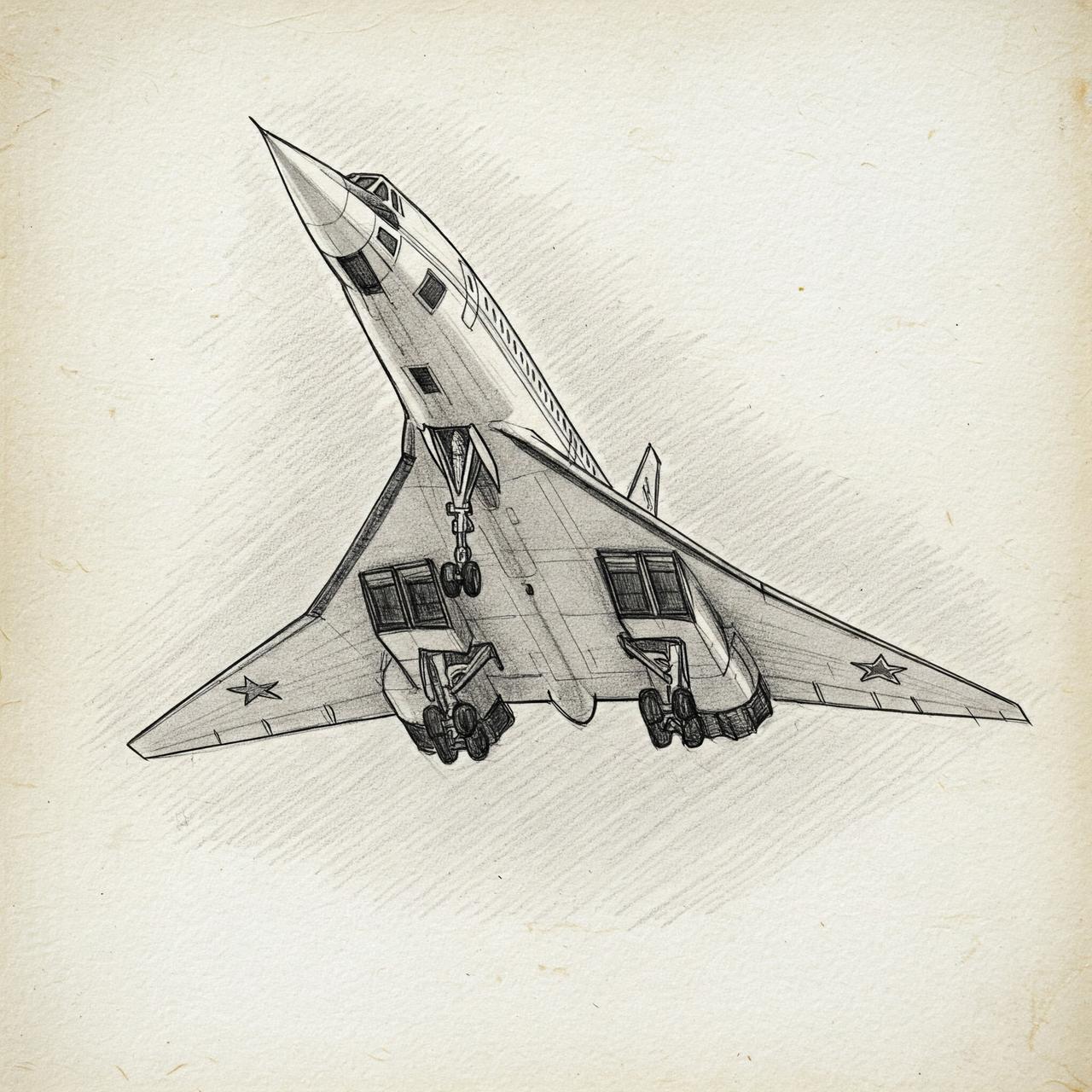
Tupolev Tu-144
Category | Supersonic passenger aircraft | ||||||||
|---|---|---|---|---|---|---|---|---|---|
Origin(s) | Soviet Union (Tupolev) | ||||||||
First Flight and Entry into Service Year | First flight: 31 December 1968 Entry into service: 1975 | ||||||||
Number Produced | 16 units | ||||||||
Engine and Power System | 4 Kuznetsov NK-144 turbofan engines | ||||||||
Users | Aeroflot (limited commercial use), NASA (for research purposes) | ||||||||
Dimension(s) | Length: Approximately 65.7 meters Wingspan: Approximately 28.8 meters Height: Approximately 12.5 meters | ||||||||
Weight(s) | Empty weight: Approximately 99 000 kg 200 kg Maximum takeoff weight: Approximately 207 | ||||||||
Performance | Maximum speed: Approximately Mach 2.15 (2,500 km/h) Range: Approximately 6,500 km Maximum altitude: 20,000 m | ||||||||
Tupolev Tu-144 is a supersonic passenger aircraft developed in the Soviet Union in the mid-1960s. The project aimed to demonstrate Soviet engineering capability and lead the way in civil supersonic air transport.
The Tupolev Tu-144, designed by a team team led by Alexey Tupolev, was the world’s first supersonic passenger aircraft. It made its maiden flight on 31 December 1968, becoming the first airplane to achieve supersonic passenger flight before the Concorde. Equipped with four Kuznetsov NK-144 turbofan engines capable of reaching Mach 2.15, the aircraft had a passenger capacity of 140 to 150. The Tu-144 attracted attention with its advanced aerodynamics design and engine technology and holds a significant place in aviation history important.

Tupolev Tu-144 (Pixabay)
The Tupolev Tu-144 is an important example that highlights both the potential and the challenges of supersonic passenger transport. This aircraft served as a symbol showcasing the technological capabilities of the Soviet aviation industry. Today some Tu-144 aircraft are displayed in museums shedding light on aviation history. Developed during the same period as the Concorde the Tu-144 had very high development and operational costs. Its withdrawal from service was due to both technical and economic factors.
The development of the Tupolev Tu-144 was intended to symbolize the technological superiority of the Soviet Union and therefore carried significant importance supply on both technical and political levels. Despite playing a pioneering role in supersonic passenger transport the Tu-144 failed to achieve the commercial success that was anticipated.

Tupolev Tu-144 (Pixabay)
Baykal, Osman Gazi. "SİVİL HAVACILIKTA KİLOMETRE TAŞI: CONCORDE ve TUPOLEV Tu-144." Airkule. Accessed April 15, 2025. https://www.airkule.com/yazar/SIVIL-HAVACILIKTA-KILOMETRE-TASI-CONCORDE-ve-TUPOLEV-Tu-144/2803/
HavaHaber. "Tupolev Tu-144 Nedir, Hangi Ülkenin ve Kaç Kişilik Tupolev Tu-144 Yolcu Uçağı Özellikleri ve Üretim Tarihi." Accessed April 15, 2025. https://havahaber.com/tupolev-tu-144-nedir-hangi-ulkenin-ve-kac-kisilik-tupolev-tu-144-yolcu-ucagi-ozellikleri-ve-uretim-tarihi/
Strategic Research Center. "Tupolev Tu-144 Was the World’s First Supersonic Passenger Aircraft, but Never Escaped the Shadow of the Concorde." Accessed April 15, 2025. https://strasam.org/savunma/havacilik-ve-uzay-sanayii/tupolev-tu-144-dunyanin-ilk-supersonik-yolcu-ucagiydi-ama-concordeun-golgesinden-hic-cikamadi-3382

Tupolev Tu-144
Category | Supersonic passenger aircraft | ||||||||
|---|---|---|---|---|---|---|---|---|---|
Origin(s) | Soviet Union (Tupolev) | ||||||||
First Flight and Entry into Service Year | First flight: 31 December 1968 Entry into service: 1975 | ||||||||
Number Produced | 16 units | ||||||||
Engine and Power System | 4 Kuznetsov NK-144 turbofan engines | ||||||||
Users | Aeroflot (limited commercial use), NASA (for research purposes) | ||||||||
Dimension(s) | Length: Approximately 65.7 meters Wingspan: Approximately 28.8 meters Height: Approximately 12.5 meters | ||||||||
Weight(s) | Empty weight: Approximately 99 000 kg 200 kg Maximum takeoff weight: Approximately 207 | ||||||||
Performance | Maximum speed: Approximately Mach 2.15 (2,500 km/h) Range: Approximately 6,500 km Maximum altitude: 20,000 m | ||||||||
Development and Technical Specifications
Commercial Use and Challenges
Legacy and Significance
Additional Information: