This article was automatically translated from the original Turkish version.
+1 More
Registration Number | 1330 | ||||||||
|---|---|---|---|---|---|---|---|---|---|
Registration Date | 30.01.2023 | ||||||||
Application Number | C2021/000184 | ||||||||
Application Date | 12.04.2021 | ||||||||
Name of the Geographical Indication | Tufanbeyli Kuru Fasulyesi | ||||||||
Product / Product Group(s) | Kuru Fasulye / İşlenmiş ve İşlenmemiş Meyve ve Sebzeler ile Mantarlar | ||||||||
Type of Geographical Indication | Mahreç İşareti | ||||||||
Applicant/Registrant(s) | Kozan Ticaret Odası | ||||||||
Address of the Registrant | Cumhuriyet Mah. Emniyet Sok. Irmak Cad. Kozan ADANA | ||||||||
Geographical Boundary | Adana İli Tufanbeyli İlçesi | ||||||||
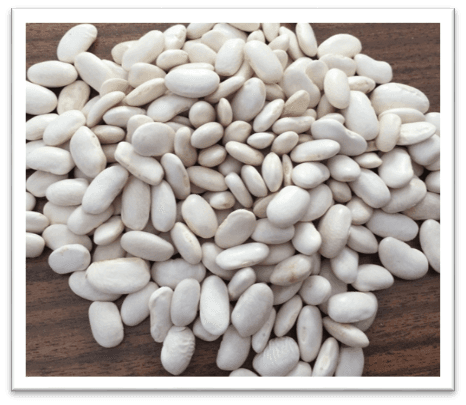
Tufanbeyli dry bean is a local variety of dry bean belonging to the species Phaseolus vulgaris L. and Phaseolus coccineus, cultivated in the Tufanbeyli district of Adana province. Classified as a “battal” type, this bean is distinguished by its white, kidney-shaped, oval-flat seeds. The product is shaped by the region’s unique climatic conditions and its clay-loam soil structure at high elevations (1300–1400 m) and is produced from local seeds.
The Tufanbeyli district has soils at elevations of 1300–1400 metres, with annual precipitation of 450–500 mm, clay-loam or loamy texture, pH values between 6.5 and 7.5, high potassium content, and moderate salinity levels. These conditions are favourable for dry bean cultivation, which benefits from a short and productive vegetative cycle. Seeds are typically sown between 5 and 10 May; the ideal soil temperature for germination is 20–30°C, and the optimal temperature range for plant development is 20–25°C.
Tufanbeyli dry bean is classified as a “battal” type with medium-sized, white, kidney-shaped, oval-flat (compressed) seeds. Despite its thick seed coat, it has a high water absorption capacity (water uptake index 1.05–1.10%; swelling index 2.25–2.32%), resulting in a short cooking time of 20–27 minutes.
The weight of 100 seeds ranges from 38.74 to 45.11 g; fresh weight from 39.44 to 45.17 g; dry volume from 132 to 137 ml; and wet volume from 222 to 236 ml. Protein content is between 23.09% and 24.36%. The plant exhibits a spreading growth habit with light green terminal leaves. Plant height ranges from 100 to 170 cm, with the first pod forming at a height of 15–25 cm. The number of main stems per plant is 1–3, and the total number of pods per plant is 43–55. The number of seeds per plant varies between 218 and 300, averaging 4–6 seeds per pod. Yield per unit area measures 158–162 kg/ha.
Before planting, it is essential to prepare a seedbed that is free of clods and uniformly leveled. This process begins with plowing to a depth of 8–12 cm using tools such as a harrow or cultivator, followed by finishing with a disk harrow, tine harrow, or rotary tiller. These operations are carried out while preserving soil moisture to support healthy germination.
Sowing is conducted after the last spring frosts, when soil temperature reaches at least 15°C. In local production, seed material from the previous year is typically used. Sowing is carried out either in rows (40–50 cm apart) or in pits (10–15 cm between rows), using 8–10 kg of seed per hectare.
Based on soil analysis, 10–12 kg of DAP fertilizer (diammonium phosphate) per hectare is applied at the time of sowing. No top-dressing is applied.
The crop requires 400–450 mm of water during its growth period. No irrigation is applied until just before flowering; thereafter, 4–8 sprinkler irrigations are carried out. Sprinkler irrigation is not recommended during flowering due to the risk of flower drop.
The ideal time for harvest begins when pods turn yellow and seeds acquire their characteristic colour. After hand harvesting, plants are dried in the field for 5–6 days, followed by threshing using a flail. After removing broken seeds, the product is stored in food-safe packaging of 25 or 50 kg, at temperatures below 20°C, in dry and well-ventilated storage facilities.
Due to its local population origin, Tufanbeyli dry bean may contain up to 2% atypical individuals. White flower colour is a distinguishing feature compared to other varieties. The short cooking time is an indicator of its geographical linkage. The high elevation, climate, and soil characteristics of the Tufanbeyli district are the primary factors determining the product’s unique qualities.
Monitoring of compliance with the geographical indication is carried out by a four-member inspection unit composed of experts from the Tufanbeyli District Directorate of Agriculture and Forestry, the Tufanbeyli Chamber of Agriculture, and the Adana Provincial Directorate of Agriculture and Forestry, coordinated by the Kozan Chamber of Commerce. Inspections are conducted at least once annually and may be repeated if necessary or in response to complaints. Inspection criteria include seed use, adherence to production methods, product characteristics, and proper use of the indication/logo.
Turkish Patent and Trademark Office. "Tufanbeyli Kuru Fasulyesi." *Coğrafi İşaretler Portalı*. Accessed August 16, 2025. https://ci.turkpatent.gov.tr/cografi-isaretler/detay/4063.
Türk Patent ve Marka Kurumu. "Tufanbeyli Kuru Fasulyesi Coğrafi İşaret Belgesi." Accessed August 16, 2025. https://ci.turkpatent.gov.tr/Files/GeographicalSigns/29bf7243-679e-48f8-ab76-e8659effed21.pdf.

Registration Number | 1330 | ||||||||
|---|---|---|---|---|---|---|---|---|---|
Registration Date | 30.01.2023 | ||||||||
Application Number | C2021/000184 | ||||||||
Application Date | 12.04.2021 | ||||||||
Name of the Geographical Indication | Tufanbeyli Kuru Fasulyesi | ||||||||
Product / Product Group(s) | Kuru Fasulye / İşlenmiş ve İşlenmemiş Meyve ve Sebzeler ile Mantarlar | ||||||||
Type of Geographical Indication | Mahreç İşareti | ||||||||
Applicant/Registrant(s) | Kozan Ticaret Odası | ||||||||
Address of the Registrant | Cumhuriyet Mah. Emniyet Sok. Irmak Cad. Kozan ADANA | ||||||||
Geographical Boundary | Adana İli Tufanbeyli İlçesi | ||||||||
No Discussion Added Yet
Start discussion for "Tufanbeyli Dried Beans" article
Geographical and Ecological Characteristics
Morphological and Technological Characteristics
Production Process
Field Preparation
Sowing
Fertilization
Irrigation
Growth and Harvest Schedule
Harvest and Storage
Distinguishing Features and Geographical Link
Monitoring Mechanism