This article was automatically translated from the original Turkish version.
+2 More
Production Site | German Democratic Republic (GDR) Zwickau | ||||||||
|---|---|---|---|---|---|---|---|---|---|
Producer | VEB Sachsenring Automobilwerke Zwickau | ||||||||
Years of Production | 1957–1991 | ||||||||
Total Production | Approximately 3.7 million units | ||||||||
Body Material | Duroplast (a mixture of cotton fiber and phenolic resin) | ||||||||
Engine Type | Two-stroke, two-cylinder, air-cooled | ||||||||
Maximum Speed | Approximately 100 km/h | ||||||||
Most Common Model | Trabant 601 (1963–1990) | ||||||||
Symbolic Role | Symbol of freedom at the fall of the Berlin Wall | ||||||||
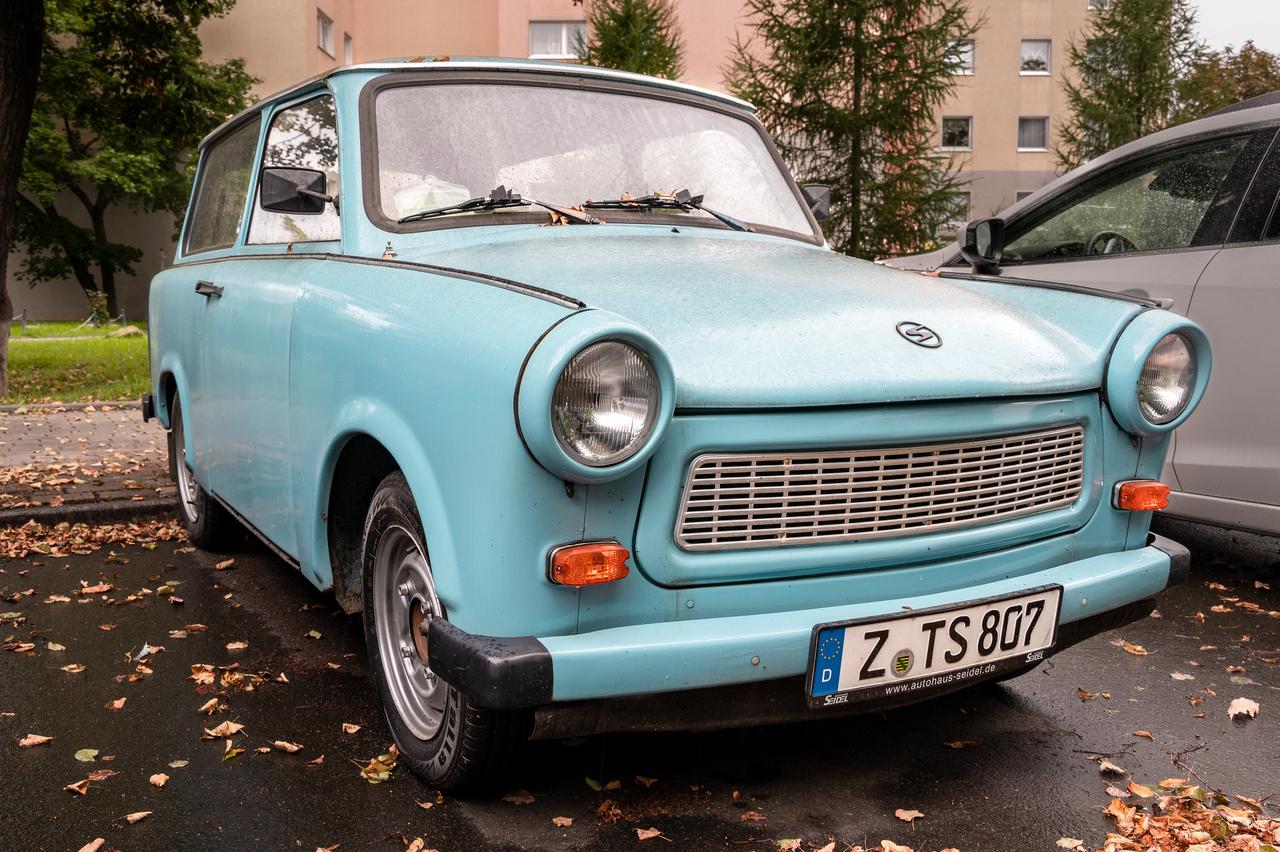
The Trabant was an automobile produced between 1957 and 1991 at the state-owned VEB Sachsenring Automobilwerke Zwickau factory in East Germany. It was known for its two-stroke engine and a unique body material called Duroplast. Commonly referred to by the public as “Trabi,” it became the most common way for citizens of the German Democratic Republic (GDR) to own a private vehicle. At the same time, it also became one of the symbols of the socialist system’s economic shortcomings due to its limited production capacity, long waiting times, and technical deficiencies.
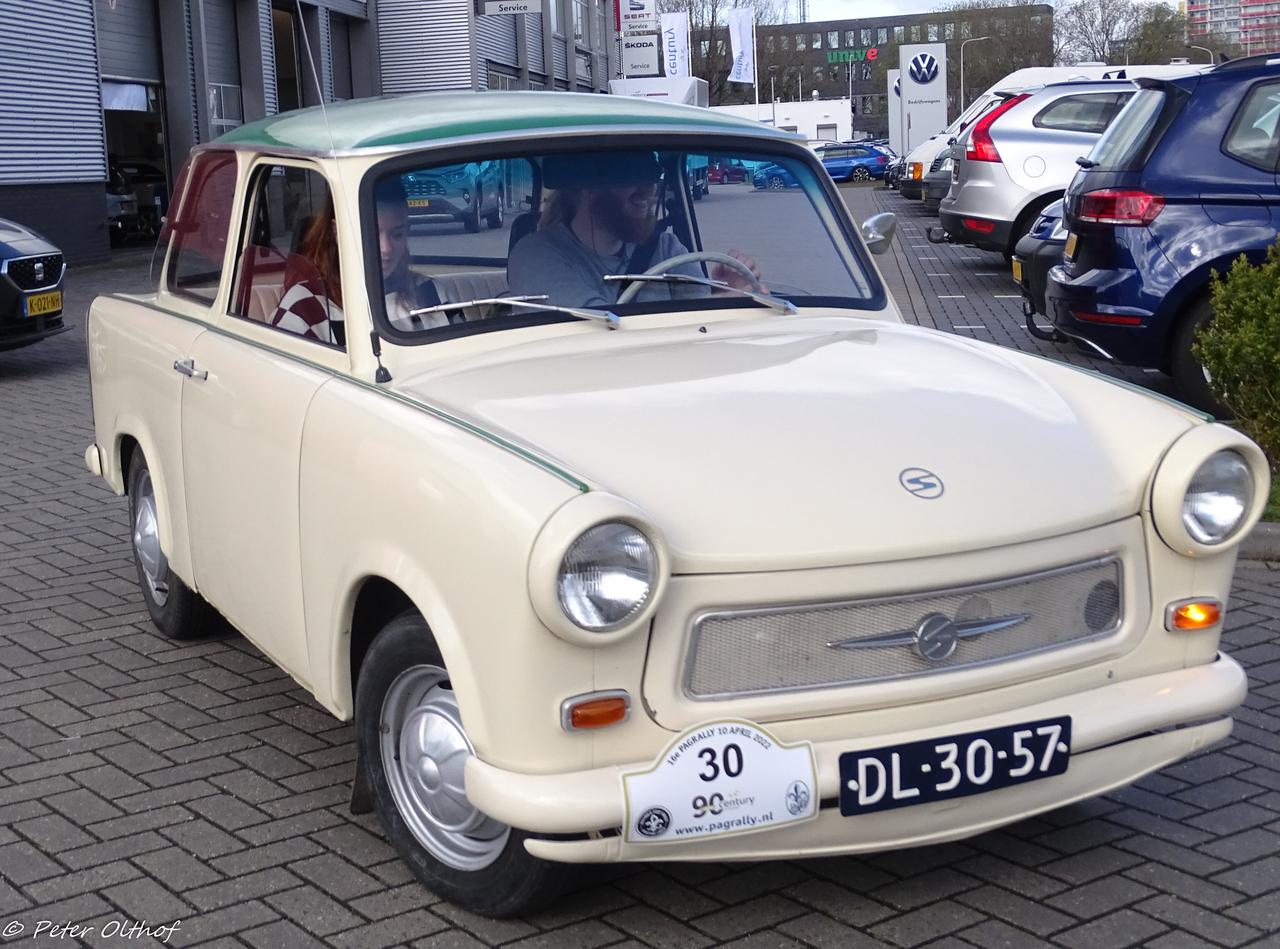
1970 Model Trabant 601 (peterolthof)
The first model, the P50, was introduced in 1957. Its front-wheel drive system was relatively innovative for its time. The Trabant’s distinctive body was coated with Duroplast, a lightweight and rust-resistant plastic made from a mixture of cotton fibers and phenolic resin. The engine was a two-cylinder, two-stroke, air-cooled unit producing 26 horsepower and running on a mixture of oil and gasoline.
The maximum speed of a standard Trabant was approximately 100 km/h; it took about 21 seconds to accelerate from 0 to 100 km/h. The vehicle had no fuel gauge; instead, fuel level was measured using a dipstick.
The most produced model, the Trabant 601, remained in production from 1963 to 1990, with approximately 2.8 million units manufactured. The final version, the Trabant 1.1, introduced in 1990, was equipped with Volkswagen engines but was discontinued after only 39,474 units were produced due to high cost and poor performance. Total production of the Trabant family exceeded 3.7 million units.
Trabant Review (Doğan Kabak)
For the East German population, the Trabant was more than just a vehicle—it was a social status symbol. On average, prospective owners had to wait 10 to 13 years to receive one. The purchase process typically began with major life events such as birth or marriage, with delivery occurring years later. The average worker’s annual salary was barely sufficient to cover the car’s price. As the primary model through which the general public could acquire a private vehicle, the Trabant was widely used for daily transportation.
The vehicle was also used by police forces and the Stasi (Ministry for State Security). Trabants served as patrol vehicles along border areas and in urban security operations; particularly the Trabant Kübel variant was adapted for military and police use. The Stasi employed specially equipped Trabants for surveillance and tracking operations. One example on display at the German Spy Museum in Berlin features a camera system integrated into the door panel, developed in cooperation with Carl Zeiss, featuring laser distance measurement with automatic focusing, 12 infrared flashes, and concealed recording mechanisms. The system could operate while the vehicle was in motion and capture photographs at distances of up to approximately 20 meters.
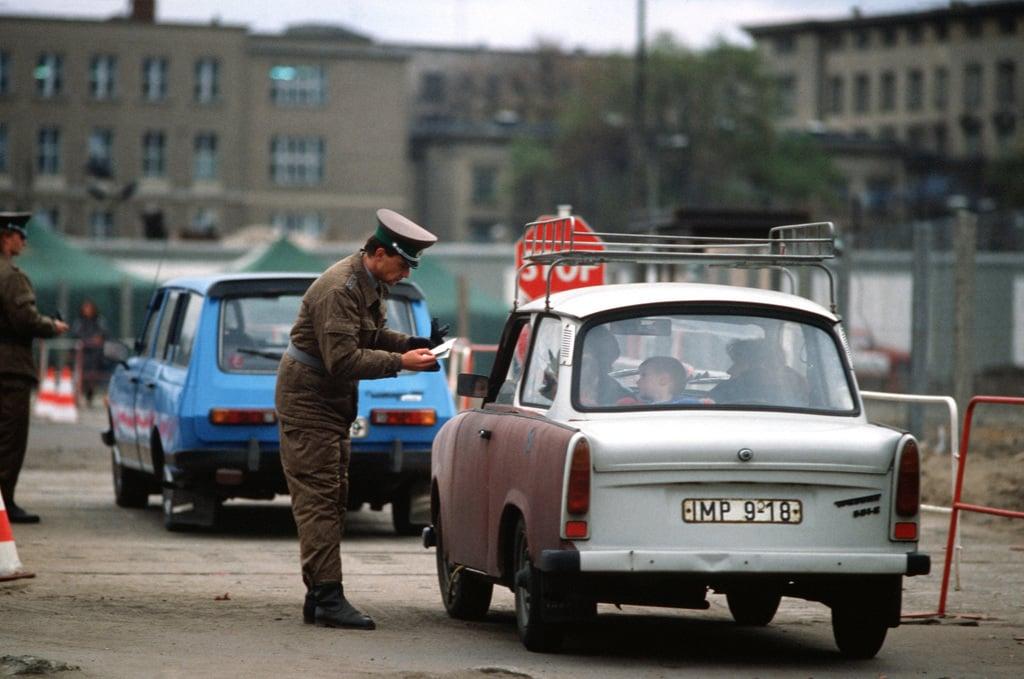
An East German Policeman Monitors Traffic Returning to East Berlin Through the Berlin Wall (National Archives (NARA))
During the years of the Berlin Wall, the Trabant was involved in both failed and successful escape attempts. One common method used by those fleeing East Germany for West Germany was modifying the interior of Trabants to create hidden compartments. Escape planners would remove the rear seats entirely and convert the resulting space into a concealment area; a person would lie within, covered with blankets, suitcases, and everyday items to make the vehicle appear as a regular cargo carrier. Similarly, in some attempts, the trunk floor was lifted and a person was carefully placed into the space where the spare tire was stored, then covered again with tools, fabric rolls, or food crates. This allowed the Trabant to appear ordinary from the outside and offered hope of passing border checkpoints undetected.
Some documented incidents include:
Moreover, Trabant parts were not only used in escape vehicles but also in various engineering projects. For example, in 1984, Czechoslovakian Ivo Zdarsky built his own microplane using a Trabant engine and fuel tank, and escaped to Austria by air.
It is known that various hiding spaces were constructed within the Trabant’s body and interior to conceal individuals and transport them to the West. In this context, the Trabant served both as a direct means of attempting to cross borders by vehicle and as a vehicle used in concealment and transport cases.
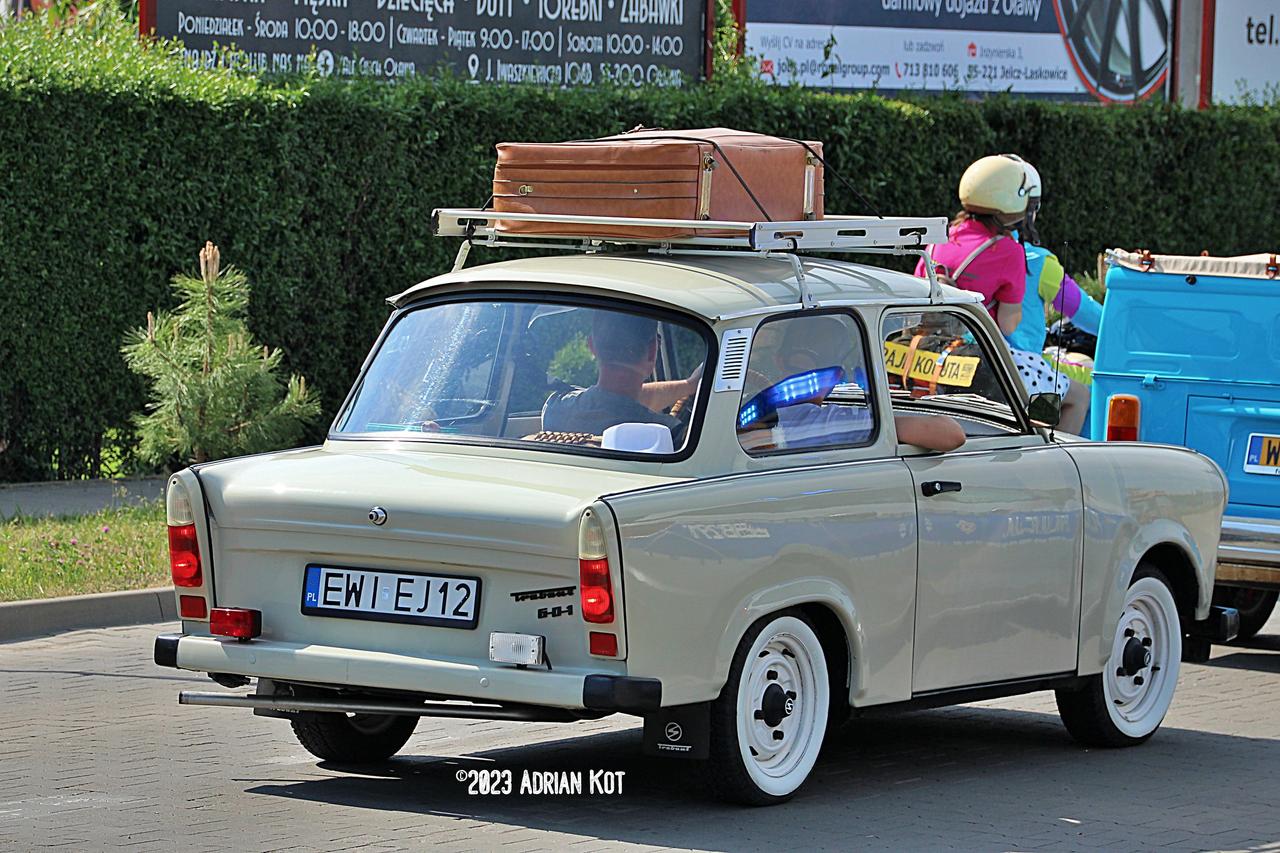
1990 Model Trabant (Adrian Kot)
Following the fall of the Berlin Wall on 9 November 1989, thousands of East German citizens crossed into the West in their Trabants. This event became known in history as the “Trabi Trail.” However, most of these vehicles were quickly abandoned or scrapped due to their failure to meet environmental standards and their outdated technology.
Nevertheless, the Trabant became a symbol of freedom during the reunification process. In a special CNN documentary marking the 25th anniversary of the fall of the Berlin Wall, a Trabant 601 was transformed into an art piece and displayed as a public “memorial object” bearing thousands of signatures.
After the end of the Cold War, the Trabant was reevaluated as a historical artifact representing everyday life and economic conditions in East Germany.
At these events, the Trabant is no longer seen as “the ordinary vehicle of the Eastern Bloc,” but as a tangible witness to history.
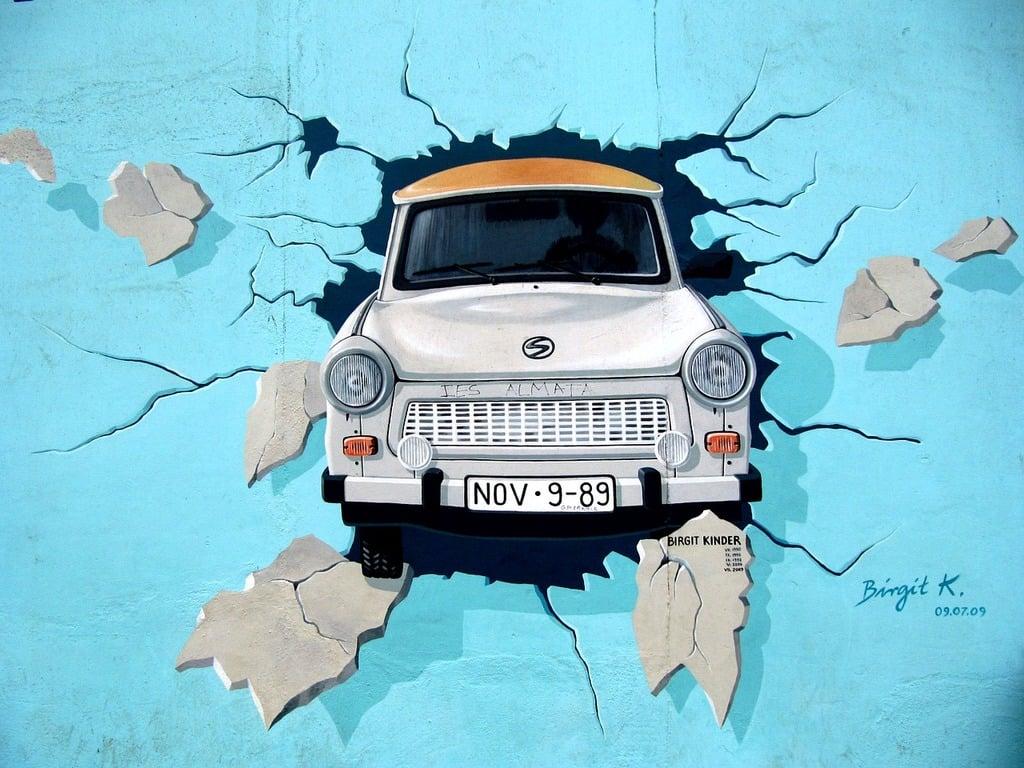
Trabant and Berlin Wall Drawing (Picryl)
The Trabant was a technically modest and economically constrained vehicle, yet profoundly symbolic in historical terms. It reflected both the industrial capacity of East Germany and the population’s yearning for individual freedom. The mass crossing of thousands of Trabants into the West after the fall of the Berlin Wall was not merely a transportation movement—it symbolized the end of an era. Today, the Trabants seen in museums and city streets are among the rare surviving artifacts that convey the daily life of the Cold War and the struggle for human freedom.
Branch, Ben. “The East German Trabant 601 – The Worst Car Ever Made.” Silodrome. Accessed October 8, 2025.https://silodrome.com/trabant-car/
Chronik der Mauer. “Gescheiterte Flucht Eines 33-Jährigen mit Einem Pkw Marke Trabant am Grenzübergang Drewitz nach Berlin-Zehlendorf, 8 August 1989.” Accessed October 8, 2025.https://www.chronik-der-mauer.de/fluchten/180942/gescheiterte-flucht-eines-33-jaehrigen-mit-einem-pkw-marke-trabant-am-grenzuebergang-drewitz-nach-berlin-zehlendorf-8-august-1989#:~:text=Ein%2033%2DJ%C3%A4hriger%20aus%20Belzig,aller%20Sperr%2D%20und%20Sicherungseinrichtungen%20aus
Das Bunderarchiv. “Flucht nach Westberlin.” Accessed October 8, 2025.https://www.ddr-im-blick.de/jahrgaenge/jahrgang-1964/report/flucht-nach-westberlin/
Das Bunderarchiv. “Flucht und Ausreise.” Accessed October 8, 2025.https://www.bundesarchiv.de/themen-entdecken/online-entdecken/staatssicherheit/flucht-und-ausreise/
Doğan Kabak. “İçinde İnsan Kaçırılan Araba | Trabant Trabi.” YouTube. Accessed October 8, 2025.https://www.youtube.com/watch?v=CsrDApOOuJk
East-West News Service. “Cold War Icon Now a Berlin Tourist Attraction.” Accessed October 8, 2025.https://www.eastwestnewsservice.com/cold-war-icon-now-a-berlin-tourist-attraction/
Edsall, Larry. “Spy Museum Celebrates East Germany’s Trabant.” ClassicCars Journal. October 18, 2018. Accessed October 8, 2025.https://journal.classiccars.com/2018/10/18/spy-museum-celebrates-east-germanys-trabant/
Garage Italia. “Birgit Kinder and the Trabant 601.” Accessed October 8, 2025.https://www.garage-italia.com/en/hub/articles/birgit-kinder-and-the-trabant-601?srsltid=AfmBOopP9zPyYrC-1XPb4YxJgJaNCQK50VJjOaMHPaKOuPJ0dVyQ5p_S
Hambling, David. “The Berlin Wall Anniversary: Remembering a Divided Germany.” Popular Mechanics, Accessed October 8, 2025.https://www.popularmechanics.com/military/g29727720/berlin-wall-anniversary/
Introducing Berlin. “Trabant.” Accessed October 8, 2025.https://www.introducingberlin.com/trabant
Javillac. “Trabant 1.1: The Model That Survived the Fall of the Berlin Wall.” Escuderia. Accessed October 8, 2025.https://en.escuderia.com/trabant-1-1-the-model-that-survived-the-fall-of-the-berlin-wall/#goog_rewarded
Kellerhoff, Sven-Felix. “Mit dem Trabbi: Spektakuläre Flucht, bei der nichts klappte.” Die Welt. Accessed October 8, 2025.https://www.welt.de/geschichte/article128991447/Mit-dem-Trabbi-Spektakulaere-Flucht-bei-der-nichts-klappte.html
Kot, Adrian. “1990 Trabant 601.” Flickr. Accessed October 8, 2025.https://www.flickr.com/photos/junktimers/54121060905/
National Archives (NARA). “An East German Policeman Monitors Traffic Returning to East Berlin through Checkpoint.” Accessed October 8, 2025.https://nara.getarchive.net/media/an-east-german-policeman-monitors-traffic-returning-to-east-berlin-through-80605d
National Museum of the United States Air Force. “Trabant 601 S Delux.” Accessed October 8, 2025.https://www.nationalmuseum.af.mil/Visit/Museum-Exhibits/Fact-Sheets/Display/Article/197604/trabant-601-s-delux/
Olthof, Peter. “1970 Trabant 601 Limousine.” Flickr. Accessed October 8, 2025.https://www.flickr.com/photos/peterolthof/52742240844/
Picryl. “Graffiti Berlin Wall – Transportation and Traffic.” Accessed October 8, 2025.https://picryl.com/media/graffiti-berlin-wall-wall-transportation-traffic-ff07bc
Pleitgen, Frederik. “Trabant: Little Car That Played A Big Role In Fall Of Berlin Wall.”CNN Wold, November 11, 2014. Accessed October 8, 2025.https://edition.cnn.com/2014/11/11/world/europe/pleitgen-trabant
Spycraft 101. "The East German Sedan Secret: The Trabant and Espionage." Accessed October 8, 2025.https://spycraft101.com/east-german-sedan-secret/
Steinberger, Ralf. “One of the last GDR cars on the road, the model Trabant 601 (P 601), produced by Sachsenring in Eastern Germany from 1958 - 1991.” Flickr. Accessed October 8, 2025.https://www.flickr.com/photos/145472109@N04/51543297443

Production Site | German Democratic Republic (GDR) Zwickau | ||||||||
|---|---|---|---|---|---|---|---|---|---|
Producer | VEB Sachsenring Automobilwerke Zwickau | ||||||||
Years of Production | 1957–1991 | ||||||||
Total Production | Approximately 3.7 million units | ||||||||
Body Material | Duroplast (a mixture of cotton fiber and phenolic resin) | ||||||||
Engine Type | Two-stroke, two-cylinder, air-cooled | ||||||||
Maximum Speed | Approximately 100 km/h | ||||||||
Most Common Model | Trabant 601 (1963–1990) | ||||||||
Symbolic Role | Symbol of freedom at the fall of the Berlin Wall | ||||||||
Technical Specifications and Production Structure
Use in East Germany
Trabant, Escape Attempts, and Human Smuggling
Fall of the Berlin Wall and Aftermath
Cultural and Historical Legacy