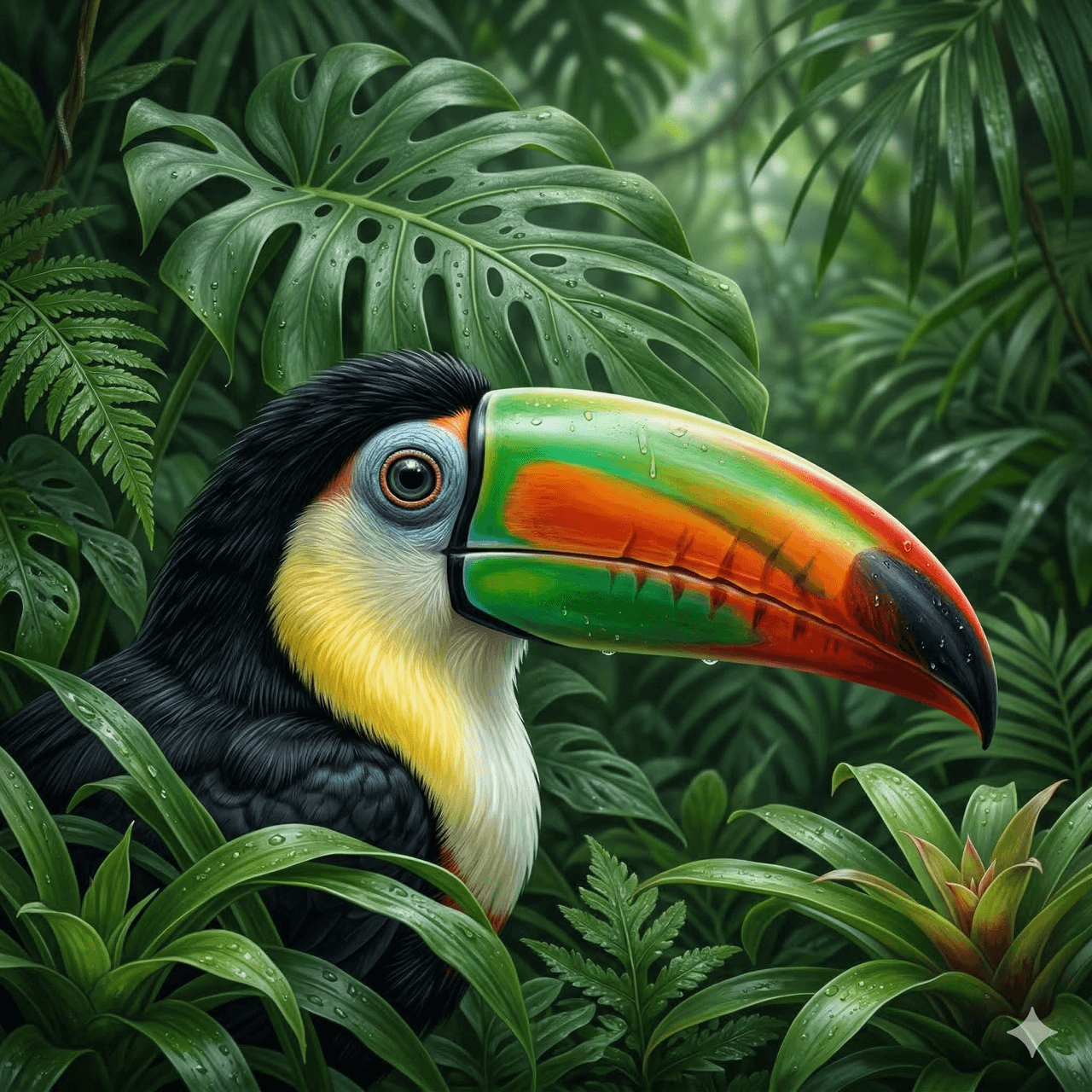


Toucan Bird
Toucans are among the world’s most recognized and beloved birds, known for their enormous, colorful beaks relative to their body size. You may have seen them in a cartoon or documentary hopping from branch to branch with their massive beaks. But did you know that this huge beak is actually extremely lightweight and plays a vital role in the forest ecosystem? Let’s explore the world of these cheerful birds together.
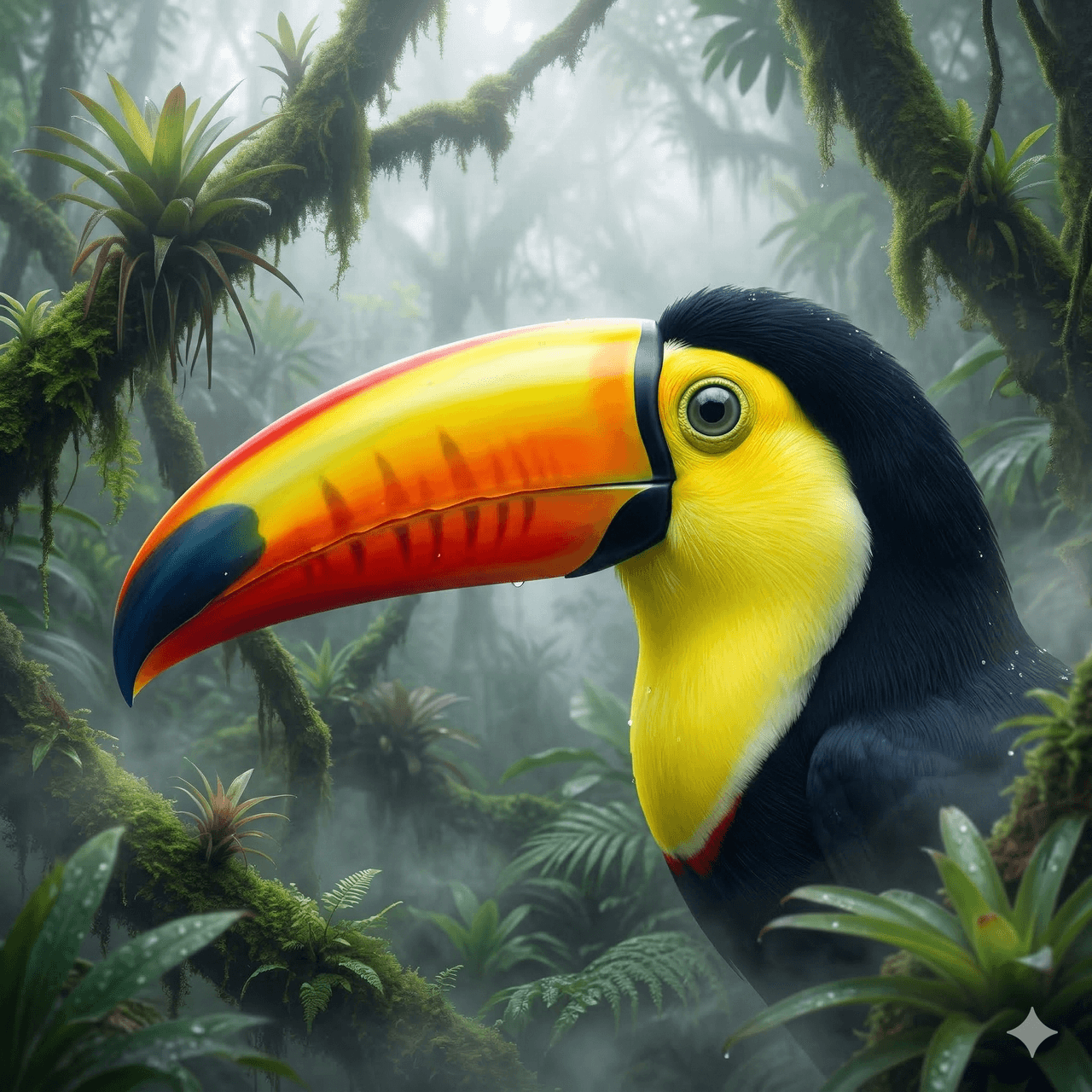
Toucan Bird (Image Generated by Artificial Intelligence)
🌳 Where Do They Live?
Toucans live in the warm, rainy tropical forests of Central and South America. They love to roam among the tops of tall trees and rarely descend to the forest floor. They typically choose abandoned or naturally formed tree cavities, often left by woodpeckers, as nesting sites.
🦜 What Is the Purpose of That Huge Beak?
Toucan beaks can be almost as long as their bodies. Although they appear heavy, they are in fact extremely lightweight because their interior is hollow and made of keratin, the same material found in our hair and fingernails. This lightness allows them to reach fruits at the ends of slender branches without losing balance. Additionally, this large beak functions like a thermostat, helping toucans regulate their body temperature in the hot rainforest. When needed, they increase blood flow to their beaks to release excess heat from their bodies.
🍉 What Do They Eat and How Do They Help the Forest?
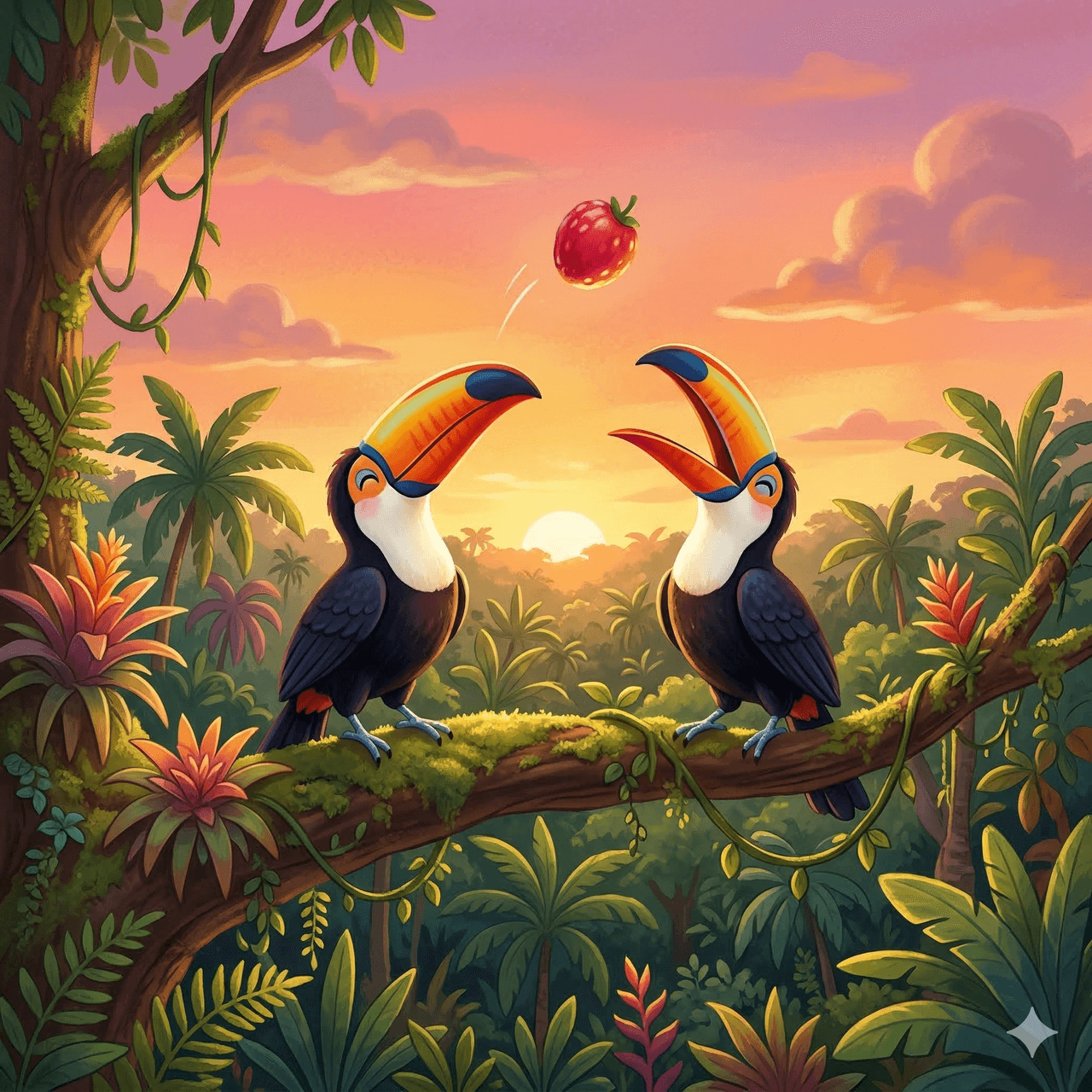
Fruits are the toucans’ favorite food. They use their large beaks to pluck fruits, toss them into the air, and swallow them whole. Occasionally, they also eat insects, small lizards, or tree frogs.
After eating fruit, they drop the seeds intact in different parts of the forest, helping new trees grow. Because they contribute so significantly to the forest’s regeneration, they are often called the “gardeners of the forest.”
Toucan Bird (Image Generated by Artificial Intelligence)
💤 How Do They Sleep and Play?
Living in small flocks, toucans are very playful birds. They enjoy playing games by tossing fruits at each other, either to mock one another or simply for fun. Social interaction is natural to them.
Their sleeping habits are fascinating! When they enter their tree cavity nests, they turn their heads backward and tuck their huge beaks under their wings. Then they fold their tails over their heads, transforming into small, fluffy balls. This allows them to fit comfortably even in the tightest tree hollows.