This article was automatically translated from the original Turkish version.
+1 More
Location | Valley of the Kings Teb Necropolis (Egypt) | ||||||||
|---|---|---|---|---|---|---|---|---|---|
Discovery Date | 26 November 1922 | ||||||||
Discoverer | Howard Carter | ||||||||
Number of Artifacts Found | Approximately 5000 objects | ||||||||
Tomb of Tutankhamun is the only largely intact royal tomb discovered in the Valley of the Kings, belonging to Pharaoh Tutankhamun of the Eighteenth Dynasty of the New Kingdom of Egypt (circa 1336–1327 BCE). Discovered in 1922 by archaeologist Howard Carter, the tomb is regarded as one of the most significant archaeological finds ever made, due to the vast array of gold artifacts and luxury objects it contained.【1】
The approximately 5,000 objects found within the tomb consist of items reflecting the pharaoh’s daily life, religious beliefs, and rituals associated with the afterlife. In size, it is small and modest compared to other royal tombs.
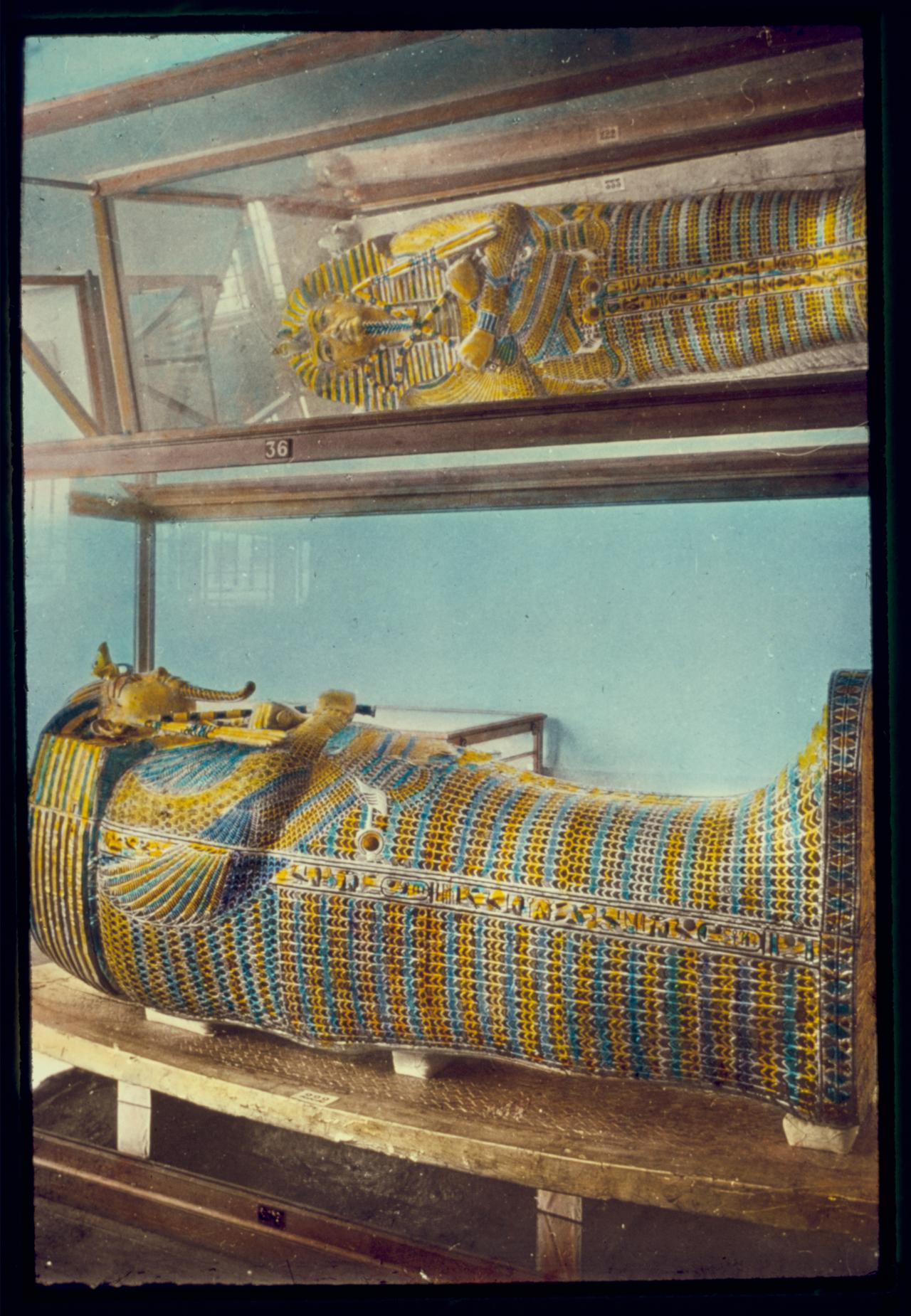
Tutankhamun’s Sarcophagus (Library of Congress)
Tutankhamun ruled Egypt during the Eighteenth Dynasty of the New Kingdom, approximately 1336–1327 BCE. He ascended the throne at the age of eight or nine and reigned for a brief period of about ten years. Tutankhamun, likely the son of the previous pharaoh Akhenaten, abandoned Akhenaten’s monotheistic worship of the Aten and restored the traditional cult of the god Amun, relocating the religious center back to Thebes.
Tutankhamun married his half-sister Ankhesenamun but had no children, leaving the succession uncertain. He died suddenly at approximately eighteen years of age. The exact cause of death remains unknown, though various theories have been proposed, including a chariot accident, a blow to the head, or a hippopotamus attack.
After Tutankhamun’s death, his vizier Ay married Ankhesenamun and ascended the throne. Although Tutankhamun’s reign was short and his political influence limited, the discovery of his tomb has made him one of the most famous pharaohs in history. The nearly intact tomb has provided invaluable insights into the religious, artistic, and daily life of ancient Egypt.
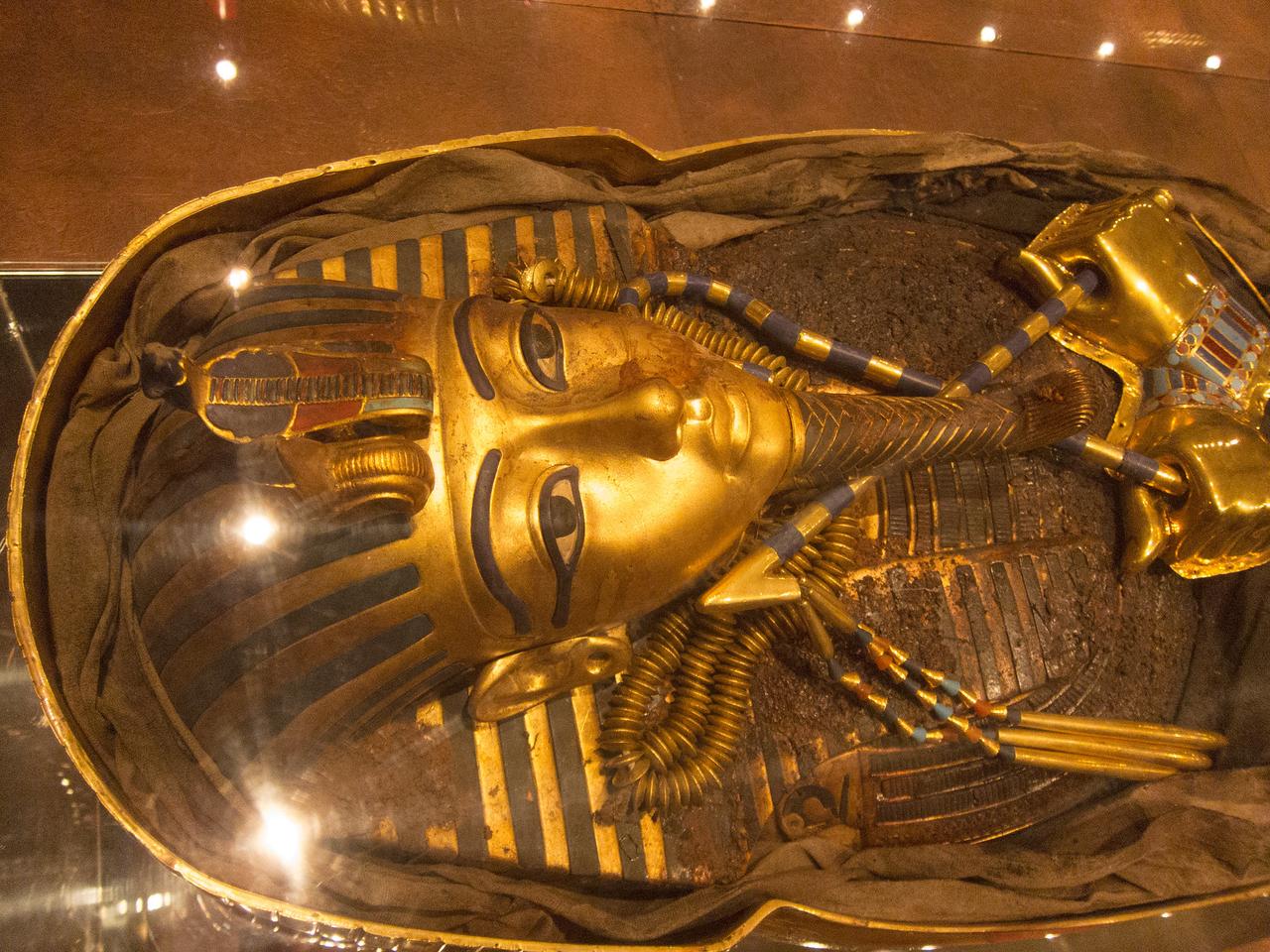
Tutankhamun’s Golden Mask (flickr)
The tomb of Tutankhamun was discovered in November 1922 by British archaeologist Howard Carter in the Valley of the Kings. This discovery generated immense international interest. Carter conducted the excavations on behalf of the Fifth Earl of Carnarvon. Upon reaching the steps leading to the tomb’s entrance, Carter sent a telegram to Carnarvon in England proposing they open the tomb together. On November 26, 1922, they opened the entrance, and Carter described his first glimpse of the antechamber as follows:
“At first I could see nothing, the hot air from the chamber was causing the candle flame to flicker, but as my eyes grew accustomed to the light, details gradually emerged: strange animals, statues, and gold—everywhere the glint of gold.”【2】
The tomb’s size and complex contents required expert support. Carter therefore requested assistance from A. M. Lythgoe, Curator of the Egyptian Department at the Metropolitan Museum. Lythgoe offered not only the services of photographer Harry Burton but also additional personnel from the museum’s staff. Thanks to this collaboration, four members of the Metropolitan Museum’s Egyptian Expedition joined the excavation team.
Harry Burton played a crucial role in documenting the tomb. Every object was photographed under electric light before being touched, and these images were published worldwide. An unfinished tomb previously used to store artifacts belonging to the Amarna royal family was repurposed as a darkroom for developing photographs.
Lindsley F. Hall and Walter Hauser created detailed plans of the tomb, drawing each object to scale in its original position. The disorganized and stacked arrangement of the objects made the documentation process extremely challenging.
Arthur C. Mace continued his work in a laboratory established for processing the出土 objects. This laboratory was set up in the tomb of Seti II at the far end of the valley. Mace collaborated with Lucas, Director of the Egyptian Government Chemical Laboratories, receiving, cataloging, and performing necessary repairs and restorations on the artifacts.
The excavation team believed that some of the tomb’s contents had been disturbed by ancient tomb robbers and subsequently hastily re-stored by necropolis officials in random boxes. This explains why walking sticks were found in the same containers as undergarments and pottery alongside jewelry.
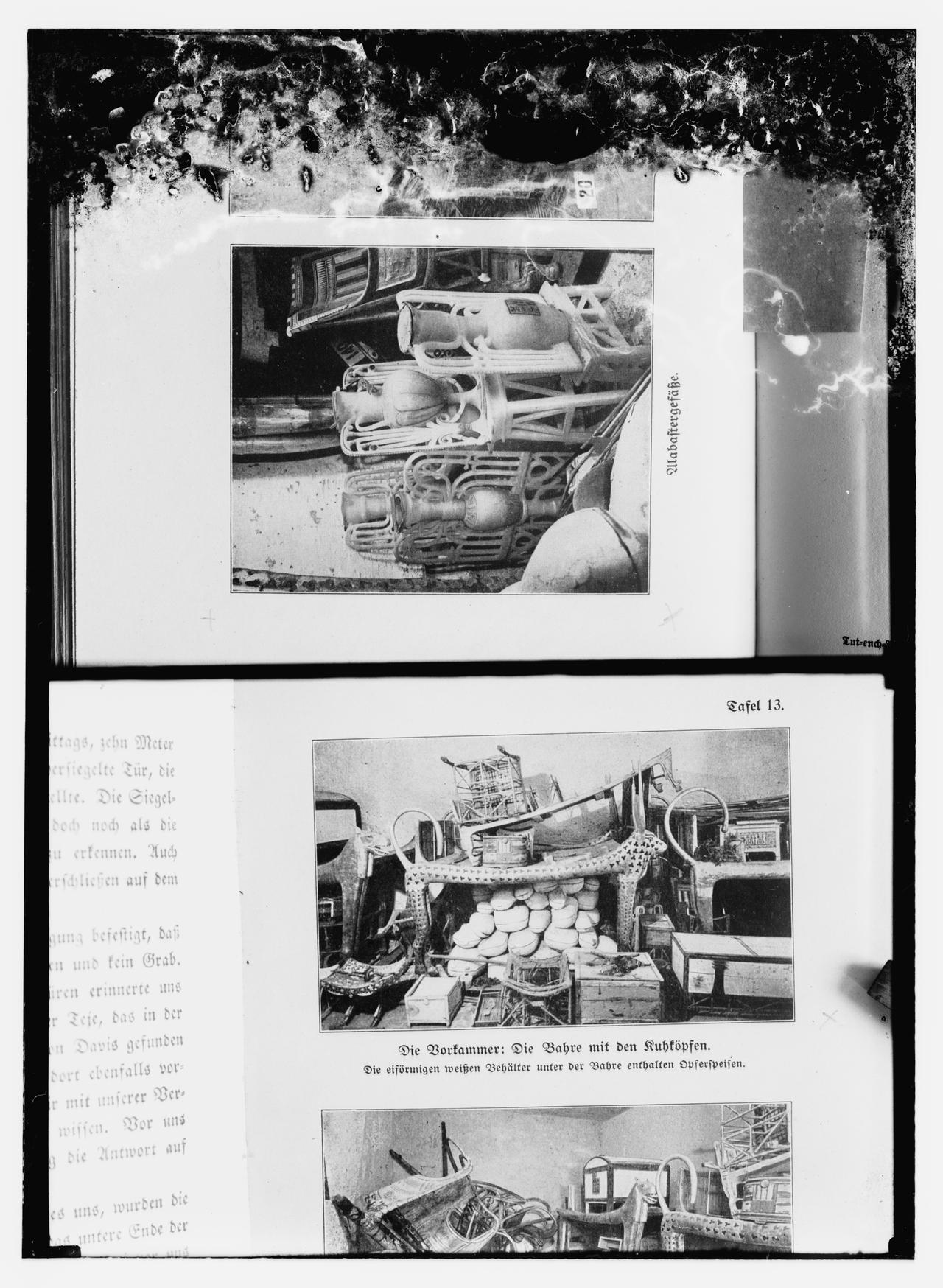
Objects Removed from Tutankhamun’s Tomb (Library of Congress)
The tomb’s nearly undisturbed state provides a document of royal burial rituals. During the first season, the team was able to clear only the antechamber; subsequent work revealed even more valuable objects in the other chambers.
The tomb of Tutankhamun was carved into the rock of the Valley of the Kings, the burial ground for pharaohs of the New Kingdom. When discovered by Howard Carter, the tomb had remained sealed for approximately 3,200 years; however, it had been subjected to two attempted robberies in antiquity.【3】
Compared to other royal tombs in the Valley of the Kings, Tutankhamun’s tomb is quite small. It consists of four small chambers, with only the burial chamber having been decorated. Its architectural simplicity and limited ornamentation suggest it may have originally been intended for someone else. Due to his sudden death, it is likely that an existing structure was expanded to accommodate the pharaoh.
Located in the eastern sector of the Valley of the Kings, the tomb stands in structural contrast to the larger tombs surrounding it. Despite its modest size, the tomb is notable for the richness of its contents and its architectural coherence, and is regarded as one of the representative examples of ancient Egyptian tomb architecture.
The decoration within the tomb is relatively limited compared to other royal tombs in the Valley of the Kings. Only the walls of the burial chamber are adorned. The tomb contains only one scene from the Amduat, while other images depict the pharaoh’s funeral rites or scenes of him being presented to various deities.
Despite its small size, the approximately 5,000 objects placed inside the tomb fill the space densely. The items bear traces of both daily life and religious rituals.
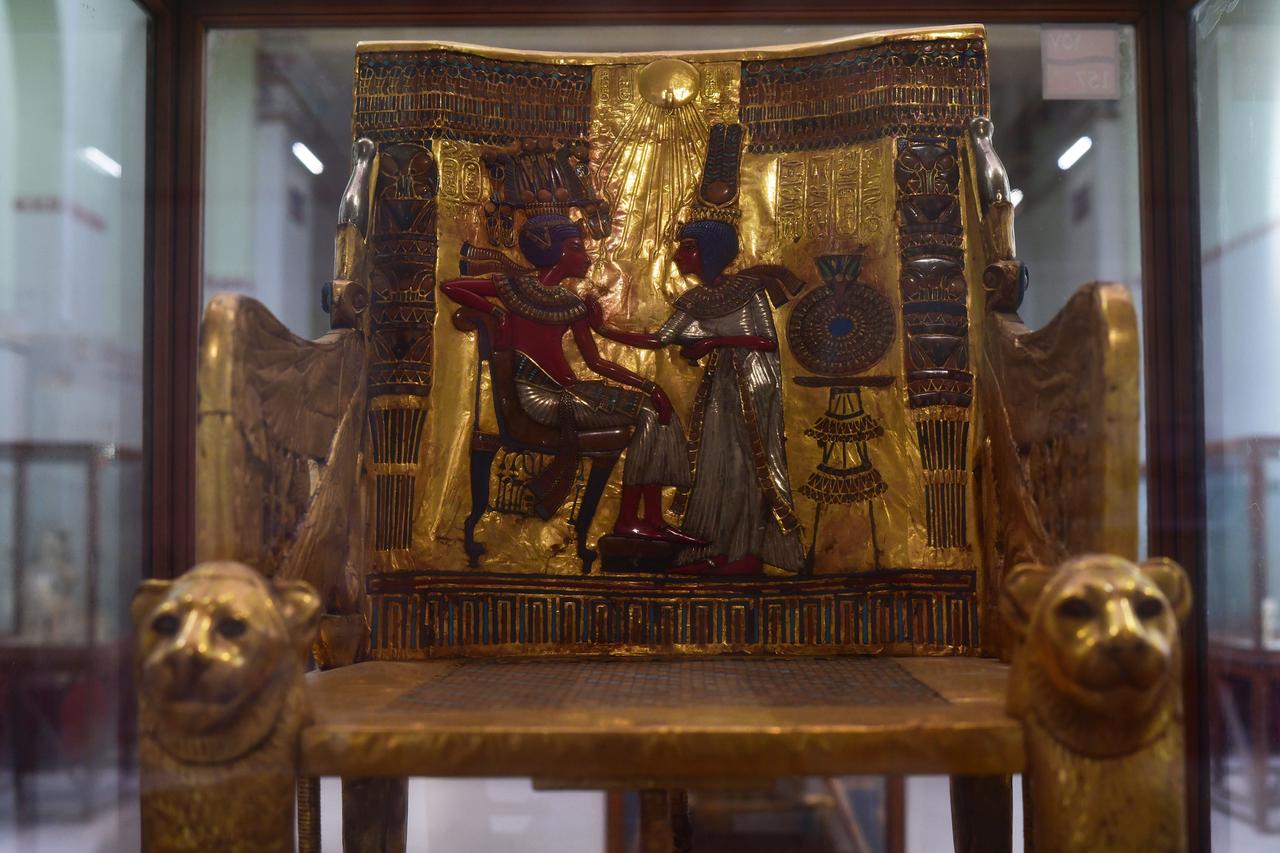
Throne Removed from the Tomb (flickr)
On the western wall of the burial chamber, twelve baboon figures represent the twelve hours of the night the pharaoh must pass through in the afterlife. These figures symbolize the temporal divisions of the journey through the underworld. On the eastern wall, a scene depicts high-ranking Egyptian officials carrying Tutankhamun’s mummy into the tomb.
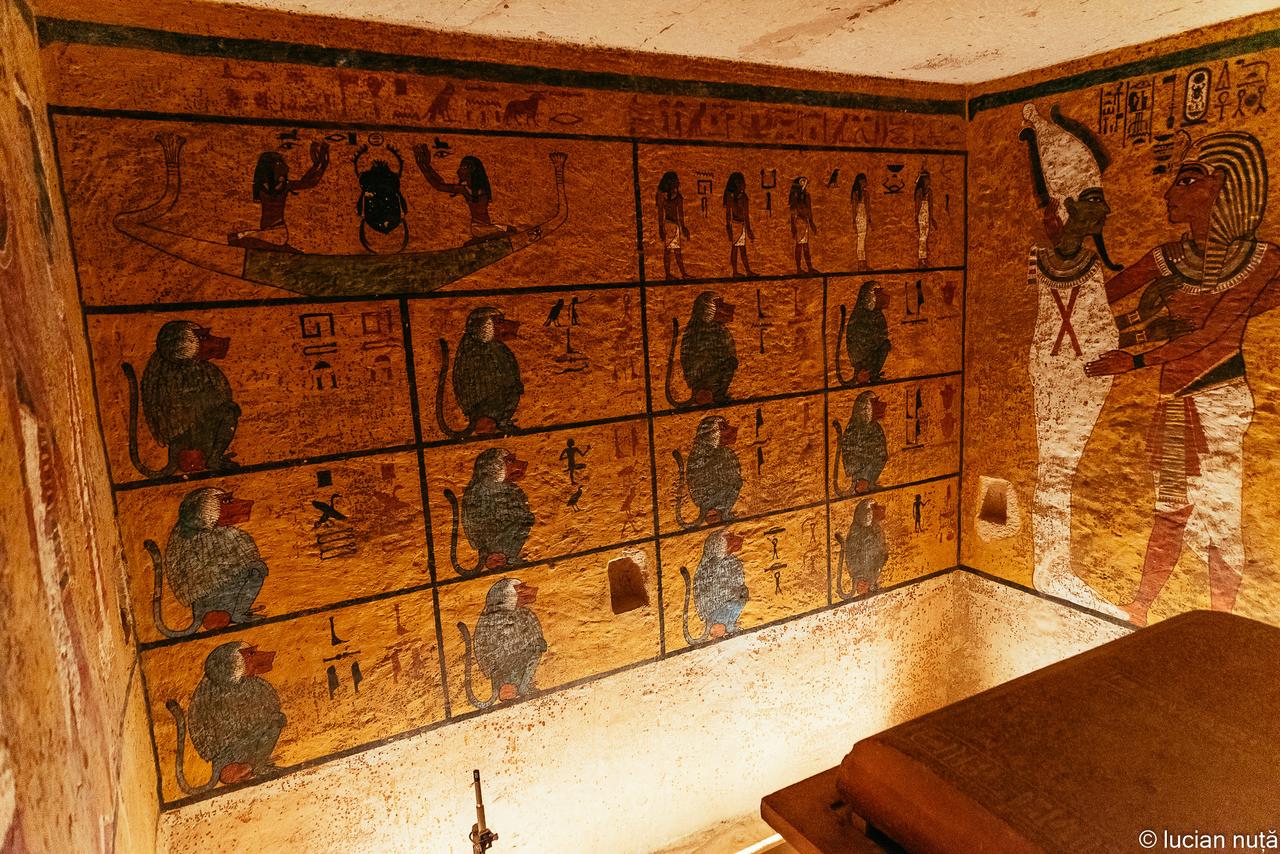
Twelve Baboon Figures (flickr)
Analysis has shown that pigment flaking occurred not after the tomb’s discovery but immediately after painting, with some areas painted without a clay plaster base. Painting techniques varied between artists. Some figures were sketched in red pigment, while others were incised into the plaster. Additionally, different grid systems were observed among the artists.
Certain artistic imperfections are also notable. Slight tilts in the figures, visible chisel marks on the wall surface, and even missing layers in some areas indicate that the tomb’s preparation was rushed.
Since its discovery, the tomb of Tutankhamun has welcomed millions of visitors, but these visits have gradually begun to threaten the tomb’s structural integrity and interior decoration. Particularly from the 1990s onward, the risks facing the tomb became more visible and were documented in reports by archaeologists and conservation experts.
Professor Sayed Hemeda of Cairo University, in his assessment of the tomb’s current condition, noted that the structure faces both present and future risks and warned that it may not remain standing in the long term. Major cracks in the entrance and main chamber constitute a serious structural threat. These cracks resulted from floodwaters, carrying stone, soil, and debris into the tomb during heavy rains, leading to increased humidity and subsequent mold growth on interior walls. A major flood in 1994 accelerated this process.
The rock type used in the tomb’s construction, Esna limestone, is sensitive to moisture and expands and contracts with changes in humidity. This causes the cracks to widen and increases the risk of structural deformation and collapse. The ceiling’s load-bearing capacity has been exceeded due to excessive weight, further threatening the tomb’s structural integrity.
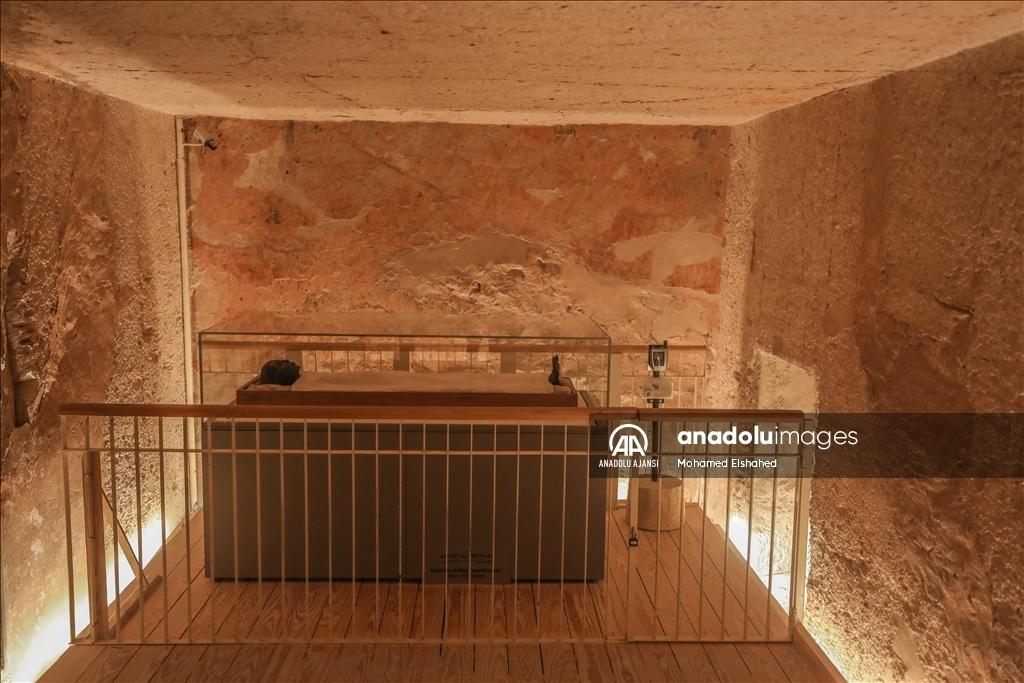
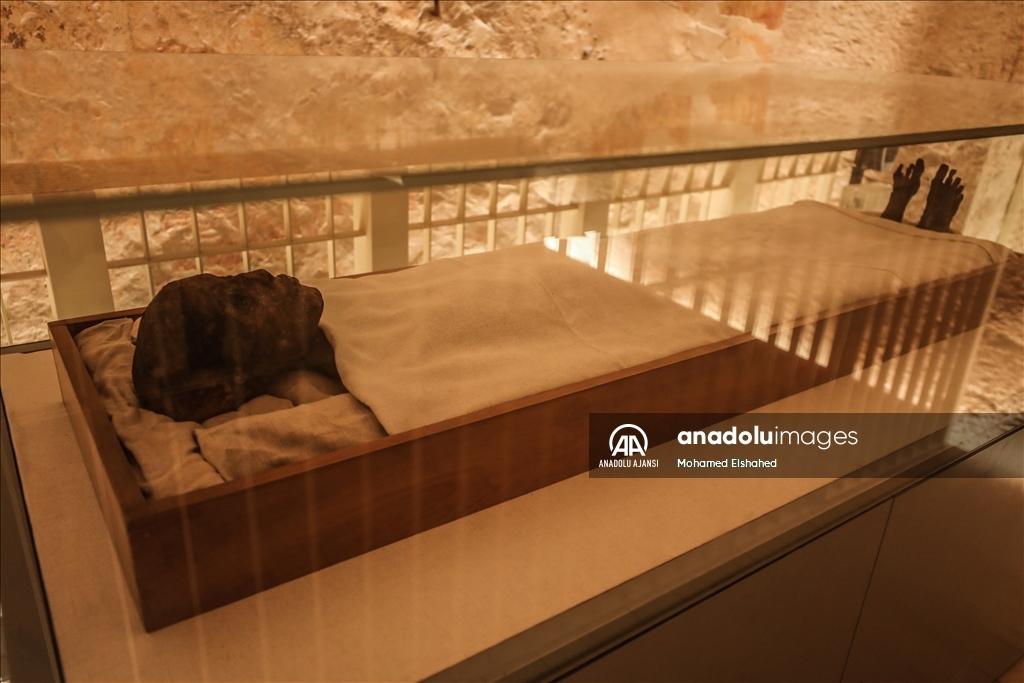
Tutankhamun’s Unmasked Mummy (AA)
Conservation efforts are ongoing to prevent further structural weakening and preserve the tomb’s artistic integrity. However, experts state that the measures taken so far have been insufficient and that the tomb may not endure for thousands of years as it has in the past.
Anadolu Ajansı. “Mısır'da Genç Firavun Tutankamon'un mezarı.” Accessed November 24, 2025.https://www.aa.com.tr/tr/pg/foto-galeri/202372911752_misirda-genc-firavun-tutankamonun-mezari/0
Cummins, Elizabeth. “Tutankhamun’s tomb (innermost coffin and death mask).” *Smarthistory.* Accessed November 24, 2025.https://smarthistory.org/tutankhamuns-tomb-innermost-coffin-and-death-mask/
JURNAL.İST. “Arkeologlardan uyarı: Antik mezar yok olma tehlikesiyle karşı karşıya.” gzt. Accessed November 24, 2025.https://www.gzt.com/jurnalist/tutankhamunun-mezari-tehlike-altinda-cokme-ihtimali-bulunuyor-dunya-haberleri-3808485
Library of Congress. “Items from Tutenchamun's [i.e., Tutankhamen's] tomb.” Copies. Egypt, None. [Between 1898 and 1946]. loc.gov.tr. Accessed November 24, 2025.https://www.loc.gov/item/2019700166/
Lobell, Jarrett A. “INSIDE KING TUT’S TOMB.” ARCHAEOLOGY. Accessed November 24, 2025.https://archaeology.org/issues/may-june-2019/features/inside-king-tut-s-tomb/
Lucian, Nuta. “Egipt 2020 PG.” flickr. Accessed November 24, 2025.https://flic.kr/p/2mXM7R9
Matson Photo Service. “Egypt. Cairo. King Tutankhamun's coffin.” loc.gov.tr. Accessed November 24, 2025.https://www.loc.gov/item/2019705714/
Ministry of Tourism and Antiquities. “Tomb of Tutankhamun.” egymonuments.gov.tr. Accessed November 24, 2025.https://egymonuments.gov.eg/monuments/tomb-of-tutankhamun/
Panegyrics of Granovetter. “26329: Tut's throne JPG.” Flickr. Accessed November 24, 2025.https://flic.kr/p/2mo7Hhp
Quine, Thomas. “Gold face of King Tut JPG.” flickr. Accessed November 24, 2025.https://flic.kr/p/yPKmgZ
Stünkel, Isabel. “The Human Connection: Photographs from Tutankhamun's Tomb.” *THE MET.* Accessed November 24, 2025.https://www.metmuseum.org/perspectives/the-human-connection
The Metropolitan Museum of Art. “Tutankhamun.” *The Metropolitan Museum of Art Bulletin* 34, no. 3 (1976): 1–48. Accessed November 24, 2025.https://doi.org/10.2307/3269009
The Metropolitan Museum of Art. “Work at the Tomb of Tutankhamun.” *The Metropolitan Museum of Art Bulletin* 33, no. 2 (1975): 96–108. Accessed November 24, 2025.https://doi.org/10.2307/3258745
[1]
Ministry of Tourism and Antiquities, “Tomb of Tutankhamun,” egymonuments, Son Erişim: 24 Kasım 2025, https://egymonuments.gov.eg/monuments/tomb-of-tutankhamun/
[2]
The Metropolitan Museum of Art, “Work at the Tomb of Tutankhamun,” The Metropolitan Museum of Art Bulletin 33, no, 2 (1975), syf 96, https://doi.org/10.2307/3258745
[3]
The Metropolitan Museum of Art, “Tutankhamun,” The Metropolitan Museum of Art Bulletin 34, no, 3 (1976), syf 3, https://doi.org/10.2307/3269009

Location | Valley of the Kings Teb Necropolis (Egypt) | ||||||||
|---|---|---|---|---|---|---|---|---|---|
Discovery Date | 26 November 1922 | ||||||||
Discoverer | Howard Carter | ||||||||
Number of Artifacts Found | Approximately 5000 objects | ||||||||
No Discussion Added Yet
Start discussion for "Tomb of Tutankhamun" article
The Life and Death of Tutankhamun
The Discovery Process and Excavation Team
Architectural Structure and Location
Decoration and Wall Paintings
Current Preservation Status and Threats